
EPISODE · Apr 27, 2026 · 3 MIN
Samsung’s profits not workers’ alone, industry minister says amid union threats to strike over bonuses
from Korea JoongAng Daily - Daily News from Korea · host SARAH CHEA
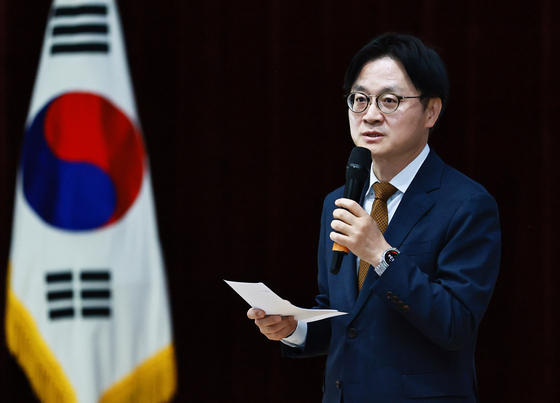
This article is by Sarah Chea and read by an artificial voice. SEJONG — While Samsung Electronics employees threaten to strike over bonuses, Korea's industry minister urged prudent judgment, noting that the company's gains cannot be credited to its work force alone and warning of looming capital demands. "Samsung has more than four million retail investors, and its current success reflects not only its employees but also an extensive industrial ecosystem and partner firms," said Kim Jung-kwan, minister of Trade, Industry and Resources, in a press briefing at the Sejong government complex on Monday, adding that it is "fair to question whether profits can simply be divided among workers." Kim pinpointed that Samsung must sustain massive investment to preserve its edge in semiconductors, a factor he said should weigh heavily in bonus decisions. "The semiconductor industry is, by nature, a capital-intensive race requiring continuous investment," he said. "Striking the right balance between profit distribution and reinvestment is critical." "Semiconductors are effectively Korea's last bastion of global competitiveness," Kim added. "Once that edge erodes, recovery is unlikely." Kim's remarks come as the union at Samsung Electronics has threatened an 18-day strike from May 21 to June 7, demanding that 15 percent of the company's operating profit be set aside for bonuses. That may cost Samsung an estimated 45 trillion won ($31 billion) in payouts this year alone. Should the strike materialize, the industry predicts that losses could reach as much as 1 trillion won a day while also triggering knock-on effects across Samsung's 1,754 suppliers spanning materials, parts and equipment. Kim also took aim at the fuel price cap, calling it "an unwelcome policy" and vowing to end it as swiftly as conditions allow. "Government intervention to control market prices is not desirable," said Kim, while noting that the impact of the Iran war invariably required a response. "But this is a 'wartime emergency.' Once the conflict subsides, the Strait of Hormuz reopens and oil prices stabilize, we will lift the cap without delay." "While prices in the United States rose 30 to 40 percent, ours increased by around 10 percent, maintaining a reasonable balance," Kim said. The government introduced the measure after disruptions in the Strait of Hormuz linked to Iran choked crude supply and threatened a sharp price spike, capping refiners' sale price to gas stations with biweekly reviews. Now in its fourth round, the level remained frozen again, as it was with the third round, as global crude prices eased. The minister also pledged to expand trade with India and Vietnam following President Lee Jae Myung's recent trip. "About 600 Korean companies operate in India, and we have established an industrial cooperation body for the first time," Kim said. "With Vietnam, where bilateral trade stands at $90 billion, we agreed to expand it to $150 billion." "In trade, we should seek to create a new framework with India and Vietnam — one that delivers mutual gains — rather than operate within structures set by others," he added.
What this episode covers
This article is by Sarah Chea and read by an artificial voice. SEJONG — While Samsung Electronics employees threaten to strike over bonuses, Korea's industry minister urged prudent judgment, noting that the company's gains cannot be credited to its work force alone and warning of looming capital demands. "Samsung has more than four million retail investors, and its current success reflects not only its employees but also an extensive industrial ecosystem and partner firms," said Kim Jung-kwan, minister of Trade, Industry and Resources, in a press briefing at the Sejong government complex on Monday, adding that it is "fair to question whether profits can simply be divided among workers." Kim pinpointed that Samsung must sustain massive investment to preserve its edge in semiconductors, a factor he said should weigh heavily in bonus decisions. "The semiconductor industry is, by nature, a capital-intensive race requiring continuous investment," he said. "Striking the right balance between profit distribution and reinvestment is critical." "Semiconductors are effectively Korea's last bastion of global competitiveness," Kim added. "Once that edge erodes, recovery is unlikely." Kim's remarks come as the union at Samsung Electronics has threatened an 18-day strike from May 21 to June 7, demanding that 15 percent of the company's operating profit be set aside for bonuses. That may cost Samsung an estimated 45 trillion won ($31 billion) in payouts this year alone. Should the strike materialize, the industry predicts that losses could reach as much as 1 trillion won a day while also triggering knock-on effects across Samsung's 1,754 suppliers spanning materials, parts and equipment. Kim also took aim at the fuel price cap, calling it "an unwelcome policy" and vowing to end it as swiftly as conditions allow. "Government intervention to control market prices is not desirable," said Kim, while noting that the impact of the Iran war invariably required a response. "But this is a 'wartime emergency.' Once the conflict subsides, the Strait of Hormuz reopens and oil prices stabilize, we will lift the cap without delay." "While prices in the United States rose 30 to 40 percent, ours increased by around 10 percent, maintaining a reasonable balance," Kim said. The government introduced the measure after disruptions in the Strait of Hormuz linked to Iran choked crude supply and threatened a sharp price spike, capping refiners' sale price to gas stations with biweekly reviews. Now in its fourth round, the level remained frozen again, as it was with the third round, as global crude prices eased. The minister also pledged to expand trade with India and Vietnam following President Lee Jae Myung's recent trip. "About 600 Korean companies operate in India, and we have established an industrial cooperation body for the first time," Kim said. "With Vietnam, where bilateral trade stands at $90 billion, we agreed to expand it to $150 billion." "In trade, we should seek to create a new framework with India and Vietnam — one that delivers mutual gains — rather than operate within structures set by others," he added.
NOW PLAYING
Samsung’s profits not workers’ alone, industry minister says amid union threats to strike over bonuses
No transcript for this episode yet
Similar Episodes
No similar episodes found.
Similar Podcasts
No similar podcasts found.