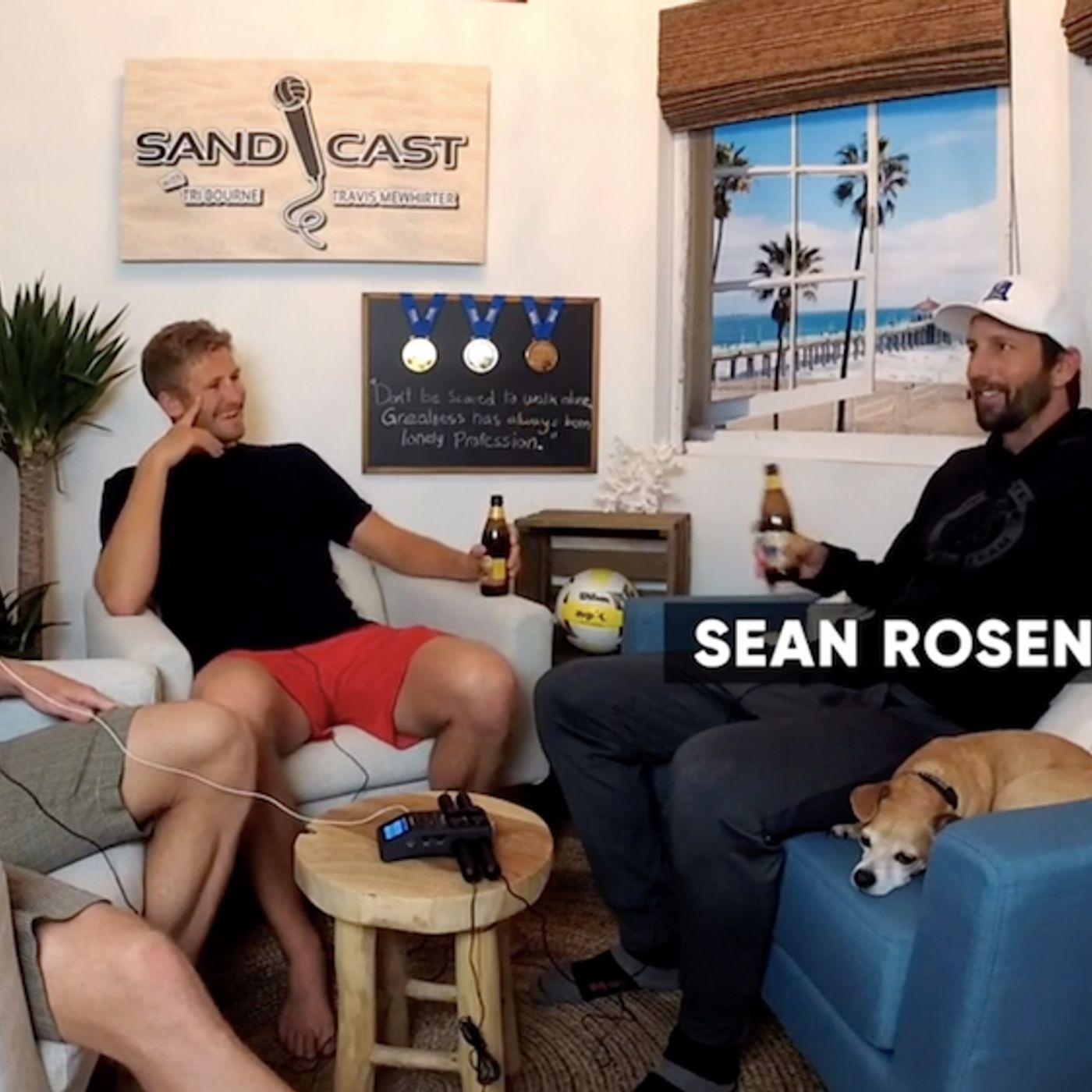
Sean Rosenthal, and a career not measured by any normal standards episode artwork

EPISODE · Feb 27, 2019 · 1H 12M

Sean Rosenthal, and a career not measured by any normal standards

from SANDCAST: Beach Volleyball with Tri Bourne and Travis Mewhirter · host Travis Mewhirter

It was almost as if Sean Rosenthal didn’t believe the words that had just come out of his mouth. “Leaving Jake [Gibb] for Phil [Dalhausser],” he said on SANDCAST: Beach Volleyball with Tri Bourne and Travis Mewhirter, “might have been the worst volleyball decision of my career.” He smiled, laughed. Then said it again, as if to cement it into reality what he had just admitted. Rosenthal’s partnership with Dalhausser was a fascinating one, though the reactions to it, including Rosenthal’s own, are complicated. By conventional standards, they were the best team in the world, winning their first event together in 2013, piling on two more Grand Slam golds. Rosenthal had never won that many tournaments on the world tour in a single year. And then he did it again, as he and Dalhausser tacked on three more FIVB golds during a run of four consecutive finals appearances in Navanger, Gstaad, The Hague and Long Beach. Less than a month later, they won the Manhattan Beach Open. For two straight seasons, they were the leading gold medalists on the world tour and also took home the biggest domestic tournament. By any human standard, the partnership was incredibly successful. But Rosenthal isn’t considered human. No, this is the Son of Jorel, the kid from krypton. This is Superman we’re talking about here, and Superman doesn’t live by the mortal standards the rest of us do. “For two years, we were the best team in the world,” Rosenthal said of his partnership with Dalhausser. “I think a little bit of it is because we didn’t win as many tournaments on the AVP as we were expected, but we won a lot on the world tour. Leaving Jake for Phil was the worst volleyball decision of my career. It’s crazy, it’s hard to say, but I think it might be true.” It might be true not because Rosenthal and Dalhausser were disappointing – they played together two years, they were the best team in the world for two years – but because Rosenthal and Gibb were just that good. They had just won the FIVB Team of the Year. Rosenthal, in an era of Emanuel Rego and Alison Cerutti, of Dalhausser and Todd Rogers, of Reinder Nummerdor and Richard Schuil, was named the best player in the world. Even after the FIVB season closed, they followed it up with a win in Santa Barbara during the AVP’s truncated, two-event revival season under Donald Sun. And then Rosenthal gave Gibb the call. He had already been in touch with Dalhausser. He knew, no matter what happened in Santa Barbara, he was going with Dalhausser for the next season. “[Phil] was just like, ‘What do you want to do? Do you want to play together next season?’” recalled Rosenthal. “And I was just like, ‘Uh, yeah.’ If your boss comes up to you and asks you, ‘Do you want a raise?’ It’s not like, ‘No, I’m good where I’m at.’ It’s kind of one of those things, not only from prize money but sponsor money, which went way up, too. Got RedBull and UnderArmour and a couple others, like SmartCar, which were basically through Phil.” But would he do it again? “I’d probably do it again,” Rosenthal said. He’d do it again because Dalhausser is a name that belongs in discussions with those of Kiraly and Smith and Stoklos and Steffes, the best the game has ever seen. He’d do it again because, even with a rash of injuries and awful timing to both Rosenthal and Dalhausser, they still finished as the best team in the world in consecutive years. Such is the standard of Sean Rosenthal. When finishing as the top on the world tour is cause for questioning a partnership change. We are now in the final act of Rosenthal’s brilliant career, one in which he has accumulated more than 20 wins, compiled a resume that will rank him amongst the all-time greats and won with a playing style that will immortalize him in the South Bay community. His focus is still on volleyball, yes, but it’s turned more to his kids, constant bundles of energy. It’s turned to taking some time off. Golfing. Enjoying beach volleyball for what it is – a wonderful sport, an incredible way to make a career. More important, a way to get the kids out of the house and spend some energy. “We all,” Rosenthal said, “need to get down to the beach and practice.” One generation of Rosenthal gradually fades out. The next charges in. Hosted by Simplecast, an AdsWizz company. See pcm.adswizz.com for information about our collection and use of personal data for advertising.

It was almost as if Sean Rosenthal didn’t believe the words that had just come out of his mouth. “Leaving Jake [Gibb] for Phil [Dalhausser],” he said on SANDCAST: Beach Volleyball with Tri Bourne and Travis Mewhirter, “might have been the worst volleyball decision of my career.” He smiled, laughed. Then said it again, as if to cement it into reality what he had just admitted. Rosenthal’s partnership with Dalhausser was a fascinating one, though the reactions to it, including Rosenthal’s own, are complicated. By conventional standards, they were the best team in the world, winning their first event together in 2013, piling on two more Grand Slam golds. Rosenthal had never won that many tournaments on the world tour in a single year. And then he did it again, as he and Dalhausser tacked on three more FIVB golds during a run of four consecutive finals appearances in Navanger, Gstaad, The Hague and Long Beach. Less than a month later, they won the Manhattan Beach Open. For two straight seasons, they were the leading gold medalists on the world tour and also took home the biggest domestic tournament. By any human standard, the partnership was incredibly successful. But Rosenthal isn’t considered human. No, this is the Son of Jorel, the kid from krypton. This is Superman we’re talking about here, and Superman doesn’t live by the mortal standards the rest of us do. “For two years, we were the best team in the world,” Rosenthal said of his partnership with Dalhausser. “I think a little bit of it is because we didn’t win as many tournaments on the AVP as we were expected, but we won a lot on the world tour. Leaving Jake for Phil was the worst volleyball decision of my career. It’s crazy, it’s hard to say, but I think it might be true.” It might be true not because Rosenthal and Dalhausser were disappointing – they played together two years, they were the best team in the world for two years – but because Rosenthal and Gibb were just that good. They had just won the FIVB Team of the Year. Rosenthal, in an era of Emanuel Rego and Alison Cerutti, of Dalhausser and Todd Rogers, of Reinder Nummerdor and Richard Schuil, was named the best player in the world. Even after the FIVB season closed, they followed it up with a win in Santa Barbara during the AVP’s truncated, two-event revival season under Donald Sun. And then Rosenthal gave Gibb the call. He had already been in touch with Dalhausser. He knew, no matter what happened in Santa Barbara, he was going with Dalhausser for the next season. “[Phil] was just like, ‘What do you want to do? Do you want to play together next season?’” recalled Rosenthal. “And I was just like, ‘Uh, yeah.’ If your boss comes up to you and asks you, ‘Do you want a raise?’ It’s not like, ‘No, I’m good where I’m at.’ It’s kind of one of those things, not only from prize money but sponsor money, which went way up, too. Got RedBull and UnderArmour and a couple others, like SmartCar, which were basically through Phil.” But would he do it again? “I’d probably do it again,” Rosenthal said. He’d do it again because Dalhausser is a name that belongs in discussions with those of Kiraly and Smith and Stoklos and Steffes, the best the game has ever seen. He’d do it again because, even with a rash of injuries and awful timing to both Rosenthal and Dalhausser, they still finished as the best team in the world in consecutive years. Such is the standard of Sean Rosenthal. When finishing as the top on the world tour is cause for questioning a partnership change. We are now in the final act of Rosenthal’s brilliant career, one in which he has accumulated more than 20 wins, compiled a resume that will rank him amongst the all-time greats and won with a playing style that will immortalize him in the South Bay community. His focus is still on volleyball, yes, but it’s turned more to his kids, constant bundles of energy. It’s turned to taking some time off. Golfing. Enjoying beach volleyball for what it is – a wonderful sp

NOW PLAYING

Sean Rosenthal, and a career not measured by any normal standards

0:00 1:12:35

No transcript for this episode yet

We transcribe on demand. Request one and we'll notify you when it's ready — usually under 10 minutes.

MG Show MG Show The MG Show, hosted by Jeffrey Pedersen and Shannon Townsend, is a leading alternative media platform dedicated to uncovering the truth behind today’s most pressing political issues. Launched in 2019, the show has grown exponentially, offering unfiltered insights, comprehensive research, and real-time analysis. With a commitment to independent journalism and factual integrity, the MG Show empowers its audience with knowledge and encourages active participation in the political discourse. Breaking News Show | eTurboNews Juergen Thomas Steinmetz News is relevant to the global travel and tourism industry, human rights and global issues.Breaking news when it happens and only from the source. Eat to Live Jenna Fuhrman, Dr. Fuhrman Our health is our most precious gift and smart nutrition can change your life. Each month, join Dr. Fuhrman and his daughter, Jenna Fuhrman as they discuss important topics in the world of nutrition. Eat to Live will change the way you eat and think about food. French Your Way Jessica: Native French teacher founder of French Your Way Boost your French listening skills and test your comprehension with this one of a kind series of podcasts. Get the chance to listen to a real conversation between native speakers talking at normal speed AND customise your learning experience through carefully designed sets of questions (2 levels of difficulty) available for download at www.frenchvoicespodcast.com. All interviews also come with the transcript. French teacher Jessica interviews native speakers of French from around the world who share a bit of their life and passion. Where else would you meet in one same place a French yoga teacher based in Melbourne, a soap manufacturer from Provence, or a couple cycling around the world?

Frequently Asked Questions

How long is this episode of SANDCAST: Beach Volleyball with Tri Bourne and Travis Mewhirter?

This episode is 1 hour and 12 minutes long.

When was this SANDCAST: Beach Volleyball with Tri Bourne and Travis Mewhirter episode published?

This episode was published on February 27, 2019.

What is this episode about?

It was almost as if Sean Rosenthal didn’t believe the words that had just come out of his mouth. “Leaving Jake [Gibb] for Phil [Dalhausser],” he said on SANDCAST: Beach Volleyball with Tri Bourne and Travis Mewhirter, “might have been the worst...

Can I download this SANDCAST: Beach Volleyball with Tri Bourne and Travis Mewhirter episode?

Yes, you can download this episode by clicking the download button on the episode player, or subscribe to the podcast in your preferred podcast app for automatic downloads.
URL copied to clipboard!