
This is StarTalk. Hello and welcome to StarTalk. I am Dr. Nassim E.
Starkey and this is StarTalk All-Stars. I am going to be your All-Star host today and joining me as a co-host, I have comedian Chuck Knight. Hey Natalie. Thank you.
Good to be with you again. Yes, it's going to be fun I think because today we're going to be talking about water in space. I want to just stress that I'm saying water. Water.
Water. I'm very British. Water. Water.
The tea in the middle of water. Not water. Not water. You're not having water.
We are actually talking about that as well. We're talking about water too. It's the same thing. Yeah.
So I guess I want to talk about this subject because it's quite important, right? We drink water all the time. We drink liters of it. I'm going to say that water is indeed the most important substance on Earth ever.
Okay, you said it. Okay. I really believe that. There is nothing more important than water.
I believe that is where the origins of life stem. Okay. I believe that that is why it is the most necessary thing to sustain life. So it is where life began and it is also what sustains it.
And for some reason, we don't treat water like it's important. We need to respect the water. Respect the water. You're also right and it's a bold statement but I think it's fair enough.
We do need to respect that. We need to understand where it came from because it does appear that Earth is the only planet in our solar system that has liquid water on its surface. Now, it's not to say there is liquid water elsewhere but not on the surface of any other planets. It's probably ice.
Now, there's loads of water in the solar system but it's probably ice. Now, importantly, we think we need it as liquid for life to start and form and everything. So why are we the only planet with liquid water? This is one of the big research questions and one of the questions we should be asking.
I'm going to say it's because we're special. We are special. We are. We are very special.
I think we're special. I mean, just look around the solar system. Okay. We're pretty damn special.
All right. Take that, Venus. There we go. Climate, surface.
Exactly. Crazy hot. We are basically the Bahamas of the solar system. Okay.
Now, think about it. It's the place you want to be. It's the place you want to be. I like that.
Yeah, it's true. So, okay. To help us with the subject today, we have a world expert on water in the solar system and it is Lindy Elkins-Hanson. Welcome to the show.
Hi. Thank you so much. All right. We're really glad you could join us now.
I'm going to be able to show you the director of the School of Earth and Space Exploration. Is that correct? Arizona State University? That's exactly right.
Okay. And what does your job involve directing people around the university? Go over there. Pick that up.
I'm Director Lindy. I'm trying to remind them that we're living in the Bahamas, basically. That's what I do. Okay.
I serve, right? That's what directors do. I try to make it easier for the scientists to do their jobs and answer their big questions. And a lot of people here are working on questions, just like what you're talking about.
Why do we have water here? Why is there not liquid water elsewhere? Why is the Earth not Venus? Thank goodness.
Very cool. And your own research. I mean, you've got a background of research as well, and that's what you've been looking at, right? You've been looking at this kind of how we get water on planets and all this business.
So you are going to be quite helpful, I think, because today we're going to be looking at cosmic queries and trying to answer some questions from the peoples out there about this subject. So I think we should probably kick off and see how we go. Let's jump right into the questions here. And I'm going to take one from Dylan Hallahan, who is a Patreon patron.
If you're a Patreon patron, what you get to do is send us a question, and we will give it priority, because if you're a Patreon patron, it means that you have supported us financially, and you helped make this whole thing happen. So it's actually addressed to both of you, Dr. Elkins Tanton and Dr. Starkey.
I know, he's very formal. Isn't that very formal? He's still very cool. How likely would it be for us to set up a workstation in a LeBronge Point?
Okay. Limit fuel consumption and keep equipment in safe location near the moon, Europa, and be able to take multiple trips to analyze the composition or harvest the water that lies beneath it. Now that, to start off, I'm going to tell you right now, to start off the cosmic queries with that. First of all, that's a super packed question right there.
That's a big question. I mean, that's a huge question. I mean, this question really has more parts. It's like a freaking cosmic cake that you've got to bake.
If this person is too sophisticated, we're going to have to get them to answer their own questions. Before we get into this, let me just ask another question. This guy knows too much. Lindy, what is water?
No. How could you do that one? All right, so let's break this down and get into it. First of all, he's talking about a workstation in a LeBronge Point.
Well, I was going to start first with the Europa part. I think that's the better way to get into this. Okay, you're the doctor. First of all, why does he want to go to Europa?
You know, that's the question. What is so interesting about Europa? It is very interesting. Because what we think is happening there is that there is liquid water, but it's not at the surface.
It's under a surface of probably water ice. But the fact is that there potentially and quite likely is water under the surface. And why do we say potentially and most likely? What evidence do we have?
I think, Lindy, am I right in saying it's not fresh water, is it? It's salty, I think. Is that right? Yeah, so we think it's salty partly because fresh water is really rare in our solar system.
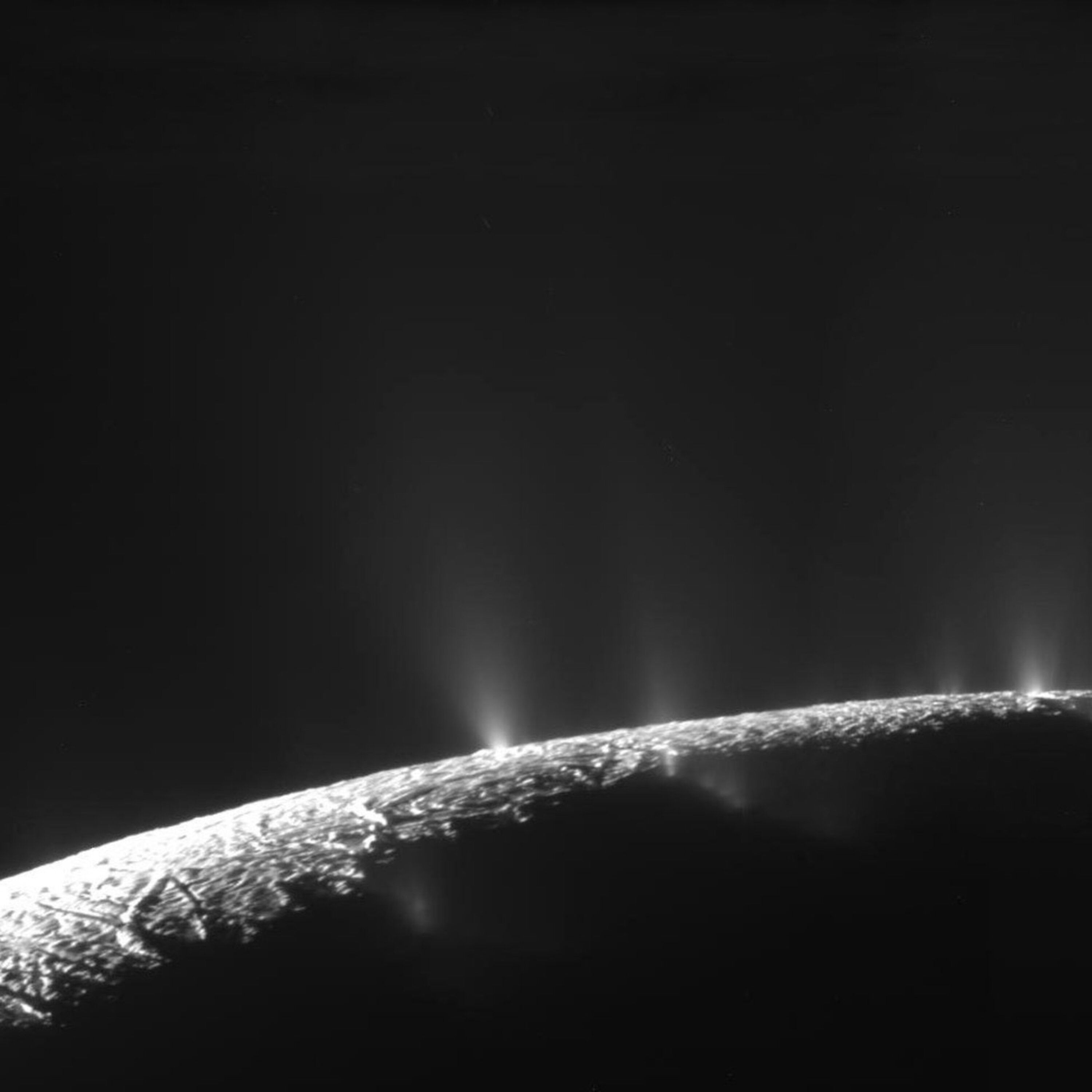
And there we think that the water is actually, there's an icy crust, and then liquid water, and then underneath that, a rocky core. And so the water and the rock are interacting. And when you say it looks like it has salted them with the geysers, you know, create a plume into space, is that because we're able to see that in some form? Yeah, so we can measure that material that's coming off.
And so they know that it's, you know, it's got potentially some elements in it that look like it could be salty water. Now, the thing is, that planet, it's kind of sounding a lot like Earth, right? We've got the rocky interior, we've got the oceans, and okay, we've got ice on the surface in some places. So it is one of the key places in the solar system that we're wanting to go in the future to actually look for life.
But first of all, we need to understand the moon itself a bit more. But this is, I think, why this person's asking this question. This is why we want to go there, and we definitely do want to go there. Now, the second part of the question, in terms of setting up a camp in an orbit around it or something, I guess that is going to be extremely challenging.
I mean, I don't know what you know about this, but I think, first of all, we just need to probably do a flyby and potentially drop something in so that we can work out what is going on there. But trying to, you know, get into orbit around something that's so far away that we don't know much about still would be challenging. That's right. So first, we're just trying to send a mission that's going to do a whole series of flybys and look at your robot from different points of view.
And right away, there's a giant challenge because there is such strong radiation that we don't even think the robotic spacecraft is going to survive for long, let alone a person. Now, that's a huge, huge challenge. So the radiation itself would actually interfere with the instrumentation. Yeah.
Yeah, we think it'll break down the instrumentation. I heard someone say recently that if you could put an unshielded person on the surface of Europa, they would die from radiation poisoning in a matter of minutes. It's that strong. That's strong.
Yeah. So I don't think we want to hang around. And, you know, NASA always says you have to limit the number of technology miracles that you require for radiation. And this idea of going and hanging out in LeBron's point and then zooming back and forth, that's, I can't count that high.
That's a lot of technology miracles. That is. All we need is a starship with shields. That's it.
Yeah. And you know what? Are you honest? You don't discover it?
It's easy. We'll just do that. But, you know, in terms of LeBron's point, I mean, I think it's something we can think about around the moon because this is a body we understand a lot better. And, you know, in terms of astro-mining, that's one of the ideas.
We drag something into low moon orbit and then we can mine it. And it's a bit easier because it's closer to us. But when you try to extend this out into the solar system, it just gets so much more complex. And we know this is about these objects that it's basically impossible at the moment.
But you never know in the future. We need to take four steps. Lightly polymissions, four steps. We get there eventually.
Test instrumentation so that we can send it there. Is that a plan in the works at all? Yes, absolutely. Absolutely.
So stay tuned because NASA has every intention of sending a flagship Europa mission. There's no launch date yet, but they've actually chosen the instruments. So we're really trying to do this. Does the mission have an aid at the moment?
It's my struggle in the means. I don't know what its official one is. And the controversy right now is do we do what some of the congressional supporters want and try to send a lander? Or is that too many technology miracles and we're just going to fly by?
Okay. Okay. That sounds good. And this isn't going to be for a while?
No, no. There isn't even a launch date yet. I think we have to get past Mars 2020 and then some other budget. And see if there's any money.
Oh, God. Now, see, that's where it all screws up. And you start asking for the money. There's no money.
And the funny part is there's tons of money. There's so much money. In the wrong places. Yes, exactly.
I mean, seriously. The billions of dollars that we give in tax credits to just one oil company. I mean, do you think we could do this for about $4 billion? Do you think if I gave you $4 billion?
That's about right, actually. Yeah. Okay. So there you go.
That's one year. That's one year of tax credits. Wow. Can you imagine?
That's one year of tax credits and we can get this done. It's crazy. Okay. Don't get me started.
Okay. All right. Here we go. That's for person.
You know, and it's not much. It's not much. I'm just going to give you that assignment, too, I think. Okay.
I'm on that one for you. Okay, Lindy. I'm on that one. All right.
Okay. Here we go. I like this. Nate Carlson from Ottawa, Canada would like to know this.
How did large moons like Europa and Enceladus end up with so much water, while others like Iowa are mostly rocks? So he went from Jupiter to Saturn and two different moons that we know are water, have a lot of water. Yeah. But then when you do think about most moons, you don't think of a moon as a place with water.
You think of a moon as a dry, desert, rocky, crater-filled, you know. Well, that's because we think about our moon. You know, that's what we see. Because it's our closest neighbor and we look up and we go, oh, it's there and it's dry and rocky and, you know, fair enough.
Right. But, you know, they're all different and they're all formed in different ways. And so they've got, you know, different origins and therefore they're going to look different off any form. So, I mean, I think part of the question of the answer here is basically, I think it's the proximity of the moons to their big planet.
So we take Jupiter. Jupiter, if you're really close to Jupiter, the effects that that massive planet has on a moon are going to strip away the atmosphere and your water away from that moon. Whereas I think, am I right, Lincoln, saying your Earth is further away so it's managed to maintain its water? Is that right?
I think there's a mixture of things. I think you're right. It depends on what the history of the moon is. You know, was it from a giant impact the way the Earth was?
Was it accreted from material very close to the planet or from farther away? And then, indeed, how does the planet affect it? Does it have its own magnetic field that helps shield it or is it just a fall victim to being stripped of everything by the magnetic field of its larger planet? Ah, okay.
So all those things come together to pretty much determine, you know, whether or not. And that's why you see, like, I love the fact that he used Enceladus along with Europa because now we have two different moons, two different planets, and they do share those characteristics. Exactly, yeah. Cool.
All right. Hey, Nick Carlson, man. Nice question, buddy. Nice question.
All right. Let's go to Anna Magnus. Mangus. Sorry, not Magnus.
Mangus. All right. So Mangus, baby. All right.
Anna wants to know this. Hello, this is Anna from Phoenix. Given the fact that we only see life-sustaining water in a few places in our solar system, how likely is it that in other solar system galaxies there is water like we have on Earth? Oh, yeah.
Okay. Great question. We agree on that. Where can we start?
I'm a good job because both of them got excited at the same time, so that was a damn good question. Okay, Linda, you go ahead. First of all, yay, Phoenix. So this is something I'm really obsessed with.
Does the water get built into the planet through its normal process of building up to planet size, or does it have to get added later? We used to be taught that the Earth got its water from comets that struck the surface after the Earth was pretty much completely made, and now we have lots of evidence that that's not true. Oh, really? Lots of evidence that the water on the Earth came from rocky material, the same rocky material that built up the bulk of the Earth.
And if that's correct, it's not that later water wasn't added. I mean, we still have stuff falling into the Earth today in adding water, but the point is it wouldn't be necessary. And so if it's true that the Earth was born wet, then that means that rocky planets everywhere in the universe have a very good chance of being born wet. And then the question becomes, how long can they stay that way?
There's some lifetime to habitability, and it's not going to be long enough everywhere. Let me just say that that will be the name of my first erotic rock and roll album, Born Wet. Secondly, if you could please tell me how you get water from a rock, aside from being Moses, if you could please tell me when you say that you think the water was built into the rock. Yeah, okay.
And the thing is, the Earth was really, really hot to stop it. So this is what I don't understand about these theories, although I've read many papers, obviously, but it's still hard to understand how we would trap all that water in the Earth when it was, you know, thousands of degrees Celsius, because water is a volatile, and it's going to evaporate away. So how do we keep it in the Earth if it, you know, went through this? So water, we think, was delivered in crystals that had water trapped inside the crystal, like mica.
There's a mineral that a lot of us have played with, and it turns out that there are water molecules actually trapped inside those crystals. Holy crap. So it doesn't come as ice, and it doesn't come as liquid water. It actually comes as rock, which is kind of crazy.
And so then it also turns out it's really hard to drive things. Even if you melt that rock, and even if you melt it and raise it up to thousands of degrees, there's still going to be a little bit of water stuck in that liquid magma, because water just doesn't go away that easily. It likes to hold in. So people say to me, how can that be, right?
It doesn't make sense, really. It's fascinating. I mean, honestly, as a concept, it really does. The crystal itself is holding the water.
It's holding the water. But to unlock the water in the crystal, because the crystal is a crystal, you would have to superheat that crystal to release the water molecule. And if that didn't happen, then you can retain that water in the Earth, and then it can stay there. And then still water can come in from elsewhere.
What we end up with is a bit of a mixture of potentially different sources, but actually, you know, some of it was there from the beginning. Now, unfortunately, we have run out of time on this. Oh, no, no, no. We can come back.
We can come back. All right, we've got to come back. Because there's, you know, there's plenty more to be had here. But for the time to go, I'm going to take a short break, and we'll be back shortly.
And welcome back to Star To All Stars. I am Dr. Natalie Starkey. I still have Chuck Nice with me here, and Lindy Elkins-Tanson joining us from Arizona.
Yes. Back to the Cosmic Queries. Back to the Cosmic Queries. Now, you know, we had to take a little break, but I really did kind of step on Amangus' question when I interjected my question about the crystals.
But let me just give her the proper do. Okay. Okay, because here was her actual question. Given the fact that we see life-sustaining water in a few places here in our solar system, how likely is it in other solar systems and galaxies there is water like we have on Earth?
So that's the real cross. We got off into the crystals and, you know, that whole deal, and it's just fascinating. It is. And very important.
But please go ahead and finish on this question. Okay, so Lindy, elsewhere, I think you alluded before that, you know, yes, it's quite likely in the way we think the water in Earth is present. But it was trapped in the beginning that actually this could happen lots of times elsewhere or throughout the universe. But have we seen any yet?
Have we actually detected it? There's hints of what's in the atmospheres of exoplanets around stars far away, but only about 12 of them have had any part of their atmosphere metric yet, so that's really an unknown area for us. All we can really do right now, besides work on measuring those measurements, is learn more about how water is delivered to our planets here in our solar system. Yeah, yeah.
Cool. Yeah. That is it. This thing's a very far way, but...
I strongly believe there is life elsewhere in the universe, and because there's water, I think there's just got to be. This place is so huge that, you know, it's unimaginable, but I think it's got to be there. A couple years ago, I saw this, I read this article, and there was a discovery, and it was more of a postulate than a discovery, that there may be, when we consider all of the galaxies that we know, and now with the information that we have from the imagery that's coming back, that there might be as many as 600 million planets like Earth. Wow.
Is that true? Yeah. Yes, that is true. Cool.
So exciting. That's very exciting. And so with 600 million planets like Earth, what does that do to the likelihood of life and even sentient life? Yeah, I mean, it's a huge number to even imagine.
It has to be that there has to be life somewhere else. I'm just absolutely sure of it. When we say that Earth-like, we should probably explain why they're Earth-like, because we end up, we basically need to get an Earth, we need a planet orbiting a star that is kind of the right distance away from the star. It's got to be the right size star, it's not too hot, not too cold, and that this planet is at the right distance that it could have liquid water on its surface, but it probably needs an atmosphere there to contain it, probably the magnetic field to keep it kind of safe, and therefore it's kind of what we call the Goldilocks zone.
So this is, you know, the porridge, sorry, the oatmeal, what do we call it here? Yeah, the porridge as well. Not too hot, not too cold, just perfect, so that we have really good conditions like we have on Earth. So these planets exist, and there's a lot of them.
You know, it's hard finding them, but they're there just because they're so far away. But yeah, there are a lot of them, I think they've got to contain life. What do you think, Lindy? Is there life out there?
I think that there has to be. I'm with you, but here's the thing that we really don't know. I think we're pretty confident that there are really a lot, hundreds of millions of billion planets like the Earth, but how long has it taken, how unlikely is it for life to actually start? If we have evidence here on Earth that life only started on Earth one time, even though we have the perfect conditions, does that make it less likely?
However, I'm with you, there has to be life out there. But we don't yet know if there isn't life elsewhere in the solar system. I mean, that's the thing, there's not complex life, so we know that because I think we would have seen it by now. But, you know, we're still from Mars, there might have been life in the past.
The other thing that we have to take into consideration, though, is that there could have been life and it could be gone. Yes, exactly. Our solar system will one day be gone. So there is very possible that another solar system with the same type of conditions as an Earth planet like ours came along, and now we're looking at that system as a part of a black hole somewhere.
Yeah, exactly. So that's scary for us. Well, yeah, you know, I'm not going to worry about that because I've got a feeling that it might happen after I'm gone and I'm that selfish. Speaking of selfish, here's a great question from Travis Cheeves.
We're going to bring it back to Earth. I know both of you are, you know, concentrated on space, but here's when we're talking water. Earth is in space. All the same.
Look at the Earth. You want to understand space? Okay. All right.
Earth is in space. I'm going to remember that. You'd remember that. That's a good one.
Earth is in space. Travis says this. One big issue facing humans, especially in the third world countries, is access to clean drinking water. Is there a way to possibly manufacture water through chemistry, or is it just not as simple as throwing two hydrogen because if we're going somewhere else where there's no water, then we need to take it with us.
Or we need to hop by a comet or an asteroid on the way and, you know, get some water from it, melt it, you know, take it with us because we need water. And humans are not going to survive very long without it. So if we want to go to Mars, that, again, is one of the big challenges for having humans on Mars because to get water off the planet is hugely expensive. It's not very efficient to get, you know, to launch stuff into space.
So this is a big problem. Yeah, we need to find a way to either mine it on these planets if there is any water, but, you know, most of them are going dry. That's a big problem. But in terms of Earth, we have enough water.
It's just in the wrong places most of the time, if you know what I mean. It's salty, and we don't know where to find more clean water. And making the dirty, salty water clean is expensive, but you can make water. And I was so excited when I did that in the lab the first time.
We were doing experiments in these little tubes, and inside the tube was hydrogen. And if you open the tube and hydrogen started to burn, it makes water. Because when you burn hydrogen, you oxidize it, and it's water. And somehow making it and seeing the drops of water fall down was kind of mind-blowing to me because you do it hypothetically or like in your head.
But this was for real. We were burning hydrogen making water. Yeah, and this is why she's a scientist, because we find these kinds of things interesting. That is very interesting.
I mean, honestly, you're burning hydrogen to create water. That is crazy. I mean, that's crazy. That's basically a James Taylor song.
You know what I mean? That's really what it is. It's kind of emotions. It's all kind of emotions.
So, wow. So, now, the fact that you've done this in a lab, if we ever got to a place where we actually had to create water, then this is what he was saying. We would be able to do that, as Travis wants to know. We would be able to create water out of nothing.
I guess so. And I think, didn't they do this in the Martian? I don't know. It wasn't because Matt Damon was up there doing this.
It went a bit wrong, didn't it? But, you know, when you're burning hydrogen, you've got to be careful. Okay. Hey, Travis, great question, man.
That was very, very cool. Let me put it in the Denimony's question. So, you talk about salty water. Water being the wrong place.
You talk about salty water. You talk about dirty water. Is there, now, we'll never run out of water, ostensibly, because three-quarters of our planet is water. And we have a water cycle.
And we have a water cycle. And our ecosystem creates the water cycle. Is there a way, if we stay on our current course, that we would actually dirty enough water that we will run out of water? Is that possible?
Yeah, I guess. Yeah. I don't see why not, because we're not very careful with it. And I guess at some point, you know, we'll have to find a way to make all the water clean.
And that'll be hard. But we can, you know, we can desalinate the sea water. But the thing that I learned recently that really shocked me is most of the water that we get is from wells. It's from underground water, you know, aquifers.
Not only do we not know how much water there is in aquifers on the earth, almost none of that is legislated. Governments don't control how much water you take out of aquifers almost anywhere. So, we don't know how much there is, and we're not tracking it and taking care of it. Wow.
That's worrisome, to say the least. I didn't know that, just recently. That's crazy. So, what you're saying is there's no regulation on the amount of extraction.
But there's also no effort to measure how much is actually there. People are beginning to work on it, but we haven't gotten there. Wow. I'm just going to say that's really stupid, but that's just my opinion.
We're trying to grow up. As a civilization, we're trying to grow up. We're in sort of an awkward adolescence here. All right.
All right. Hey, well, Travis, that was a great question, man. I really, really enjoyed that. All right.
Here's a simple one, and this is Tom Ricks from Western Australia. There's never a simple question, is there, though? There's no stupid questions. I have to say, this is a short one.
Okay, it's a short one. I don't know if it's simple. I don't know if it's simple, because our listeners, they're not simple people. Tom Ricks wants to know this.
Is a comet or is comet water salty or fresh? And can we find out? Oh, okay. That's a nice question.
That is a nice question. Yeah. So, yeah, we can find out, definitely, because we can go and measure the water. It's in the form of ice, so we have to be able to measure the ices.
But this comes off as vapor when the comet goes by the sun and gets heated up. So we can measure either vapors with telescopes, or we can send a space mission and measure these things. So this is definitely something measurable, and we do do it. In terms of fresh or salty, I'm going to have a guess it's fresh.
I should probably know this. This is embarrassing. Lindy, did you? Lindy, save me!
Okay, maybe this is called hedging. So when you had salty water and you froze it, the ice would be almost entirely fresh. And so since the water didn't start, it's salty water, and it's frozen, I think it's mostly fresh. But it's dirty, because there's all kinds of other ices, and there are lots of rock fragments and bits of minerals, and lots of organic matter, lots of complex hydrocarbon, biological building blocks kind of stuff.
And so if you took a whole comet and you melted it, you would definitely not want to drink it. Yeah, it would taste a whole comet. Speak for yourself, Lindy. All I'm saying is I can't wait to drink it.
We don't just have water ice on these comets. Because of where they're formed, it's too cold. You can get other weird types of ice as well, like methane ice. And so you've got a whole mixture.
So yeah, if you could just get the water ice itself, you'd probably be all right. But yeah, I'm not sure I'd want to be drinking all the methane water and stuff. Because there's a lot of things that once you get to a certain temperature, they'll become ice. Gases that will become ice at a certain temperature.
Exactly, yeah. And all that's mixed in. And when you say mixed in, are they mingled? Or are they mixed in as in that one type of ice next to another type of ice?
Yeah, I mean, it's probably a bit complex. Because you've got the dust in the comet, and these are all kind of fine-grained bits of rock, kind of small pieces of rock, just the dust that form the solar system. But mixed into that, you've got organic material, which we kind of said is kind of gloopy. Gloopy, that's a nice scientific term that I like.
It kind of holds stuff together. It's like a glue to hold these dust particles together. Otherwise, the comet wouldn't fall apart, because there's not much acting on it to make it fall apart. But this helps us stick the stuff together.
And then we've got the ices. Now, in terms of understanding the distribution of those ices through the body, I don't think we have a good idea about that at the moment. But the methane ice forms what we call a clathrate. It's kind of a different structure.
It's got a different structure to normal ice. And that can actually have bits of other material in it, but you then have the water ice as well. I think, yeah, they're probably closely associated. It'll depend on the particular area of the comet.
But yeah, it will be dirty. It'll contain a lot of the dust and the organic materials. Oh, very cool. I don't know why, but every time you said ices, I had a patriotic urge to kick that comet's ass.
I'm sorry. I'm sorry for that. Everyone, please, I apologize. All right.
Have we got a quick one? Okay, let's get a quick one. See, I said it was short, and you're right. It wasn't simple.
It wasn't simple. It was a short question, but it really wasn't simple. All right, here we go. This is Heidi Heimler.
And Heidi says, are there any indications of possible life forms in the rocky material that may be the source of water on Earth? So that's kind of a... I said simple. That's a really cool question.
And I don't know, you know, certainly I don't know if we've got time for it, but that's a great question. If you want to start answering this question, we may run out of time in the segment, but we can come back because I think there's probably quite a lot to say. So, yeah. So the short answer is no, there's not.
But why not? We don't know why not. And so, actually, we're teaching a whole course about this in the fall to try to begin to understand why not because no one knows. Wow.
See that? We did have time for that question. We had time, but then why? You know, this is some of the questions we've got to ask, and, you know, this should be.
So it's a really good question. But we can leave it there, and we're going to take a short break, but we'll be back with StarTalk All-Star shortly. Welcome back to StarTalk All-Star. I am Dr.
Natalie Starkey. I'm still here with StarTalk All-Star, and we are getting some cosmic queries about water in the solar system. We've had a great time so far to understand this complex subject. So, let's move on.
Let's hit you with another question right here, okay? I'm still reeling from the crystals. I'm telling you right now. Wet rock.
Wet rock is, like, freaking me out. And, by the way, for those of you listening and watching us here on our video, Connect Pal, please look for my new erotic rock and roll album, Born Wet, named by Dr. Lindy. Okay?
I'm not licensing fees on that. All right, all right. Let us move on. This is Jalen Patson.
Jalen is coming to us from Twitter, at Jalen Patson. Jalen wants to know this. What is the feasibility of using comets to combat freshwater shortages on Earth in the future? Now, we kind of touched on this earlier when you were talking about the ices on a comet.
And, actually, no, it's a good question, because they do contain a lot of water. But, actually, asteroids also contain a lot of water. In fact, they could be, you know, tons and tons of water in asteroids, more than in the Earth itself. And they might be easier to get to, because we have quite a lot of near-Earth asteroids which are close to us, which we can get to quite easily.
But, I think, as we said earlier, it would be more useful to use those to go elsewhere in the solar system, because we don't have a huge water problem on Earth at the moment. So, I think if we want to go to those and mine the water, we can split it and use it for hydrogen fuel, or we can use it to drink or survive. There's even talks about the best way to protect yourself in space is from radiation, I think, is to coat a spacecraft in a kind of volume of water. Bubble of water.
Like a womb. Yeah. A space womb. Exactly.
Oh, my God. A protection bubble. Back to your album. Back to your album.
That's my second album. Space womb. So, this might be a way to do it. You know, use the water from these asteroids, or comets, but it's just, you know, they both contain water.
But, actually, the asteroid is probably a better choice, because you might find more water. There's more of them nearer to Earth, so, yes, that would be better. All right. Very cool.
Very cool. Let's move on. Oh, God. I'm just laughing at the name.
Electronic Janitor. Is this from Twitter? This is from Twitter. At Electronic Janitor.
Nice. That's a very cool handle. Something tells me he's an IT guy who really hates his job. Definitely.
He wants to know this. Where other than Earth have we positively identified water like we have here on Earth? Okay. Well, we have tons of different types of water on Earth, so I guess we've got fresh water, we've got salt water, fresh water.
So, yeah, loads of places. It's everywhere. It's everywhere. It depends if you want it as liquid or not, but, I mean, we think there is liquid in loads of places, so, yeah.
So, now, here's what I want to know, based upon his question for you and Lindy. You know, ice seems to be the order of the day, because, you know, space is really, really cold. Yeah. But where does the ice get to be ice, because it had to be someplace hot and something else before it became that ice on the asteroid or the comet?
Okay. So, where does that happen? Where does water become the ice water? Right.
Well, you know, what is that? Is that in the formation of something, or what happens to make that happen? Okay. Lindsay, do you want to?
Sure. I can tell you what our best idea is, although I don't think we really understand this process yet, but it looks like when planets are forming, they start out just as a rotating disk of gas and dust around the young star. We see this elsewhere in the universe, even though ours is long gone, and close to the young star, it's too hot for the water to the ice, but further away from the young star, ice is formed, because it's cold, even in that early dust and gas disk. And so, some of the ice could have been ice from the beginning of the solar system, and it was never melted and frozen again.
Oh! There we go. Look at that. Primordial.
So, if we captured a comet, we could drink primordial ice from the origin of the solar system. So, this is like four and a half years old. That's the party I want to go to, Lindy, by the way. That's good.
A little vodka. Yeah, that's what I'm saying. You know what I mean? Just like your little cat one and primordial ice.
Primordial ice, yeah. Can I have a one on primordial rocks, please? So, that's it. And you can get the ice made of different types of hydrogen.
So, if you've got like the heavy ice, then you'd get potentially ice cubes that might sink in your drink rather than float. Nice! Yeah! It's going to be fun.
Oh, this is fun. I kind of like it. Really charged a lot of money for that. They're lining up right now.
All right. Very cool. Very cool. Okay.
This is Chris Jacobs coming to us from Twitter. And Chris wants to know this. Do you think we'll be mining from asteroids or meteors in the very near future? It's a good question because we have now landed with Philae.
Yeah. So, how far are we from actually going in and mining? Yeah, that's really debatable because, I mean... It's something that we've, it's kind of come to the forefront in the last few years.
And there's a couple of kind of private companies that are now looking at actually doing space mining. Now, originally, I think they were saying it was going to happen really soon. And I think the scientists were all sort of going, wow, okay, they're going to do this really quickly. And that's going to be very, very impressive if they can do it.
And I think their plans have been slightly scaled back when they realized that actually it is going to be a little bit tricky than they thought. They've got to get the funding together. But the potential is that if they were to be able to mine these things, the return economically is enormous. So a small investment to start with, you know, we're still talking billions of dollars.
But you could potentially release many, many more billions from these asteroids. And that's because, you know, of course, you being a geologist, inside of these asteroids are the same elements that we find here on Earth. Exactly. Which means the rare elements, the ones that are really expensive, we might be able to find crap loads of them.
There's so much up there. And, you know, the precious metals are so important on Earth. We're making a lot of our electronics. Right.
And there's a finite amount on Earth. You know, we're going to use it. It's in seams and stuff. And it's concentrated in different areas.
That's why we mine in different areas on the surface. But with an asteroid, there's tons of this material. So the potential is that, I mean, there's every potential that we can mine these things. But it's just going to be a case of time and economics.
And we've got to decide how much we need, say, platinum, how much we need to platinum. And if we run out on Earth, what price it's got to on Earth. And whether it's going to be economical to go into space and make this happen. So I think it is going to happen in the future.
And I think it's going to be a case of, hopefully, what I hope is, private companies working with space agencies so that we get some scientific return from this. But we also get whatever we need economically. So, yeah, do you have anything to add, Lindy? Yeah, I can't resist.
So they've got even models for how they could go to a rocky asteroid, take some of that miracle water that's trapped in the minerals and heat it up to release the water. So it's feasible. It's not economically viable yet, like you say. But the thing I like to think about, we're trying to go to an iron, a metal asteroid right now with a mission to look at it.
And if we could bring that back to Earth, you're right, it would be the equivalent of all the metals we've ever needed. But then you don't really make billions and billions of dollars because what you do is you collapse the global market. Yeah. From an economic standpoint, if we had a crap load of gold here on Earth, gold would no longer be valuable.
Yeah, so we'd have to kind of retain it. So there'd have to be organizations that retain it and release it as we need it. Otherwise, it would be a cost. So the fact is you would have to, you would own the asteroid, and then you would release the gold as necessary.
So you would basically corner the market on whatever it is, platinum gold or whatever it is. And then you would determine how much you're going to release to set the price for it. And then there's other problems with who owns the stuff, because it's space, you know. We understand Earth, we fight over who owns bits of the Earth, and that's bad enough.
But we're going to space, well, who owns the stuff? So if a private company goes up, a U.S. company, is it a U.S. asteroid then?
Is it all U.S. resources, or is it the global, you know? All I know is if I land on that asteroid, that's my asteroid. And if you think it's not, you can kiss my asteroid, okay?
Very good. Okay, okay. Let's go with Lucas M. Rodriguez, and he wants to know, which of the two icy moons is more likely to support life, in your opinion, Europa or Enceladus?
Oh, that's a good one. Okay, so which one of those two moons, from those two planets, is more likely to have life? That is so, you know, I could not decide, actually, between those. They're both quite, I'm going to say, highly likely to, they've got the right conditions, almost.
So, I don't know, do you have an idea? I don't know, I think both could. I can't immediately think of a reason why one would be more likely than the other, but the thing that troubles me about it is that the very most likely place for there to be life on them is at the bottom of the water ocean next to the rock. And how we will ever detect that, I don't know.
Well, I mean, can we just, so we've got to get through the ice, they've both got an ice layer, I guess, on the outside. So, we've got to get through the ice with some kind of spacecraft and drop it in and then get that to get to the bottom of the ocean. It's not very easy, because if it's deep, you know, we find it hard to get to the bottom of our ocean. We can't even get to the bottom of our ocean.
So, the pressures are crazy, the conditions are going to be not very conducive to, you know, getting, you know, transmitting a signal back and to understand what's there. So, yes, I guess it's going to be hard for us to tell. Yeah, well, there you have it, Lucas. You have just given our two scientists a Sophie's choice.
They cannot decide, okay? Both my babies must die. I cannot decide. All right.