
EPISODE · Jun 4, 2025 · 1H 4M
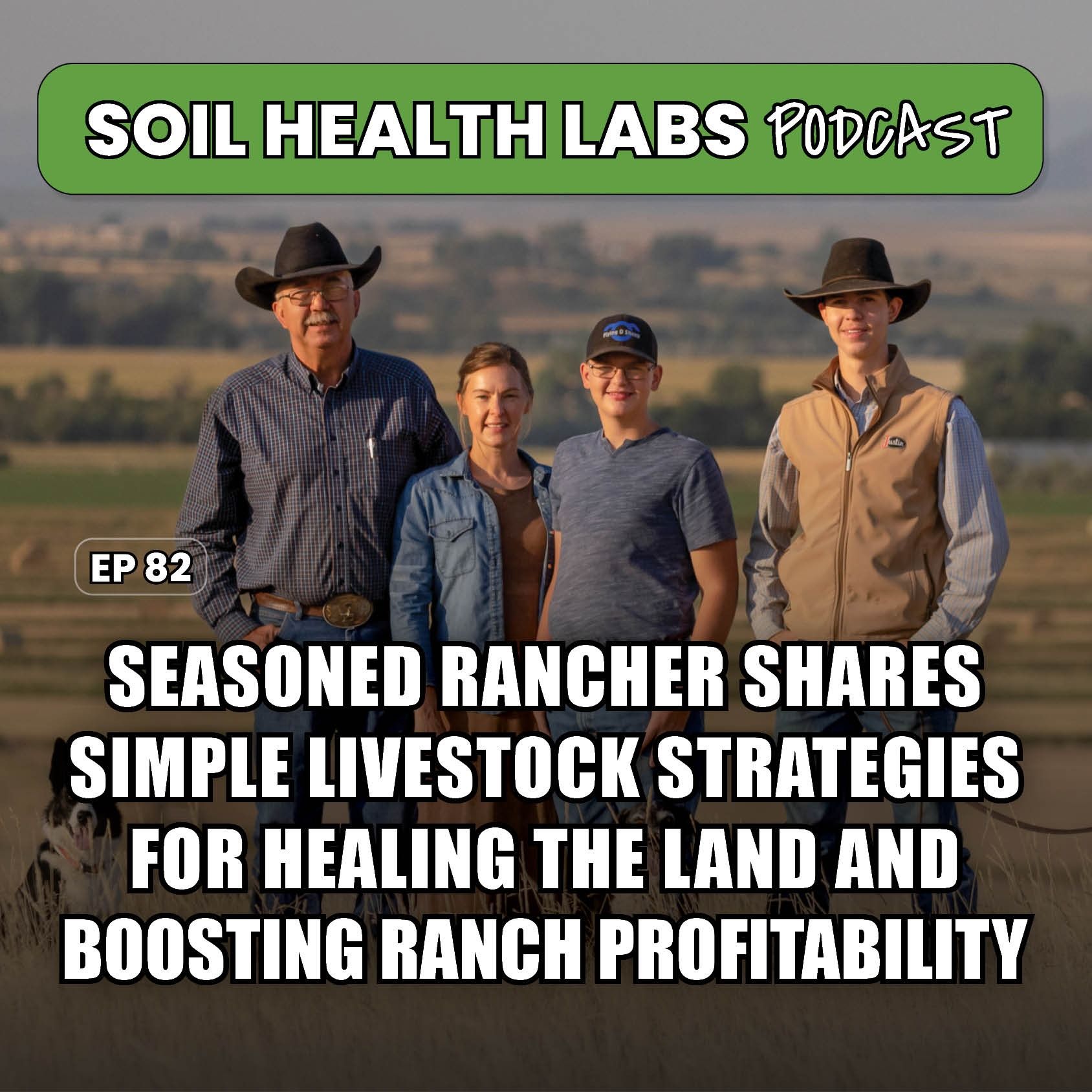
Seasoned Rancher Shares Simple Livestock Strategies For Healing the Land and Boosting Ranch Profitability
from Soil Health Labs · host Soil Health Labs
🧲 Quotable Quotes“You can’t graze a landscape unless you understand what that landscape wants to be.” — Dave Ollila“We’ve got a chance to tell a story—to show that red meat can come from stewardship, not just consumption.” — Dave Ollila“The biology in the rumen is the same biology in the soil. That’s no accident. That’s design.” — Dave Ollila👩🌾 About our GuestDave Ollila is a seasoned rancher and agricultural educator in Butte County, South Dakota. With a career spanning over 25 years, he has made significant contributions to sustainable livestock management, particularly in multi-species grazing and soil health.Dave’s great-grandfather immigrated from Finland and homesteaded in Butte County in 1916. Dave and his wife, Holly, continue this legacy by raising sheep and cattle on the same land, emphasizing practices that align with the region's semi-arid conditions (South Dakota Magazine.)Professionally, Ollila served as the South Dakota State University (SDSU) Extension Sheep Field Specialist until his retirement in February 2020. He then joined the South Dakota Soil Health Coalition (SDSHC) as a Soil Health Technician, focusing on assisting producers in western South Dakota with soil health consultations (South Dakota Soil Health Coalition).🌾 In this EpisodeIn this deeply engaging conversation, Dave Ollila shares hard-won wisdom from decades of grazing and ranching in western South Dakota. We dive into the ecology of the prairie, how sheep and cattle mimic native herbivores, and how integrating multiple species—and technologies—can regenerate landscapes, boost ranch income, and reconnect producers to the land’s natural rhythms.🐑 Topics CoveredWhy context matters in livestock integrationEastern SD = tallgrass prairie; Western SD = shortgrass prairieMatching livestock species (e.g., sheep vs. cattle) to land, rainfall, and forage typeMulti-species grazing as ecological mimicryCattle as analogs to bison: bulk grazers of coarse grassSheep and goats as browsers akin to deer and elkBetter soil biology and insect/bird diversity through livestock diversityVirtual fencing in practiceUsing “No Fence” GPS collars to control small ruminantsHow virtual fences help manage weed outbreaks and reduce fencing costsCurrent limitations: signal strength, battery life, and trainingTraining livestock to graze invasive speciesHow sheep learn to consume Dalmatian toadflax through experienceLessons from Dave's cooperative research with BLM and insights from the Targeted Grazing ManualBenefits of sheep in dry countrySheep’s ability to thrive on snow as a water sourceTheir lower infrastructure needs and suitability for women and youthIncome diversity through meat and wool (up to 200% lambing rates)Why we need to educate our "city cousins"Comparing prairie biodiversity to the AmazonUrban lawns, golf courses, and parks can also sequester carbon“We’re not enemies—we’re partners with nature.”📚 Resources Mentioned1. Targeted Grazing 101: Starting and Sustaining a Grazing Service EnterpriseA new handbook from the American Sheep Industry Association (ASI) is available for download from SheepUSA.orgAlso supported by the Society for Range Management2. 2006 "Targeted Grazing" ManualComes included with the new supplement (PDF or USB)Research-backed chapters on targeted grazing practices3. Dave Ollila’s 2024 Soil Health Conference TalkCovers virtual fencing with visuals [Watch it on YouTube]4. WWF’s Case Study on Grazing InnovationsFeatures Dave’s work with virtual fencing and multispecies grazing (Read the WWF Vlog here)
Embed this episode
NOW PLAYING
Seasoned Rancher Shares Simple Livestock Strategies For Healing the Land and Boosting Ranch Profitability
No transcript for this episode yet
Similar Episodes
No similar episodes found.
Similar Podcasts
No similar podcasts found.