
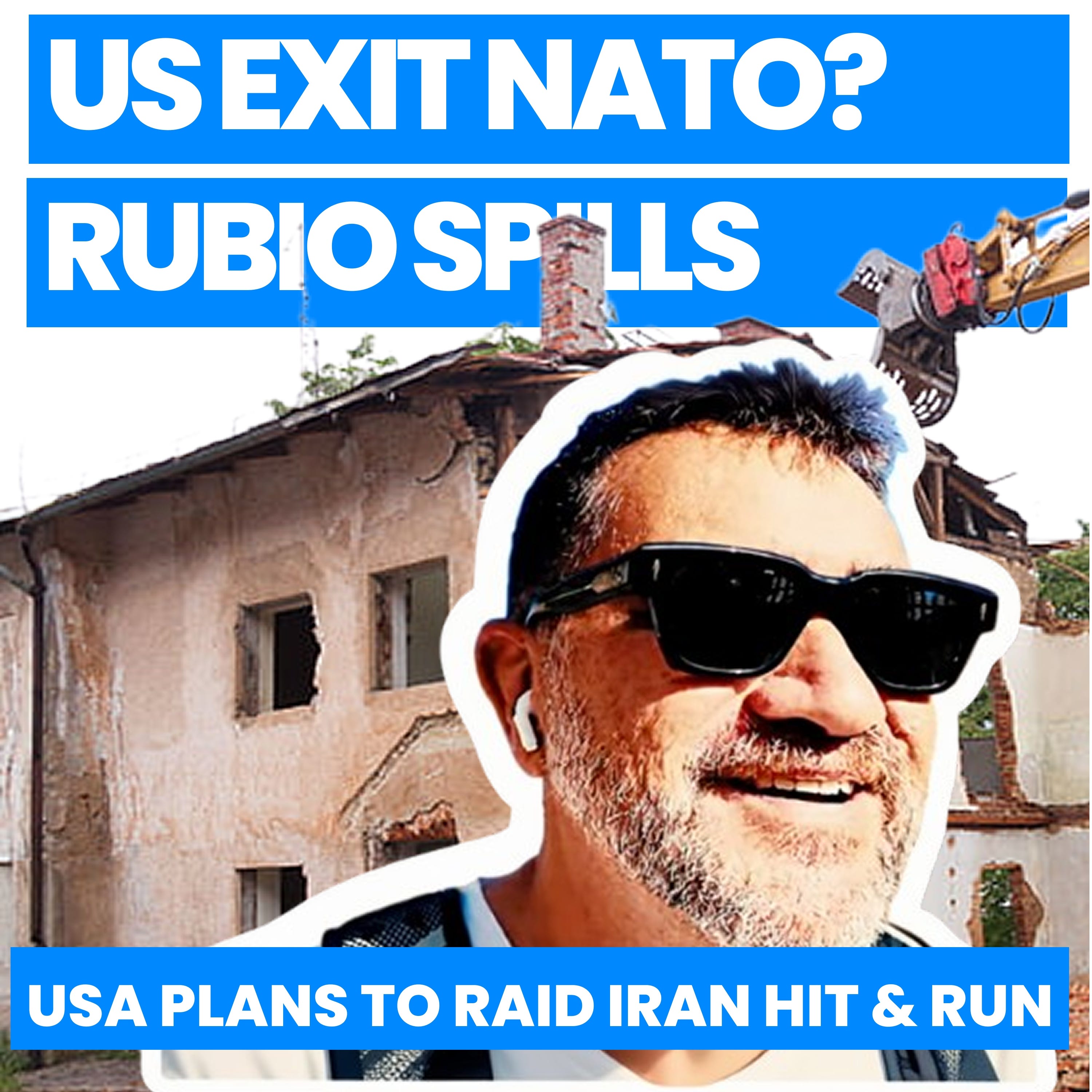
EPISODE · Apr 1, 2026 · 16 MIN
Secretary Rubio’s Blunt Warning on NATO Being a “One-Way Street”
from Dave Talks Global Politics Podcast · host Dave Talks: Politics 🌐
Welcome back, team! In this episode of Dave Talks Politics, hi, I’m Dave, and I’ll be talking politics. Today, team, let’s talk about:Secretary Rubio’s Blunt Warning on NATO Being a “One-Way Street”**1. Rubio’s Statement and What It Actually Means**- Secretary of State Marco Rubio publicly stated that NATO was never just about defending Europe — it was about the US having military bases and infrastructure in Europe for American national security interests.- He said if the alliance now prevents the US from using those bases to defend its own interests, as happened when some allies blocked support for Iran operations, then “it’s a one-way street.”- Rubio added that the US will have to “re-examine” the value of NATO after the current Iran conflict concludes, signalling serious frustration with unequal burden-sharing and the refusal of some European allies to grant base access.- This came after several NATO members, including Spain, denied the US use of airspace and bases for strikes related to the Iran war, highlighting how the alliance can constrain American freedom of action.- Team, this is not casual rhetoric — it’s a senior Trump administration official openly questioning the fundamental bargain that has defined NATO for decades and warning that the current setup no longer serves US interests.**2. Consistency with Trump’s National Security Strategy and Pre-Midterms Timing**- The 2025 Trump National Security Strategy explicitly calls for Europe to take primary responsibility for its own conventional defence while the US focuses on the Western Hemisphere and competition with China.- It emphasises the “Trump Corollary” to the Monroe Doctrine — prioritising US interests in its own backyard over open-ended commitments in Europe and criticising Europe’s past reliance on the US.- With Republicans holding the House, Senate and White House before the midterms, this is the perfect window to pass legislation that locks in changes while they still control all three branches of government.- Rubio’s comments line up directly with this strategy — the US is no longer willing to subsidise European security while being denied the use of European bases when Washington needs them.- My take: The timing is deliberate — acting now with the full trifecta gives the administration maximum leverage to reshape the alliance before any future Democratic Congress or president can easily push back.**3. Laws That Could Be Passed and Bills Already on the Docket**- Congress could pass provisions in the annual National Defense Authorization Act (NDAA) to cap or phase out US funding for NATO infrastructure, limit troop deployments, and require congressional approval for any new base usage commitments.- Funding bills could redirect money away from European command and toward Indo-Pacific or Hemisphere priorities, while also authorising base closures or equipment withdrawals that are expensive and slow to reverse.- There are already bills circulating in committee that would mandate higher European defence spending thresholds as a condition for continued US support and intelligence sharing — these could be fast-tracked pre-midterms.- A future government could try to redirect spending to reverse changes, but once bases are closed, equipment is shipped home, and personnel are reassigned, rebuilding the infrastructure would take years and face massive budgetary and political hurdles.- Team, structural changes passed now — such as defunding 90%+ of non-essential contributions, pulling back non-essential staff and equipment, and limiting intelligence sharing to only what directly serves American interests — would create facts on the ground that are very hard for any future administration to unwind quickly.**4. Elbridge Colby’s Vision for a More Limited US Role**- Elbridge Colby, the influential former Pentagon official and architect of the 2018 National Defense Strategy, has long advocated for a more limited and conditional US role in NATO.- He argues Europe must handle its own conventional defence against Russia while the US focuses on high-end capabilities like nuclear deterrence, air and naval power, intelligence and long-range strike — not large standing ground forces or unlimited base access.- Colby has explicitly said the US should not be expected to provide “blank cheque” conventional support and that NATO 3.0 would see America acting more like a strategic reserve rather than the default first responder.- This would not mean “CIA and radar only” — it would still include substantial US air, naval and nuclear assets — but it would dramatically reduce the day-to-day footprint of American troops and equipment on European soil.- My take: Colby’s thinking aligns perfectly with Rubio’s comments — a more limited role restores US strategic flexibility without abandoning the alliance entirely, forcing Europe to step up while America focuses on higher-priority threats.**5. Timeline, Reversibility, Polymarket Odds and Broader Implications**- Rubio has said the re-examination will happen “after the war concludes,” so any major structural changes are unlikely before the current Iran conflict winds down — probably months rather than weeks, but the pre-midterms window gives real momentum for legislation.- Full US withdrawal from NATO would require Senate approval and is politically and legally complex, making it slow and difficult to reverse once started, while partial reductions in funding and presence could be locked in through annual budget acts.- Polymarket traders currently price only about 11% chance that the US withdraws from NATO before 2027 and around 9% chance that NATO dissolves before 2027, reflecting low odds of a sudden break but growing scepticism about the alliance’s long-term value under this administration.- The administration could make reversal harder by reducing funding, closing bases, withdrawing equipment and limiting exercises and intelligence-sharing now, creating facts on the ground that future administrations would struggle to undo quickly.- Forward realism: This is not about abandoning allies overnight — it’s about ending a one-way street and forcing a more balanced partnership that actually serves American interests in a multipolar world, with the current trifecta giving the best chance to make those changes stick.I hope you enjoyed this show today team. The main show, and snack sized supercuts are available on yt, plus apple and Spotify as a podcast and show notes on substack; come join the team it’s free and gets you instantly connected to what’s happening. Help me grow with a like and subscribe and wherever you are team in this wonderful world of ours, I hope, you have, a wonderful day.Talk soon! This is a public episode. If you would like to discuss this with other subscribers or get access to bonus episodes, visit wgowbrics.substack.com
Embed this episode
NOW PLAYING
Secretary Rubio’s Blunt Warning on NATO Being a “One-Way Street”
No transcript for this episode yet
Similar Episodes
No similar episodes found.
Similar Podcasts
No similar podcasts found.