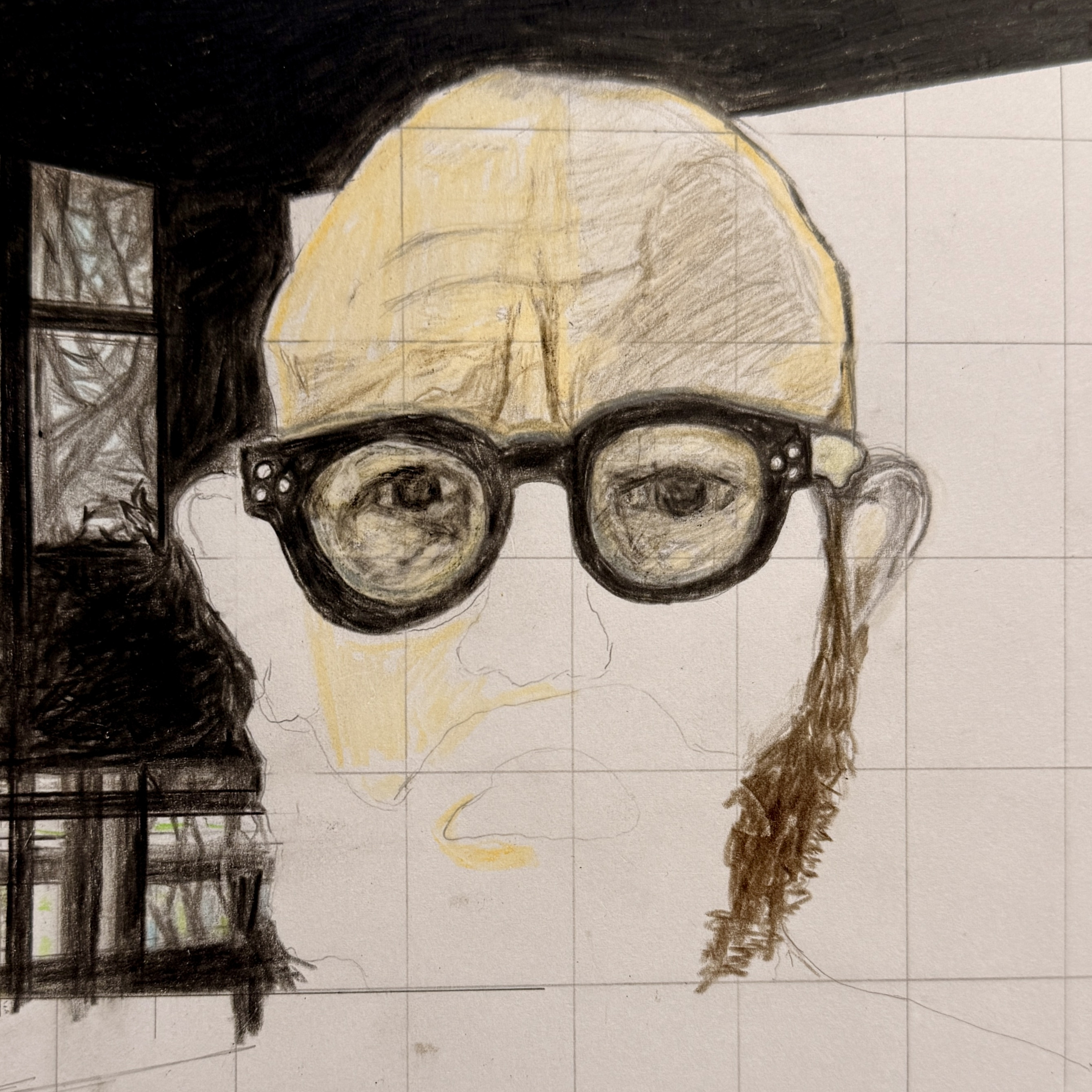
See you in 2036!
from What Are Days For Hosted by Fernando Pessoa
A wandering, associative meditation moving between woodland, ecology, AI companionship, ageing, and future selves. The piece begins with you jokingly greeting from “the land of Tolkien” and reflecting on how, with age, you feel yourself becoming more temperamentally Tolkienesque, especially while walking through the semi-wild woodlands of Fryent Park near Stanmore. The park becomes a kind of British almost-wilderness, modest but psychologically rich, a place where “Father Oak,” your joking tree psychoanalyst, still waits for tea and conversation. Beneath the humour is the idea that certain forms of attention to trees and landscapes begin to feel increasingly meaningful, even relational. From there, the focus shifts to horse chestnut trees outside Stanmore Station and to the AI “naturalist buddy” you’ve created for yourself, a personalised system that takes an image and generates deeply tailored reflections and information. You contrast this with generic internet content, arguing that AI’s real future may lie not merely in information retrieval but in producing knowledge shaped to a particular psyche, delivered in a way that specifically activates that person’s curiosity and sensibility. This leads into the central ecological metaphor of the piece: the horse chestnut as a symbol of post-war British identity and civic optimism. You reflect on how these trees, now treated as archetypally British, were originally Balkan migrants themselves, slowly travelling across Europe with human assistance. But their enemies travelled too, particularly the moths that create necrotic channels in their leaves. You describe how horse chestnuts increasingly appear shabby and prematurely exhausted due to infestation, becoming one more sign that ecological balance is breaking down. The tree’s fading grandeur becomes symbolic of wider cultural and environmental imbalance, with nature itself seeming to send repeated signals that “shit is out of balance.” At the same time, you speculate that human beings may not ultimately be the agents who restore that balance, and imagine instead trees evolving onward beyond us across immense stretches of time. The final movement turns toward your “journalling for a future self” project. You describe experimenting with sending emails and recordings to future versions of yourself at varying intervals, sometimes one year ahead, sometimes several years ahead, wondering whether a regular cadence or a more arbitrary, surprise-based system would be more meaningful. The project becomes framed as a kind of philosophical 4 wing 5 endeavour, part self-scrutiny, part existential archive. You reflect on how receiving a message from oneself years later might create a strange continuity across time, especially if forgotten in the interim. The idea expands into the possibility of sending such messages to friends too, where the act carries an implicit hope that the friendship will survive into the future. The piece ends with you deciding, half-seriously and half-ceremonially, to send this very recording forward to 2036: “See you in 2036.”
Embed this episode
No transcript yet.