
EPISODE · Sep 8, 2026 · 12 MIN
SEMA (Kampala, Uganda)
from On the Ground · host LONG FEI
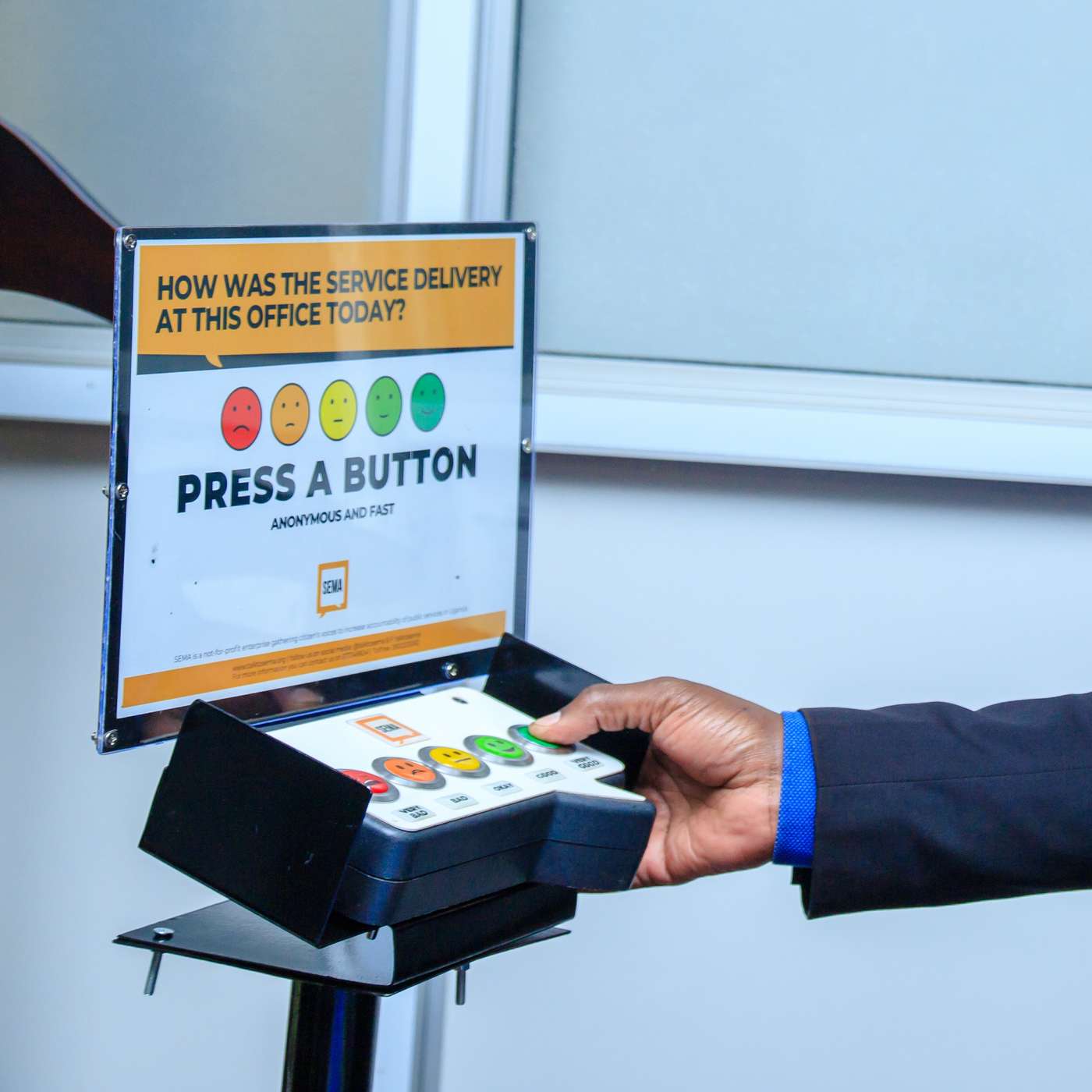
In March 2018, Nathalie Dijkman, a Dutch criminologist, founded SEMA — "speak up" in Swahili — in Kampala, Uganda. She had previously worked as an East Africa program coordinator at a legal-innovation organization in The Hague, and her research kept her based in Uganda for long stretches. She found that a 2019 Transparency International survey showed nearly half of Ugandans who had used a public service said they'd paid a bribe to get it done, with the police widely seen as the worst offender — while Uganda's more than forty languages meant many citizens couldn't read or write and didn't own a smartphone, so the people who depended on public services the most had never had their real experience of them systematically collected. SEMA's response was to turn a feedback terminal into a physical device — a button painted with five faces — paired with a free USSD number, and place it at the exits of police stations, hospitals, and town halls, so that people who can't write, don't have a phone, or don't want to speak out loud could still be heard. What actually made the devices work was the "watchdog effect": SEMA issues a monthly report backed by evidence and created an "Office of the Year" award, pushing public servants to improve their conduct on their own; in 2019 alone SEMA received more than 32,000 pieces of feedback (including over 20,000 button ratings and more than 10,000 face-to-face interviews), and at one police station in Kampala, the rate of bribe demands fell from 25 percent to 5 percent over seven months. Beyond monthly reports and Barazas (community gatherings), SEMA has kept pushing for more structural dialogue: in 2020 it tried "dialogue brokers" and "dialogue events" to put trend reports directly in front of police headquarters and senior officials — while also confirming a hard truth, that it's easy to change behavior on the ground and difficult to change power. Around 2024, SEMA partnered with Sunbird AI, a Kampala-based nonprofit AI lab, to upgrade the face button into voice feedback: citizens can now record a specific complaint in any of Uganda's forty-plus languages, which is transcribed, translated, and anonymized by Sunflower — an open-source model Sunbird AI released in October 2025 that supports 31 Ugandan languages and is currently the strongest translation model for 24 of them — before it reaches an office; the pilot is now live at Kasangati Health Center and the Old Kampala police station. SEMA's website says it has collected more than 80,000 pieces of citizen feedback to date and is now listening to "hundreds of thousands" of voices, with a vision that by 2030, the most commonly used public services across East Africa will all be built on citizen feedback.
Embed this episode
Ready to play
SEMA (Kampala, Uganda)
No transcript for this episode yet
Similar Episodes
No similar episodes found.