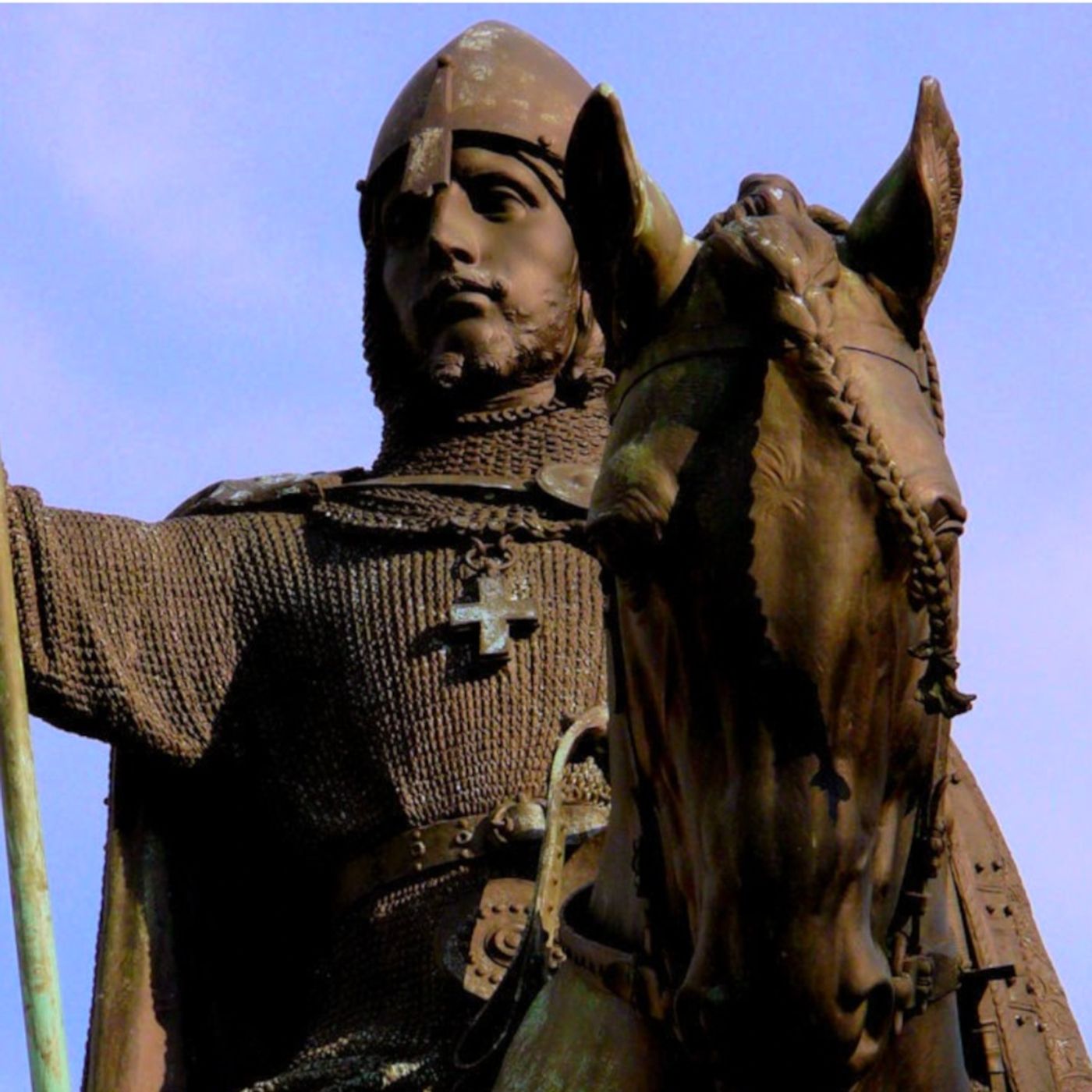
September 28: Saint Wenceslaus, Martyr
from Catholic Saints & Feasts Hosted by Fr. Michael Black
September 28: Saint Wenceslaus, Martyr c. 907–929 Optional Memorial; Liturgical Color: Red Patron Saint of the Czech Republic and Slovakia A young duke is killed by a jealous brother and becomes a Czech icon When the famous die young, their unwrinkled faces, dark hair, and youthful vigor are frozen in time, forever vital, forever attractive, forever fresh. Time is not given its chance to run over their skin like water over rocks. No shaping, cracking, molding or shifting of the surfaces. Before the modern cult of celebrity held up athletes, movie stars, and musicians for supreme adulation, most cultures revered their royalty, soldiers, or holy men and women. Kings and princes, bishops and saints, chiefs and warriors served the common good by governing, praying for, and protecting the people. No class of entertainers distracted a populace from the leadership that mattered. Today’s saint, Wenceslaus, Duke of Bohemia, was felled in a fateful encounter with his brother Boleslaus the Cruel. Wenceslaus was already famous when he died young and dramatically. All the ingredients needed to guarantee a lasting legacy were present, and his memory endured. He was recognized by the Church as a martyr, posthumously given the title of King, and quickly became an iconic figure to the Bohemian people such that his Feast Day, September 28, is a national holiday in the modern Czech Republic. Wenceslaus lived as Christianity was still dawning in Central Europe. German missionaries had been laboring among pagan tribes for a few generations with success, but the visible layer of a Christian culture rested on a rock-hard pagan substrata. Central and Eastern Europe were passing through the normal stages of evangelization, as an age-old culture with all of its customs and traditions was slowly pushed back by a greater force moving across the landscape like a glacier. Catholicism had moved into Bohemia by the 900s, but the religious environment was not yet monolithic. As our martyr’s death attests, religious and political divisions still ran through the culture. The grandfather of Wenceslaus may have been converted by no less than Saints Cyril and Methodius themselves. His grandmother Ludmila was an ardent Catholic and oversaw Wenceslaus’ excellent education in which he learned to read and write both Slavonic and Latin. Wenceslaus’ mother, Drahomira, clung to the old ways, though she was nominally a Christian. When Drahomira thought Ludmila was encouraging Wenceslaus to assume power as a teen, Drahomira had her mother-in-law strangled to death with her own veil. Once he did take power, Wenceslaus banished his own mother, solidified control of Western Bohemia, and became an honorable ruler. He followed the law, favored education, and promoted the form of Christianity practiced in Germany, not in the East. This was a fateful decision. Poland, the Czech Republic, and Slovakia are Slavic peoples of the Latin Rite, unlike their Byzantine Rite Slavic cousins to the east of the Orthodox curtain. Wenceslaus was pro-Western theologically and liturgically, while retaining his Slavic identity and independence in other essential matters. This double allegiance endures and lends Slavic Catholicism its unique features. But for all of Wenceslaus’ brief successes, in the shadows lurked Boleslaus, creating a power center in Eastern Bohemia. When Wenceslaus’ wife gave birth to a son, Boleslaus knew he would not succeed his brother, so he plotted his murder. Boleslaus and his henchman struck down the young Duke Wenceslaus in 929 on the Feast of Saints Cosmas and Damian and on the Vigil of Saint Michael the Archangel. “Brother, may God forgive you” were our martyr’s last words. Saint Wenceslaus, you were the model of a just ruler in your brief reign. You saw it as your sacred duty to promote the true God and His religion. Help all rulers and leaders to see morality, liturgy, prayer, and catechesis as the bedrock of a just society.
Embed this episode
No transcript yet.