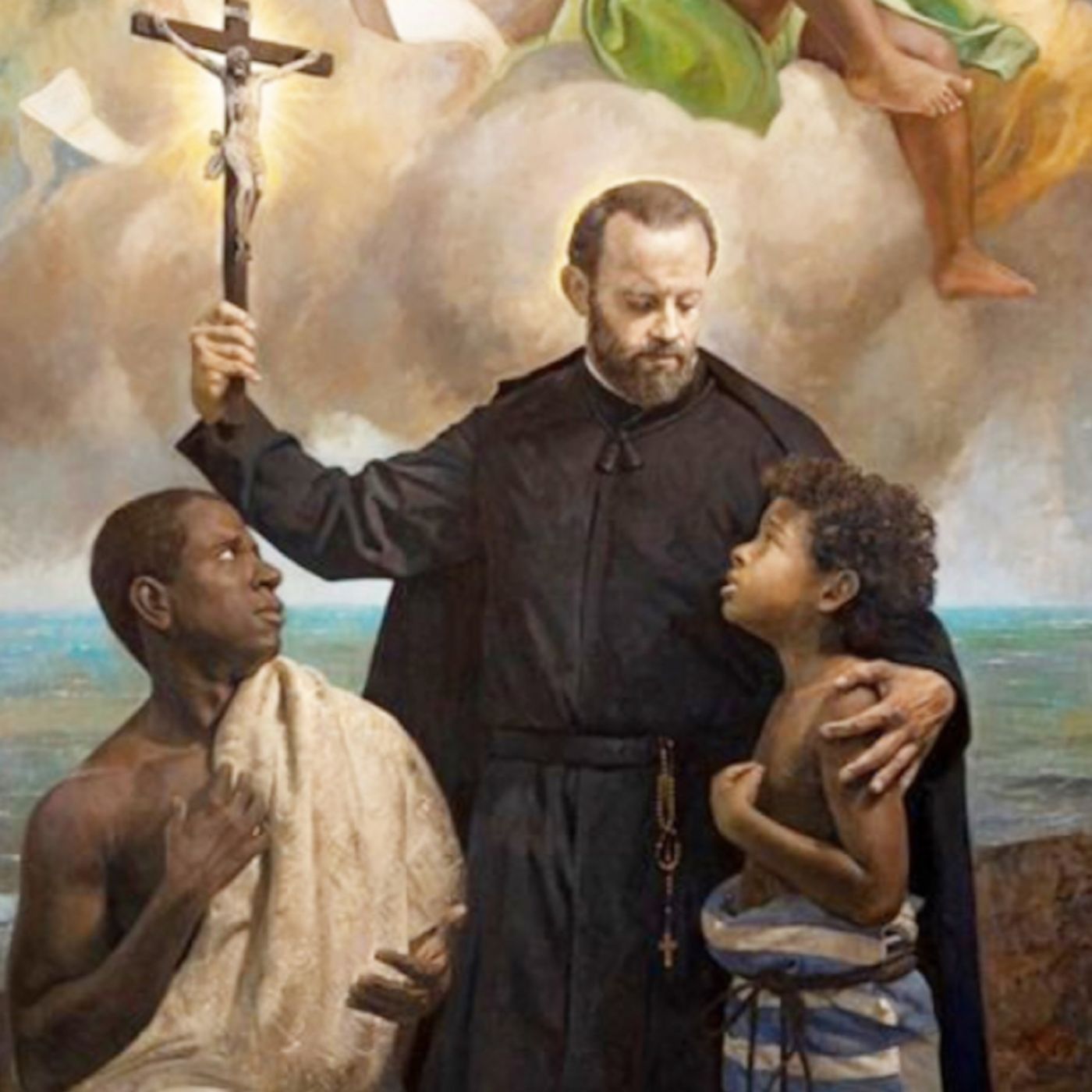
September 9: Saint Peter Claver, Priest (U.S.A.)
from Catholic Saints & Feasts Hosted by Fr. Michael Black
September 9: Saint Peter Claver, Priest (U.S.A.) 1580–1654 Memorial; Liturgical Color: White Patron Saint of slaves, Colombia, seafarers, and missionaries to Africa A builder of the Spanish Bridge, he personified respect for human rights It is commonly taught that human rights were born in the Anglo-Saxon Enlightenment of the seventeenth and eighteenth centuries. This thesis holds that non-Catholic, nominally Christian intellectuals, including the founders of the United States, were the first generation of thinkers to philosophically articulate, and legally protect, man’s inherent, universal human rights. And, this train of thought concludes, these steps forward were possible only after the heavy chains of traditional Christianity fell to the ground. In other words, human rights were the obverse of Catholicism. As the shadow of the Church and its archaic teachings receded, the theory goes, the inherent dignity of individual man moved into the light. The problem with this thesis is twofold: first, it ignores one thousand seven hundred years of history; second, most Enlightenment thinkers owned other human beings just like they owned cows, or at least depended on the services of slaves or took advantage of slave women. Today’s saint was among numerous Spanish priests, nuns, and lay men and women who built the Spanish Bridge from the Old World to the New. They knew what Jesus taught. They internalized the content of the papal encyclicals condemning the indignity and immorality of slavery. They battled over human rights in royal courts, they risked life and limb confronting their own unscrupulous countrymen in the fields and ports of New Spain, and they sacrificed their personal health to care for slaves. Their intellectual advocacy for, and practical living out of, human rights is the true source of the Western world’s embrace of human rights, not those few Anglo-Saxon intellectuals whose culture raised them to despise a broader tradition of which they were ignorant. A converted former slave owner and fellow Spanish priest named Bartolomé de las Casas laid the intellectual groundwork for people like Peter Claver, today’s saint. Claver practiced, in flesh and blood, what Las Casas had taught a few generations before him. Peter Claver lived human rights. He cared for actual persons at great cost to his own health. He did not write books like Las Casas or just give lip service to human dignity like many colonists. He implemented Catholic social teaching for over forty years, universalizing the concept of neighbor to include everyone, because everyone is made in God’s image and likeness. He epitomized the sweet and sacrificial love of the Gospel of Jesus Christ. Saint Peter Claver was from the region around Barcelona, Spain. He joined the Jesuits and requested to serve in the American missions. Like so many saints, when he left for God, he left for good. He never returned to friends and family in Spain. He was ordained a priest in the port city of Cartagena, Colombia, in 1615, and immediately and from then on dedicated himself to the physical and spiritual care of African slaves. But he didn’t just care for them in the fields or plantations of Colombia. He met every slave ship he possibly could as soon as it dropped anchor in port. Using interpreters, he greeted the traumatized chained men and women with fresh water, ripe fruit, bandages, perfumes, food, medicine, lemons, a broad smile and charitable caresses. When weather prohibited seafaring and he didn’t have to be in port, Peter instructed and baptized whatever slaves were open to it. He baptized more than forty thousand souls. It is said that Saint Peter Claver lost his senses of taste and smell due to his long years of breathing obnoxious odors. He called himself the slave of the slaves. He also labored among the Spanish slave traders, attempting to convert them from their evil ways. When visiting his fellow Spaniards, he did not stay with them but in their often rancid slave quarters. This apostle of Cartagena died forgotten, alone, and poor. He was canonized in 1888. Saint Peter Claver, you worked among the most traumatized and destitute populations of your time, caring for slaves, because they were made in the image and likeness of God. Help us to understand, protect, and exalt the inherent dignity of every human person, just like you did.
Embed this episode
No transcript yet.