
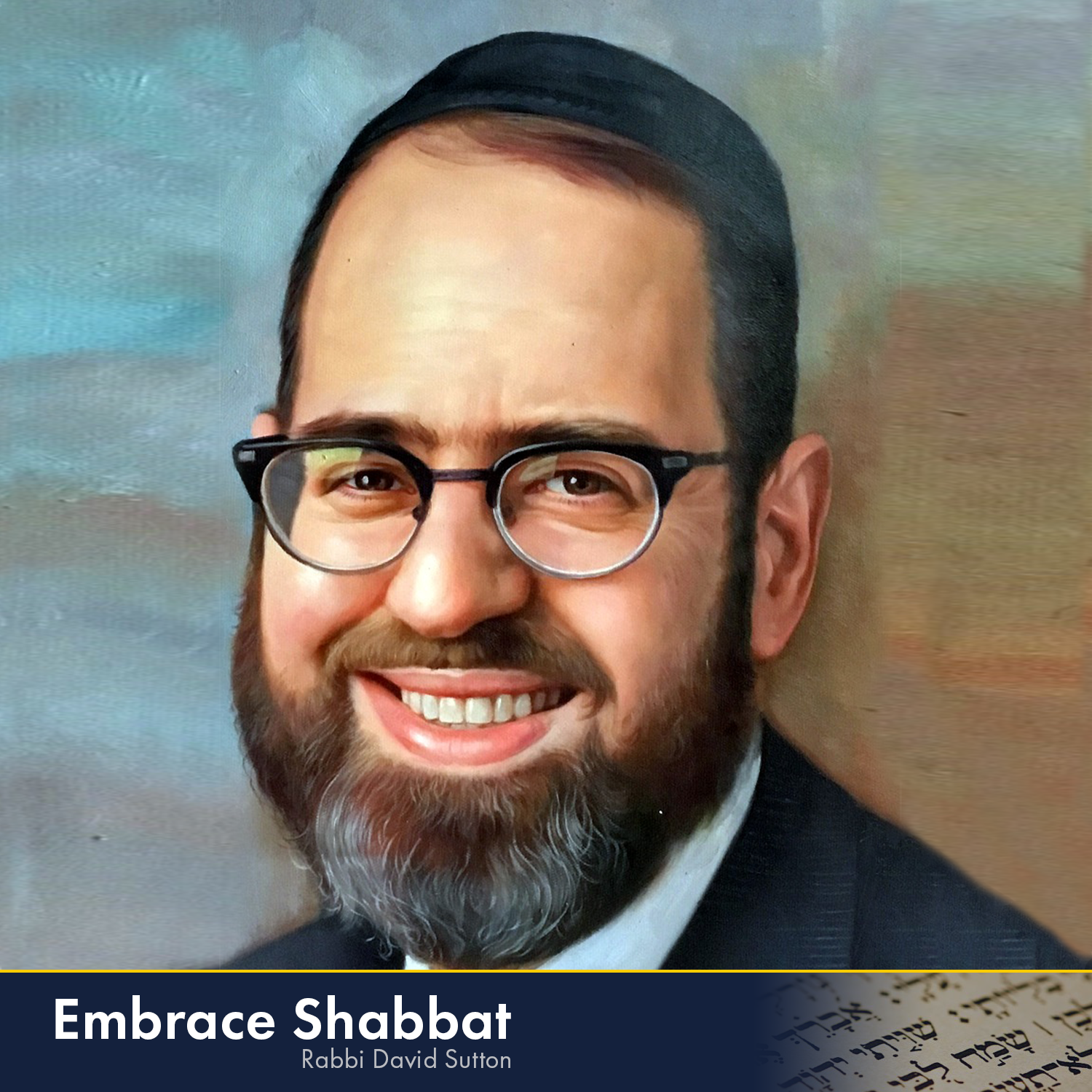
EPISODE · Jun 30, 2023
Shabbat and 100 Blessings
from Embrace Shabbat · host Rabbi David Sutton
Welcome to Embrace Shabbat. In his commentary on Parshas Lech Lecha (14:19), the Baal HaTurim teaches that there are seven pesukim in the Torah that speak about brachos to HaKadosh Baruch Hu. These seven pesukim correspond to the seven brachos recited in the amida on Shabbos and the yamim tovim. They are also comprised of 100 words, which correspond to the 100 blessings that we recite each day. What is interesting is that during the week, the majority of the daily 100 blessings comes from the amida . Each amida has 19 blessings, and when recited three times a day, it completes over half of the daily amount. However, on Shabbat, there are only seven blessings in the amida, falling quite short of the recommended 100 daily brachot . While mussaf adds an additional five blessings, there are still around 30 missing brachot . It is interesting that, when commenting on the pesukim blessing HaKadosh Baruch Hu, the Baal HaTurim specifically points out that there are only seven brachot in the amida on Shabbat and Yom Tov. How can a person fulfill the recommendation to recite 100 blessings on those days? The Rabanim teach that a person is supposed to eat extra on Shabbat, and this is what helps to make up the extra brachot. A person is supposed to have fruit, delicacies, dessert, and the like in order to reach 100 brachot . Both Ashkenazim and Sefardim mention the 100 daily brachot in their pizmonim on Shabbat. In the zemer kol mekadesh shivii, the Ashkenaim recite סוֹעֲדִים בּוֹ לְבָרֵךְ שָׁלשׁ פְּעָמִים , we eat on it to make blessings three times. The Sefer HaTadir explains that the reason we have seudat shelishit is in order to make more brachot. In the pizmon אליו מי הקשה וישלם (written by the Ibn Ezra), the Sefardim also stress completing the 100 brachot and mention that in their zechut , we will merit Olam Haba. What is the difference between the 100 blessings on Shabbat, which are fulfilled through extra eating, and the 100 blessings of the weekday, which are fulfilled through our prayers? The sefer Yoma D’Nishmata explains that the purpose of our long 19-blessing amida during the week is to come to the realization that all of our work and activities come from HaKadosh Baruch Hu. We bless Him and recognize that our efforts are merely hishtadlut, and Hashem bestows the blessings upon us. Shabbat is m’ein Olam Haba, and therefore we just eat and praise HaKadosh Baruch Hu. It is for this reason that the Ibn Ezra connects Olam Haba to the 100 brachot in his piyut. Olam Haba is a time when we will be able to simply “eat”, “drink”, and appreciate HaKadosh Baruch Hu. Our fulfillment of reciting 100 brachot during the week and on Shabbat reflects these two approaches. During the week, our lengthy amida mentions our specific needs and our recognition that Hashem takes care of us through our work and activities. But on Shabbat, there are only seven brachot, because the amida emphasizes the hashkafot of creation, Matan Torah, and Mashiach; there is a completely different focus. Our connection to HaKadosh Baruch Hu on Shabbat, like Olam Haba, comes about through eating and drinking. Consequently, it is the extra brachot on food and drink that help comprise the daily 100 blessings. The sefer Yoma d’Nishmita concludes that this is why the seven pessukim that correspond to the seven brachot of the amida also hint to the 100 daily blessings. Further, it explains the Chazal that teaches that if someone accidentally recites the weekday amida on Shabbat, it is not a good sign. The entire essence of the tefillah is different; one is a humbling, requesting tefillah and the other a reminder of the hashkafot on Shabbat. Have a wonderful day.
What this episode covers
Weekly Shabbat thoughts with Rabbi David Sutton
NOW PLAYING
Shabbat and 100 Blessings
No transcript for this episode yet
Similar Episodes
Jun 1, 2025 ·89m
Apr 6, 2025 ·110m
Mar 31, 2025 ·11m
Mar 23, 2025 ·87m
Mar 16, 2025 ·55m
Mar 9, 2025 ·90m