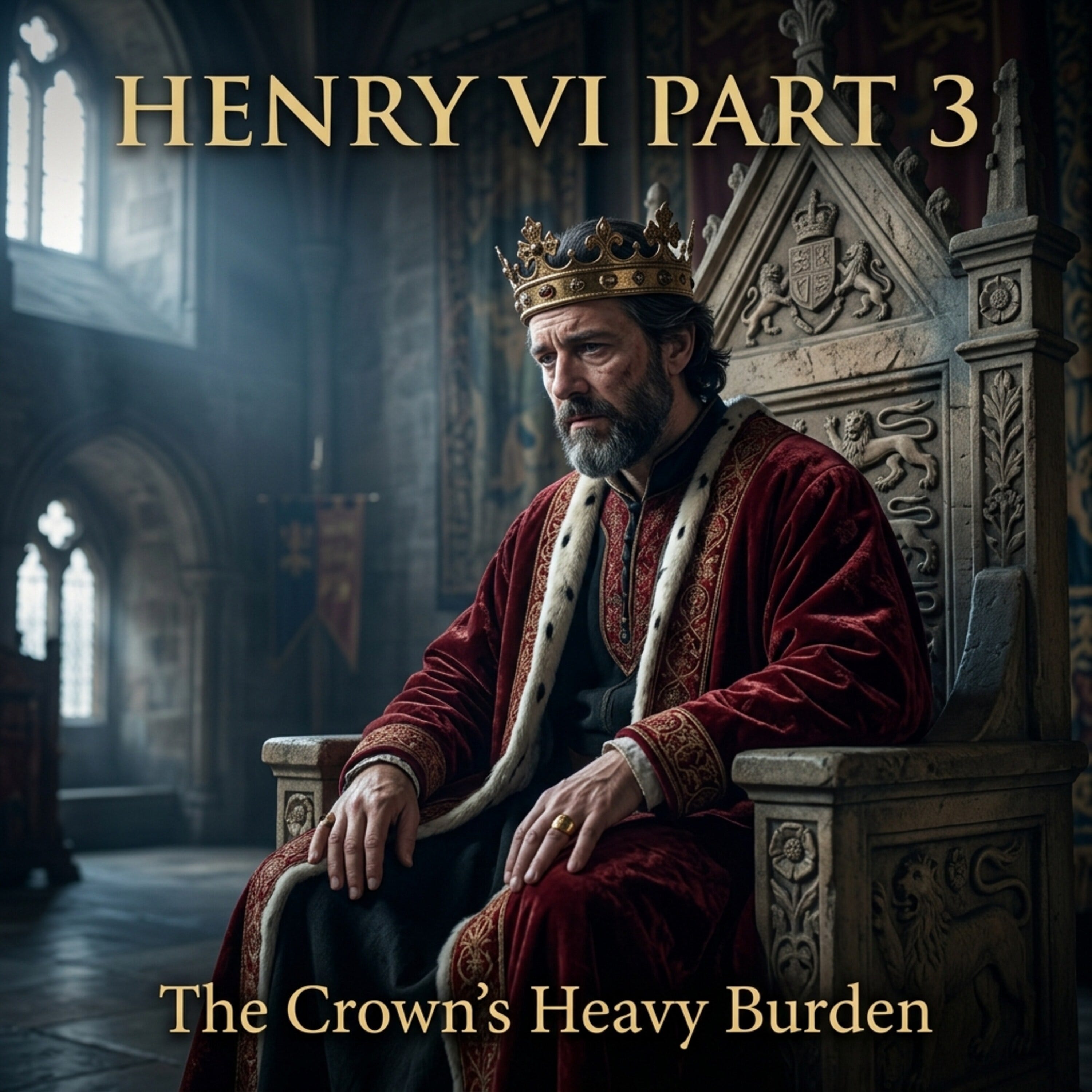
Shakespeare, Henry VI, Part 3
from Wisdom for the Present: Western Wisdom Literature Hosted by Kanu Emeruwa
Can a 15th-century bloody civil war teach us how to navigate our modern hyperpolarized world? In this episode of Wisdom for the Present, we dive into William Shakespeare’s Henry VI, Part 3, using the sharp, timeless lens of 19th-century literary critic William Hazlitt to dismantle the illusion of neat historical timelines of “good guys” versus “bad guys”. We explore how the brutal historical power struggles of the Wars of the Roses mirror the psychological warfare we experience in our modern corporate boardrooms, toxic workplaces, and fractured political landscapes. Ultimately, this tragic play challenges us to confront our own internal struggles with ambition, passivity, and the relentless pressure to pick an ideological side in an increasingly divided world. At the heart of the play is what Hazlitt calls a “perfect bear garden”—a visceral, unnatural arena of blood sports and absolute slaughter where the social fabric is completely shredded. Shakespeare illustrates this devastating reality at the Battle of Towton, where a son discovers he has accidentally killed his own father, followed immediately by another father realizing he has killed his only son. Standing helpless in the midst of this intimate annihilation is King Henry VI, a ruler reduced to a passive spectator of his own kingdom’s destruction. This shocking breakdown of the most fundamental human bonds exposes how systemic conflict strips away our humanity, turning families and societies into transactional meat grinders. This environment breeds a dangerous, highly transactional landscape where loyalties are fluid and egos run rampant, epitomized by the Earl of Warwick, the legendary “kingmaker” who flips sides the moment his pride is bruised. When a system functions like an algorithm, demanding absolute ideological purity and forcing individuals to wear a specific “color” to survive, the institution itself becomes a predator. We see this exact psychological manipulation in modern life, where corporate departments wage quiet wars against one another and family Thanksgiving tables dissolve into battlegrounds over political colors. It forces us to ask: when the system we operate in demands that we treat our neighbor as an enemy combatant, how do we protect ourselves from being consumed by the machinery? As the chaos intensifies and the storm of war rages, logical structures break down under the weight of sheer desperation and tribal bias. We witness Queen Margaret rising to power, delivering a masterclass in crisis resilience with her famous “shipwreck” speech, urging her followers to grab the helm rather than weeping and adding useless tears to the sea. Yet, this survivalist instinct carries a dark side, as Margaret hardens into a terrifying predator who psychologically tortures the Duke of York with a napkin soaked in his young son’s blood. Meanwhile, Richard of Gloucester represents the ultimate apex predator, choosing a path of absolute Machiavellian control as he navigates the “thorny wood” of his own psychological deformity, declaring “I am myself alone” and reducing his own brothers to chess pieces. Reclaiming our agency in such a hostile world requires deep discernment and a refusal to settle for easy, binary defaults. We must learn to walk the high wire between King Henry’s “spineless goodness”—his passive, conflict-averse apathy that throws his loved ones to the wolves—and Richard’s “spine-chilling ambition”. True strength is found not in running away to a pastoral “crown of content” on a literal molehill, but in staying engaged in the messy, confrontational work that leadership demands without losing our moral compass. Shakespeare’s final, provocative image of a dying Henry forgiving his murderer, Richard, forces us to make a profound choice: is grace in a brutal world the ultimate sign of weakness, or is it the most powerful, enduring act of defiance we have? In This Episode * The “Bear Garden” of Conflict: How Shakespeare uses Hazlitt’s description of a historical blood-sport arena to show how unchecked systemic conflict destroys the social fabric. * The Tragedy of Passive Goodness: Why King Henry VI’s conflict-averse, “good-natured” apathy ultimately functions as complicity, abandoning his kingdom to wolves. * The Illusion of the “Crown of Content”: Assessing whether seeking inner peace on a metaphorical molehill is true spiritual enlightenment or an escape from leadership responsibilities. * How Ambition Breeds Monsters: A close look at Queen Margaret’s descent from a protective mother into a ruthless, vengeful “she-wolf”. * The Psychology of the Apex Predator: Analyzing Richard of Gloucester’s terrifying embrace of Machiavellian isolation, declaring “I am myself alone”. * Resilience in the Face of Shipwreck: Unpacking Margaret’s rallying cry to grab the helm and keep course through the rough winds of crisis. * The Ultimate Act of Defiance: Exploring the moral weight of King Henry’s final act of dying forgiveness toward his murderer, challenging our definitions of strength. Practical Reflection Where are you chasing a “crown” at the expense of your own peace, and how can you cultivate inner contentment today without abdicating your responsibilities to those who rely on you? In your professional or personal life, are you operating like Henry—allowing others to walk over those you are supposed to protect because you are terrified of difficult conversations? What is your personal middle ground between Henry’s passive, conflict-avoidant goodness and Richard’s ruthless, zero-sum ambition? Suggested Substack Excerpt In a world that forces us to choose a side, how do we survive without becoming monsters ourselves? Explore the psychological breakdown of Shakespeare’s Henry VI, Part 3 and discover the dangerous cost of passive leadership and the enduring power of active discernment. AI Disclosure This episode was created using Google NotebookLM Audio Overview, based on human-curated source material, structured guidance, and editorial review. AI is used as a tool for clarity and delivery, not as a replacement for thoughtful study or engagement with the original texts. Copyright © 2026 Wisdom for the Present / Kamashcu Production Studios. All rights reserved. This is a public episode. If you would like to discuss this with other subscribers or get access to bonus episodes, visit wisdomforthepresent.substack.com
Embed this episode
No transcript yet.