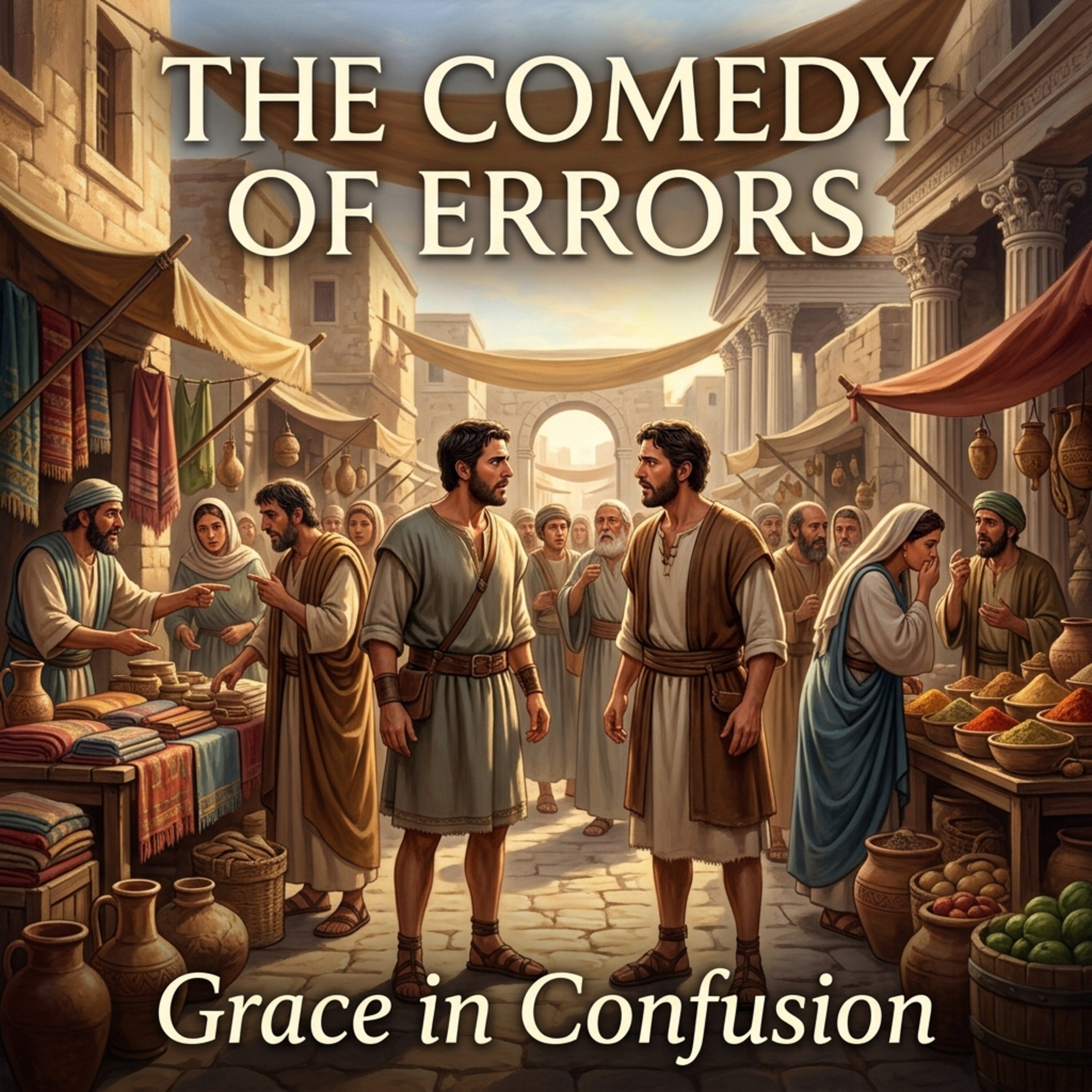
Shakespeare, The Comedy Of Errors
from Wisdom for the Present: Western Wisdom Literature Hosted by Kanu Emeruwa
While William Shakespeare’s The Comedy of Errors is historically celebrated as a fast-paced, physical farce complete with mistaken identities and slamming doors, its lighthearted surface conceals a startlingly accurate mirror for our 21st-century psychological anxieties. Far from being just a series of silly mishaps, the play taps into deeply modern struggles: the fragility of human identity, the agonizing pain of relational isolation, and the desperate, sometimes destructive lengths to which we go in search of genuine connection. In an era where we are technologically hyperconnected yet facing an epidemic of loneliness, this 16th-century narrative offers profound, timeless insights into the modern human condition. The play’s comedic chaos is grounded in an exceptionally dark and bleak opening conflict. We are introduced to Egeon, an old Syracusian merchant who has been completely erased by trauma and stands legally condemned to die by sunset in the hostile city of Ephesus. Ephesus is locked in a lethal, high-stakes geopolitical trade war with Syracuse, and the Duke refuses to bend these rigid bureaucratic laws even when moved by Egeon’s heartbreaking story. This setup establishes a baseline of extreme isolation and systemic rigidity, illustrating how unyielding administrative structures fail to accommodate individual suffering and instead perpetuate human division. Beneath the comical surface lies a profound exploration of character identity and the fragility of the human ego. As Antipholus of Syracuse wanders the hostile city of Ephesus, he expresses a melancholic truth: human identity is not built in isolation, but is deeply and fundamentally relational. The pervasive modern myth of the independent, rugged individual is dismantled by his experience; without our social tethers, our psychological boundaries begin to dissolve, and we lose our sense of self. When these internal tethers break, our defense mechanism is to grip our external environment tightly—as seen in Adriana’s codependent attempt to control her husband, wrapping around him like a vine on an elm, which only pushes him further away and triggers a toxic relational loop. This relational friction reaches a boiling point when a literal and figurative storm splits the characters’ worlds, culminating in a total breakdown of logic. In the chaotic streets of Ephesus, identical faces and names trigger an avalanche of miscommunications, most famously captured in the locked-door scene where a husband is shut out of his own home while his wife dines with his twin brother. Instead of calmly analyzing the missing variables when faced with this confusion, the characters fall victim to a severe confirmation bias. They immediately apply a hostile tone, assume malicious intent, and escalate the conflict—much like a modern text message argument where we yell across digital doors at things the other person never actually said. Reclaiming our agency and mental well-being in a chaotic world requires practicing wisdom with discernment. By adopting the principle of charity in communication, we train ourselves to pause, look past our immediate assumptions, and assume missing context rather than malicious intent. Furthermore, we must actively guard the ‘digestions’ of our relationships by protecting our shared spaces of rest and sweet recreation from constant bickering and toxic stress, which biologically destroy our physical and cognitive health. When we dismantle our rigid, isolated illusions and accept our deep interconnectedness, we allow ourselves to be delivered from our self-imposed exiles and experience a true spiritual rebirth. In This Episode * Beyond the Slapstick: Shakespeare’s shortest and most chaotic farce holds up a deceptive, profound mirror to modern existential and relational anxieties. * Systemic Rigidity vs. Humanity: The Duke of Ephesus illustrates how rigid bureaucratic structures and laws prioritize geopolitical posturing over individual human suffering. * Relational Identity: Through the soliloquy of Antipholus of Syracuse, the play dismantles the myth of the rugged individual, showing that human identity is fundamentally relational. * The Danger of Codependency: Adriana’s “vine and elm” metaphor diagnoses the peril of making another person your sole source of emotional stability, which triggers a vicious cycle of anxiety. * Communication as a Locked Door: The farcical mix-ups serve as a powerful metaphor for relational alienation and how quickly we assume malice instead of missing context when we lack full information. * The Somatic Cost of Stress: Through the Abbess’s diagnosis of “unquiet meals,” the play highlights how chronic relational conflict and toxic environments directly destroy physical and mental health. * Reclaiming the Shadow and Interconnectedness: The climactic meeting of the twins mirrors Jungian shadow integration and Buddhist self-dissolution, leading to spiritual rebirth and family restoration. Practical Reflection In what areas of your life are you currently trying to exert rigid control over your external relationships to compensate for a lack of internal stability? Think of a recent misunderstanding (like a “locked digital door” text argument)—did you assume malicious intent, and how might assuming missing context have changed your reaction? Are your shared spaces of rest and meals filled with “venom clamors,” and what boundaries can you enforce to protect your “sweet recreation” and physical health? Suggested Substack Excerpt Explore how William Shakespeare’s classic farce The Comedy of Errors serves as a startlingly accurate psychological mirror for 21st-century anxieties, offering profound wisdom on relational identity, codependency, and toxic communication loops. AI Disclosure This episode was created using Google NotebookLM Audio Overview, based on human-curated source material, structured guidance, and editorial review. AI is used as a tool for clarity and delivery, not as a replacement for thoughtful study or engagement with the original texts. Copyright © 2026 Wisdom for the Present / Kamashcu Production Studios. All rights reserved. This is a public episode. If you would like to discuss this with other subscribers or get access to bonus episodes, visit wisdomforthepresent.substack.com
Embed this episode
No transcript yet.