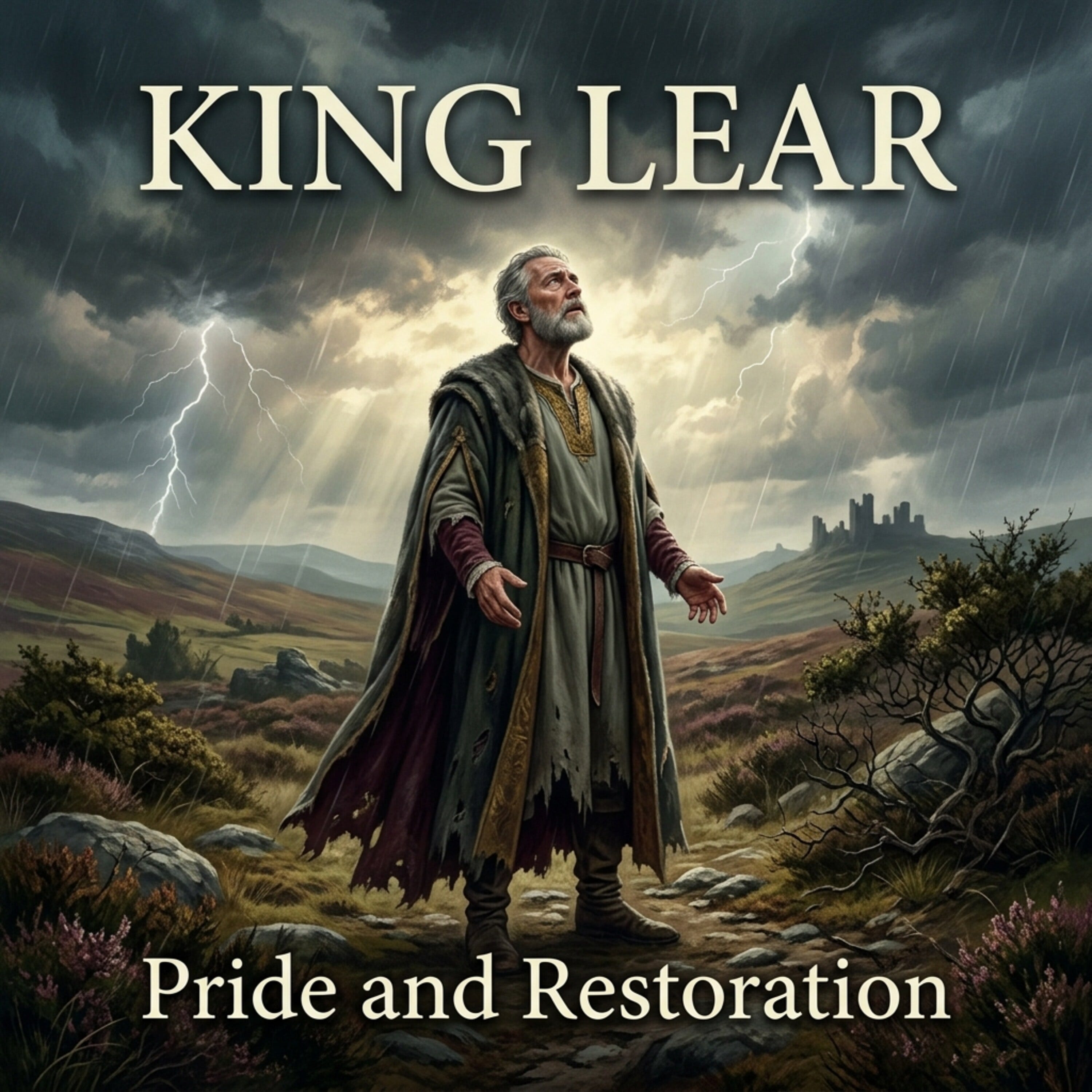
Shakespeare, The Tragedy of King Lear
from Wisdom for the Present: Western Wisdom Literature Hosted by Kanu Emeruwa
--- Imagine spending forty years painstakingly building an absolute empire—holding all the wealth, power, and influence—only to burn it all down in a single ten-minute conversation because one person refused to tell you how brilliant you are . This is the shocking starting point of William Shakespeare’s The Tragedy of King Lear, a 400-year-old masterpiece that acts as a profound mirror for modern psychology and our contemporary struggles with ego . Paired with the sharp, penetrating 19th-century commentary of essayist William Hazlitt, the play forces us to confront the deep-seated mechanisms of our own minds . Why do we crave constant validation, hide from painful realities, and self-sabotage the very structures we worked so hard to protect ? The catalyst for Lear's tragic collapse lies in his decision to abdicate his throne while holding his daughters' inheritance hostage in exchange for performative public flattery . He wishes to retain the name and additions of a king without any of the actual responsibilities, late nights, or difficult decisions—essentially demanding identity without utility . This transactional demand is a classic psychological trap, illustrating how a lifetime of absolute deference can condition the brain to reject any form of friction or disagreement . While his older daughters, Goneril and Reagan, easily weaponize grotesque flattery to secure their shares, Lear's youngest and favorite, Cordelia, completely short-circuits the game by simply responding with 'nothing' . Her quiet refusal to turn genuine affection into transactional currency exposes the fragile house of cards upon which Lear has built his entire sense of self . This dynamic of self-curated echo chambers and outsourced validation is not merely an Elizabethan relic; it is the exact blueprint of our modern daily lives . Just as Lear banishes his loyal advisor Kent for daring to point out his folly, we too systematically avoid the truth-tellers in our lives and surround ourselves with sycophants who validate our worst instincts . The urge to escape cognitive dissonance leads us to eliminate the source of uncomfortable friction rather than engage in the painful work of personal growth . Even when our lives begin to unravel, we employ what the illegitimate son Edmund mocks as the 'excellent foppery of the world'—externalizing our blame to the stars, or in today’s terms, to the social media algorithm, pop-psychology attachment styles, or macroeconomic climates . We desperately search for these modern 'heavenly compulsions' to excuse our very earthly, self-inflicted failures . When Lear's fragile bubble of flattery inevitably explodes, his ungrateful daughters lock him out of their castles, casting him into an apocalyptic storm on the heath . This howling tempest is a physical macrocosm of the psychological chaos occurring within Lear’s own mind as his identity, illusions of control, and anchors to reality are violently severed . Yet, as Hazlitt observes, it is precisely within this harrowing crucible of ego death that Lear's mind, like a buffeted ship, manages to find its true anchor . Stripped of his royal garments and standing freezing in the mud, his madness clears the way for the birth of genuine empathy . For the first time, he looks outward to care for his freezing Fool and the naked beggar, crying out in deep regret for having 'taken too little care of this' during his decades of absolute power . Ultimately, King Lear demands that we reclaim radical agency over our own lives and practice a higher level of discernment . The play warns us against seeking the easy, sanitized 'happy endings'—like the historical Nahum Tate adaptation that rewrote Cordelia’s death to satisfy audiences seeking comfort over consequence . True growth does not come from magically erasing our mistakes, but from accepting unvarnished, quiet reality and surviving the storms of our own making . Furthermore, as Hazlitt's critique of Cordelia's own rigid, stubborn honesty reminds us, delivering truth requires empathy and tact to be truly heard; otherwise, it becomes a blunt instrument that merely triggers defensive walls . By welcoming constructive friction and listening to the quiet, non-transactional 'nothing' of genuine connection, we can build resilient lives grounded in truth rather than fragile kingdoms of vanity . In This Episode * The Fragility of the Outsourced Ego: Demanding public flattery and outsourcing self-worth to others creates a fragile house of cards that collapses at the first sign of friction . * Identity Without Utility: Lear represents the modern executive or family patriarch who demands the titles, prestige, and dopamine of leadership while refusing to carry its actual responsibilities . * The Trap of Cognitive Dissonance: When confronted with uncomfortable truths, the brain naturally seeks to eliminate the source of the truth (banishing Kents) rather than facing the pain of personal growth . * Modern Constellations of Blame: Much like Gloucester blaming the stars for his misfortunes, we frequently use algorithms, pop psychology, or genetics as "heavenly compulsions" to evade personal accountability . * The Strategic Role of the Fool: The court jester served as a psychological safety valve, wrapping brutal, defensive-bypassing truths in absurdity to keep the king connected to reality . * Empathy through Ego Death: It was only after being stripped of his title, standing freezing on the storm-swept heath, that Lear experienced the dismantling of his false self and discovered genuine empathy for the vulnerable . * No Neat Comebacks: True tragedy teaches us that certain actions permanently alter the landscape; growth comes from surviving and being transformed by the consequences of our actions, not from wishing for a tidy rewrite . Practical Reflection Who is the "Kent" in your life—the person who has explicit, unrevoked permission to look you in the eye and tell you that you are making a massive mistake? In what areas of your professional or personal life are you holding onto a "crown"—demanding deference and authority—while secretly avoiding the grinding responsibility that justifies it? When faced with a personal or professional "storm," do you reflexively look upward to externalize the blame (the algorithm, the market, attachment styles), or do you accept radical agency for the surfeit of your own behavior? Suggested Substack Excerpt Using William Shakespeare’s King Lear and the penetrating essays of William Hazlitt as a mirror, this episode dissects how fragile egos, echo chambers, and the evasion of accountability can burn down our empires—and how we can find radical empathy and agency in the ruins. AI Disclosure This episode was created using Google NotebookLM Audio Overview, based on human-curated source material, structured guidance, and editorial review. AI is used as a tool for clarity and delivery, not as a replacement for thoughtful study or engagement with the original texts. Copyright © 2026 Wisdom for the Present / Kamashcu Production Studios. All rights reserved. This is a public episode. If you would like to discuss this with other subscribers or get access to bonus episodes, visit wisdomforthepresent.substack.com
Embed this episode
No transcript yet.