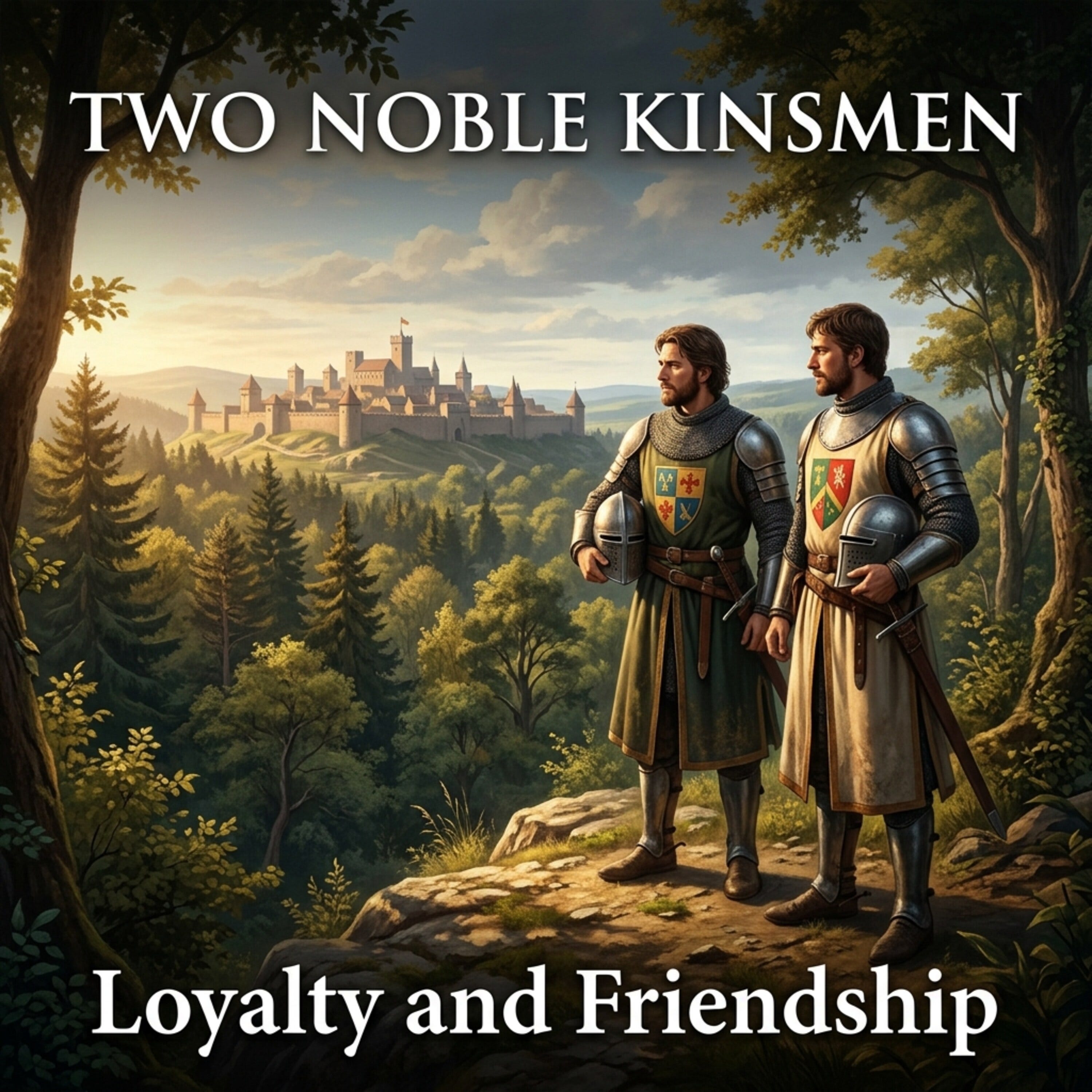
Shakespeare, The Two Noble Kinsmen
from Wisdom for the Present: Western Wisdom Literature Hosted by Kanu Emeruwa
We like to believe that our high-minded morals, deeply held philosophies, and sacred promises are unbreakable bonds forged in iron. But what if those profound agreements are merely situational, waiting for the right trigger to completely dissolve? In this episode of Wisdom for the Present, we journey into the psychologically shattered world of The Two Noble Kinsmen, a fascinating collaboration between William Shakespeare and John Fletcher. This ancient and murky text operates on the exact same psychological hardware as our modern lives, proving that whether we are knights fighting for chivalric glory or professionals navigating toxic corporate boardrooms, the core mechanics of human ego and betrayal remain identical. The narrative begins in the deeply corrupt city of Thebes, a poisoned well ruled by the tyrannical King Creon, who takes credit for everyone else’s labor and treats people as entirely disposable instruments. Our young elite protagonists, the cousins Palamon and Arcite, recognize this systemic toxicity with perfect clarity and plan to walk away to protect their integrity. However, when an external threat of war crashes into their plans, they undergo a massive rationalization. Instead of fleeing, they stay to fight for the very tyrant they despised, demonstrating how easily our primal tribal defense mechanisms override our higher moral reasoning under the comfortable excuse of “loyalty to the team”. After their defeat and imprisonment in Athens, the cousins’ grand, stoic vows of lifelong brotherhood are put to the ultimate test when they spot a young woman, Amelia, picking flowers in the garden below. Instantly, their elevated philosophy is completely hijacked by a primal, biological algorithm driven by resource scarcity and the urge to compete. Their lifelong bond dissolves into venomous hatred because, as the text reveals, lacking the opportunity to express a desire is not the same as mastering it. This “Amelia Test” forces us to confront our own repressed shadow selves and recognize the specific temptations—whether money, promotions, or public recognition—that could bypass our rational minds and shatter our closest alliances. As the primary plot spirals into chivalric madness, the tragic subplot of the jailer’s daughter mirrors this psychological breakdown in its rawest, most visceral form, illustrating the somatic reality of deep emotional trauma as her mind fragments. When the well-meaning but ethically monstrous Renaissance doctor attempts to cure her with a deceptive, behavioral “band-aid,” we see a reflection of our modern tendency to gaslight trauma with quick, superficial fixes rather than confronting the root cause of psychological pain. This chaotic intersection of high-flying poetry and base psychological ruin brings us to William Hazlitt’s profound literary critique of Shakespeare’s doubtful works, teaching us to look past prestigious “brand names” or legacy labels, identify our own confirmation biases, and listen for the authentic, smooth “sweep of the second hand” in the media we consume. The final act of the play culminates in a sanctioned tournament to the death, where Palamon’s physical defeat leads to an astonishing display of amor fati—the active love of one’s fate. Facing the executioner’s block, Palamon reframes his early death not as a tragic cosmic punishment, but as a preventative grace that saves him from the slow physical decay of old age. This superpower of narrative resilience reminds us that when external agency is entirely stripped away, our ultimate freedom lies in how we interpret the outcome. By ending on a vulnerable epilogue where the actors admit their fear of “the hiss” of the audience’s judgment, the play grounds its sweeping themes of war, madness, and stoicism in raw human insecurity, leaving us with the enduring wisdom that the courage to act in a complex world is what truly endures. In This Episode * The Trap of Systemic Corruption: How the city of Thebes serves as a “poisoned well” where evil is given a “good color,” showing how easily systems rebrand unethical behavior to ensure compliance. * The Complicity of “Loyalty to the Team”: Why Palamon and Arcite abandon their plans to flee and instead fight for a tyrant they despise, illustrating the cognitive dissonance and false separations we use in toxic modern workplaces. * The Amelia Test: Understanding how untested philosophical vows easily crumble under resource scarcity and primal biological imperatives when a highly desired trigger appears. * The Shadow Self in Closest Alliances: How repressing our competitive drives under a veneer of nobility leaves us defenseless to sudden betrayals when temptation finally presents itself. * The Somatic Reality of Trauma: Analyzing the tragic descent of the jailer’s daughter, highlighting the undeniable link between psychological trauma and physiological decay. * Spotting the True Master’s Hand: Applying William Hazlitt’s literary criticism to evaluate the fundamental integrity of ideas, learning to look past brand names to find the “smooth sweep” of genuine quality. * Amor Fati and Narrative Resilience: How Palamon’s reframing of his execution teaches us to reclaim narrative control and discover hidden grace within life’s unavoidable defeats. Practical Reflection Where in your professional or social life are you tolerating a toxic environment or an unbounded tyrant under the comfortable excuse of “doing it for the team”? What is the “Amelia” in your closest personal or business partnerships—the specific trigger of money, promotion, or public recognition that could bypass your higher reasoning and shatter your alignment? When you experience a massive, unavoidable defeat or a closed door, how can you reframe the narrative from cosmic punishment to a preventative measure that preserves your agency and dignity? Suggested Substack Excerpt Take a deep dive into the psychologically shattered world of Shakespeare and Fletcher’s The Two Noble Kinsmen, where we explore the fragile veneer of human agreements, systemic complicity, and how to reclaim narrative agency in the face of absolute defeat. AI Disclosure This episode was created using Google NotebookLM Audio Overview, based on human-curated source material, structured guidance, and editorial review. AI is used as a tool for clarity and delivery, not as a replacement for thoughtful study or engagement with the original texts. Copyright © 2026 Wisdom for the Present / Kamashcu Production Studios. All rights reserved. This is a public episode. If you would like to discuss this with other subscribers or get access to bonus episodes, visit wisdomforthepresent.substack.com
Embed this episode
No transcript yet.