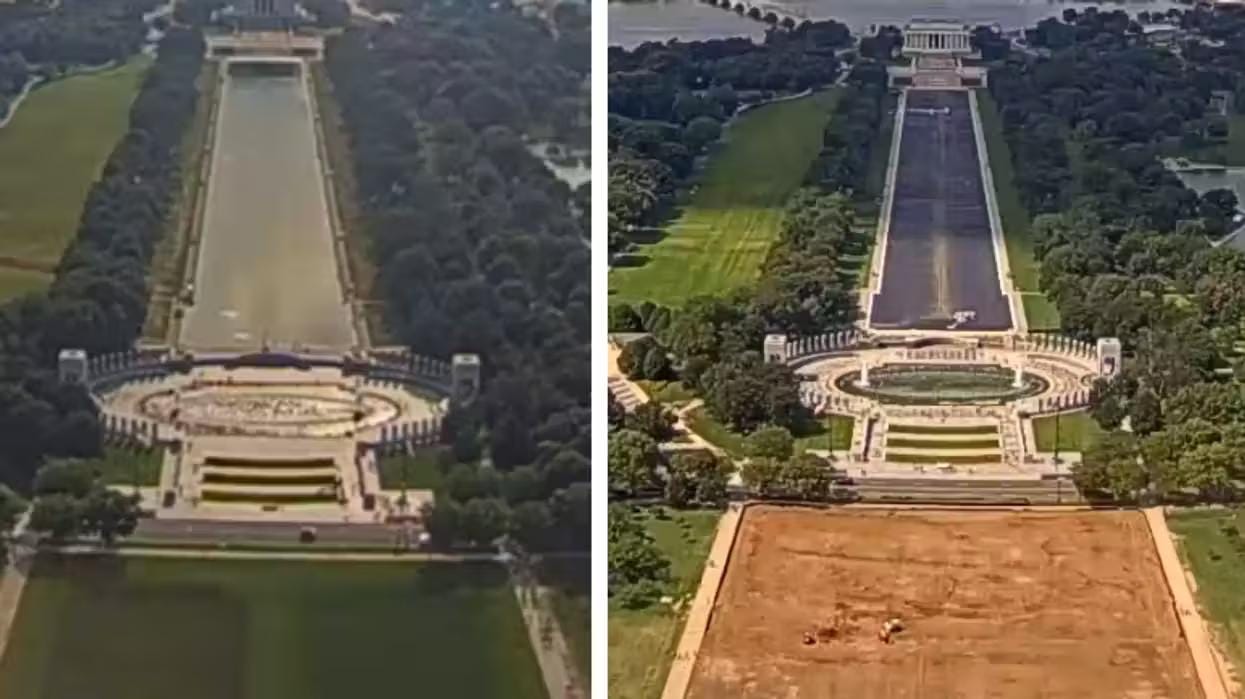
Side-by-side photo reveals stark 'visual metaphor' for Trump’s DC damage
from Systemic Error Podcast Hosted by Paulo Santos
Via X @jamiedupree Public Monuments, Private Vanity The Damage Is a Governance Choice The emptied Reflecting Pool and torn-up lawn near the Washington Monument are not merely evidence of bad maintenance. According to the reporting, they followed decisions made by the Trump administration: rushing a cosmetic overhaul, awarding a no-bid contract to a Republican donor and Mar-a-Lago neighbor, and pursuing increasingly grandiose construction projects across Washington. The visible damage is the consequence of political authority exercised for personal display. Patronage Made Concrete The central fact is not that a contractor made mistakes. Contractors make mistakes; governments are supposed to prevent, detect, and correct them. Here, the administration reportedly bypassed competition and selected someone with political and social proximity to the president. Help fuel the work. Independent analysis doesn’t fund itself:☕ Buy us a coffee That arrangement concentrated benefit among the connected while transferring the risk to public property and the public purse. The contractor received privileged access. The administration received its spectacle. Everyone else inherited the failure. Prosecution as a Public-Relations Tool When the pool liner failed, the administration did not begin with accountability for the work it commissioned. It pursued alleged vandals, including former Olympian David Hearn. U.S. Attorney Jeanine Pirro was eventually forced to acknowledge that defective workmanship—not sabotage—caused the damage, and the contractor later admitted errors in applying the liner. That sequence matters. Federal prosecutorial power was turned toward weaker, more convenient targets while the politically connected contractor escaped the initial blame. Trump reportedly continued alleging vandalism after his administration’s account had collapsed. That is not bureaucratic confusion. It is scapegoating: invent an offender, mobilize state power against that offender, and protect the decision-makers whose choices produced the problem. The Article’s “Vanity” Frame Is Too Soft Calling these projects vanity captures Trump’s appetite for monuments, but it understates the institutional failure. A ballroom, a proposed 250-foot triumphal arch, gold-coated horse statues, and a flag-blue reflecting pool are not simply matters of poor taste. They show public institutions being subordinated to one officeholder’s preferred image of himself and the nation. The relevant power lies with the president who demanded the projects, the officials who executed them, and the legal institutions that permitted construction to continue. The lawn did not destroy itself. The liner did not select its own contractor. The damage emerged from a chain of authorized decisions. Spectacle Over Stewardship Public landmarks impose an obligation of care precisely because presidents do not own them. Treating Washington’s civic landscape as a personal branding portfolio reverses that relationship. Preservation becomes secondary to speed; procurement becomes a favor network; and public space becomes scenery for executive self-glorification. The administration’s response to failure followed the same logic as the project itself. Appearance came first. When the appearance deteriorated, responsibility had to be displaced rather than accepted. The System Protects the Signature, Not the Structure The broader pattern is government by personalized command, enabled by officials willing to convert impulse into policy and institutions reluctant to impose limits. The brown lawn and empty pool are minor beside the reach of federal power, but they expose its operating method in unusually visible form: patronage at the front end, haste in execution, coercion when challenged, and denial after failure. The physical damage can be repaired. The more consequential damage is a governing culture in which public assets are treated as presidential possessions and accountability is redirected toward whoever has less power than the people responsible. Thanks to Alter Net Source: Side-by-side photo reveals stark ‘visual metaphor’ for Trump’s DC damage Systemic Error is a reader-supported publication. To receive new posts and support my work, consider becoming a free or paid subscriber. We warned them.We told them.We shouted from the rooftops.We plead.We begged.They didn’t listen.Now, we all will suffer.Y’all know what to do, right?VOTE BLUE! 💙Vote as if your life — nay, our country — depend on it.Because, this time, and every time, it does. This is a public episode. If you'd like to discuss this with other subscribers or get access to bonus episodes, visit paulstsmith.substack.com/subscribe
Embed this episode
No transcript yet.