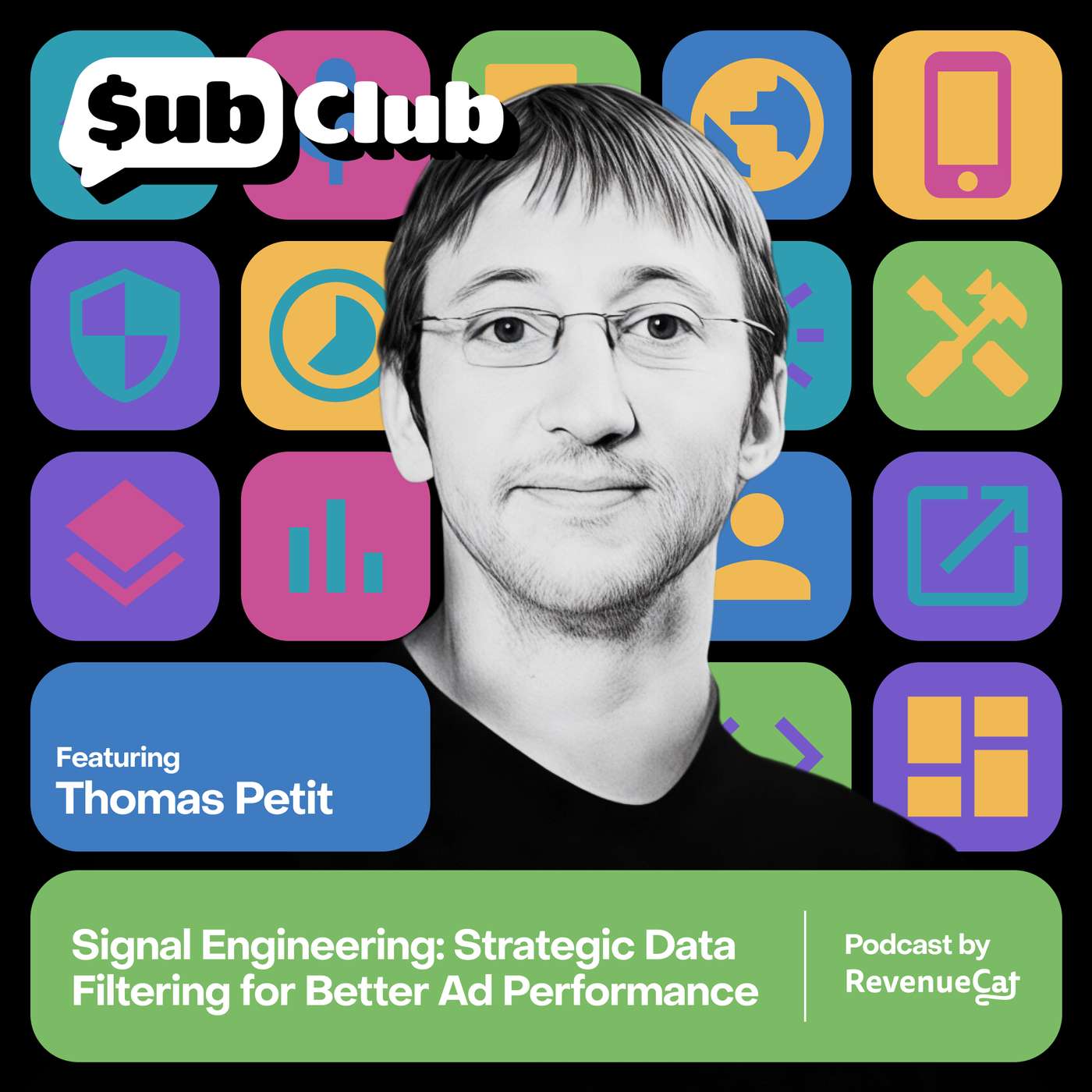
Signal Engineering: Strategic Data Filtering for Better Ad Performance — Thomas Petit, Independent Consultant episode artwork

EPISODE · Aug 20, 2025 · 1H 33M

Signal Engineering: Strategic Data Filtering for Better Ad Performance — Thomas Petit, Independent Consultant

from Sub Club by RevenueCat · host David Barnard, Jacob Eiting

On the podcast I talk with Thomas about using signal engineering to optimize ad spend, how AI is changing creative testing, and why most people should avoid app2web… for now.Top Takeaways:🧠 The biggest AI opportunity in ads is smarter analysis, not faster productionAI is now good enough to produce ad-quality video and variants at scale — but that’s where 95% of the industry focus stops. The underused frontier is AI for analysis: spotting winning hooks, predicting performance, and even pre-testing creatives with “AI humans” before spend. The teams that combine rapid AI production with AI-driven analysis can iterate faster and scale what works more reliably.🔍 Signal engineering starts with fixing broken dataIf the events you send to ad networks are inaccurate or poorly mapped, you’re sabotaging the algorithms. First step: make sure event counts match internal analytics within ~5–10% (not 30–50%). Then move from “normal” to “sophisticated” by filtering for quality — for example, optimizing to high-LTV trial signups instead of all trials — and sending value-adjusted revenue that reflects predicted LTV, not just day-one spend.⚖️ Balance exploitation of winners with exploration of new conceptsWhen a creative crushes it, it’s tempting to flood your account with variations. But over-reliance on a single concept speeds fatigue and leaves you exposed when performance drops. Keep iterating on winners and testing new hooks in parallel — especially on fast-moving platforms like TikTok, where trends expire in weeks.🌐 App-to-web works best for big brands with deep resourcesMoving checkout to the web can bypass app store fees, but it’s a high-commitment experiment. Success usually requires brand trust, team bandwidth, and a well-tested flow — often with different plan structures than in-app. For most smaller teams, the opportunity cost outweighs the benefit. “Saying no to good ideas” is often the smarter prioritization.💳 Hybrid monetization is powerful, but not plug-and-playCombining subscriptions with one-time or usage-based purchases can capture more revenue from different segments — especially for AI-powered apps with real compute costs. But designing it to avoid cannibalizing subscriptions is complex. Treat hybrid as a later-stage lever: exhaust easier wins in pricing, packaging, and paywall optimization first, then experiment, possibly starting with Android or non-US markets. About Thomas Petit: 👨‍💻 Independent app growth consultant helping subscription apps like Lingokids, Deezer, and Mojo.📈 Thomas is passionate about helping subscription apps optimize their ad spend and increase ROI through smarter testing.💡 “The whole idea of signal engineering and optimization of the data that you're sending back is: send the network something better, and they're gonna do a better job. They are doing a better job — it's you who are not doing yours.”👋  LinkedInFollow us on X: David Barnard - @drbarnardJacob Eiting - @jeitingRevenueCat - @RevenueCatSubClub - @SubClubHQEpisode Highlights: [1:21] Testing smarter: How AI may be changing the game for testing ads.[13:09] Untangling the web: App-to-web can work for some, but it’s not a slam dunk.[21:19] Hedge your bets: The benefits of moving away from subscription-only and embracing hybrid monetization strategies.[26:50] Going global: When and why to consider experimenting with hybrid monetization outside the US.[31:15] Signal vs. noise: The signal engineering framework for sending the most valuable user interaction data to ad platforms.[44:47] Multi-platform: Optimizing your data and event mapping for multiple ad networks.[53:01] Low-hanging fruit: Scoring easy wins with signal engineering.[1:08:04] Hands-off: Why ad networks likely won’t (and maybe shouldn’t?) implement built-in signal engineering tools for app marketers.[1:14:05] Going deep: Advanced signal engineering techniques.[1:26:09] Volume vs. quality: Why sending fewer events to ad networks may actually yield better results.

On the podcast I talk with Thomas about using signal engineering to optimize ad spend, how AI is changing creative testing, and why most people should avoid app2web… for now.Top Takeaways:🧠 The biggest AI opportunity in ads is smarter analysis, not faster productionAI is now good enough to produce ad-quality video and variants at scale — but that’s where 95% of the industry focus stops. The underused frontier is AI for analysis: spotting winning hooks, predicting performance, and even pre-testing creatives with “AI humans” before spend. The teams that combine rapid AI production with AI-driven analysis can iterate faster and scale what works more reliably.🔍 Signal engineering starts with fixing broken dataIf the events you send to ad networks are inaccurate or poorly mapped, you’re sabotaging the algorithms. First step: make sure event counts match internal analytics within ~5–10% (not 30–50%). Then move from “normal” to “sophisticated” by filtering for quality — for example, optimizing to high-LTV trial signups instead of all trials — and sending value-adjusted revenue that reflects predicted LTV, not just day-one spend.⚖️ Balance exploitation of winners with exploration of new conceptsWhen a creative crushes it, it’s tempting to flood your account with variations. But over-reliance on a single concept speeds fatigue and leaves you exposed when performance drops. Keep iterating on winners and testing new hooks in parallel — especially on fast-moving platforms like TikTok, where trends expire in weeks.🌐 App-to-web works best for big brands with deep resourcesMoving checkout to the web can bypass app store fees, but it’s a high-commitment experiment. Success usually requires brand trust, team bandwidth, and a well-tested flow — often with different plan structures than in-app. For most smaller teams, the opportunity cost outweighs the benefit. “Saying no to good ideas” is often the smarter prioritization.💳 Hybrid monetization is powerful, but not plug-and-playCombining subscriptions with one-time or usage-based purchases can capture more revenue from different segments — especially for AI-powered apps with real compute costs. But designing it to avoid cannibalizing subscriptions is complex. Treat hybrid as a later-stage lever: exhaust easier wins in pricing, packaging, and paywall optimization first, then experiment, possibly starting with Android or non-US markets. About Thomas Petit: 👨‍💻 Independent app growth consultant helping subscription apps like Lingokids, Deezer, and Mojo.📈 Thomas is passionate about helping subscription apps optimize their ad spend and increase ROI through smarter testing.💡 “The whole idea of signal engineering and optimization of the data that you're sending back is: send the network something better, and they're gonna do a better job. They are doing a better job — it's you who are not doing yours.”👋  LinkedInFollow us on X: David Barnard - @drbarnardJacob Eiting - @jeitingRevenueCat - @RevenueCatSubClub - @SubClubHQEpisode Highlights: [1:21] Testing smarter: How AI may be changing the game for testing ads.[13:09] Untangling the web: App-to-web can work for some, but it’s not a slam dunk.[21:19] Hedge your bets: The benefits of moving away from subscription-only and embracing hybrid monetization strategies.[26:50] Going global: When and why to consider experimenting with hybrid monetization outside the US.[31:15] Signal vs. noise: The signal engineering framework for sending the most valuable user interaction data to ad platforms.[44:47] Multi-platform: Optimizing your data and event mapping for multiple ad networks.[53:01] Low-hanging fruit: Scoring easy wins with signal engineering.[1:08:04] Hands-off: Why ad networks likely won’t (and maybe shouldn’t?) implement built-in signal engineering tools for app marketers.[1:14:05] Going deep: Advanced signal engineering techniques.[1:26:09] Volume vs. quality: Why sending fewer events to ad networks may actually yield better results.

NOW PLAYING

Signal Engineering: Strategic Data Filtering for Better Ad Performance — Thomas Petit, Independent Consultant

0:00 1:33:02

No transcript for this episode yet

We transcribe on demand. Request one and we'll notify you when it's ready — usually under 10 minutes.

MG Show MG Show The MG Show, hosted by Jeffrey Pedersen and Shannon Townsend, is a leading alternative media platform dedicated to uncovering the truth behind today’s most pressing political issues. Launched in 2019, the show has grown exponentially, offering unfiltered insights, comprehensive research, and real-time analysis. With a commitment to independent journalism and factual integrity, the MG Show empowers its audience with knowledge and encourages active participation in the political discourse. That Hoarder: Overcome Compulsive Hoarding That Hoarder Hoarding disorder is stigmatised and people who hoard feel vast amounts of shame. This podcast began life as an audio diary, an anonymous outlet for somebody with this weird condition. That Hoarder speaks about her experiences living with compulsive hoarding, she interviews therapists, academics, researchers, children of hoarders, professional organisers and influencers, and she shares insight and tips for others with the problem. Listened to by people who hoard as well as those who love them and those who work with them, Overcome Compulsive Hoarding with That Hoarder aims to shatter the stigma, share the truth and speak openly and honestly to improve lives. Flottengeflüster ALD Automotive Österreich | LeasePlan Beim Flottengeflüster powered by ALD Automotive | LeasePlan präsentieren Jörg Janik und Peter Gutenbrunner alle zwei Wochen spannende Informationen rund um das Thema nachhaltige Mobilität. Beide beschäftigen sich schon lange mit der Thematik und bringen umfangreiches Fachwissen mit. Sollten sie aber doch einmal nicht weiter wissen, werden unsere Expert*innen hinzugezogen, die ihnen gerne mit Rat und Tat zur Seite stehen. The Small Business Startup School – Business Notes | Financial Literacy | Retail Psychology – For Professionals & Entrepreneurs The Small Business Startup School Inc. Starting or buying a small business? While personal circumstances may vary, business patterns remain timeless. On The Small Business Startup School, we explore strategies, insights, and practical solutions to help entrepreneurs confidently navigate their journey.Hosted by Ola Williams—a retail entrepreneur, fintech founder, and financial coach with over two decades of experience—this podcast marries financial awareness and retail psychology with optimism to deliver actionable takeaways.Join us to learn, grow, and connect as we uncover the keys to business success.Let’s continue to learn together and be encouraged to keep on connecting!

Frequently Asked Questions

How long is this episode of Sub Club by RevenueCat?

This episode is 1 hour and 33 minutes long.

When was this Sub Club by RevenueCat episode published?

This episode was published on August 20, 2025.

What is this episode about?

On the podcast I talk with Thomas about using signal engineering to optimize ad spend, how AI is changing creative testing, and why most people should avoid app2web… for now.Top Takeaways:🧠 The biggest AI opportunity in ads is smarter analysis, not...

Can I download this Sub Club by RevenueCat episode?

Yes, you can download this episode by clicking the download button on the episode player, or subscribe to the podcast in your preferred podcast app for automatic downloads.
URL copied to clipboard!