Sikkim: The World's First '100% Organic State'
from Brym Labs Hosted by Thomas Guest
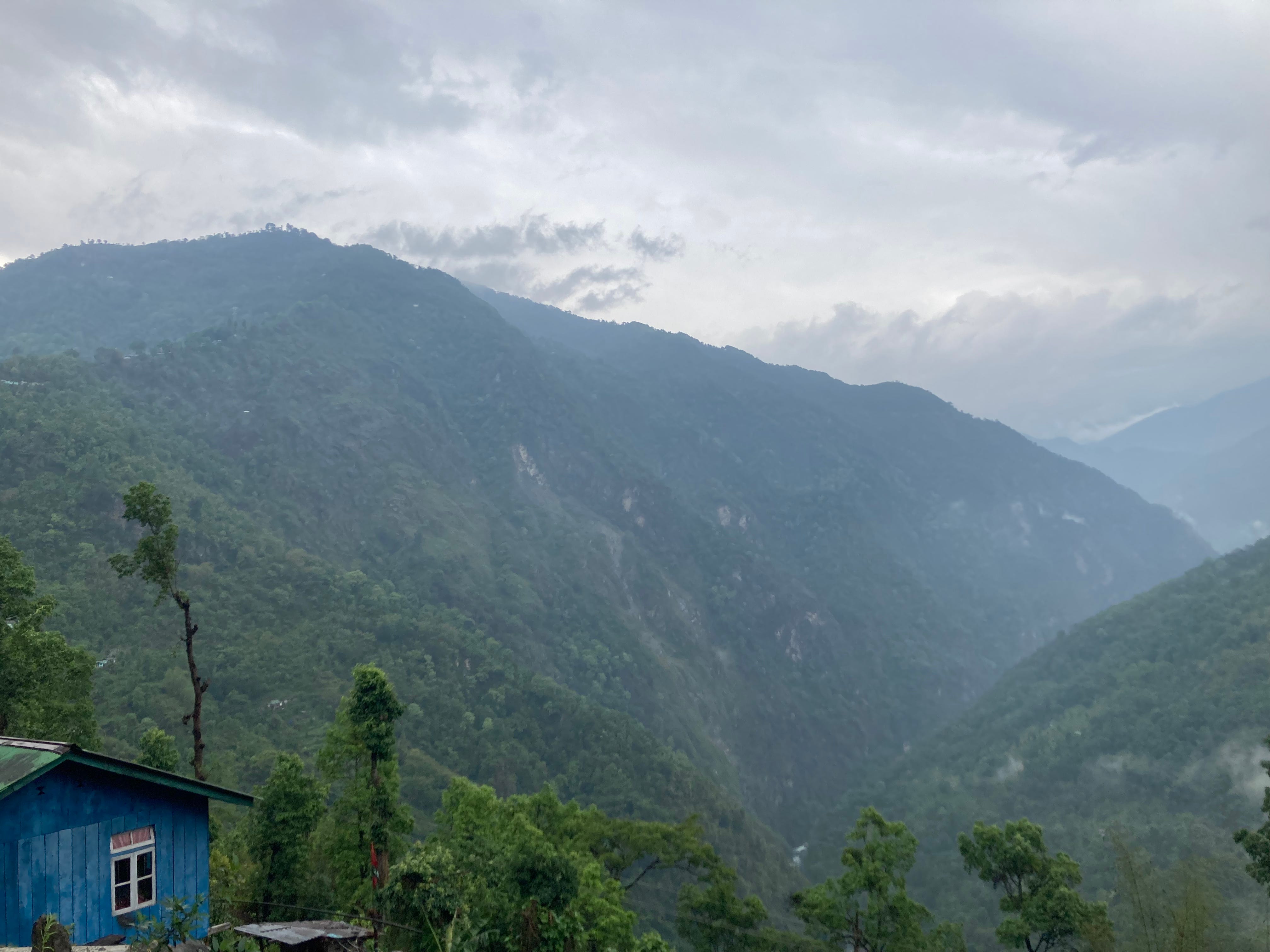
We’re in Double Digits!!! Episode 10 comin’ at ya. As always, you can also read the full case study on our website HERE and listen to our full interview on Apple Podcasts @Brym Labs In this week’s podcast episode, you’ll hear from Shri B.B. Subba, Secretary of Horticulture for the Government of Sikkim, a ‘small’ State in Northeastern India setting a great example for the rest of the world. This audio was recorded during an in-person presentation in Gangtok at their government offices! I would suggest listening in tandem with the Case Study below - where you can learn about the efforts of their department in much more detail. Intro What if a government and their people could actually produce a coordinated effort to create a more sustainable climate AND economy? Sikkim, the second smallest Indian State, is tucked among the Himalayas in the northeastern corner of the country. They are the first state, not just in India but in the world, to become a ‘100% Organic State’. At the same time, they are creating new jobs for young people and building a strong economy, exemplifying that sustainability and development can go hand in hand… if the government and community are aligned on how to achieve that vision. Amidst the contentious histories of India’s Green Revolution, when chemical fertilizers were first introduced in response to famine in the 1960s, and the more recent ‘Farmer’s Protests’ in 2020/2021, when an estimated 250 Million Indians took a stand against agricultural neoliberalism and formed the world’s largest ever organized strike, Sikkim is writing a new narrative. I had the honor of sitting down with the Government Secretary of Horticulture, Mr. Shri B.B. Subba in Gangtok, Sikkim’s capital, to learn more. I’m excited to share my interview with Mr Subba and help tell the story of how their ‘small’ state can provide a substantial blueprint for other states in India and across the world. Also, before I dive in, don’t just take my word for their impressive record… here are a list of national and global accolades given to Sikkim for their example and leadership in futuristic planning and sustainability: * Future Policy Gold Award, 2018 in Rome, Food and Agriculture Organization of the United Nations * Delhi-based research institute Energy and Resources Institute (TERI) - Sustainable Development Leadership award to Chief Minister Chamling (2016) * Germany-Based International Federation of Organic Agriculture Movements (IFOAM) - One World Award Grand Prix (2017) * Khangchendzonga National Park was named a UNESCO World Heritage Site and the 11th Biosphere Reserve added to UNESCO’s World Network of Biosphere Reserves in July 2018. * Indian Agribusiness Excellence Award, 2017 * National Kalam Innovation Governance Award, 2018 Also, a quick shout out to Cuba!! Cuba is the only other country/state that has a government-driven mission for total organic farming. The Journey - Getting to Sikkim At the end of April, right after leaving the Sundarbans and JGVK, (at the Southeastern most point of India) my dad and I set off on a 24-hour journey to Sikkim (India’s northeastern most State) at the foothills of the Himalayas. The journey started with a 3 hour drive to Kolkata, then we took an overnight train 13 hours North to Siliguri. Bunk beds lined the sides of the train cars - we were lucky to be in a section with air conditioning … and to meet some new friends from neighboring bunks! From Siliguri, we took an electric, three-wheeled ‘Auto’ to the town bus terminal, where we were ushered into the back seat of a ‘Shared Jeep.’ 10 total people smushed into a 3-row jeep van was a new experience that tested the alignment of our spines and that bumpy ride was our home for the next 3 hours as we climbed the hills at the feet of the Himalayan Mountain Range, arriving next in a town called Darjeeling. Our family (my grandmother, Frances Helen and great-grandparents, Walter and Mary) lived in Kolkata and Darjeeling almost 100 years ago. So before heading to Sikkim, we spent some time researching our family history first at the school where my grandma attended when she was just 3-5 years old. We found the old cottage where they lived, holding an old black and white picture up to the brightly colored day to confirm the match. Finally, our last Shared Jeep brought us further North, through the border at Jorethang, out of the state of West Bengal (where Kolkata and Darjeeling are based) and into Sikkim. Jaws drop as you climb higher. Clouds dip into the stunning mountain range like a system of intertwined rivers flowing down from the largest mountain range in the world. The Background During my first weeks in India, I had heard tales of Sikkim and their wonderful momentum towards a sustainable and completely ‘Organic’ society. Ahead of our journey North, I was able to learn more thanks to a lucky find in a Kolkata used bookstore - Jiwan Rai’s Remember the Name: Sikkim: India’s First Organic State. I highly suggest everyone reads this for more details on the political, social, cultural and economic context of this beautiful place. The Sikkimese message is simple but profound - “Organic farming can heal our Earth, help our families, and offer hope for our shared future. Will anyone listen? Will anyone join us?” There is so much to highlight about their work, but it’s already impressive you’ve read this far :) so here’s what we’ll prioritize … * A brief history of Sustainable agriculture in India and how Sikkim plays into that picture * What does being a ‘100% Organic State’ actually mean? How does their mentality represent a larger movement beyond just farming and gardening practices? * As the first state in the world, not only India, to achieve this, how did they actually pull this off? I’ve included a table of specific actions below rather than try to write them all in narrative form. * Where does Sikkim go from here? How can we follow? * Sikkim - A Brief History: The Green Revolution in the 1960s introduced pesticides (many supplied by the US) and showed great promise in the first few years after adoption. However, farmers started to realize quickly that while short term yields were up, the soil and crops were changing… and not for the better. “What began as a genuine desire to increase agricultural productivity in Sikkim through chemicals has become dangerous to the soil and to the health of the people and livestock.” (Rai) They had to seek a different approach that would better position the health of Sikkim over the long-term. 28 years ago, in 1994, Chief Minister Chamling was elected into leadership. It seems that this transition / push for sustainability started with him in many ways. After he was elected, he made a speech that immediately struck me because it is something I have never heard from the US: ‘To All with Love, My government is with all those farmers who deserve a dignified life anchored to a dignified profession. The state government will lend every possible aid by way of subsidies, rebates, start-up loans, consultation, capacity building, free benefits doled out to farmers by the state government etc. This offer is for all farmers, agro-entrepreneurs and educated youth who aspire a career in organic farming.’ - Pawan Chamling From Day 1, Chamling was unwavering in his commitment to this strategy and it has paid off. And not just in success for the ecology of Sikkim but for the economic livelihoods of its people. In the mid-1990s, 41% of the population was living in extreme poverty. By 2011-12, that had dropped to just 8%... Of course, wary of correlation vs causation, there are other factors that might have impacted this drop in poverty than just the Organic transition, but the variable of Sikkim’s new ‘Organic Mission’ should also not be understated. Some other fun facts on Sikkim * ALL of their cultivable land is now certified organic - over 76,000 hectares. * Sikkim only occupies 2% of land in India, but it is home to 26% of flowering plants species. * 82.31% of geographical area is under administrative … Get full access to Brym | Center for Sustainable Worlds at brym.substack.com/subscribe
Embed this episode
No transcript yet.