Sine Die | Looking Back on the Legislative Session
from Equality Arizona Updates Hosted by Equality Arizona
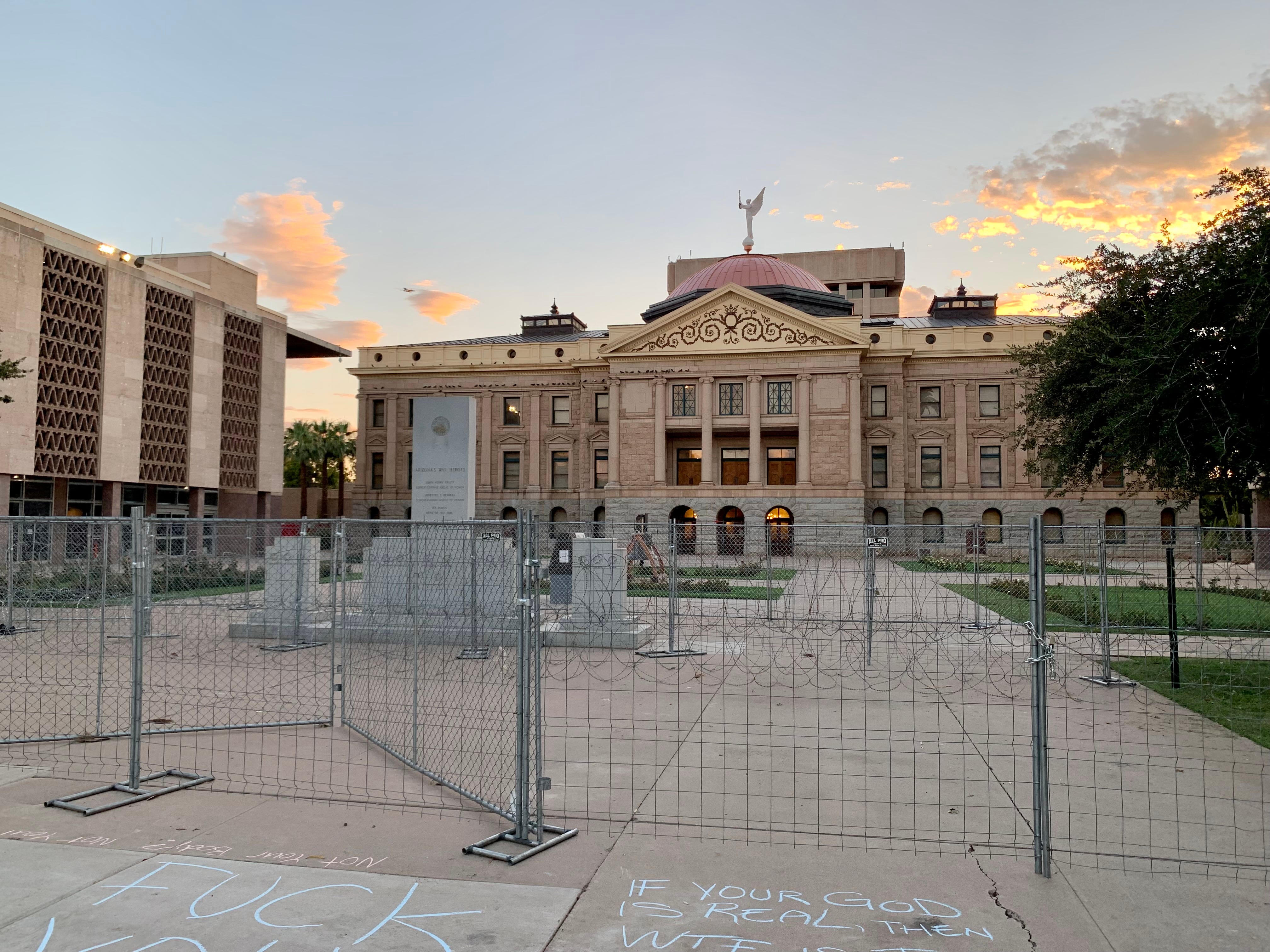
Sine Die | Looking Back on the Legislative Session In the early hours of Saturday, June 25, the Arizona legislature – driven out of their chambers by tear gas deployed against Arizonans protesting the Dobbs decision overturning Roe v. Wade – conducted their final business of the session and adjourned sine die. Now, only days after passing a bipartisan $18 billion budget and new water conservation plan, fences, cement barriers, and barbed wire are being raised around the capitol grounds, underscoring the strained relationship between the legislature and the people of Arizona. From day one in early January to sine die now at the end of June, if there has been one driving current this session, then it has been this fragile balance of power in the legislature, where Republicans held one-seat majorities in each chamber and fissures between and within parties opened and grew deeper in an era of heightened extremism and polarization. And while this political atmosphere carried a record number of anti-trans and anti-LGBTQ+ bills in its wake, it also required moderate voices to work together across the aisle, and brought about several historical moments of bipartisanship. Equality and Fairness for All Arizonans After a banner year in which four new cities in Arizona won LGBTQ-inclusive non-discrimination protections, starting in Mesa, lawmakers Amish Shah (a Democrat) and Rusty Bowers (the Republican Speaker of the House) introduced a statewide measure in the House of Representatives to extend non-discrimination protections to LGBTQ Arizonans in employment, housing and public accommodations while also protecting religious rights for people and institutions of faith. On Thursday, March 17, the Equality and Fairness for All Arizonans Act received a historic-first committee hearing, and the same framework that won bipartisan support in the state legislature is now advancing in the U.S. Senate. Ask your elected leaders in Congress to support Equality and Fairness for All Americans today! Anti-LGBTQ+ Legislation Signed into Law By sheer volume, 2022 was the worst year on record for anti-LGBTQ+ policy in state legislatures around the nation. Here in Arizona, we faced an onslaught of legislative attacks, from bills targeting kids and their support systems to book bans and preemptive restrictions on gender neutral identity documents. Some ideas that we’ve successfully rebuffed before, like a law banning trans girls from school sports, found success this year, and disturbing new proposals, like the criminalization of gender-affirming care, nearly made it into law. Let’s review the three anti-LGBTQ+ bills that were signed into law this session. * SB 1138: Originally written as a total ban on gender-affirming care for transgender youth (one of four total bills introduced this session with that intent), this bill faced early community opposition, and received a critical “no” vote from Senator Tyler Pace in a committee meeting. The bill was subsequently revived and overhauled with a strike-everything amendment that narrowed the ban to “irreversible gender reassignment surgery.” While it is largely in line with current WPATH standards of care to limit gender-affirming surgery for patients under 18, this law introduces additional restrictions beyond those standards (which are themselves due for an update, later this year). * SB 1165: With this bill, Arizona joined 17 other states in enacting a law to ban transgender girls from participating in school sports with their peers. Much has been made of “the solution without a problem,” but among the 170,000 student athletes in Arizona’s high schools, only 16 trans students (both boys and girls) have appealed to play in high school sports in the past five years. Even if trans girls did pose a problem for competitiveness in school athletics (which there is no good evidence to support), this is something that not only can and should be handled at a local and individual level, but something that has successfully been addressed for years under the Arizona Interscholastic Association’s trans-inclusive policy. As we look back on what brought us to this point, it’s as important as ever to point out that this is a manufactured controversy, using one of the few areas in life where the diversity of physical traits between and within genders takes on significance in order to exacerbate division by exaggerating difference. * SB 1399: Part of a larger debate over religious liberty and non-discrimination in foster care and adoption services, including notably the Supreme Court decision Fulton v. Philadelphia, this law will permit discrimination in adoption and foster care services on the basis of religious preference, under the guise of protecting religious groups from discrimination. The current shape of the foster care system in Arizona may dull the blow of this law in effect, but it nevertheless — by opening the door to unfettered discrimination even by state-contracted agencies — sets a precedent with dangerous consequences for both LGBTQ+ families and LGBTQ+ kids. Failed Anti-LGBTQ+ Bills Through organized, citizen-based advocacy, the vast majority of anti-LGBTQ+ bills introduced this session never made it out of the legislature. In some cases, these were more draconian versions of bills that did pass: SB 1130 would have banned gender-affirming care for both youth and vulnerable adults by classifying it as abuse and criminalizing providers, while SB 1046 (a trans student athlete ban) would have subjected cis and trans girls alike whose genders were questioned to invasive testing and genital inspections. Any of these ideas could be brought back to the table next session, so let’s review the full list. * SB 1045: Would have banned gender-affirming care for trans youth and required school employees to out trans kids. * SB 1046: Would have banned trans girls from girls sports in schools and required invasive testing and genital inspections for girls whose gender was questioned. * SB 1049: Would have introduced $5,000 penalties against schools for violations of the parent's bill of rights, the legal cornerstone of many anti-LGBTQ+ bills. * SB 1130: Would have defined gender affirming care for children and vulnerable adults as a form of abuse, criminalizing providers. * HB 2011: Targeted GSA clubs in schools by introducing a parental opt-in requirement and other restrictions. * HB 2292: Would have mandated that Arizona birth certificates only be issued with M or F gender markers. * HB 2293: Stipulated that schools could not require employees to respect a student’s pronouns or penalize them for misgendering students. * HB 2294: Would have prevented state agencies like the MVD or vital records department from issuing documents with gender markers other than M or F. * HB 2314: Would have banned trans kids from school bathrooms, changing rooms, and other “multi-occupancy facilities” appropriate to their genders. * HB 2608: A mirror bill to SB 1138 (in its original form), this would have banned all gender-affirming care for trans youth. Successfully Amended Anti-LGBTQ+ Bills Two additional bills posed serious concerns for LGBTQ+ rights when introduced at the beginning of the session, and while both were eventually passed through both chambers of the legislature, each bill received a series of amendments that largely addressed those concerns. Let’s look at each in turn. * HB 2161: Sponsored by Representative Kaiser, this bill immediately raised red flags for a section that explicitly required teachers to compromise the privacy and safety of trans students by outing them to potentially unsupportive parents. While this passage was quickly removed, significant privacy concerns for LGBTQ+ youth remained, including catch-all language that would have had the same effect in practice, along with a provision denying confidentiality to adolescents for sensitive medical care not requiring parental consent. Refreshingly, as the result of a process of thoughtful stakeholder engagement with the sponsor and two s… This is a public episode. If you would like to discuss this with other subscribers or get access to bonus episodes, visit equalityarizona.substack.com
Embed this episode
No transcript yet.