Sitting in the Car With Ghosts
from Walter Rhein Podcast Hosted by Walter Rhein
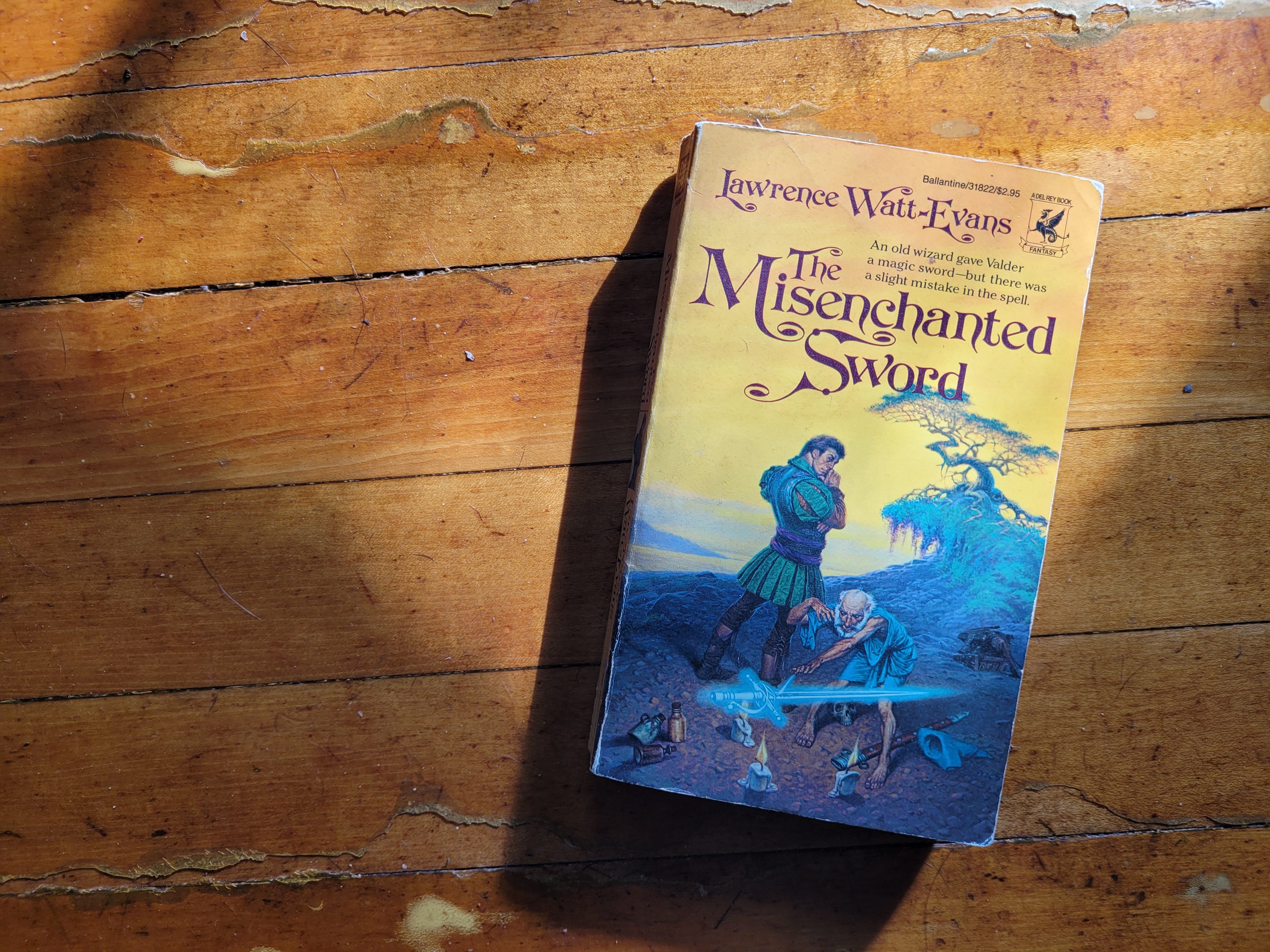
Thanks for your support: 30% off 💙 40% off 💙 50% off 💙 60% off 💙 80% off Lately I’ve had the privilege of driving my daughter to a college class. She’s a junior in high school, but we’re a Spanish speaking family and she completed every course the school offered as a sophomore. There are some good people in my daughter’s district, and they worked to get her into a program at no cost to us. “It’s like I’m cheating the system,” my daughter said. “You have to cheat the system,” I replied. “The system is corrupt.” “Daddy,” she sighed. She’s used to such comments from me. It takes about 20 minutes to drive to the college, so twice a week we get to make that journey together. I find those moments to be precious. It’s another opportunity for the two of us to have some time together where she can tell me about her life. These days, the screens steal so much of our life. Technology is often a tragedy. On the way to her class the other day, she began to tell me about the book she’s reading. My daughter breezes through her AP literature course. She spots plot holes and inconsistencies with unshakable confidence. We’ve always made reading into a game. Every book we read, we discuss. “What could have made that story better?” The key to life is to make a game out of everything. That way, even when you watch a bad movie, it’s not a wasted effort. When we read, “The Name of the Wind,” my daughter didn’t like the romantic lead. “No woman would ever speak like that,” she said. “What does that make you think?” “It makes me think the character was written by a man who hasn’t had too much experience speaking with women.” “Interesting.” She is the type of person who tears through a book or two a week. She reads more than I ever did, a lot more. Honestly, I don’t know where she finds the time. As she told me about her latest read, I found myself reflecting on an experience I had with my own dad. Perhaps it was because it was an autumn day, late in the season when most of the leaves had already gone. The book I tried to tell my dad about was “The Misenchanted Sword” by Lawrence Watt-Evans. The book came out in 1985, so I would have been around ten. We were driving back from Rice Lake, Wisconsin, back before the highway had been built. The roads were still narrow with tremendous hills that seemed to take forever to climb. The book is about a wizard who tries to cast a spell on a soldier’s sword, but accidentally uses a brass ring instead of a gold ring. The result is rather unfortunate, and the sword becomes somewhat demonic. This was one of the books that I read to my girls some time ago. In fact, some of the plot elements inspired me to write a book for them which I titled “The Resistance of Etienne.” I was working on that about the time of the Dobbs decision. The title shortens to “ROE.” Cheat the system. To my knowledge, the girls didn’t recognize the similarities. However, it’s possible it might be something they suspect. Anyway, as I was driving along with my dad, I attempted to convey the plot. Again, I was around 10, and as I spoke I felt pretty confident in my ability to explain what had happened in the book. I decided to be meticulous. It would be as much an exercise in memory as a compelling story. I wasn’t as certain as my daughters are when it comes to literature, and I feared there might be important elements I’d left out. It felt safer to include everything. As we drove along, my father would occasionally react to the story. “The Misenchanted Sword” involves a lot of assassinations. The soldier becomes an assassin thanks to the power of the sword, which doesn’t particularly turn out well for him. The first time I described a battle that ended with “and the soldier killed him,” my dad’s eyes got all wide as if in shock. I thought this was funny. Part of me recognized he was only passively listening to me and that he was waiting for phrases like “he killed him” to provide the pantomime of an engaged listener, but I played along. I was delighted in having the time to talk to him. I also found value in my ability to recall so much of the book. We’d talked for a while, me happily prattling along, when my father finally held up his hand. “I’m not really interested in hearing about this book,” he said. Well, I’d known that already. It had been obvious in his demeanor and his lack of sincere attention. Still, I was telling the story as much for myself as him. “Okay, I’ll provide a summary.” He winced as if in annoyance that I hadn’t gotten his message, but I pushed on through anyway. My father listened with glazed eyes, waited for me to be done, and then he turned on the radio. He always picked the radio. It hurt to know he was always more interested in listening to random strangers long dead than me, but that didn’t hurt as much as the other things. I focused on how much I’d enjoyed the story and how pleasing it had been to tell it. Sure, there was evidence I hadn’t told the story effectively because my dad wasn’t interested. But I took that as a rejection of me and not of my storytelling abilities. That hurt less. I was used to that. We didn’t speak again the whole way home. A few months later, we had an assignment for class. We were supposed to write our parents a letter and say nice things to them. I addressed my letter to my mom and my dad. In the letter, I thanked my dad for listening to me explain the book I was reading even though I could tell he didn’t really want to listen. Part of the assignment was that we were to put the letter in the mail. A few weeks after it was sent, I was surprised to receive a response from my mom. She’d left it in my room. I thought it was delightful that she followed the rules of making the exchange indirectly. It was a special letter and she told me ways she was proud of me that I hadn’t realized. I still have that letter. My dad didn’t answer. I have other stories about my dad where he was cruel, but this story gets churned up every now and then. It’s a story of indifference. It’s not the kind of story that garners a lot of sympathy if you try to tell it. But there must be some reason that I’ve continued to remember it for 40 years. I remember the surprised look on his face when I said, “and he killed him.” His eyes were so wide you could see the whites. The face was close to his rage face, but it was meant comically. Still, I recognized it. About a decade ago, I mentioned to a friend of mine how I no longer speak to my father. “Really, how could a dad who had as cool a son as you not want to be involved with him?” I laughed that question off at the time. I guess that’s something I stopped thinking about when I was 10. But sitting in my car with my daughter, I thought about that again. It delighted me to listen to her expertly describe the story she was reading. She’d pause, become reflective, and add in her observations. “I don’t think that plot choice was effective,” or “the main character could be more compelling.” “How could she be more compelling?” “Well, maybe if everything didn’t work out for her all the time, or if she had a different back story, or if there was more about her that made her unique...” These are questions she’ll think about when she writes papers in her AP class, or when she writes her own stories. I find it a lot more compelling to be engaged in conversations with my brilliant daughter than to listen to the voices of long dead strangers on the radio. What compels people sit silently together in the car and listen only to ghosts? Why would you do that if you had the opportunity to speak to your brilliant children? I might as well be a ghost to my father now as he is to me. I wonder if there’s anything left of this memory that he could perhaps go and visit? If he misses me, he could think back on the times I gave him everything and he didn’t listen. But truthfully, I don’t think all that much about him. I’m too busy composing adventures of joy and happiness with my daughters. We pulled up to the school. “Have a good class,” I said. “Thank you,” she sai… Get full access to I'd Rather Be Writing at walterrhein.substack.com/subscribe
Embed this episode
No transcript yet.