
EPISODE · Jul 13, 2026 · 23 MIN
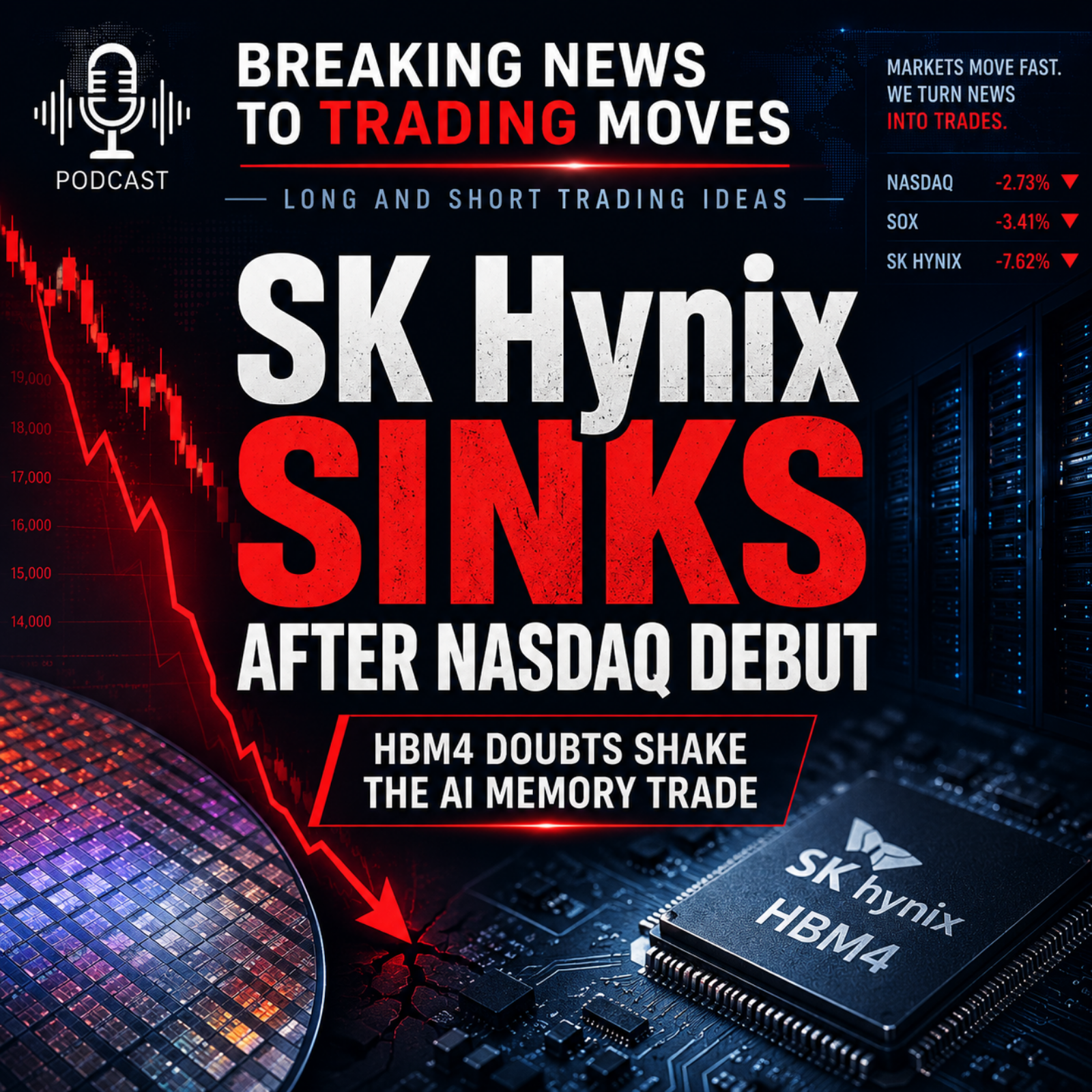
SK Hynix sinks after Nasdaq debut: HBM4 doubts shake the AI memory trade
from Breaking News To Trading Moves
SK Hynix has moved quickly from a strong Nasdaq debut to a test of investor confidence. Its U.S.-listed ADRs debuted strongly, but its Seoul shares then fell as traders took profits and reassessed HBM4 shipment expectations.High-bandwidth memory is essential for advanced AI accelerators because it moves large volumes of data quickly. Changes in HBM supply, pricing or demand can affect memory producers, equipment suppliers, AI chip designers and cloud companies.Potential winnersU.S.-listed memory alternativesMicron is the clearest potential beneficiary because it competes directly in advanced memory and HBM. If SK Hynix’s difficulties are company-specific, customers may seek more supply from Micron, improving its market position and pricing power.SanDisk is not a direct HBM rival, but it offers exposure to the wider memory and storage cycle and may attract rotation from SK Hynix.Names: $MU (Micron Technology), $SNDK (SanDisk)Semiconductor equipment suppliersAdvanced DRAM and HBM production requires complex equipment. Applied Materials supplies materials engineering systems, Lam Research provides etch and deposition tools, and KLA supplies inspection equipment.These companies may benefit if memory producers spend more to improve yields and expand capacity. Difficult HBM4 manufacturing can increase demand for advanced tools.Names: $AMAT (Applied Materials), $LRCX (Lam Research), $KLAC (KLA Corporation)Packaging and testing companiesHBM must be packaged closely with AI processors and tested carefully. These companies provide packaging, automated testing and inspection technologies.They could benefit if production challenges lead to more spending on testing and quality control.Names: $AMKR (Amkor Technology), $TER (Teradyne), $ONTO (Onto Innovation)LosersSK Hynix and high-beta semiconductor stocksSK Hynix is the direct loser because investors must decide whether its Nasdaq debut reflected durable demand or excessive excitement around the AI memory trade.Astera Labs and Credo do not compete directly with SK Hynix, but both are high-growth AI infrastructure stocks. A sharp reversal in a major AI listing can encourage traders to reduce exposure across expensive semiconductor names.Names: $SKHY (SK Hynix), $ALAB (Astera Labs), $CRDO (Credo Technology)AI accelerator and custom-chip designersNvidia and AMD depend on HBM for advanced AI accelerators. Broadcom’s custom AI chip programmes also rely on advanced memory.If weaker HBM4 shipments reflect manufacturing constraints, these companies could face tighter supply, higher costs or product delays. If they reflect softer demand, investors may see an early warning that the wider AI infrastructure cycle is slowing.Names: $NVDA (Nvidia), $AMD (Advanced Micro Devices), $AVGO (Broadcom)Hyperscale cloud companiesThe largest cloud companies are spending heavily on AI data centres and accelerators. Limited HBM4 supply could mean higher hardware costs or slower server deployments.If the disappointment is caused by weaker orders, the market may question whether hyperscalers are moderating AI capital expenditure.Names: $GOOGL (Alphabet), $MSFT (Microsoft), $AMZN (Amazon), $META (Meta Platforms)#StockMarket #Trading #Investing #DayTrading #SwingTrading #SKHynix #SKHY #Micron #MU #Nvidia #NVDA #AMD #Broadcom #Semiconductors #AIStocks #HBM #HBM4 #MemoryChips #DataCenters #CloudComputing #TechStocks #Nasdaq #TradingIdeas
Embed this episode
Ready to play
SK Hynix sinks after Nasdaq debut: HBM4 doubts shake the AI memory trade
No transcript for this episode yet
Similar Episodes
No similar episodes found.
Similar Podcasts
No similar podcasts found.