
Wait, you listen. Okay. Okay. Okay.
Okay. You're listening to Radio Lab Lab. Radio Lab. Shorts.
From WNYC. C, N, N, P, R. Hey, I'm Jack Aboume-Ron. I'm Robert Kruehl.
This is Radio Lab. The podcast. And today, on the podcast, something a little different. We say that often.
We do. This is more different than our usual different. Yeah, this comes from our friend, Carl Zimmer, who's been on the show a bunch of times, helping us untangle some complicated scientific things. This time, we find him not in our normal area on our show.
He's in the basement of a bar, which is in Brooklyn, New York, to untangle some really kind of a very personal question in his mind. He wanted to give it away. That's right. Carl told this particular story for a group called Story Collider, which has people come on stage to tell live stories about science.
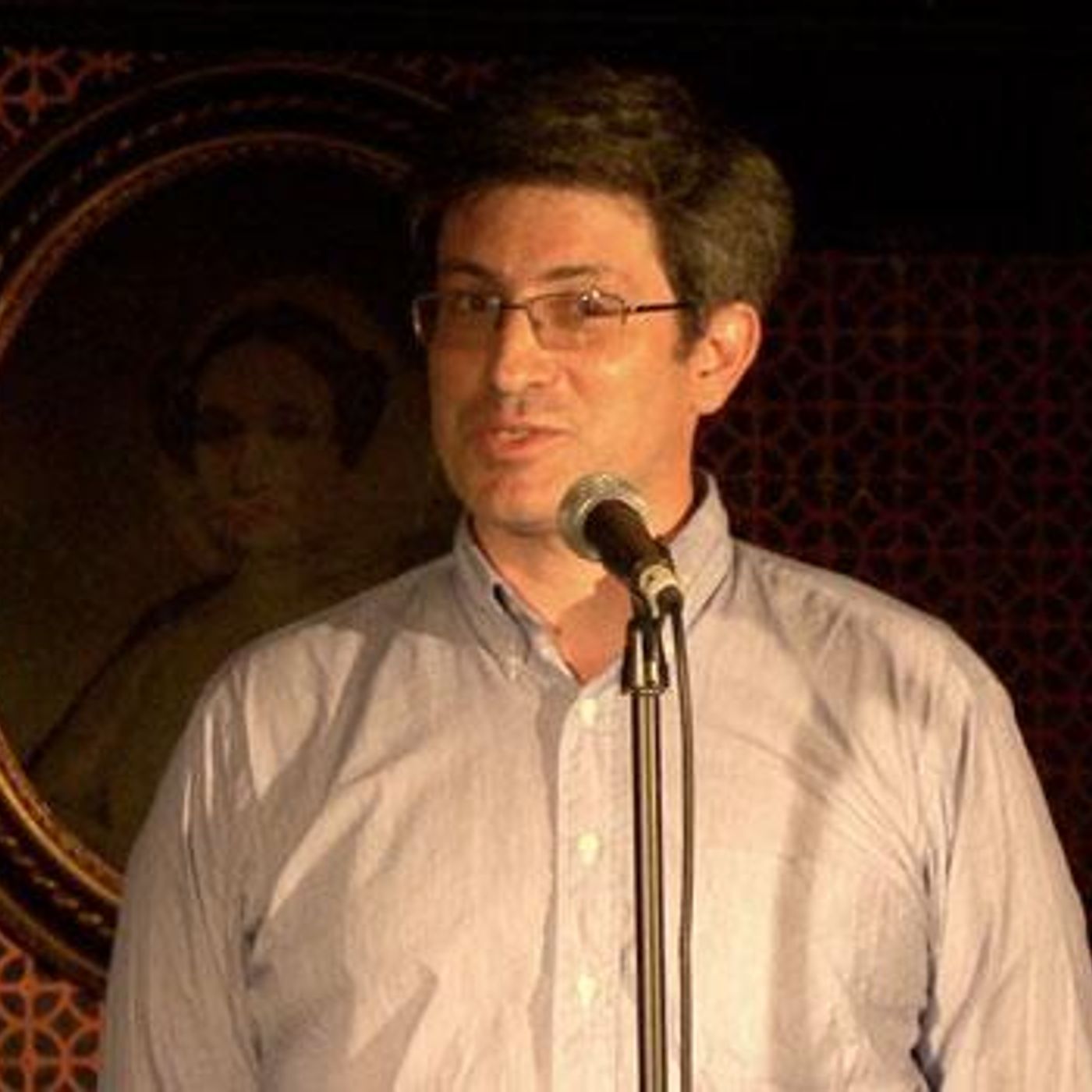
And I feel like you're going to hear introducing Carl. This is Ben Lilly. Welcome to the stage. Carl Zimmer.
He's the co-founder of Story Collider. So in 1997, I woke up in the middle of the night in South Sudan. At the time, South Sudan was not its own country. It is an independent country just recently.
When I was there, it was in the middle of a civil war. Now South Sudan is a territory about the size of Texas, and I was not near the front lines. So it's not as if I had to worry about getting shot by somebody from the other side. But there were plenty of things to be very worried about.
So for example, if you were walking around outside and there was a plane coming overhead, you never quite knew if it was a plane that came from a cartoon that had a bomb and was looking for a place to drop it. And they like to drop it in places like hospitals, which is where I was at. And if the bombs didn't get you, there were lots of other things that could, little invisible things that could get you. See, because South Sudan is at the time was probably the best place in the world to get sick.
There were so many ways to get sick. And so many ways to get sick in South Sudan that you actually really couldn't get sick anywhere else in the world. So for example, there were flies buzzing around called C.C. flies, and they might bite you, and they might put a little single cell parasite into you, and you would get sleeping sickness.
You can't really get sleeping sickness much of any place else. And if you didn't get medical attention, you would die. It's one of those diseases where there's no escape clause. You will die if you don't get medicine.
And in that case, the medicine that you would get was basically arsenic. So neither alternative is really attractive. Then maybe you would drink some unsheltered water, and you might swallow a guinea worm. So you might swallow some invisible larvae.
It would get into your stomach and say, well, this is where I belong. It would grow. It would burrow out of your intestinal wall. It would wander around in your abdomen.
It might meet up with a guinea worm with the opposite sex, and they would mate. And the female would develop eggs. Yeah, you know what this is going. She gets to be about two feet long.
She says, it's time to bring forth a new generation of guinea worms. What shall I do? I'm going to crawl down this person's leg. And I'm going to create a blister.
I'm going to poke up on skin. I'm going to create a blister, which the only way to relieve it is to splash water on it. And with every splash of water, the guinea worm will surge out eggs that will go into another pond and carry on the generation of guinea worms. So you might want to just pull on this thing out.
But of course, you just pull part of it and the rest would die. And you would have about maybe a foot of dead worm in your leg. And you would probably have an immune reaction that would kill you. There were things you could get sick of that had no name.
You might survive. You might not. And of course, there were the good old standard ways to get sick. I mean, there was malaria.
You can get malaria lots of places. But the people at this medical center, a lot of them were American doctors who would kind of go from crisis to crisis. And they would talk about the malaria in South Sudan and say, this is an amazing malaria. It is like the worst malaria in the world.
It is like a malaria that goes, you don't just get a fever and you can kind of achy and get over it. You go straight to your brain. You go crazy. And if you don't get a whole plane to get you out of there and maybe it's in a rowbie, you're going to die.
Now, something to bear in mind is that I'm not a doctor. In fact, at this point, I was kind of a hypochondriam. And so the thing is that every time I got a fever, I'm sure it was going to be mening and jigus. Or if I got a pain to my side, I was sure it was going to turn into a tumor.
And so there I am, looking up in the moonlight at the mosquito net above my head and I'm saying , hold on it. I'm thinking, what am I doing here? This is the kind of trouble that writing about science can get you into. I started as a science writer, actually as a copy editor.
I got a job at a magazine. It was basically to pay the bills. I was a copy editor. I wasn't very good at it.
I was like, how much do I go through? Which you're not supposed to do as a copy editor. As a real copy editor, I tell you, my boss took pity on me and let me fact check some things and I got to write some short pieces. Just about all sorts of different things.
You know, a moon of Saturn or beetle that produced a green glow. And it was all interesting, but it didn't feel particularly important to me. I was always writing and I felt like when I grow up, I'm going to be a writer, but I wasn't really sure what I was going to be writing about. And so I got this job and it paid the bills and it was fine and eventually I would figure things out, I hoped.
Now at the time I was dating a woman named Esther. And so Esther and I had met in high school. And she was tough when she was funny and she wasn't quite sure what she was going to do with her life when she grew up. And we managed to continue to date through college.
And then after college, she really wanted to do something. And again, she wasn't sure what. So she applied for the Peace Corps. And she got in.
And eventually she was assigned to Africa. The whole process, it takes an incredibly long time to actually even leave the United States. So by the time she left, I was already working at this job and I was already starting to write about science. So she went to Rwanda and that guys have happened with a lot of people at Peace Corps.
She burned out. So within a year she was back home. But she got in the bug. She wanted to get back to Africa.
She wanted to be back there in a meaningful way. And so she thought that a meaningful way to be there would to go as a journalist, if you were a foreign correspondent. So she applied to journalism school and she went to Columbia. So Columbia was hard, naturally.
But after a while, other things became to be hard. So for example, waking up in the morning was hard. And after a while, eating was hard. And after a while, walking up the stairs to our apartment was hard.
And she was asking, what's going on? So she went to her doctor. And the doctor said something wrong. And eventually it was determined that she had a rare form of cancer that starts in the pancreas.
Now you don't think about cancer when you're mid-20s. You don't think of rare forms in the pancreas in mid-20s. And so as a result, this cancer had moved really fast and spread very far by the time it was detected. Now she and I, being in our mid-20s, we just thought, well, we're going to fight this.
As if somehow our thoughts could vaporize cancer cells. And our doctor kind of went along with that, I think because he probably felt that maybe that's the best way that people in their mid-20s should deal with something like this, to prepare for a life that they're not going to have. So after a few months, she died. And I lived.
So I went away for a few months. And then I came back. And I came back to my job. And I was writing about science.
And it was different. So for example, I wrote a story about water. Just about water. And yet it was quite mesmerizing to me.
This was a story just about how water molecules kind of interact. They're kind of like dancers at a dance party in a crowded club. And the molecules sort of join together and then pull apart. They form clusters that dissolve again.
And it's incredibly complicated and incredibly beautiful. And it's water. It's water that we've all grown up with looking at in a glass or what have you. And those water molecules in a weird way have been waiting all this time for us to understand them and to get to know them.
And I felt in talking to these scientists that in a way, why not like this old friend? So you know how with an old friend, you haven't seen him for a long time and you take up right where you left off? Well, these water molecules were just floating around for billions of years waiting for us to learn about them. And we could go away and we could come back.
And maybe some scientists have found something else interesting about water. And we would just take off where we left off. And all the attention that we paid to the water would be repaid with beauty. So at the same time, I looked at sort of all of us and human life.
And I felt like how is it that we can all be walking around just pretending that we are going to die? You know, the main tomorrow you'll get a diagnosis. And that's it. We're all going to die.
And so I felt like somehow we were walking on a thin sheet of glass with cracks in it. And I was the only one that noticed. And I could look down and I could see the people on the other side. My doctor at the time was actually friends with.
And he was incredibly patient with me because he understood what sort of, you know, my frame of mind. And I would go to him and I would say, I don't want you to get me. I want you to get to test my heart. I want you to test my blood.
I want you to test this and test that. I was sure that if we ran enough tests that I would find out that there was something wrong with me because I had to be, right? And so he would run test after test after test and which was totally uncalled for. And it all came back negative.
And I was so dissatisfied. I was in perfect health. And it was terrible. So I think through that kind of experience, I ended up writing a lot about evolution because here was a process where life and life turning into death could actually not just end in death but lead to something.
And you could produce new things. So my first book, which came out a few years after Esther died, was about evolution. And it was about these big transitions, these transformations. You know, fish coming on land and then some mammals going into the water becoming dolphins and whales.
There was a certain kind of joy and melancholy in writing about it. I found this passage from the Metamorphosis by Aave that made the opening book. And the story is that, you know, so the Metamorphosis is full of all sorts of changes. A lot of which are very agonizing to the people who are going through those changes.
They don't like it. And yet something beautiful comes out of it. So for example, the god Bacchus is kidnapped by some people on a ship and he's going to take vengeance on them. And so the sailors are horrified to watch their hands disappearing and turning into flippers.
And their nose stretches out into a hook and their voice disappears. And they're flailing around and they just leap into the water and they become the dolphins. And I was reading that and I was thinking, you know, I've seen that kind of change myself in my own life. After that book I was casting around for another idea and I thought, well, I'll write about parasites.
And you know, at the time it just sort of seemed like, oh that'd be cool. When I look back at it, I think there's something more going on there. I mean I became a real Efecianado of the strangest, most extreme parasites out there. I mean we're talking about wasps that perform brain surgery on cockroaches and then lay their eggs inside of them and the cockroaches are alive as the wasps growing inside them.
Or you know an ant that climbs up to the top of a flower and then a giant stalk of fungus comes out of its head and showers down on the ends below, sowing death. And I suppose I just felt like, well, you know, if we're all going to die, you might as well look at the most amazing ways that that happens in the natural world. So I started to travel around and look for parasites. And I wanted to go to a place where I could see parasites making like difficult for people.
I wanted to quite try to do it. I had an old, really good friend who was living in a rowbie at the time. So I went and visited him and his wife. And I would make little forays to try to find a story for my book.
And I just sort of end up with a lot of dead ends. And I was thinking, you know, I'm going to go home and I'm going to have nothing. It's going to be a real bummer. But my friend, I started by chance and I said, hey, you know what, there's this medical organization.
They're dealing with the sleeping sickness epidemic in South Sudan. Which is actually right across the border from Kenya. And they're looking, you know, they would like to invite some journalists to come and see what they're up to. And to me, this was, I don't know, this was like the invitation to the Oscars or something.
I mean, I was thinking about all the things that I could see there that I just read about. I mean, I could see them. So for example, there's something called Loa Loa. I don't know if I've even heard of it.
So it's a worm. If I remember correctly, it's transmitted by mosquito. So you see mosquito buzzing around, you think, oh God, I hope it didn't have Loa Loa. I know it's not going to bite me.
Because what happens, it bites you, Loa Loa gets into your system. And it starts crawling around. It likes to crawl around and connect to tissue. And one of the places where you have connected tissue is in the surface of your eyes.
So people who get Loa Loa will say that they can actually see the parasite crawling across their field of view. So this was really a place where you could see parasites. I mean, really, really see them. And I don't know if they meant that I wanted to get it or talk to someone and say, well, what's it like to see?
I don't know what I wanted. All I know is that very early morning I went to this little airport in the outskirts of Nairobi with my friend. He drove me out there. And you know, my friend Scott said, okay, I'll see ya.
I got a little plane with a couple other journalists. And it's not easy to get to South Sudan, especially back then when it was a war zone. So what you had to do is you had to fly from Nairobi to the border. And the border is the most desolate place you can imagine.
You can look for miles and see basically nothing. I think I saw a couple of huts in the distance. That was it. You land on one runway.
And there's another plane there. That's the plane that's going to take you to South Sudan. So I'm like, okay, I get my bag and get out and the other journalists are getting out. They're just like four or five of us.
And there's no one else around for miles except this guy. I recall he was wearing like a members only jacket. And he was like the border guard. And he said, I'd like to see your passports.
So you know, you give me passports because he's supposed to stamp them and give them back to you and then you're on your way. But going across borders in Africa is always a little sketchy so you're nervous already. Because he holds your life in your hands. Maybe he wants some money or something.
Well, the thing was that he couldn't stamp a visa on our passport because we weren't going to a real country. We weren't really going anywhere. We were going to this place that had really no official designation yet. So he didn't stamp our visas.
He just said, I'm going to hold onto these. So he takes our passports and he just tucks them away and his members only jacket. And we're thinking, yes, we're going. And we all got into this plane.
It was a supply plane. There were some crates with medical supplies and stuff in it. And we got in and sort of buckled up along the walls of this open part in the back and they closed the back of the plane. And then the plane took off and we went off the grid.
So a week later, I did come back. I did get my passport. I did get back home. It's been 14 years since I got back from South Sudan.
Two years after I got back, I fell in love with a woman named Grace. And we got married. We have two girls who run around in our garden. And I feel like I have been given like a gift, a second life, a second story.
We still deal with some parasites where I live. Maybe not getting worms, but you know, West Nile virus, Lyme disease, actual plasma. You can never get away from them totally. We are human.
But I don't go to places like South Sudan anymore, mainly for their sake. When I was there in South Sudan, I saw a lot of things. I saw people suffering beyond what I could imagine. I also saw a lot of people getting off their lives in the middle of a war zone, which was something that I didn't even think possible before then.
I would see huge fields full of gigantic termite mountains. But the thing that I actually remember most, most clearly was that night, waking up in the middle of the night and looking up in a panic at them, a skin or net, and thinking they're holes in it. I could see them in the moonlight. And I could feel this kind of panic coming up with me.
And then another voice in me said, well, what's the video? I mean, if you're going on and on about we're all going to die and there's nothing you do about it and you're sure that there's something just waiting for you, then why don't you just go back to sleep and just let it happen? And I could feel this thing inside me, this thing that was resisting that. That was me.
It wasn't a parasite. That was myself. And there was this drive that I felt. I was not going to just fall asleep again.
And it's a drive that we all have. We live, we keep living. If death comes into the neighborhood, we're going to fight it. And that is true.
That's a rule. And it's real. It's as real as those water molecules floating in space for billions of years. And that is what running about science is giving me.
Thanks. That's our podcast for today. Thanks so much for listening. Big thanks to a Ben Lillian story collider for letting us run that story.
And of course, Carl Zimmer. And by the way, a story collider has its own podcast. So if you like Carl's story, there's tons of more science stories that you can enjoy over there. The address is one word storycollider.org.
I'm Jada Bumrun. I'm Robert Groch. Thanks for listening. Hi, this is Jessica from Boston Mass.
I'm a radio lab listener. Radio lab is supported in part by the Alfred C. Sloan Foundation, enhancing public understanding of science and technology in the modern world. For more information about Sloan at www.slone.org.
Thanks.