
Ladies and gentlemen, welcome back to another S.S.G. V.R.A.B.D. of your host, Albert, to bring you another exciting guest. I mean, how many of you have seen the movie Black Panther or Star Wars classic movies?
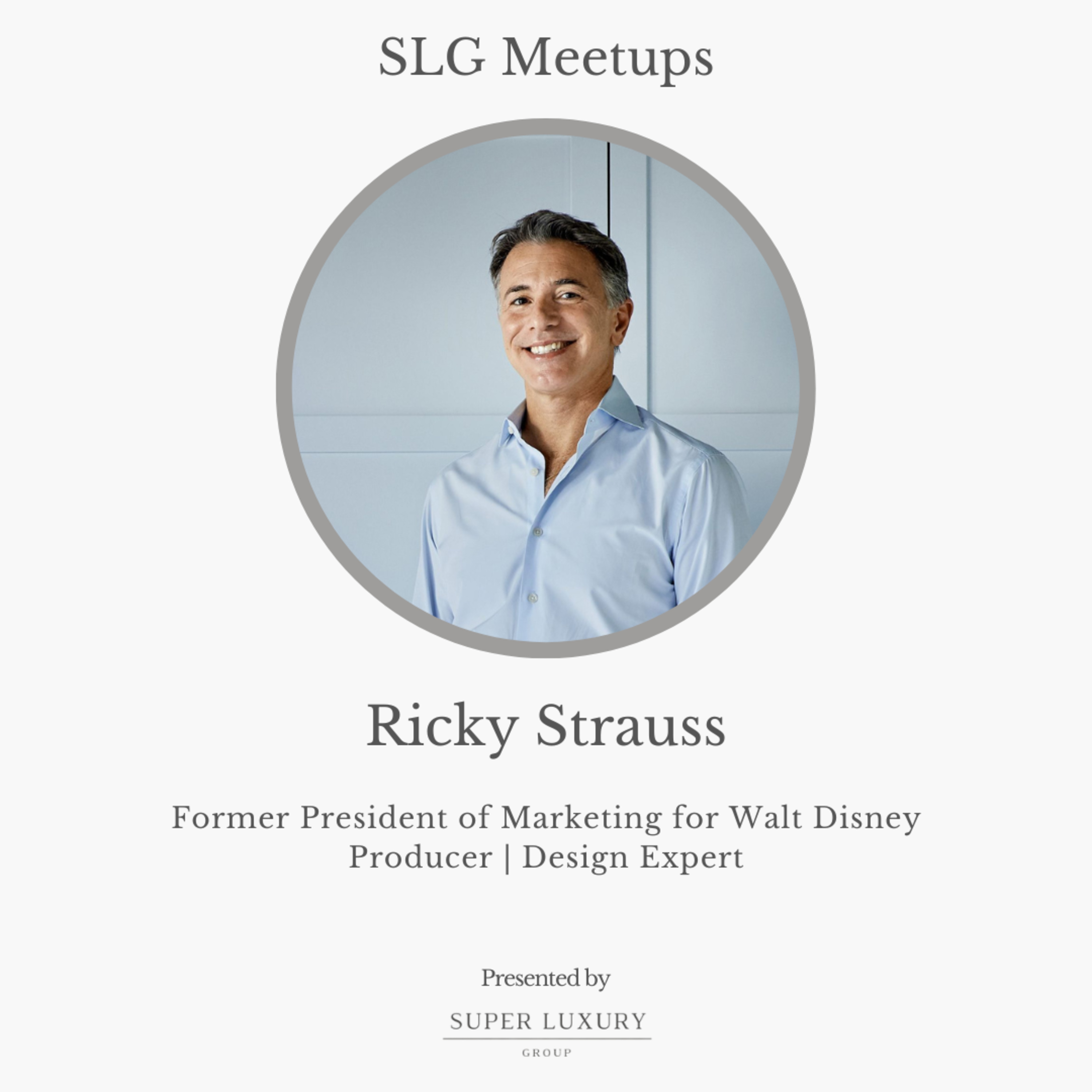
Now for that, we're gonna have the own former president in marketing of Walt Disney Studios and Disney Plus. His name is Ricky Strauss, and not only he is a complete beast when he comes to marketing, but also he is a designer on the side. Now he's one of his biggest hobbies, and to the point where he's been designing multiple homes, and I can't wait to hear all about what he's been doing and what he's up to today. Very big legend in the space, and super excited to have him as a guest.
There you go. What's going on, Ricky? How you doing? Hi, everybody.
Sorry about that. I'm good. Thank you. So good to have you here.
Thank you for joining us today. Thank you, my pleasure. Sorry. Now, how are things in LA?
Beautiful. Of course, today. Yeah. Living in California, even though we are all suffering from extreme climate change drought, in California, in Southern California, anyway, today, it's very nice.
I love that. You know, I'm very, very excited to have you here today, because I was making a quick intro about yourself. You were the former president of marketing for Walt Disney Studios. Also Disney Plus.
You've been heading all the marketing campaigns for these black bosses, such as Star Wars or Black Panther. And you've always been not only just an expert when it comes to marketing, but also a big official in that when it comes to design, right? You've been designing your homes, and you've been working on that as a passion. And now it's what you're focusing on, right?
So tell us a little bit about you, and what's going on. Thanks. Thank you. First of all, thank you for having me on the show.
I really appreciate that on this live Instagram feed on your show. It is a show. I mean, I think that funny enough, everything that we do is around storytelling in our lives, not only what I was able to do for a living for so long and entertainment, and what I still love about movies and television shows and books and podcasts and all forms of distractions of our daily lives to get into a story, whether or not it's fiction or nonfiction, rather, you're really living a story. Everybody's own journey is a story.
And so for me, when I was a little boy, I loved to draw pictures of homes and furniture. But I would also fill them in with the people that were living there and what their own culture was and how they entertained and how they lived. And so getting into the movie business was something that was very fortunate for me, because I got to expand upon that professionally. But also, I still loved interior design.
And I always had that in my family. My grandmother was a great designer in Las Vegas in the 60s and 70s, and then in New York. My aunt, Babs, as a designer, and both incredible women. And I learned a lot from them, as well as from my own mom, and from paying attention to the experts.
So yeah, I've always been doing it. When I was in college, I decorated our dorm rooms. I always, you know, and then, you know, even when there wasn't a lot of money or a lot of resources, I still found a way to make a space interesting and at least curated. That's very, very nice.
We were saying it super interesting because when it comes to the entertainment industry, right, especially the movies and series, how important it is to have a great setup and the design of it? Yes, I always have a huge amount of respect for production designers and set decorators and dressers and art directors, because they work with the director of the movie and the producers to come up with a look and feel, not only of the set that's a practical location, but also in actually designing a set from the ground up that sometimes isn't based on anything that's in the script. And so not only do you have to have a really good idea for design, you also have to have a really good sense of story and understanding what a character would have in their environment and where that action is gonna take place. There's a huge amount of discipline to that as a craft.
But it's, but for me, I also love the idea of building a home that's informed by your own life. And so nothing I've ever done for me has been just about shopping at one or two stores filling in the space with furniture that's comfortable and you're done. I think a lot of it is informed by where you travel and what you've pieces you've inherited or taken from your family. But also it's really interesting to have a point of view.
And I always used to say that everybody, even your finance teams are creative, everybody's creative. And everybody, people that say, oh, I'm not creative, I don't believe that. I think everybody has a point of view. Well, I love that you brought the point of traveling because you're a big traveler, you're being seen in the world.
And it's also a way of expanding your creativity and understanding the story that you can bring from the different cultures into your space. Yes, I have always collected tabletop items sometimes if I try to travel light. So there's times where I just would bring back placemats or something small, but something that is gonna show up in your home so that when you are able to create a meal or entertain for friends and family and you have things on the table that reflect places that you've been, first of all, a lot of those items are not terribly expensive. They all can be really distinctive.
I love being able to set a table and say those glasses are from Portugal, the plates are from China, the napkins are from France and the flatwares from Europe. And again, I was really lucky that I got to travel, but I'm even talking about going to an antique store two hours from your town when you're going away on a little road trip. I just think it's important, again, I'm not a hoarder and I believe that stuff needs to be curated. You have to have a disasculosive.
It's a skill, a voice is too chaotic, right? Yes, but you should buy what you love and you should buy what reminds you of a place. And I also think that it's in our enlightened self-interest as consumers to not just buy new things because new things are being made and manufactured. And it's not great for the environment to just keep making something new and throwing out old.
There's a lot of ways of recycling and redesigning and reformatting things. In fact, in my house that was just published in Architectural Digest for an online exclusive, there's a fur throw in my living room that was made from my grandmother's fur coat. So I had an idea when she passed that I would take one of her fur coats and turn it into a throw. And so it's a piece of fur in my living room.
Wow. So we're in the real estate industry here and we work with a lot of different architect developers, real estate brokers. And we've always heard this story so on when they're trying to sell a house and sometimes they want to include all the foreign tourists, but there's some pieces that they don't want to include because it has that attachment, that special value that even though it's just maybe $500 or $5,000, whatever it is, in comparison to the big price of the house, it still remains so important that they need to keep it, right? Yeah, yeah.
And I think that there is a way to create rooms or around pieces that you love or you can find a way to recycle them. As I said, how many people take old dressers and turn them into sink cabinets? Or how many times you could take the top of a coffee table and reuse it to create another table or for a console? And I had a desk in another house that I turned into a vanity.
I've done it so many times and I've been very fortunate to have lived in different styles of homes in Los Angeles and that's one of the great gifts of our city is that there's a lot of different style homes that turn a century to today. And I'm lucky to live in a mid-century house now, but in the past I lived in a Tudor revival, Hollywood Regency house in Spanish house and post-it beam house. And again, this is my passion, it's what I love. And I think there's nothing more special to me than going into someone's home, going into someone's space.
By the way, it can also be your office, even in an office building in a non-owned environment and feel like you understand that person. It's such a feeling that you're creating and having comfortable furniture and a place to put your drink and a place to sit down and a place to relax and art that amuses you. Again, nothing has to be super expensive. It just has to be personal.
You are so passionate when it comes to design and homes and coming from the entertainment industry and have worked on so many campaigns for all these amazing movies. I can ask you, because this is something that actually I was never even thinking about until now. When it comes to the setups, we were briefly touching about the setups or when you're going to be doing certain scenes, all the design that takes into place. Who has the saying on it?
Do you guys bring all the designers of art or all the other? So the director of the movie has the final say, usually, when it comes to production design. When it comes to making a movie or a series, you have the director is the creative engine for the film. And when he works with, or she works with a production designer and they craft the whole looking feel of the movie, they'll have a conversation about where they want to go strategically and then have a holistic view of the sets.
Depending on the movie or the show, it could be really big, like you mentioned, a big Star Wars adventure, or it could be much more contained, like a three-camera sitcom that really only takes place in one setting. But the pieces and the design that's informed by those decisions gets filled in by the department under the production designer to do that. And there was a period of time in my life when I was in marketing years ago, where I did look into the idea of moving into production design, because it was a good marriage of my two passions. But I stayed in film marketing, and then I was a producer, too.
I was on the other side, so I was making movies, and I was a production executive. And then when I got to Disney after a run-app participant, which was a media company focused on socially relevant entertainment, I learned even more about the creative process through watching the folks on the park side with the Imagineers and everything that was done at Disney. And it was a wildly creative company, and something that I really, really loved being a part of for almost, yeah, almost the other years. But for me, again, my office is, I was in very corporate space, but I still had pieces.
I'm a big Marilyn Monroe fan, and I collected original Marilyn Monroe magazine covers all the time, you know, the late 40s until she died in the early 60s. And I had framed them as a series, and I had put them behind my desk up as a suite of, again, Marilyn Monroe really doesn't have anything to do with Disney other than, I guess, they both were in a movie business at the same time. But for me, I created a wall of Marilyn art, if you will, in my office. I also, on another side of that wall, again, back at Disney, I asked the Marvel guys in New York to emulate a mural I had seen, and their offices, that was a very vintage Captain America from kind of look like World War II propaganda posters, and I had them turn that into a wallpaper for me in my scene office.
So, yeah, so, you know, again, like, there's ways of being created, even in your office. Absolutely. Now, obviously, you have such a great expertise when it comes to marketing. And one of the things that we also want to touch based on is on how to launch products, right?
You've been working on these incredible movies and then coming up with the whole campaign to make sure the entire world knows about it in a very strategic way. So what will be, out of all the years that you've been doing this, the biggest lesson that you've learned when it comes to launching a campaign? Well, first of all, this applies to anything. My feeling is that you need a unique selling proposition, sometimes known as a USP.
I think that understanding your brand and understanding the product that you're launching is really important. And you've got to think about the DNA of that product, it could be anything from a line of, of a dishware to selling a home, to selling an office building, to, you know, launching a clothing line, or any kind of business that you're building, especially with all the competitive online and digital activity that's happening. What is the unique selling proposition? What am I creating in the environment?
And who are my competitors? And what is the unmet need that I'm trying to fill? Once you understand what that proposition is, and then really understanding what it is that is the DNA of that product or of your business, including who you are, you have to stay very tried and true and avoid mission drift so that you stay focused on what it is that you're selling, who your consumers are, that's probably number two, who your consumers are, so you know who the audience is. So for example, in the movie business or in the TV business, you make a show, you make a movie, and you know immediately, okay, we're going to go after these people.
We're going to go after this audience. As a focus, doesn't mean that there's other audiences that could actually have unintended consequences, that that could be successful. But even in the case of a house, you could say we're building this house, or we're going to design this house for a family of four and a dog, and they're going to have two cars, and we're going to, but you can also then think about larger, okay, well, it could also be a couple, or maybe a single person that has a lot of family comes and come into this, but what is it exactly that you're doing and what your focus is? And then what you understand, I can deal with what it is.
I love it, thank you for sharing, that's very important. And a lot of people, you know, even when it comes to real estate, when they're trying to put this whole campaign together to launch this amazing home, they don't even know what the DNA on it is, you know, that you need selling points, and I really like that you broke it down, we definitely want to put it in the highlights. Now, I mean, aside from that, I usually ask this question to all of our guests, and I'm very curious to know what it is to you. Because you know, a lot of people, it could be a feeling it could be something material, but what is really luxury to you?
Exclusivity, craftsmanship, quality, and distinction, care. I think immediately luxury is anything that's handmade, anything that is something that was crafted by one person or a team of people and not a machine. That's what the area is. So true.
And you know what, you just said that, to my mind, because you both, you and I both travel a lot, and I was just also this year in Kilimanjaro, or sometimes I'm, yeah, and the guys, they're so talented, they do such amazing craftsmanship. I believe that they did it with their hands. It's so, wow. You know, I was in, it's staring at some of the stuff I bought.
Like you said, why is the local things and it's unbelievable to the stories? I was in Peru not that long ago with close friends, and we were in the Amazon, really remote. And we took a trail into the jungle, and when we came out of the trail, there were some people, local people, that had, were displaying some of their pieces that they had made from local wood, from a certain palm tree that's not available anywhere other than the Amazon. And there were these beautiful, beautiful bowls that they crafted with their own hands.
They were, they were, they would have been in any high end shopping Manhattan or London without any question, they were stunning. And they were super affordable, because they were made locally by Andy in the Peruvian Amazon, but that was luxurious. Wow. I love that.
You know, I gotta go to your place at some point, and discover all the stories that you have through all the items that you have in there. You know, because that's what you're saying. For me, I mean, yeah, for me, if somebody cares, I'm happy to walk you through it, but for me, I can go room to room, and I can actually recall some of those spots. And I love that.
That's incredible. I'm going to LA in a few days. We talked about it. So we'll see you come by.
Yeah. Now, you gotta come by. Last question. As a former president of marketing, world is named, you've experienced so many different amazing projects.
Now, what's the next phase for you? Well, we'll see. I'm actually working on a couple of ideas. There's some stuff that I'm doing in the design space.
We'll see where that goes. And also, other pursuits and entertainment that are being incubated right now. So I imagine in the next month or so, we'll be announcing some stuff that's going on for me. But I've been having such a good time.
And it's been, even though the world is a very tricky place right now, I feel very fortunate. It's been great. Well, I'm glad that things are going well for you. Thank you so much for everything that you've shared with us today.
I know your time is limited. So thank you once again. And yeah, I just wanted to say if there's anything else that you would like to share before we wrap this up. Thank you, my friend.
I would say just everybody that's watching and listening, we're all creative. There's no bad choices. Do what you love and more importantly, when it comes to your home and the space that you're in, bring things in that you really love and that you really care about. And if somebody doesn't, if somebody is a comp board with your decisions, that's okay.
That's true to that. Well, thank you again, Ricky. I appreciate it. You are awesome.
We should do the best of success and I'm sure we'll see to the race. And thanks again for everybody tuning in today. We hope you enjoyed it. And remember, embrace it's beautiful success in life.
My name is Alvaro and I'll see you next time.