
EPISODE · Aug 24, 2026 · 14 MIN
Smaller Than Advertised
from The Rest of the World Podcast · host Rudy Martinez and Rest of the World Report
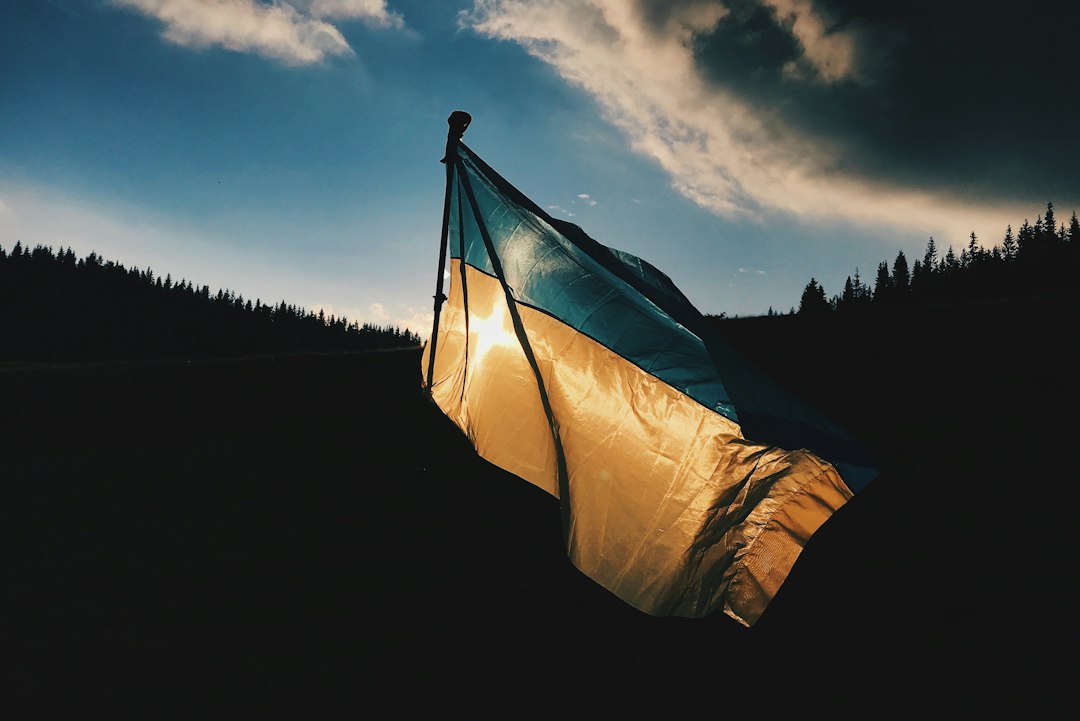
Weekday morning and evening editions. Saturdays once. Good news on Sundays. All sources labeled.THE BOMB THAT WASN’TTreasury Secretary Scott Bessent unveiled what he called “Operation Economic Outcast” Monday, a new round of sanctions aimed at isolating Iran, after ten days of building anticipation around what he’d branded an “economic D-Day.” The reality landed smaller than the buildup. Bessent expanded secondary sanctions targeting five sectors, digital assets, technology, gold, aviation, and shipping, and said any entity helping Iran launder money would be removed from the US dollar system. He said Trump himself was personally calling foreign leaders to press them directly on cutting trade with Tehran, and that a major financial institution would be sanctioned by the end of this week for doing business with Iran. But the sweeping, immediate penalties Bessent had spent over a week teasing did not materialize Monday.Bessent had written in a Financial Times op-ed Sunday that Monday would mark “an economic D-Day, the single greatest financial offensive ever marshaled against an adversary.” The US already maintains extensive secondary sanctions on Iran, some dating back nearly 50 years, and has a documented history of only partially enforcing them. For the campaign to actually work, Washington will need to confront not just Iran but China, Russia, India, Pakistan, Qatar, and Türkiye, all countries that continue trading with Tehran despite existing sanctions.China’s own government answered directly, not through American commentary about China’s likely position. A spokesperson for China’s embassy in Washington said sanctions and pressure “do not help resolve the problem,” calling instead for diplomacy. The response matters beyond its brevity: China has historically bought roughly 90 percent of Iran’s oil exports, and Bessent had specifically pressed Beijing in his Sunday op-ed to cooperate. The Soufan Center, an international security research organization, assessed that US officials will likely calibrate how aggressively they enforce the new sanctions against China specifically, given that China’s president is scheduled to visit the United States next month.Iran’s threatened response went well beyond defiant rhetoric. Mohsen Rezaei, secretary of Iran’s Supreme National Security Council, warned that continued economic pressure would halt oil exports through the Strait of Hormuz and the rest of the Persian Gulf entirely. He said Iran would treat any country’s cooperation with the sanctions “as an act of war.” Iran has already struck US bases in Jordan and Gulf states including the UAE, Kuwait, and Saudi Arabia during this war, with documented injuries and deaths. The Soufan Center’s own assessment warned that added economic pressure raises the risk that IRGC hardliners will push for exactly that kind of military escalation against Gulf states, not less of it.Iran’s own economic indicators complicate both sides’ narratives. The rial fell to a record low against the dollar Monday, even as Iran’s oil ministry announced a major new natural gas discovery in Fars province: 7.5 trillion cubic feet of gas, with 5.7 trillion cubic feet recoverable, equivalent by the ministry’s own estimate to one full block of the South Pars field. Oil Minister Mohsen Paknejad called the deposit “sweet” gas, meaning it requires less costly processing than sour gas fields. Iran already holds the world’s second-largest natural gas reserves after Russia. The announcement came the same week South Pars itself, Iran’s most important gas field, remains under repair from wartime strikes; the field’s operator says roughly 70 percent of production has been restored, with full recovery not expected for three years or more.Iran has also shown it can be selective about who it lets through the strait it otherwise controls. Iran granted permission for a number of Iraqi oil tankers to transit Hormuz over the weekend, following repeated requests from Baghdad relayed during Ghalibaf’s own visit to Iraq last week. Iraqi President Nizar Amidi said Iran had facilitated passage for vessels carrying Iraqi oil in recent days, calling the arrangement still “complex” and adding that Iraq remains among the countries most exposed to the broader conflict given its economic ties to Iran. Al Jazeera’s own correspondent in Tehran described the situation as a holding pattern that applies to more than just Iraqi shipping, with Iran separately negotiating a broader reopening arrangement with Oman that has not yet produced a deal.🌍 TRANSLATOR’S NOTE: The Soufan Center’s own analysis, published the same day as Bessent’s announcement, offered a specific caution largely absent from American coverage: many independent security experts doubt Iran’s government, which has survived two decades of sanctions-based “maximum pressure” campaigns already, will buckle under this one either. That skepticism sits uneasily next to Washington’s own stated assessment that the new sanctions, combined with the existing naval blockade, will be enough to force Iran back to negotiations. Iranian and Gulf-region coverage of the same-day gas discovery treated it as a pointed rebuttal to the collapse narrative, timed for contrast against Bessent’s announcement. American coverage largely covered the sanctions and the gas discovery as unrelated stories.🇺🇸 WHAT AMERICAN READERS NEED TO KNOW: After more than a week spent branding this campaign an economic D-Day, the actual sanctions announced Monday were narrower than advertised, expanded categories and a promise of one bank sanctioned this week, not the sweeping blow Bessent had teased. China’s government has already rejected the pressure campaign outright. Iran’s own government has threatened to shut down Gulf oil shipping entirely if the pressure continues, a threat backed by a real record of striking US and allied targets in the region already.Sources: Reuters via US News (international wire — Rezaei’s Gulf oil shutdown threat and “act of war” quote, China embassy statement); The Soufan Center (international security research organization, non-partisan — China calibration analysis, expert skepticism on sanctions effectiveness, IRGC escalation risk assessment); NPR (US — Rezaei’s Gulf states warning, prior US base attack history); Axios (US — “Operation Economic Outcast” name, partial-enforcement history, coalition-building requirement); CBS News (US — Bessent’s FT op-ed quote, five-sector breakdown, Trump’s “completely collapsing” post); CNN (US — rial record low, Netanyahu’s statement); Bloomberg via World Oil (international wire — Fars province discovery figures, Paknejad’s state television statement, war-related production loss context); OilPrice.com (US, energy trade outlet — Paknejad quote, South Pars restoration status); Al Jazeera (Qatar, state-funded/editorially independent — Tehran correspondent’s holding-pattern framing, Oman negotiation detail); The National (UAE — Amidi’s “complex” quote and full statement, Baghdad Dialogue conference detail)SEALED FOR TWO DAYSIsraeli forces sealed every entrance to Qalandiya refugee camp, in northern East Jerusalem, for roughly 48 hours starting August 5, deploying military bulldozers and heavy vehicles across the camp’s estimated 16,900 residents. According to the UN Office for the Coordination of Humanitarian Affairs, forces searched the majority of residential buildings and confined some families to single rooms for prolonged periods. Three homes and the offices of the camp’s Popular Committee were converted into temporary interrogation centers. Local sources told OCHA roughly 150 Palestinians were detained and interrogated inside the camp; most were later released. The Palestine Red Crescent Society recorded 51 injuries during the operation, including a nine-year-old child. The camp’s UNRWA health center was unable to operate for the full two days.The Qalandiya operation was one entry in a documented pattern OCHA has now tracked in detail for a full 19 months. A West Bank monthly snapshot covering January 2025 through July 2026 puts the cumulative toll at 316 Palestinian fatalities, including 73 children, and 5,641 Palestinian injuries, including 915 children, over that period. Israeli forces were responsible for 283 of those deaths and settlers for 24, with the remainder disputed or unclear. The same period recorded 3,254 documented settler attacks against Palestinians resulting in casualties or property damage.That pattern played out again just days after Qalandiya. On August 5, roughly 30 Israeli settlers attacked the Tuba community in Masafer Yatta, in the southern Hebron hills, throwing stones and flammable materials at homes. Five Palestinians, including two girls, were injured. Three homes burned down, displacing three families, 23 people including 14 children, along with the community’s shared solar power system, cutting electricity to about 100 residents. Elsewhere that same week, settlers attacked a Palestine Red Crescent team responding to a separate emergency near Bethlehem, pepper-spraying two paramedics and damaging their ambulance and a water tanker. In Nablus governorate, more than 200 olive trees were found vandalized after landowners said settlers had warned them off their own land two days earlier.Demolitions compounded the same week’s toll. OCHA documented 25 structures torn down across the West Bank in a single week, displacing 29 people including 17 children. Part of a school in Masafer Yatta was among them, a strike affecting 54 students and 14 staff just before the new academic year. Separately, Israeli forces used explosives to demolish the family home of a Palestinian accused of killing an Israeli soldier, a punitive demolition that displaced a woman and her five daughters and damaged roughly 25 neighboring homes.Gaza’s own humanitarian toll continued to climb in parallel. OCHA’s most recent tally puts casualties since the October 10, 2025 ceasefire at 1,259 fatalities and 4,148 injuries. A survey by the WASH Cluster found 90 percent of Gaza’s population now experiences frequent, unpredictable disruptions to safe drinking water, up from 84 percent the previous month. Gaza City residents fared worst, with 92 percent reporting water insecurity. Separately, the Health Cluster’s Rehabilitation Task Force estimates that roughly a quarter of everyone injured in Gaza since October 2023 is now living with a spinal cord injury, traumatic brain injury, or amputation. No specialized pediatric rehabilitation services exist anywhere in the territory.🌍 TRANSLATOR’S NOTE: OCHA’s own reporting treats the Qalandiya operation, the Tuba arson, and the week’s demolitions as connected data points in a single tracked pattern, not isolated news items. The office has documented West Bank casualties continuously since 2005 and settler violence since 2006, and that continuity is the point. OCHA’s own disclaimer language notes that 2026’s toll builds on a trend line stretching back two decades, with 2025 the deadliest year on record. American coverage, when it covers West Bank incidents at all, tends to treat each raid or attack as a standalone item without that longer documented arc.🇺🇸 WHAT AMERICAN READERS NEED TO KNOW: A single week in the West Bank produced a two-day military lockdown of a refugee camp, a house-burning by settlers that left children without a home, an ambulance crew pepper-sprayed mid-emergency, and a school partially demolished days before students returned. None of this is disputed or alleged. It’s documented and dated by the same UN office that has been counting it for 20 years.Sources: OCHA (UN, primary source — Qalandiya operation detail, PRCS injury count, Tuba arson, Bethlehem ambulance attack, demolition figures, Rehabilitation Task Force estimate); OCHA West Bank Monthly Snapshot (UN, primary source — cumulative January 2025-July 2026 fatality, injury, and settler-attack figures); OCHA Reported Impact Snapshot, Gaza Strip (UN, primary source — Gaza demographic and access context); WASH Cluster Light Touch Monitoring Survey via OCHA (UN-coordinated humanitarian cluster, primary source — water insecurity figures)THIRTEEN DAYS AND COUNTINGA storm with winds up to 100 miles per hour tore through Northwest Indiana on August 11, knocking out power to as many as 400,000 customers of the Northern Indiana Public Service Company. Thirteen days later, parts of Gary, Indiana, still have no power. NIPSCO’s own restoration tracker lists Gary and neighboring Portage for full restoration by Tuesday night, August 25, two full weeks after the storm hit. The company’s website already cautions that some outages may persist even past that revised date.Gary bore the worst of the damage. NIPSCO reported roughly 300 utility poles and 44 transmission poles needing repair or replacement in the city alone. As of Sunday, more than 20,000 people across Northwest Indiana remained without power. Gary Mayor Eddie Melton put the number of affected residents in his city at 17,000 as of Saturday.The outage has stretched into ordinary life in ways that compound daily. Myra Carden, 74, lost power for more than two days after the initial storm, watched it restored, then lost it again the following week. She said she has filed multiple outage reports with no result beyond being told she’d already filed one. “I’m not a lineman; I’m a paralegal,” she said, describing her frustration at being expected to diagnose the problem herself. Tasha Harris, in neighboring Griffith, said she has been hauling coolers of ice to preserve food meant to share with family. Courtney Page-Tan, a professor at Indiana University Indianapolis who studies community resilience, warned that prolonged outages carry real health risks. Carbon monoxide poisoning from generators run without adequate ventilation, medical devices losing charge, and spoiled food eaten out of necessity are all real dangers, she said. Gary schools resumed for the year this week with thousands of families still without electricity at home.Residents say the outage went largely uncovered by major news outlets until people in Gary began documenting it themselves on social media. Gary is roughly 76 percent Black, according to Census Bureau data. The pace of restoration compared to other communities in NIPSCO’s service territory has drawn direct scrutiny from Black-focused outlets including Essence, Ebony, and the Indianapolis Recorder. Indiana Governor Mike Braun has directed the state’s Office of Utility Consumer Counselor to file a formal complaint against NIPSCO over its handling of the outage.Mutual aid has filled gaps that institutions have not. The Gary Muslim Center launched a fundraiser for emergency relief, seeking $25,000 for water, meals, gas cards, generators, and emergency housing. Social media personality Keith Lee traveled to Gary this week to host a giveaway of supplies at the city’s Roosevelt Pavilion. Regina Gary, a resident who arrived at 3 a.m. to attend, said she came in part because she still had no power and cares for her 72-year-old mother and several pets at home.🇺🇸 WHAT AMERICAN READERS NEED TO KNOW: Thirteen days after a storm hit, tens of thousands of Americans are still living without electricity. It’s a city that is overwhelmingly Black, and residents say they had to document their own crisis before anyone outside it noticed. A governor has now ordered a formal complaint against the utility responsible, but only after two weeks of sustained pressure from the people living through it.Sources: NPR (US — storm wind speed, Melton’s 17,000 figure, ongoing outage detail); NPR (US — Page-Tan quote, health risk detail, restoration timeline); CBS Chicago (US — Braun’s formal complaint directive, Keith Lee giveaway, Regina Gary account, school reopening detail); CBS Chicago (US — Tasha Harris account, restoration delay detail); ABC News (US — pole repair figures, Carden account, NIPSCO executive statement); Block Club Chicago (US, nonprofit local outlet — Gary Muslim Center fundraiser detail); MSN via original report (US — Census racial demographic figure, social media documentation detail); NIPSCO (US, utility company, primary source — live restoration tracker, Gary/Portage August 25 target date)NUMBERS AT PUBLICATION🇮🇷 Iran: 3,636 killed 🇱🇧 Lebanon: 4,346 killed, 12,301 wounded 🇮🇱 Israel: 1,200+ killed, ~5,400 wounded (includes 472 killed, 3,004 wounded in Gaza) 🇺🇸 US military: 18 killed, 687 wounded 🇵🇸 Gaza: 73,407 killed, 174,335 wounded 🇵🇸 West Bank: 316 killed (incl. 73 children), 5,641 wounded (incl. 915 children), since January 2025 🛢️ Brent crude: $91.99/barrel ⛽ US gas: $4.10/gallonSources: HRANA (Iran), Lebanon MOPH, INSS (Israel), DCAS (US, disputed — see Aug 4 story), OCHA/MoH Gaza (Gaza and West Bank, both confirmed this session), OilPrice.com, AAA.“Whenever the people are well informed, they can be trusted with their own government.” — Thomas Jefferson, 1789Happy Independence Day, Ukraine! Get full access to The Rest of the World Report at www.restoftheworldreport.com/subscribe
Embed this episode
Ready to play
Smaller Than Advertised
No transcript for this episode yet
Similar Episodes
No similar episodes found.
Similar Podcasts
No similar podcasts found.