
EPISODE · Nov 22, 2025 · 6 MIN
Sometimes Listening Makes You Dumber
from Honestly Unorthodox · host Kayla
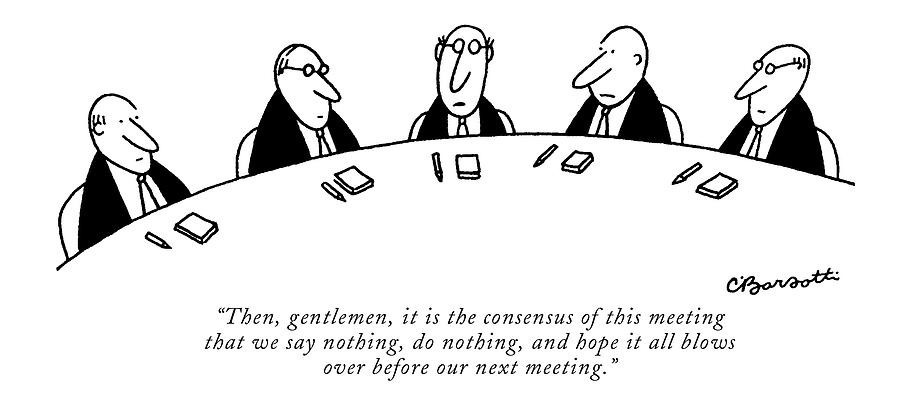
I’ve fallen into the trap of procrastination dressed up as intellectual curiosity. We all have. We purchase the trilogies of books and attend the Masterclasses and clamor to sit front and center at our favorite influencer’s conference about self-betterment… and proceed to do zilch.Listening and learning are crucial until they replace action. Herding a company’s cats to “the same page” through workplace events like “debriefing”, “collaborations”, or “committees”, keeps systems running poorly. Collaboration theater is the act of talking endlessly about a problem to the point of admiring it, which creates the illusion of progress: We met for an hour and a half about a client and got through so much! Every Friday we meet to discuss updates, replete with an agenda!Thanks for reading honestly unorthodox.! Subscribe for free to receive new posts and support my work.This tendency to stall-via-listening also spotlights a bias we have about learning: that awareness of a problem will surely lead to action toward changing it. And that, when given the same information, we’d all agree on the next steps toward identifying root cause and developing some form of intervention or risk-mitigation strategy.Disagreements actually do not stem exclusively from a lack of information, but from the stories we tell ourselves about that information. It’s plausible, then, that “processing” dilemmas functions only as emotional masturbation (normal people call this “self-soothing”).Situations to Shut Up Instead of Show UpHuman service jobs are best characterized by the adage “too many cooks in the kitchen spoil the broth.” When an excess of opinions are brought in to address a problem, without any clear chain of command or protocol for decision-making, the final result is often a task done poorly--- or not at all.Take individuals with special needs as an example, particularly in education settings. A child with autism cannot simply be given differentiated tasks by his teacher or his support staff! He requires an occupational therapist for his sensory regulation challenges, a behavior analyst for his challenging behavior and dearth of language, a speech pathologist to enhance his nonexistent vocal speech, a social worker to “process” his diagnosis with him by way of slime and an iPad, a physical therapist to address some fine motor affliction, an on-site autism specialist to collaborate with the team to best “support the student’s needs”, and a teacher tasked with the opinions of 6+ women clamoring for a sense of importance. Too many cooks with feelings.Too many cooks muddles responsibility. In the case described above, who is responsible for leading decision-making, and how is that role decided? Do we have evidence that six people working with a single child expedites process any more than, say, one or two individual providers? These practices are widely accepted as “high support” without analyzing the result of such support. I remember asking the Director of Behavioral Services at an agency one day, “Do we know if all this ‘support’ has changed anything?”, to which she said, “Huh? I mean, I have no idea. It’s just so great the client has all this support.” A hundred people listening to one another doesn’t guarantee a problem will be solved--- or even recognized.Systems built on “collaboration”, like special education teams, most forms of human service, or IEP meetings, reward talking over doing. Is it useful to hear the opinions of others? Of course it is! Much of my shtick is built on teaching people to become more open-minded and to stretch their perspective-taking abilities, as I think doing so enhances our relationships, our careers, and our sense of contentment. But these are practices which require The Work to be done, with clear milestones, objectives, and success criteria for having done The Work. Talking in circles, which is flagrant avoidance, is not The Work. It is only seen as such because so many companies have abandoned the very consequences necessary for talking to become doing.The principles which make group work successful are all extracted from good old behavior science. When tasks require coordination between a bunch of adults, and the final product is clear at the outset, every group member must modify their behavior in real time. Natural consequences, like being called out publicly, humiliated for dropping the ball, slowing our team down, and/or being disapproved of socially serve as strong motivators for action. Additionally, say what you will about group work (I, too, prefer to work alone); there is wealth of research demonstrating the positive effects of merely being in the presence of other people when it comes to reaching your goals. If you’ve ever gone for a 1-rep-max back squat alone versus recording yourself with the intention of posting it to social media, you understand the dominant force that is “accountability”.More insight from more voices does not cleanly equate to more solutions. It often times backfires without a strong lead to guide and facilitate the meeting, which generates an entirely fresh cluster of problems to have more useless meetings about.What to Do Instead: A Framework That Won’t End In A Group Hug1. The Three Opinions Max Rule: When tasked with making a decision, allow yourself exposure to only three different opinions about what to do. After you’ve collected these insights, make the call.2. The 10-Minute Talking Purge: When you find yourself tempted to “talk through” or “process” a problem, try spending those 10-15 minutes taking action toward it. This is crucial: actually take action toward it, rather than developing an action plan. Plan development is where initiative takes its forever dirt nap.3. The Very Important Question: When you’re tempted to seek out research, opinions, or insights, ask yourself if you’re listening to learn something new, or to delay what needs to be done.Crowd-sourced indecision is born of good intentions, much like many of today’s greatest tragedies are. It’s imperative you remember, then, that listening matters… but so does your own judgment.Thanks for reading honestly unorthodox.! Subscribe for free to receive new posts and support my work. This is a public episode. If you would like to discuss this with other subscribers or get access to bonus episodes, visit honestlyunorthodox.substack.com
Embed this episode
Ready to play
Sometimes Listening Makes You Dumber
No transcript for this episode yet
Similar Episodes
No similar episodes found.