
EPISODE · Nov 12, 2024 · 11 MIN
Sophocles Reimagined: The Greek Tragedian in the Age of Modern Theater, Therapy, and Media
from The Cogitating Ceviché Podcast · host Conrad T Hannon
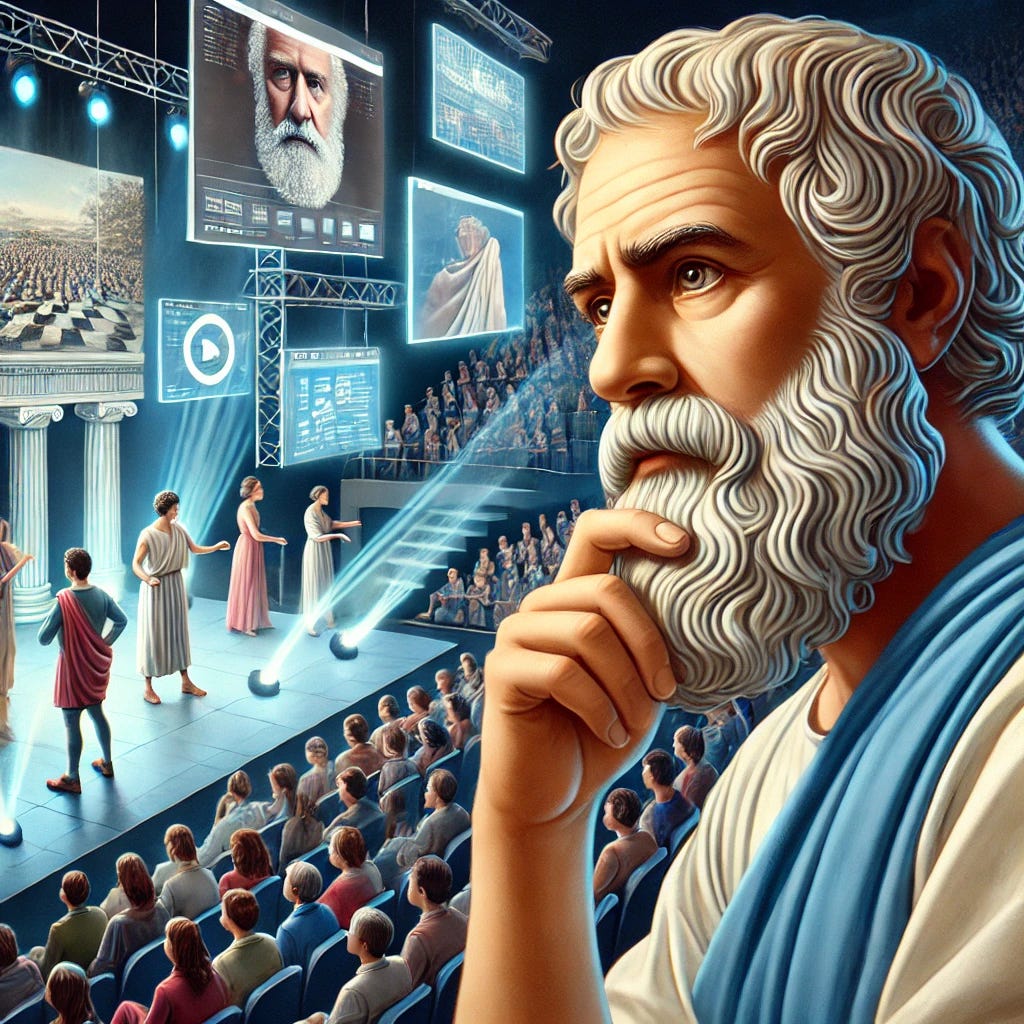
The Cogitating CevichePresentsSophocles Reimagined: The Greek Tragedian in the Age of Modern Theater, Therapy, and MediaPast Forward: Historical Icons in the Digital Frontier #34By Conrad HannonNarration by Amazon PollyPrefaceWelcome to the thirty-fourth entry in our ongoing series, "Past Forward: Historical Icons in the Digital Frontier." This series explores how history's most influential figures might interact with the modern world, imagining how their timeless talents and insights could influence contemporary society. In this installment, we bring Sophocles, the celebrated Greek tragedian, into the 21st century. Imagine the author of "Antigone" and "Oedipus Rex" stepping into the vibrant world of modern theater, drama therapy, and multimedia storytelling. How would Sophocles respond to the evolution of drama, new forms of audience engagement, and the therapeutic power of storytelling in today’s world? Let us accompany Sophocles as he immerses himself in the modern landscape of theater and media, leaving an indelible mark on our understanding of human emotion and resilience.IntroductionThe scent of stage makeup fills the air as Sophocles stands backstage, observing the flurry of activity as actors prepare for the evening’s performance. He is in a modern theater, far from the outdoor amphitheaters of ancient Athens, yet the energy is unmistakably familiar. Sophocles—one of ancient Greece’s greatest dramatists—has been transported to the present day, surrounded by sets, lighting rigs, and a diverse group of actors. The curtain is about to rise on a performance of "Antigone," but this version is not quite as he remembers it. The lines are his, yet the setting is contemporary, and the dialogue is filled with fresh nuances that speak directly to today’s audiences. Sophocles watches intently, curious to see how his work has been adapted for a modern world and how drama has evolved as a tool for storytelling, healing, and transformation.A Modern Theater: Reimagining the ClassicsSophocles’ journey begins in the heart of a bustling city’s theater district. He finds himself in front of a modern playhouse that is showcasing a new adaptation of "Antigone." Intrigued, he steps inside, settling into the darkened theater just as the lights begin to dim. The production takes his familiar tragedy and reimagines it in a contemporary context—Antigone is now a young activist, standing against a corrupt government, while Creon is portrayed as a powerful corporate executive. Sophocles is fascinated by the reinterpretation of his themes: authority, morality, and individual conscience are no longer confined to ancient Thebes but resonate powerfully in a modern, urban setting.As the play unfolds, Sophocles notices how the audience reacts—how they gasp at Antigone’s defiance, how they silently empathize with Creon’s growing desperation. He realizes that his tragedies still resonate deeply, transcending the centuries. The modern adaptation captures the same emotional intensity he once sought to evoke, but the new setting adds layers of meaning that Sophocles had not anticipated. After the performance, the director invites Sophocles backstage, where they discuss the adaptation. The director explains how the core of his work—human suffering, moral dilemmas, and the tragic consequences of hubris—still speaks to the issues of today’s world: social justice, civil disobedience, and the consequences of unchecked power.Sophocles is struck by how modern theater uses technology to enhance storytelling. The director shows him how lighting, sound, and even projection mapping are used to create a more immersive experience, adding symbolic layers to the narrative. Sophocles marvels at the ability of these tools to amplify the emotional impact of his work, creating an atmosphere that draws the audience into the story on a visceral level. He is inspired by the possibilities and begins to think about how he might adapt his own style to embrace these innovations, envisioning new ways to tell stories that bridge the gap between ancient and modern worlds.Drama Therapy: Healing Through TragedySophocles’ journey takes a transformative turn when he is introduced to the field of drama therapy. He is taken to a community center where a drama therapist is leading a group session for trauma survivors. Sophocles watches as participants use role-playing and storytelling to express emotions that are too difficult to articulate in words alone. He sees echoes of his own work—catharsis, the purging of deep emotions through drama—come to life in a profoundly therapeutic way.The therapist explains that many of the exercises they use draw inspiration from Greek tragedy. Participants explore the roles of victim, oppressor, and bystander, using the framework of classic plays to process their own experiences. Sophocles is moved by the therapeutic potential of his art. He always believed that tragedy could lead audiences to a deeper understanding of themselves and their world, but seeing it used as a direct tool for healing surpasses even his expectations.Sophocles becomes an active participant in the therapy sessions, helping to craft new exercises that draw on the themes of his plays. He works with the therapist to adapt scenes from "Oedipus Rex" and "Electra," allowing participants to explore complex family dynamics and the search for identity. He finds great fulfillment in seeing how his tragedies, once meant to entertain and provoke reflection, now serve as a bridge to healing. The participants are empowered by taking on the roles of tragic heroes, confronting their own fears and finding strength in their vulnerability. Sophocles sees firsthand how the emotional truths at the heart of his plays can help people navigate their own journeys of recovery.New Media and Storytelling: Sophocles Meets the Digital AgeSophocles’ exploration of the modern world wouldn’t be complete without delving into the vast realm of digital media. He is introduced to a group of young playwrights who are experimenting with multimedia storytelling—combining live performance with film, virtual reality, and interactive elements. They invite Sophocles to participate in a workshop where they are developing a new project inspired by "The Theban Plays."Sophocles watches as the playwrights use digital tools to create an immersive narrative. Actors perform live on stage while digital projections depict the surrounding environment—blending physical and virtual worlds to depict Thebes as a city both ancient and futuristic. Sophocles is amazed by the way technology can be used to add layers of meaning, transforming the setting into a dynamic character in its own right. He is especially fascinated by the use of virtual reality, which allows audience members to step into the story and experience the action from different perspectives.The playwrights also introduce Sophocles to social media, explaining how it has transformed the way stories are shared and experienced. They show him how audiences can engage with characters and plotlines before, during, and after the performance—using platforms like Twitter and Instagram to participate in the narrative. Sophocles is intrigued by the immediacy of this interaction, realizing that storytelling in the digital age is no longer confined to the theater. Instead, it is a continuous, collaborative experience that invites audiences to become co-creators of the story.Sophocles begins collaborating with the young playwrights, lending his expertise in crafting compelling narratives while learning to embrace the possibilities of new media. Together, they develop an interactive adaptation of "Oedipus Rex," where audiences can explore different characters’ perspectives and make choices that influence the outcome of the story. Sophocles finds this approach exhilarating—it transforms the passive experience of watching a tragedy into an active exploration of fate, free will, and the consequences of one’s actions. The project is a resounding success, and Sophocles is delighted to see how his work can evolve in ways that engage new generations.Public Engagement: Sophocles as a Modern Storytelling AdvocateSophocles’ journey through the modern world also includes a role as an advocate for the power of storytelling in contemporary society. He is invited to speak at universities and conferences, where he shares his insights into the timeless nature of drama and its role in helping individuals and communities process complex emotions. Sophocles emphasizes that while the tools and mediums have changed, the essence of storytelling remains the same—at its core, it is about exploring the human condition, confronting our fears, and finding meaning in our experiences.He becomes an outspoken advocate for the inclusion of theater and drama therapy in education and community programs, believing that the arts can play a vital role in fostering empathy and resilience. Sophocles participates in workshops with educators, helping them develop curricula that use drama to teach emotional intelligence, ethics, and social responsibility. He draws on his own plays to illustrate how the struggles of characters like Antigone and Oedipus can serve as powerful teaching tools, prompting students to reflect on their own values and the choices they make.Sophocles also collaborates with mental health professionals to create public awareness campaigns that use storytelling to address social issues such as grief, addiction, and social justice. He believes that the themes of Greek tragedy—hubris, fate, and the pursuit of truth—are more relevant than ever in a world facing unprecedented challenges. By sharing stories that resonate on a deeply human level, Sophocles hopes to inspire audiences to confront difficult truths, to empathize with others, and to take action in their own communities.Conclusion: The Timeless Tragedian in a Modern WorldSophocles’ journey into the 21st century reveals a world where theater has evolved in extraordinary ways, yet the fundamental power of storytelling remains unchanged. From reimagining his classic tragedies on the modern stage to witnessing the transformative impact of drama therapy, Sophocles finds that his work continues to resonate with audiences, offering insights into the complexities of the human experience. He embraces new media, exploring how technology can expand the boundaries of storytelling and make the audience an active participant in the narrative.As Sophocles prepares to return to his own time, he leaves behind a message for the artists, therapists, and storytellers of today: "The power of drama lies not in its spectacle, but in its ability to reveal truth. Whether through the spoken word, the digital screen, or the immersive stage, let us continue to tell stories that reflect the human soul, that challenge us to grow, and that remind us of our shared humanity." Sophocles’ journey through the modern age serves as a reminder that the essence of storytelling transcends time, connecting us across generations in our shared quest for understanding and meaning.Thank you for your time today. Until next time, stay gruntled. This is a public episode. If you'd like to discuss this with other subscribers or get access to bonus episodes, visit thecogitatingceviche.substack.com/subscribe
Embed this episode
Ready to play
Sophocles Reimagined: The Greek Tragedian in the Age of Modern Theater, Therapy, and Media
No transcript for this episode yet
Similar Episodes
No similar episodes found.
Similar Podcasts
No similar podcasts found.