
EPISODE · Jan 23, 2025 · 15 MIN
Sor Juana Inés de la Cruz: A 17th-Century Luminary Navigates Contemporary Feminism and Digital Frontiers
from The Cogitating Ceviché Podcast · host Conrad T Hannon
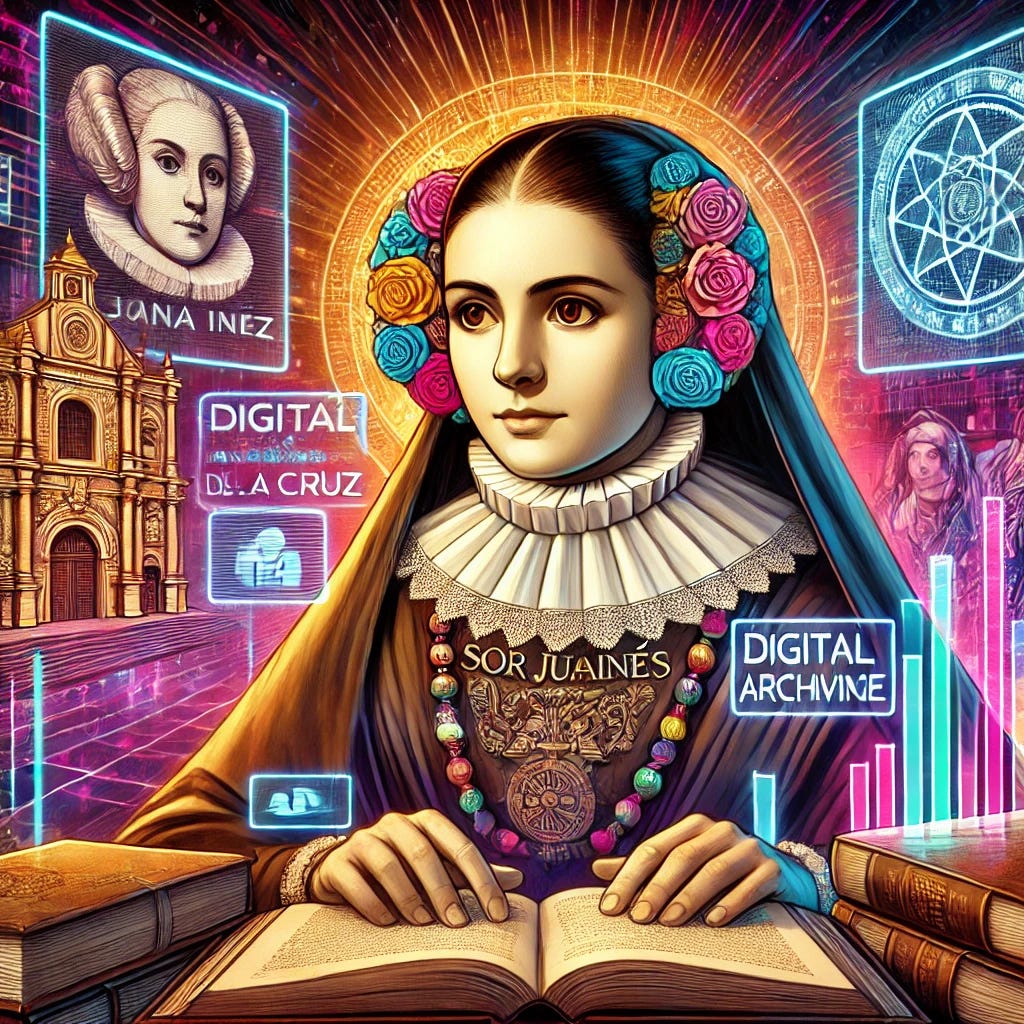
The Cogitating Ceviche PresentsSor Juana Inés de la Cruz: A 17th-Century Luminary Navigates Contemporary Feminism and Digital FrontiersBy Conrad HannonNarration By Amazon PollyPrefaceSor Juana Inés de la Cruz, the celebrated 17th-century Mexican scholar, poet, and nun, was a trailblazer in advocating for women's intellectual freedom and education. A self-taught polymath who defied societal norms, Sor Juana’s works remain a powerful testament to the pursuit of knowledge against formidable barriers. In imagining her presence in today’s world, we ask: How would her voice resonate in contemporary debates on feminism? What contributions might she offer to the digital preservation of cultural heritage and educational reform? Join us as we explore Sor Juana’s journey into the complexities and opportunities of the 21st century.Arrival in the Modern WorldSor Juana’s first encounter with the modern world unfolds in the vibrant heart of Mexico City—a metropolis teeming with activity, its streets lined with bookstores, art galleries, and digital screens displaying news and advertisements. Clad in her traditional nun’s habit, she is simultaneously out of place and strikingly composed, her sharp gaze absorbing every detail. The cacophony of modern sounds—the hum of engines, snippets of conversations, and the omnipresent buzz of technology—awakens her curiosity. She marvels at the colorful street art adorning the walls, blending traditional motifs with contemporary messages about equality and justice. The sight of women confidently navigating public spaces fills her with a profound sense of accomplishment for the progress she hoped for in her own time.Her journey takes her to a university campus, a bustling microcosm of intellectual activity. Here, sprawling libraries brim with books from every discipline imaginable, alongside rows of computers connecting students to vast online resources. As she walks through the halls, she hears snippets of animated debates and the hum of collaborative study. One student group catches her eye; they are discussing feminist theory. Drawn by their energy, she joins their circle, listening intently. The discussion ranges from classic works to contemporary struggles, linking global movements for gender equality. Sor Juana is overwhelmed yet invigorated as she recognizes echoes of her own challenges in their words.Later, in a lecture hall, Sor Juana listens to a professor dissect modern feminist theory, exploring concepts of intersectionality and systemic inequality. She is struck by how the struggles she articulated in her writings centuries ago persist, albeit reframed for a modern context. The idea of intersectionality, linking gender with race, class, and other identities, resonates deeply with her own experiences as a mestiza scholar in colonial Mexico. Her mind races with connections and ideas, eager to contribute her unique perspective. She feels a spark of determination to use this new world’s tools and opportunities to further the causes she championed so passionately centuries ago.Historical Context and Modern ConnectionIn her time, Sor Juana’s intellectual pursuits were revolutionary. Born in 1648 in colonial Mexico, she defied expectations for women of her era by pursuing rigorous self-education. Her extensive library—which spanned disciplines from theology and science to literature and mathematics—was a testament to her relentless curiosity and hunger for knowledge. Her aptitude for philosophy, literature, and science earned her recognition as one of the most learned individuals of the Spanish Americas. Yet, her intellectual achievements were met with skepticism and opposition from a society that believed a woman’s place was confined to domestic or religious duties. Her boldness in challenging these societal norms, particularly in advocating for women’s right to education, brought her into sharp conflict with the Church. When her writings questioned the limitations imposed on women and championed intellectual freedom, they provoked censure that ultimately forced her into silence, a devastating end to her public intellectual life.Today, her legacy as a feminist icon remains as potent as ever. Her famous essay, Respuesta a Sor Filotea de la Cruz, stands as a manifesto for intellectual freedom and a passionate defense of women’s right to knowledge. It is a text that continues to inspire feminists across the globe, who draw strength from her eloquent arguments and see her as a precursor to the gender equality movements of the 20th and 21st centuries. Sor Juana’s advocacy for education as a means of empowerment resonates deeply in a world where barriers to knowledge still persist. As she immerses herself in modern discourses, Sor Juana is awed by the strides made in education and gender equity—the presence of women in leadership roles, the proliferation of global education initiatives, and the open access to scholarly resources online. Yet, her keen eye does not miss the enduring inequalities. She notes with concern the systemic issues that keep millions of women, particularly in marginalized communities, from accessing education. These barriers—rooted in poverty, cultural biases, and political neglect—strike a familiar chord, echoing the struggles she herself faced centuries ago.Sor Juana reflects on the evolution of the feminist movement and its intersection with other social justice causes. She marvels at the ways in which women have harnessed technology and media to amplify their voices, creating a global network of solidarity and advocacy. At the same time, she contemplates the challenges that remain—from the gender pay gap to the underrepresentation of women in STEM fields—and wonders how her own experiences and writings might contribute to addressing these issues. Her historical perspective brings a fresh lens to contemporary debates, reminding modern audiences of the enduring importance of education, resilience, and the courage to challenge entrenched power structures.Exploring Modern InnovationsSor Juana’s natural curiosity leads her to explore the tools and technologies that shape contemporary scholarship and activism. She is introduced to digital archiving projects, where she learns about efforts to preserve cultural heritage through digitization. The idea of safeguarding knowledge from the ravages of time and censorship resonates deeply with her, recalling her own struggles to protect and disseminate her writings under the watchful eyes of colonial authorities. She eagerly participates in workshops on digitizing manuscripts, offering insights into the meticulous care required to preserve historical texts while ensuring their accessibility for future generations. Her enthusiasm is contagious, inspiring the archivists to expand their scope to include rare indigenous works that might otherwise be lost.Her collaboration with a team of archivists leads to a groundbreaking project: the digitization of colonial-era writings, including her own works, with annotations that contextualize them for modern readers. She dedicates herself to cataloging and cross-referencing texts, creating connections between forgotten authors and modern thinkers. Sor Juana’s keen understanding of language and history makes her an invaluable contributor, and she proposes innovative ways to engage younger audiences, such as interactive platforms, augmented reality experiences, and virtual reality recreations of colonial libraries. These initiatives bring historical texts to life, allowing students to virtually "walk through" a library filled with voices from the past, connecting them to present-day issues.In education, Sor Juana is astounded by the potential of online learning platforms to democratize access to knowledge. She partners with educators to design curricula that blend classical literature with contemporary issues, ensuring that her works—and those of other marginalized voices—remain relevant. Her efforts extend to workshops for educators on how to use these platforms effectively, highlighting the importance of teaching critical thinking alongside factual knowledge. Her suggestion to include multilingual resources sparks a new initiative, making education accessible to diverse communities. Sor Juana also advocates for integrating storytelling and the arts into STEM education, believing that a holistic approach fosters creativity and empathy. Inspired by her vision, a global coalition of educators implements her ideas, launching pilot programs that combine literature, history, and technology to reimagine learning for the 21st century.Ethical Reflections and Societal ImpactAs Sor Juana delves into modern feminism, she is struck by the parallels between her own struggles and those faced by women today. She engages in discussions about intersectionality, recognizing how issues of race, class, and gender intersect to shape individual experiences. Drawing on her experiences as a mestiza woman in colonial Mexico, she shares poignant anecdotes of overcoming barriers in a rigid caste system, underscoring the need for a feminism that embraces diversity and actively dismantles systemic inequities. Her historical insights lend gravity to modern conversations about inclusivity, reminding participants of the enduring strength found in collective solidarity.Sor Juana also grapples with the ethical dilemmas of the digital age. She questions the commodification of knowledge and the ways in which algorithms perpetuate biases, such as disproportionately silencing marginalized voices or amplifying harmful narratives. Inspired by the complexity of these issues, she convenes a roundtable with tech ethicists and activists to explore solutions. Her reflections lead her to address online harassment, particularly against women and marginalized groups, calling for stricter regulations, robust community guidelines, and a cultural shift toward respect and inclusivity. She emphasizes the importance of educational campaigns to promote digital literacy, aiming to empower users to navigate online spaces responsibly.Her insights on intellectual freedom are especially poignant in debates about censorship and misinformation. Sor Juana’s experiences with suppression inform her passionate defense of free expression, which she balances with a call for accountability in the dissemination of information. She argues for transparent algorithms and public oversight of digital platforms, suggesting the creation of interdisciplinary councils that include voices from marginalized communities. Sor Juana envisions a digital world where ethical guidelines prioritize truth, equity, and the amplification of historically silenced perspectives. Her call to action resonates widely, sparking global discussions on the ethical responsibilities of technology in fostering a more just society.Collaborative ContributionsSor Juana’s influence extends beyond her individual contributions as she collaborates with contemporary thinkers, educators, and activists. She joins forces with feminist scholars to organize international conferences, where she delivers compelling speeches on the enduring importance of education and intellectual freedom. Her words inspire a new wave of activism, with young women taking up her mantle to advocate for equitable access to education globally. At these conferences, Sor Juana emphasizes the need to address systemic inequalities in education, highlighting how access to knowledge can uplift entire communities. She also conducts workshops, mentoring aspiring scholars and activists, and sharing her strategies for overcoming barriers to intellectual freedom.In the digital realm, Sor Juana partners with programmers and data scientists to develop an AI-driven platform that highlights underrepresented voices in literature. This tool uses advanced natural language processing to analyze and recommend works by women and other marginalized authors, creating a dynamic and inclusive literary community. She plays a hands-on role in curating the platform’s initial library, selecting texts that resonate across cultures and eras. Her deep appreciation for the written word ensures that the platform respects the nuances of language and culture, including regional dialects and historical context. The platform also incorporates interactive features such as virtual book clubs and discussion forums, fostering meaningful dialogue among its users.Her involvement in public policy also leaves a significant mark. Sor Juana advises governments and NGOs on education reform, emphasizing the need to integrate humanities into STEM curricula to cultivate critical thinking and empathy. She champions initiatives that promote lifelong learning, advocating for programs that support adult education and literacy in underserved communities. Her advocacy leads to pilot programs that combine literature, philosophy, and technology, demonstrating the transformative power of interdisciplinary education. These programs are later adopted on a broader scale, inspiring educational reforms that prioritize inclusivity and creativity alongside technical skills. Sor Juana’s influence becomes a cornerstone for a global movement, reshaping how education systems prepare future generations for a rapidly evolving world.Legacy and Modern InfluenceSor Juana Inés de la Cruz’s journey into the modern world reaffirms the timelessness of her ideas and the enduring relevance of her struggles. Her contributions to contemporary feminism, digital archiving, and education reform illustrate how historical figures can offer fresh perspectives on today’s challenges. By bridging the past and present, Sor Juana inspires a new generation to value knowledge, embrace diversity, and fight for equity. Her impact stretches beyond intellectual circles, as her writings become rallying cries for grassroots movements advocating for education reform and gender equality in underserved regions. Students, activists, and leaders alike draw upon her legacy to reimagine how societies can build inclusive frameworks for learning and dialogue.As she prepares to return to her own time, Sor Juana reflects on the vast potential of humanity to create, innovate, and connect. She contemplates the intricate interplay between history and progress, realizing that her work has found a new voice through the technologies and communities of the modern era. Her legacy, she understands, is not confined to the pages of history but lives on in the actions of those who continue to champion intellectual freedom and justice. She imagines her ideas carried forward by those inspired by her resilience—teachers introducing her writings in classrooms, programmers embedding her philosophies into AI-driven platforms, and activists using her essays to bolster campaigns for human rights.Filled with hope and determination, Sor Juana feels a deep connection to the people she has encountered in this future world. She knows that her influence will echo not only in academic institutions and policy debates but also in everyday acts of resistance and creativity. As she takes one last look at the vibrant tapestry of the 21st century, she carries with her a renewed sense of purpose. Her voice, now amplified across digital and physical realms, becomes a timeless beacon guiding humanity toward a more equitable and enlightened future.Thank you for your time today. Until next time, stay gruntled. This is a public episode. If you'd like to discuss this with other subscribers or get access to bonus episodes, visit thecogitatingceviche.substack.com/subscribe
Embed this episode
NOW PLAYING
Sor Juana Inés de la Cruz: A 17th-Century Luminary Navigates Contemporary Feminism and Digital Frontiers
No transcript for this episode yet
Similar Episodes
No similar episodes found.
Similar Podcasts
No similar podcasts found.