
EPISODE · Dec 16, 2025 · 21 MIN
Sorghum, The ancient grain that might just save our future
from Duke Teynor · host DUKE TEYNOR
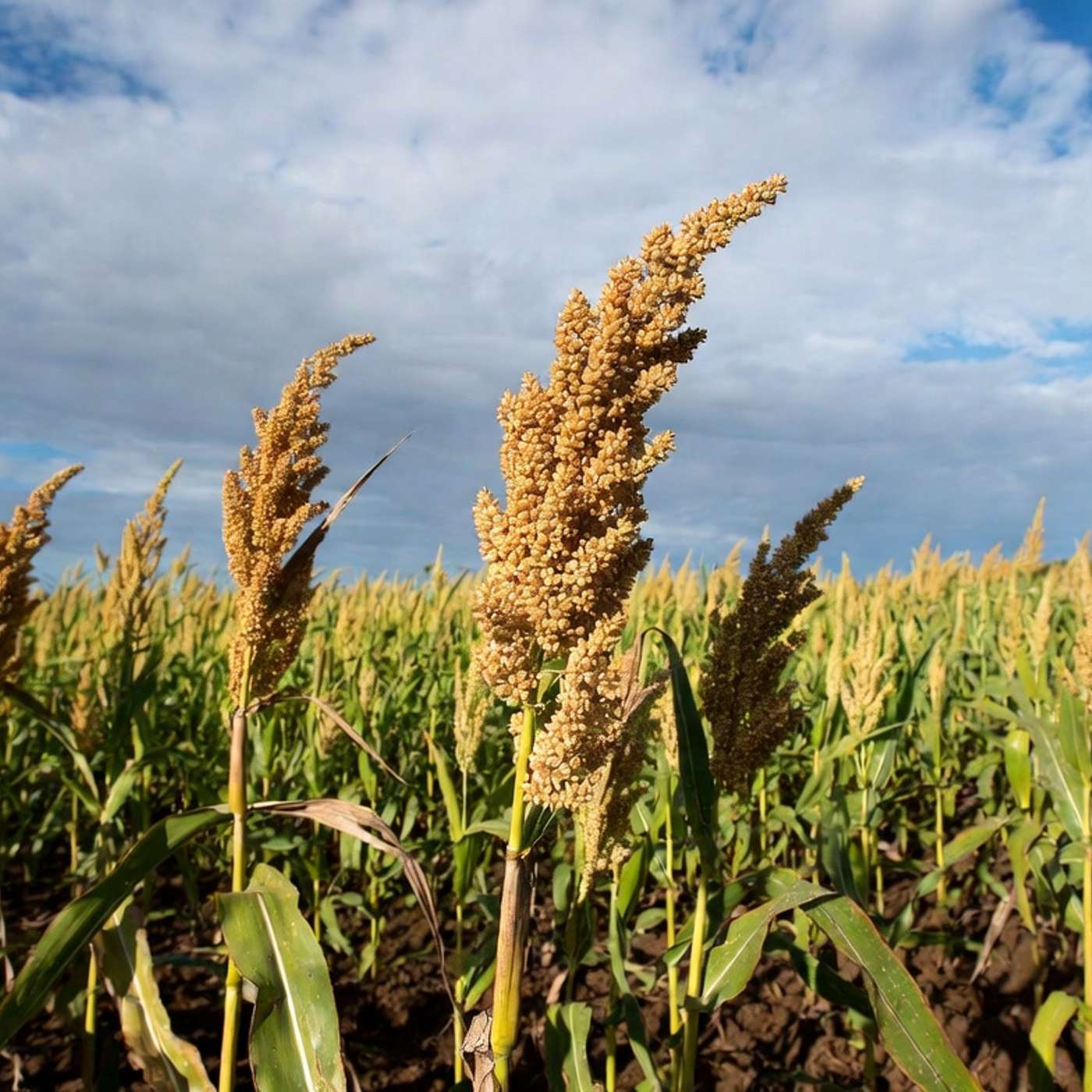
Today we're diving into something that might surprise you. We're not talking music, we're not talking policy, we're not even talking about the latest AI developments. Today, we're talking about a grain. But not just any grain.We're talking about sorghum—one of the most ancient, resilient, and frankly underappreciated crops on planet Earth. A grain that's been feeding humanity for over five thousand years. A grain that survives where corn and wheat can't. A grain that's about to become absolutely critical as our climate continues changing and our global population keeps growing.Sorghum. The ancient grain that might just save our future.So settle in, because we're about to explore the fascinating history, the incredible versatility, and the untapped potential of this remarkable plant. And I guarantee you, by the end of this episode, you'll never look at this humble grain the same way again.Let's get into it. PART ONE: THE ANCIENT HISTORY Alright, so let's start at the beginning. And I mean the very beginning—because sorghum has been around longer than most of what we call civilization.Archaeological evidence suggests that sorghum was first domesticated in northeastern Africa, specifically in what's now Ethiopia and Sudan, somewhere between 8,000 and 5,000 BCE. That's right—we're talking about a crop that predates the Egyptian pyramids. While our ancestors were still figuring out how to transition from hunter-gatherers to agricultural societies, they were already cultivating sorghum.Why? Because it worked where nothing else would.See, the regions where sorghum originated were harsh. Hot. Dry. Unpredictable rainfall. Soil that wasn't particularly forgiving. And yet people needed food. They needed reliable calories. They needed something that could handle the brutal conditions of sub-Saharan Africa and still produce a harvest.Sorghum was the answer.From those African origins, sorghum spread throughout the continent, becoming a staple crop for countless cultures. It moved into West Africa, became central to diets across the Sahel region, spread south into various kingdoms and empires. Everywhere it went, it adapted. Different varieties emerged for different conditions—some for wetter climates, some for extreme drought, some for altitude, some for heat.And here's what's remarkable: Unlike wheat or rice, which require very specific growing conditions, sorghum is basically the survivor of the grain world. It's the plant equivalent of that person who can sleep on a concrete floor, eat whatever's available, and still wake up ready to work. Sorghum doesn't complain. It just grows.The grain eventually made its way across the Indian Ocean through ancient trade routes, establishing itself in India and parts of Asia. Different cultures adopted it, gave it different names, developed different uses. In India, it became jowar. In China, gaoliang. Each culture recognized what African farmers had known for millennia—this grain was reliable.Now, sorghum didn't arrive in the Americas until much later. It came with the slave trade—a dark chapter of history, but one that's important to acknowledge. Enslaved Africans brought sorghum seeds with them, maintaining a connection to their homeland through this familiar crop. In the American South, sorghum found another home, another set of conditions where it could thrive.By the 1850s, sorghum cultivation had expanded across the southern United States. Farmers discovered something interesting—you could not only eat the grain, but certain varieties of sorghum produced incredibly sweet juice that could be boiled down into syrup. Sweet sorghum became a major crop, particularly during the Civil War when sugar supplies from Louisiana were disrupted. Sorghum syrup became the sweetener of choice across much of rural America.My own family history connects to this. Growing up in the South, sorghum syrup was a staple. You'd pour it over biscuits, use it in baking, sweeten your coffee with it. That dark, rich, almost molasses-like flavor with hints of caramel and earth—that was sorghum. And most folks didn't think twice about it. It was just part of Southern food culture.But here's what most people don't realize: While we in America were mainly using sorghum for syrup and animal feed, the rest of the world—particularly Africa and Asia—continued relying on sorghum grain as a primary food source. Hundreds of millions of people have depended on sorghum for their daily calories for thousands of years.It's the fifth most important cereal crop globally, after wheat, rice, corn, and barley. And yet, if you walk into an American grocery store and ask where the sorghum is, you'll probably get blank stares.That's about to change. Because sorghum isn't just an ancient grain with a rich history. It's a crop perfectly suited for the challenges we're facing right now. PART TWO: THE RESILIENCE FACTOR Let me tell you why sorghum matters more today than maybe ever before.Climate change is real. I'm not here to debate it—the evidence is overwhelming. And one of the major consequences of our changing climate is increased stress on our food systems. Droughts are becoming more severe and more frequent. Water resources are becoming scarcer. Growing seasons are becoming less predictable.Traditional crops that require abundant water—corn, wheat, rice—are struggling in many regions. Farmers are watching yields drop. Irrigation costs are skyrocketing. And we're realizing that our current agricultural system, heavily dependent on these water-intensive crops, might not be sustainable long-term.Enter sorghum.Sorghum is what agronomists call a C4 plant. Without getting too deep into the biochemistry, this means sorghum photosynthesizes more efficiently than most crops, especially in high temperatures. It can maintain productivity even when temperatures soar above 100 degrees Fahrenheit—conditions that would devastate corn or wheat.But the real superpower of sorghum is its water efficiency. Sorghum requires approximately 30% less water than corn to produce the same amount of grain. In drought conditions, sorghum can essentially go dormant—shutting down growth temporarily, conserving resources—and then resume growing when moisture returns. Corn can't do that. Wheat can't do that. Sorghum can.The plant has an extensive root system that digs deep into the soil, accessing moisture that other crops can't reach. Those roots can extend six feet or more below the surface, finding water reserves that keep the plant alive even during extended dry periods.Sorghum also tolerates poor soil conditions better than most grains. It doesn't require heavy fertilization. It resists pests relatively well. It can grow in alkaline soils, acidic soils, soils with high aluminum content that would poison other crops. Basically, sorghum grows where other things give up.Now, I know what you're thinking: "Duke, if sorghum is so great, why isn't it everywhere already?"Fair question. The answer is complicated, involving agricultural subsidies, historical crop preferences, infrastructure built around corn and wheat, and frankly, a lack of consumer awareness in developed countries. But that's starting to change.As water scarcity becomes a pressing issue—particularly in the American West and Southwest—farmers are reconsidering their options. Growing corn in Arizona or West Texas is becoming economically unsustainable. The water simply isn't there. But sorghum? Sorghum can work.Research institutions are investing heavily in sorghum breeding programs, developing new varieties wi...
Embed this episode
Ready to play
Sorghum, The ancient grain that might just save our future
No transcript for this episode yet
Similar Episodes
No similar episodes found.