
EPISODE · May 10, 2026 · 7 MIN
'Sorry for playing': Despite world's lowest birthrate, in Korea school activities muted by residents, parents
from Korea JoongAng Daily - Daily News from Korea · host SEO JI-EUN
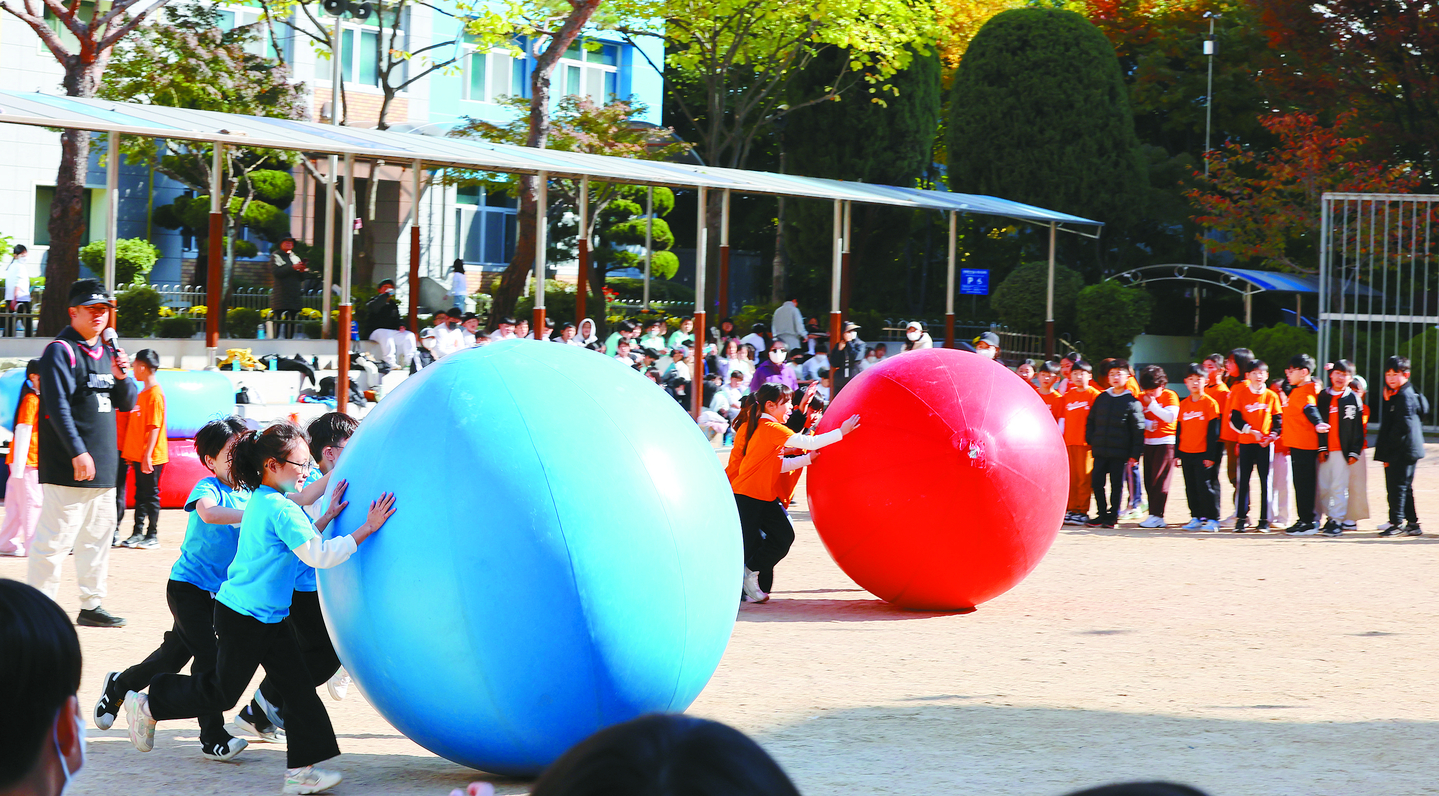
This article is by Seo Ji-eun and read by an artificial voice. Park Sung-jae, an MC, has spent 24 years hosting children's events, which used to be lively days full of outdoor activities and kids joyfully expressing themselves. However, these days, the first thing he does at a school sports day is to have the kids say "sorry." "We're sorry. We'll only play for a little while today," a group of about 100 elementary students in Daegu chanted in unison, facing the apartment blocks adjacent to their school before their sports day started. The video spread widely across the country — and the size of the school it captured reflects Korea's 0.8 total fertility rate, the world's lowest. But despite the country's desperate need for more children, it is growing less tolerant of the ones it has. Before nearly every sports day, schools give Park the same instruction: Keep the volume down. Speakers get angled away from nearby apartment blocks, and when that isn't enough, police get called or residents walk onto school grounds mid-event to pull the plug themselves — a far cry from the days when a school sports day was considered a neighborhood celebration, drawing curious onlookers from the surrounding streets. For many schools, the logical conclusion has been to move sports day indoors altogether, where no one outside can hear them. What was once a place where children grew up together — through running about, competing and sharing experiences both in and out of the classroom — is increasingly becoming a stripped-down service operation, experts say, one that would rather do less than risk a complaint. No more first place According to a teacher in Gwacheon, Gyeonggi, who has taught for 27 years, individual footraces — where children used to get their hands stamped 1st, 2nd or 3rd — are gone. "Now the point is simply that every child crosses the finish line," said Kim, who asked to be identified only by her surname. Awards and prizes in the classroom have been phased out too, after parents complained that losing hurt their children's confidence. Group performances — such as traditional fan dances that classes once rehearsed for months — have also disappeared following parent complaints that the preparation cut into class time. With teachers unwilling to absorb the risk of organizing events themselves, many schools now outsource the entire day to private event companies. Activities outside school have fared worse. A parent of two children in Seocho District, southern Seoul, surnamed Cho, said her son's elementary school no longer runs any off-campus trips at all. Cho's son started elementary school just as the Covid-19 pandemic hit, and by the time restrictions lifted, the climate around teacher liability had already changed. Consequently, he has never been on a school field trip in his entire six years of elementary school. "He saw his older sister — four years ahead of him — pack lunchboxes for day trips, go on overnight excursions and do father-and-child camping through school, so he had high hopes," Cho said. "But he is quite disappointed he's never been able to go somewhere on a bus with his classmates." A quarter ran day trips only, and 7.2 percent had stopped all forms of off-campus activity. Of those surveyed, 89.6 percent said they were anxious about the prospect of criminal liability if an accident occurred. The constant fear of lawsuits is also taking a toll on teachers' morale. "Many of us jokingly say that our retirement is not in our own hands, but in the hands of the students and parents we happen to meet," Kim said. Kim herself developed a vestibular disorder this year that she attributes to stress. Teachers alone take the fall Park Nam-gi, a professor emeritus of education of Gwangju National University of Education, traces the problem to how liability is structured. In medicine and other professions, institutions absorb much of the legal risk when something goes wrong — however, teachers in Korea do not have that b...
What this episode covers
This article is by Seo Ji-eun and read by an artificial voice. Park Sung-jae, an MC, has spent 24 years hosting children's events, which used to be lively days full of outdoor activities and kids joyfully expressing themselves. However, these days, the first thing he does at a school sports day is to have the kids say "sorry." "We're sorry. We'll only play for a little while today," a group of about 100 elementary students in Daegu chanted in unison, facing the apartment blocks adjacent to their school before their sports day started. The video spread widely across the country — and the size of the school it captured reflects Korea's 0.8 total fertility rate, the world's lowest. But despite the country's desperate need for more children, it is growing less tolerant of the ones it has. Before nearly every sports day, schools give Park the same instruction: Keep the volume down. Speakers get angled away from nearby apartment blocks, and when that isn't enough, police get called or residents walk onto school grounds mid-event to pull the plug themselves — a far cry from the days when a school sports day was considered a neighborhood celebration, drawing curious onlookers from the surrounding streets. For many schools, the logical conclusion has been to move sports day indoors altogether, where no one outside can hear them. What was once a place where children grew up together — through running about, competing and sharing experiences both in and out of the classroom — is increasingly becoming a stripped-down service operation, experts say, one that would rather do less than risk a complaint. No more first place According to a teacher in Gwacheon, Gyeonggi, who has taught for 27 years, individual footraces — where children used to get their hands stamped 1st, 2nd or 3rd — are gone. "Now the point is simply that every child crosses the finish line," said Kim, who asked to be identified only by her surname. Awards and prizes in the classroom have been phased out too, after parents complained that losing hurt their children's confidence. Group performances — such as traditional fan dances that classes once rehearsed for months — have also disappeared following parent complaints that the preparation cut into class time. With teachers unwilling to absorb the risk of organizing events themselves, many schools now outsource the entire day to private event companies. Activities outside school have fared worse. A parent of two children in Seocho District, southern Seoul, surnamed Cho, said her son's elementary school no longer runs any off-campus trips at all. Cho's son started elementary school just as the Covid-19 pandemic hit, and by the time restrictions lifted, the climate around teacher liability had already changed. Consequently, he has never been on a school field trip in his entire six years of elementary school. "He saw his older sister — four years ahead of him — pack lunchboxes for day trips, go on overnight excursions and do father-and-child camping through school, so he had high hopes," Cho said. "But he is quite disappointed he's never been able to go somewhere on a bus with his classmates." A quarter ran day trips only, and 7.2 percent had stopped all forms of off-campus activity. Of those surveyed, 89.6 percent said they were anxious about the prospect of criminal liability if an accident occurred. The constant fear of lawsuits is also taking a toll on teachers' morale. "Many of us jokingly say that our retirement is not in our own hands, but in the hands of the students and parents we happen to meet," Kim said. Kim herself developed a vestibular disorder this year that she attributes to stress. Teachers alone take the fall Park Nam-gi, a professor emeritus of education of Gwangju National University of Education, traces the problem to how liability is structured. In medicine and other professions, institutions absorb much of the legal risk when something goes wrong — however, teachers in Korea do not have that b...
NOW PLAYING
'Sorry for playing': Despite world's lowest birthrate, in Korea school activities muted by residents, parents
No transcript for this episode yet
Similar Episodes
No similar episodes found.
Similar Podcasts
No similar podcasts found.