
EPISODE · Apr 23, 2026 · 8 MIN
South America, Africa, Asia, Australia, and New Zealand in the Shadow of Venetian America (1500–2026)
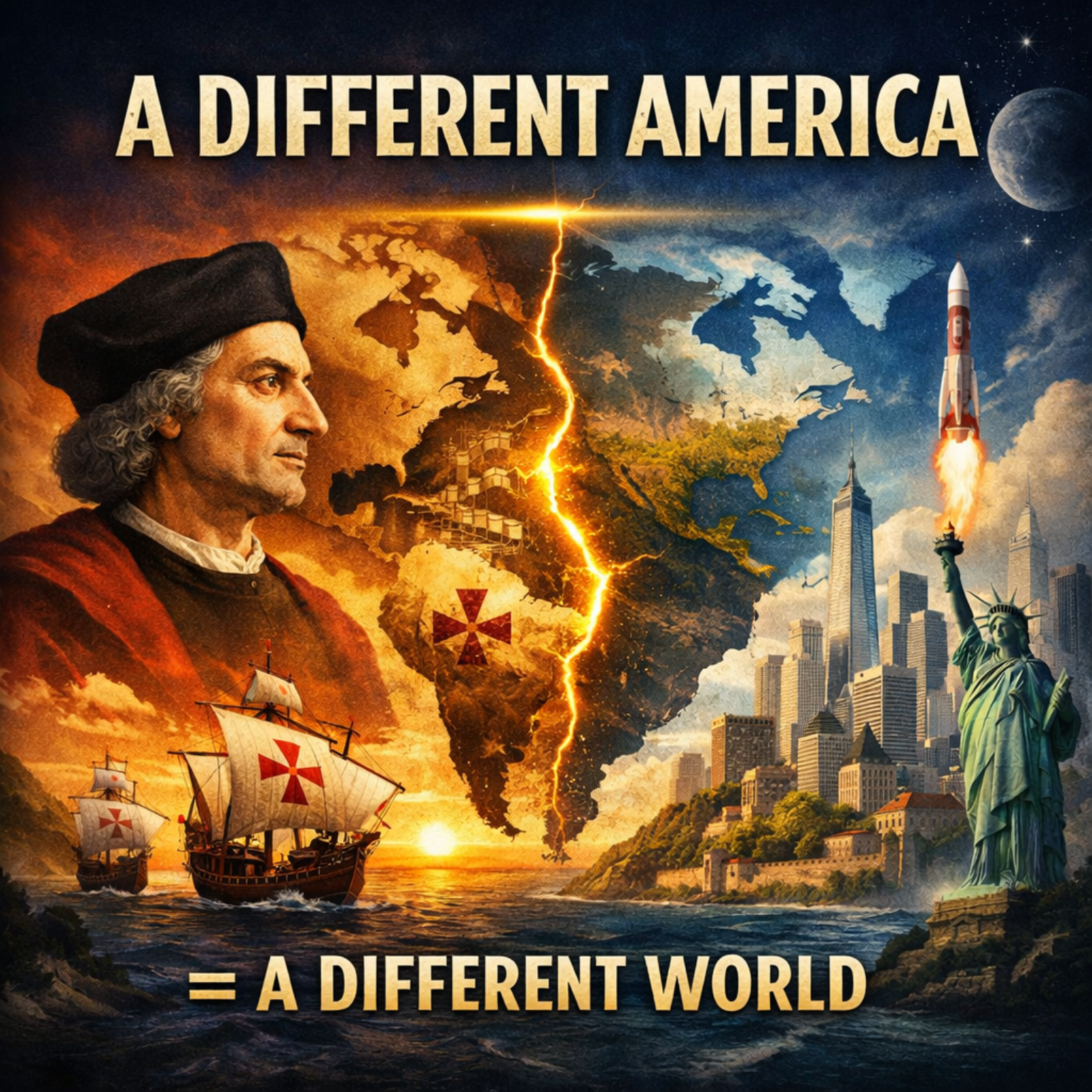
from A Different America = A Different World
What if the New World had not created empires… but a network? In this episode, we leave America and follow its shadow across the rest of the globe. Because the discovery of the New World was never just about one continent—it was the spark that connected Europe, Africa, Asia, and eventually Oceania into a single system. And if that system had been shaped not by Iberian crowns, but by the Venetian Republic, then the entire logic of globalization would have changed. Instead of vast territorial empires, the world begins to organize itself around ports, trade routes, contracts, and financial networks. America becomes not just a colony, but the beating heart of a commercial ocean—and that ocean reaches everywhere. In South America, no unified “Latin world” emerges. Instead, the continent becomes a mosaic of port republics, coastal powers, and inland regions that develop more slowly. Cities dominate over territories. Trade dominates over administration. The result is dynamic—but unstable. In Africa, the Atlantic system pulls even deeper. Coastal cities grow into cosmopolitan hubs linking continents, while the slave trade becomes even more systematized within a highly efficient commercial network. Africa is not just colonized—it is structurally woven into the global economy earlier and more intensely. In Asia, the encounter is different. Instead of immediate conquest, merchant networks arrive first—alliances, trade posts, financial ties. But over time, dependency grows. Port cities flourish, interiors resist, and the balance between cooperation and control defines a new kind of global tension. In Australia and New Zealand, colonization takes another path entirely. Not single-nation settler societies, but mixed, multicultural nodes emerge—bridges between Asia and America, shaped by trade rather than isolation. By the nineteenth century, the world no longer revolves around a few great empires. And by the twentieth, there is no single dominant superpower to define the age. Instead, power is dispersed across multiple centers—Atlantic, European, Asian, and oceanic. By 2026, this is a world that feels familiar… yet fundamentally different. Globalization exists—but not as the spread of one model. It is a web. Languages are diverse. Cultures are layered. Trade flows through many hands. This episode asks a simple but profound question: What if modernity had not been built by empires of land… but by empires of connection? Because if Venice had opened America, the world might not belong to one center. It might belong to the network.
Embed this episode
Ready to play
South America, Africa, Asia, Australia, and New Zealand in the Shadow of Venetian America (1500–2026)
No transcript for this episode yet
Similar Episodes
No similar episodes found.
Similar Podcasts
No similar podcasts found.