Sovereignty, Trust and Context Are Not Three Separate AI Problems
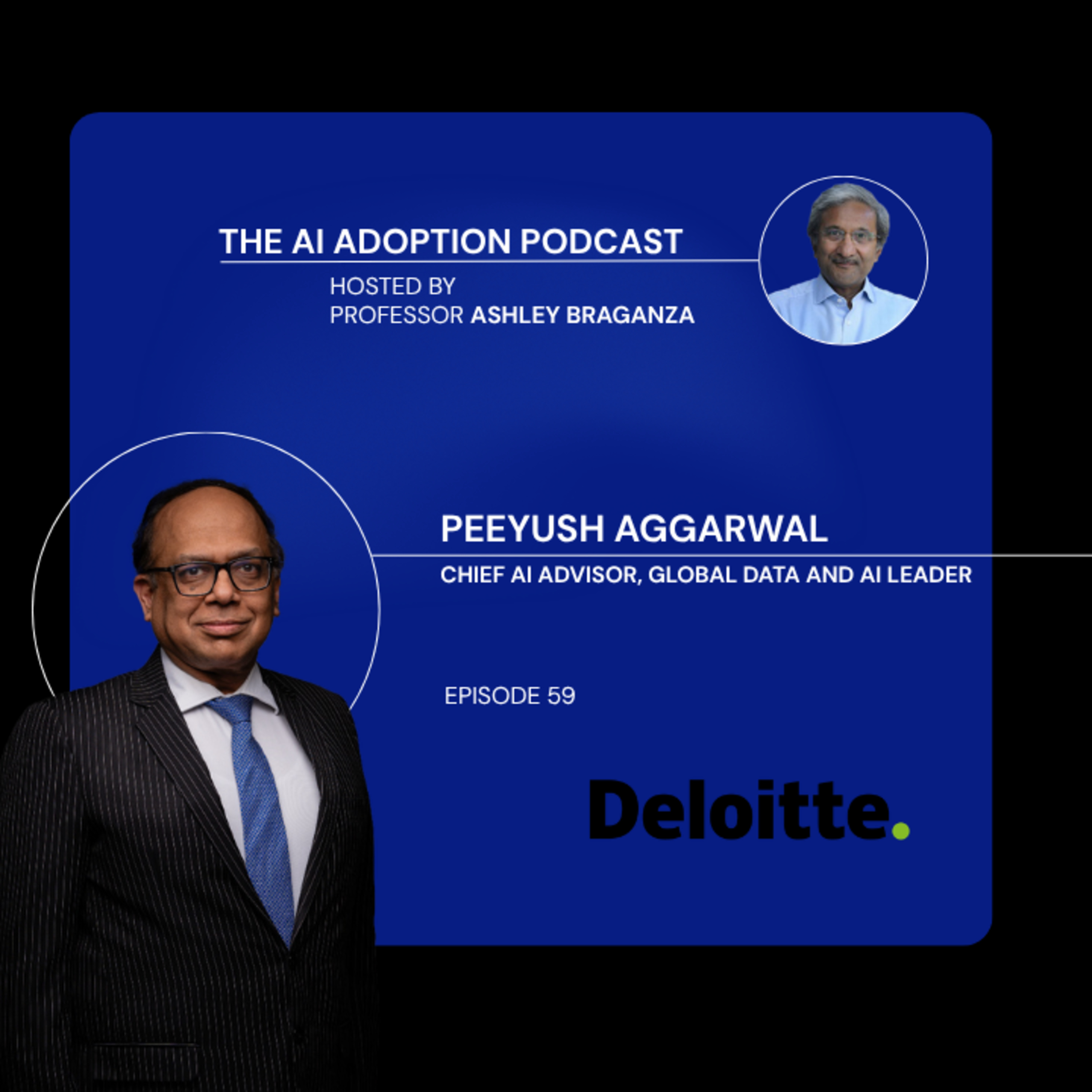
from The AI Adoption Podcast Hosted by Professor Ashley Braganza
Sovereignty, trust and context are often addressed separately, yet there is an underlying interplay between them. Send the same prompt to the same large language model and two institutions receive the same answer, so the advantage that remains is the context a firm owns. That context is arguably the ground on which trust has to be earned, and it holds only if the data and intelligence layer beneath it are not outsourced. Peeyush Aggarwal, senior partner at Deloitte, makes the case that banks, and organisations across the public, private and third sectors, have to solve all three at once. He argues that the book of record captures what happened, while the intelligence lives in the why, the how and the who, much of which has never been written down. He shows that agentic AI, software that pursues goals and takes actions rather than answering a single query, breaks the settled architecture of transaction, engagement and analytics, while latency, predictable outcomes and cost remain unsolved. He warns that the real risk in a multi-agent system is not one agent failing but the interaction between them, where intent drifts and no one can trace who decided what. He treats the disintermediation of banks as an open question, with trust the deciding factor. • "You do not outsource your intelligence layer," a principle Peeyush applies to energy, compute, models and data alike. • Trust cannot be deployed like software; it is earned transaction by transaction, and a single agent taking a wrong turn or inappropriate action can lose it. • A customer who says "I lost my wallet" forces four actions at once: detect fraud, issue a new card, block the old one, and offer further protection. • Four pillars of a durable AI strategy: a choice of tools, a business metric, instrumented trust, and data and context at the heart. The episode hands leaders a test to apply before approving another agent: name the business metric it is meant to move, and the context it draws on. Press play. Chapters: 00:00 National sovereignty and AI infrastructure 05:54 Controlling the intelligence layer and infrastructure design 07:51 Data management and the data moat 09:26 Business model evolution with AI 11:37 Impact of AI on value creation in industries 13:17 AI readiness of software architecture 15:41 Challenges of deploying AI at scale 18:39 Consumer trust and AI agents 22:42 Disintermediation of banking and trust 24:06 Ecosystem emergence and innovation 25:50 Key ingredients for a successful AI strategy 29:30 Summary: Trust, context, and strategic pillars
Embed this episode
No transcript yet.