SPA111 Fall2012 Subject Pronouns and the Verb Ser
from Michele Moore's Podcast Hosted by SmilingSun Spanish Notes
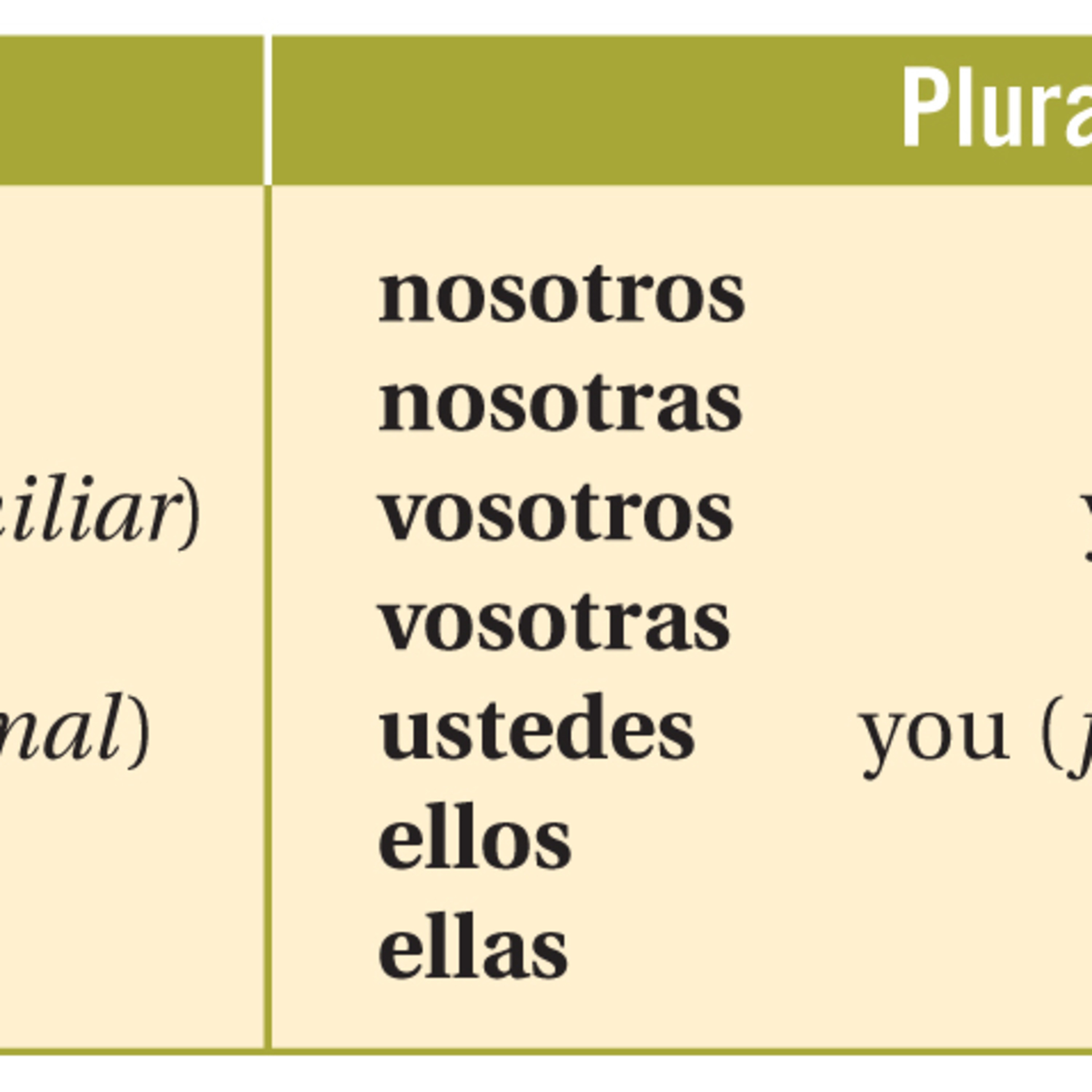
SUBJECT PRONOUNS The subject of a sentence, the noun, is the person or thing, which performs the action. The Subject pronoun replaces this person or thing, the noun. Before you can fully understand how to conjugate verbs, you must understand subject pronouns. ENGLISH 1st person singular I 2nd person singular you 3rd person singular he, she, it 1st person plural we 2nd person plural you (y'all) 3rd person plural they SPANISH 1st person singular yo 2nd person singular *tú 3rd person singular él, ella, *Ud. 1st person plural nosotros, nosotras 2nd person plural *vosotros, vosotras 3rd person plural ellos, ellas, *Uds. * The Spanish distinguish between the informal and the formal "you." The informal is used for friends, family, and people close in age. The formal is used to show respect or to indicate the person is unknown to the speaker. 2nd person singular *tú = you, informal, close friend, relative, child... 3rd person singular *Ud.= you, formal, respectful, older person... 2nd person plural *vosotros, vosotras, used primarily in Spain 3rd person plural *Uds. = y'all, used throughout Latin America Vosotros/vosotras are used only in Spain. In Latin America, ustedes is used to refer to both the familiar and the formal “plural you”. Ser In English, the verb "to be" can be conjugated in the present tense like this: Verb in the infinitive form (the "to" form) to walk, to talk, to read ... to be ENGLISH 1st person singular I am 2nd person singular you are 3rd person singular he is, she is, it is 1st person plural we are 2nd person plural you (y'all) are 3rd person plural they are Ser = to be SPANISH 1st person singular (yo) soy Soy de Pittsburgh. 2nd person singular (tú) eres Eres un alumno. 3rd person singular él es, ella es, Ud. es Es de Chicago. Who? We need the subject pronoun or the actual noun to clarify "who is from Chicago" 1st person plural nosotros, nosotras somos Somos estudiantes. 2nd person plural *vosotros, vosotras sois Sois de España. We won't use this in class, but I want you to be able to recognize it when you see it. 3rd person plural ellos, ellas, Uds. son Son de Pittsburgh. Who? Just like the 3rd person singular (es), with son we need to use the subject pronoun or the actual noun to clarify this statement. Don't stress we will do this over and over again.
Embed this episode
No transcript yet.