
EPISODE · Sep 15, 2025 · 52 MIN
Spartacus in Fact and Fiction
from Have Toga, Will Travel: Exploring Greece and Rome, Ancient and Modern
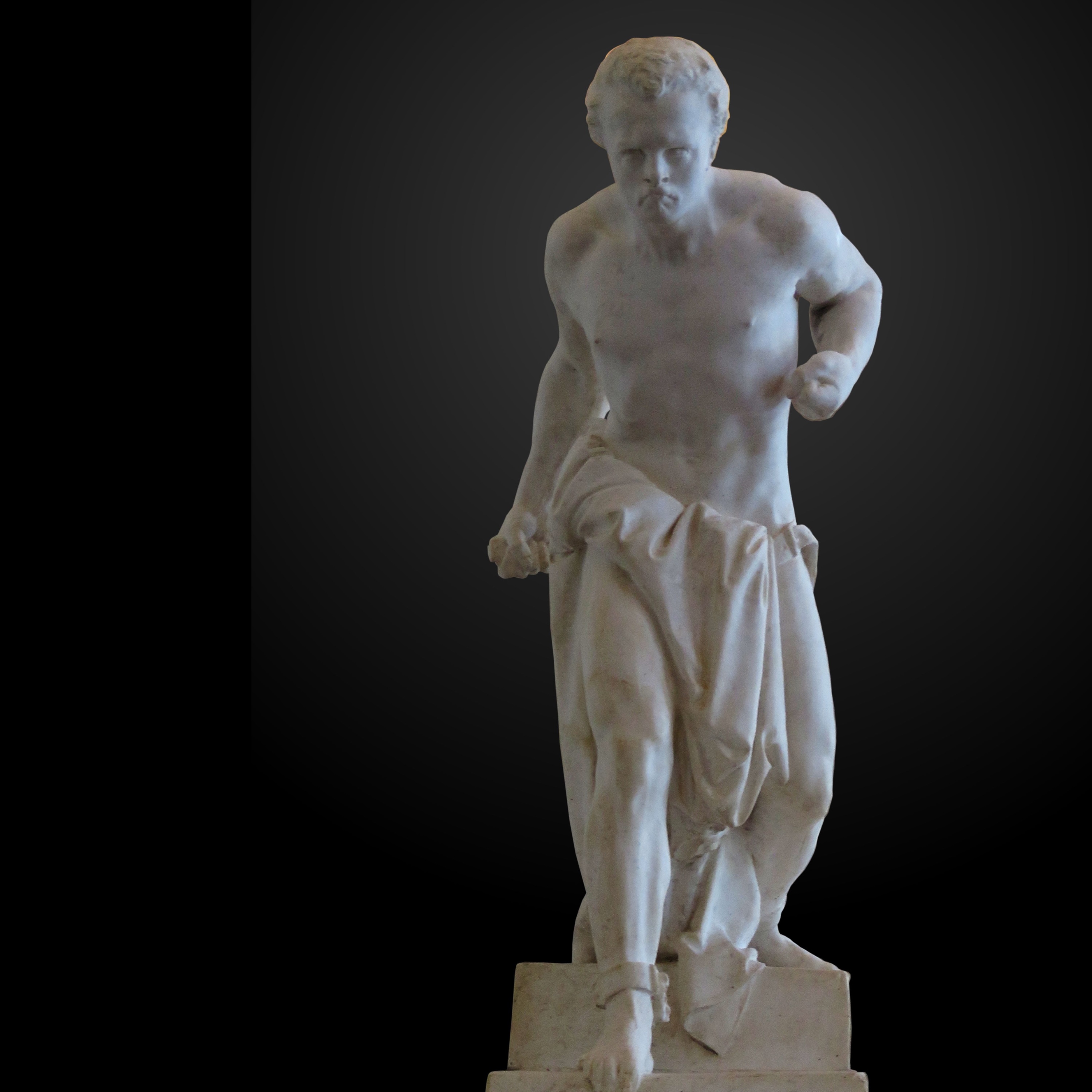
In this episode—the final episode in a three-part series on gladiators—Emily and Cam focus on Spartacus, the most famous gladiator of all. They first discuss the causes of Spartacus’ rebellion against the Romans, and then explore how Spartacus has been represented in modern literature and film.Cover image: Vincenzo Vela, Spartacus (1848); photograph by Rama (Wikimedia commons)Links:“I am Spartacus”: an iconic scene from Kirk Douglas’ 1960 filmPepsi’s “Spartacus” commercial“The Son of Spartacus”: an unofficial 1962 sequel to the Kirk Douglas movie, starring Steve ReevesVisit our homepage to subscribe and to find us on social media:https://havetogawilltravel.comIf you liked this episode, buy us a coffee:Our Ko-Fi page----------00:10 - Introduction01:11 - The sources: what can we know about Spartacus?01:27 - Plutarch, Appian, and their interest in Spartacus02:17 - Sallust: the original source02:58 - Spartacus: a basic biography03:05 - Spartacus' origin in Thrace, among the Maidi03:16 - Spartacus' brief career as a Roman auxiliary and as a latro03:49 - Spartacus enslaved and sold to the ludus of Lentulus Batiatus04:44 - The gladiators escape from Batiatus’ ludus, seek refuge on Mount Vesuvius, and defeat several forces sent to suppress them07:07 - As the rebellion gathers steam, Spartacus and his supporters drive north, and defeat three Roman armies along the way10:04 - After Spartacus’ army turns south again, winning yet another major battle, the Romans entrust Crassus with the responsibility of ending the rebellion11:49 - The Romans outmaneuver Spartacus and defeat the rebels15:31 - Why did Spartacus and his supporters rebel?15:51 - Enslaved people and small-scale resistance17:28 - What made large-scale rebellions so difficult18:40 - Poor living conditions as a motivation for rebellion: gladiators, enslaved herdsmen, enslaved agricultural workers21:16 - Poor prospects for winning manumission as a further motivation for rebellion23:03 - Many of the rebels had been enslaved only recently and longed to reclaim their freedom24:52 - What were Spartacus and his supporters attempting to accomplish?25:15 - To escape from Italy, or not? The sources and the problem of reconstructing Spartacus’ plans27:01 - Modern approaches: (1) The sources had it right; (2) Spartacus had a larger agenda—whether to destroy the hegemony of Rome in Italy, or to end slavery28:15 - A critique of these approaches, and an alternative: staying together was the best guarantee of freedom31:16 - The ongoing resonance of Spartacus in modern literature, film, and television32:29 - The discovery of Spartacus by French and Italian thinkers in the 18th and 19th centuries33:35 - The Marxist and communist take on Spartacus35:40 - 20th century novels: Koestler’s “The Gladiators” and Fast’s “Spartacus”38:20 - Spartacus goes to Hollywood: Kirk Douglas’ 1960 film and Spartacus as social revolutionary49:08 - A Spartacus for the 20th century: Andy Whitfield as Spartacus51:05 - Wrap-up
Embed this episode
Ready to play
Spartacus in Fact and Fiction
No transcript for this episode yet
Similar Episodes
No similar episodes found.
Similar Podcasts
No similar podcasts found.