Spring Shower episode artwork

EPISODE · Mar 20, 2026 · 8 MIN

Spring Shower

from Soundwalk · host Chad Crouch

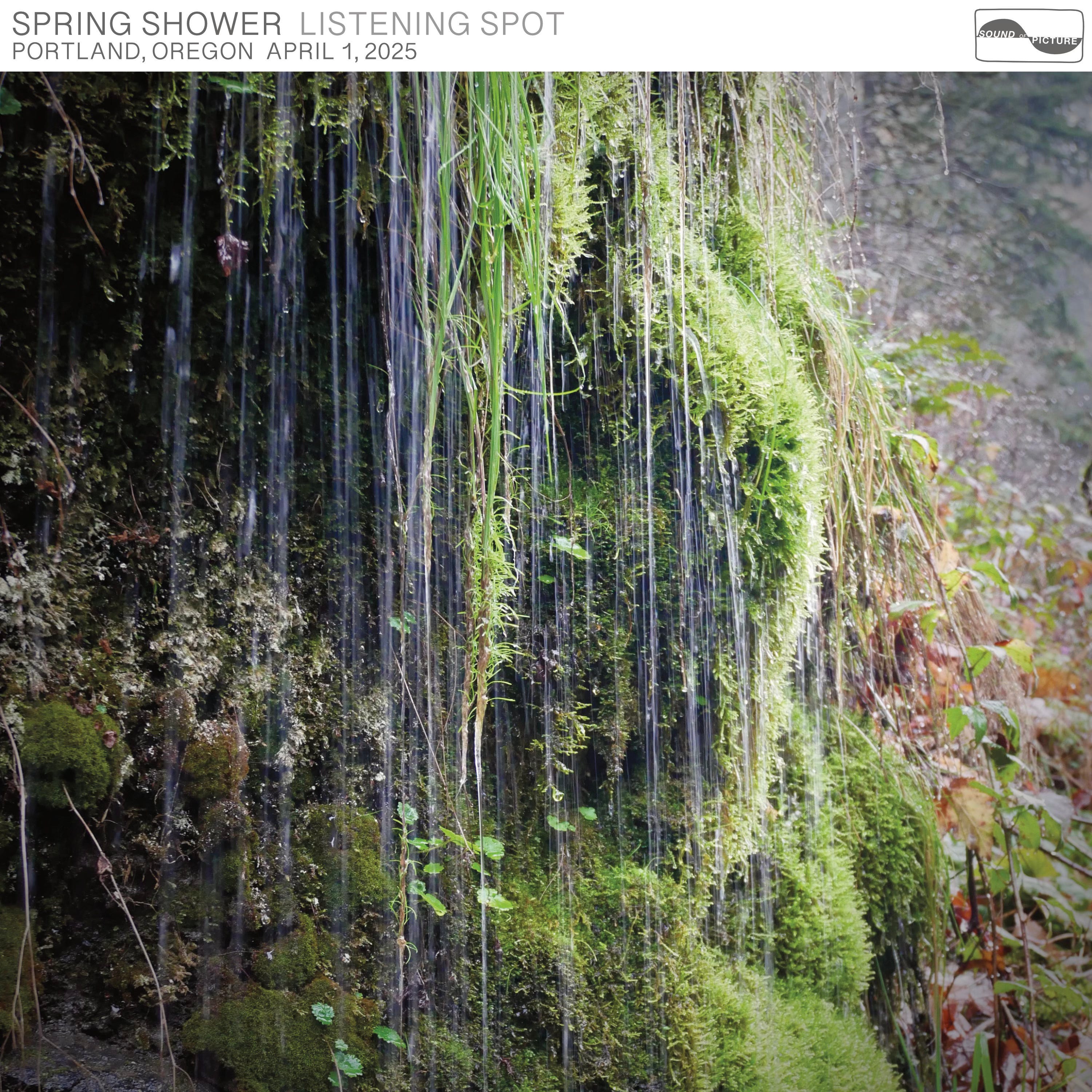
Traveling around, I’ve become aware of how Pacific Northwest rain is different from rain patterns in other regions of the US. Take Texas, for example. Texas rain pours. Houses don’t have gutters there, presumably because they can’t engineer them large enough to accommodate the deluges reliably. Storm water infrastructure is three times the size of what I see around here. In contrast, Oregon rain is persistent. Drizzle can last for days. It’s kind of like the tortoise and the hare, I guess. This soundscape was recorded in Forest Park last year around this time, on a dead-end, unnamed trail that doesn’t see a lot of use, but nonetheless features a sturdy old bench. It is a pretty sweet listening spot for this reason, and this particular time slice offers a pretty accurate sound portrait of our soft rain. Our soft power. Did you know that the Pacific Temperate Rainforest—a bioregion extending from the northern California redwoods to the coastal forests along the gulf of Alaska—can pack more carbon per acre than a tropical rainforest like the Amazon? The Pacific Temperate Rainforest is the second-most dense biomass repository and carbon sink in the world (bested only by the Eucalyptus regnans forests of Victoria and Tasmania, Australia) and it’s what gives our Pacific Northwest rain its unique character (and sound). The Pacific Temperate Rainforest operates like a giant lung. Just as a lung draws in air, extracts what's vital, and releases what the body needs to stay alive, the Pacific Temperate Rainforest breathes on a continental scale, pulling carbon dioxide out of the atmosphere and locking it away in massive old-growth trunks, roots, and the deep organic soils beneath them, while exhaling oxygen and releasing moisture that cycles inland as rain. The forest doesn't just store carbon passively; it actively pumps water vapor into the atmosphere, seeding clouds and feeding rivers that sustain salmon, which in turn fertilize the forest floor when they die. It’s a closed loop where nothing is wasted.Spring Shower is available under the artist name Listening Spot on all streaming platforms Friday, March 20th, 2026. I’ve made it available here in its entirety with the idea it might be useful. Thanks for reading and listening! This is a public episode. If you'd like to discuss this with other subscribers or get access to bonus episodes, visit chadcrouch.substack.com/subscribe

NOW PLAYING

Spring Shower

0:00 8:16

No transcript for this episode yet

We transcribe on demand. Request one and we'll notify you when it's ready — usually under 10 minutes.

漫聲SoundWalk 簡志宏(C.H Chien) 我是一名攝影愛好者,攝影10多年,拍的都是自己的記憶,幾年前,開始思索,留下記憶的方式只能是影像而已?透過不到一場關於聲音的講座,提醒了自己本來就有錄音的習慣,只是一直都沒很深入的去思考,自己為什麼錄音?該怎麼錄音?在哪裡錄音? 於是,在那天之後,我花了幾千塊買了一台專業的低階錄音設備Zoom H4n,開始記錄我覺得自己值得紀錄的聲音,這跟攝影一樣,也會是我記憶的一部分,希望也可以成為你記憶的一部分 在這個頻道的聲音,我最建議的聆聽方式,就是請您閉上眼睛,心無旁鶩的感受,你會感受到最棒最真實,屬於你自己的單純 在podcast之前,我把錄音上傳至Youtube,歡迎各位收聽 YT連結 : https://goo.gl/yhRz2i 如果,您也認同我記錄的聲音,歡迎點擊以下連結您小額贊助,讓我更有能力去更多的地方紀錄及分享更多聲音,感恩您的收聽!! https://pay.firstory.me/user/soundwalk Powered by Firstory Hosting 在无锡荡马路 是小脑呀 《荡马路》是由小脑和旧馆长发起的一个社会声音艺术项目。*我们想记录无锡这个城市的文化和人。“你带我荡马路,我听你讲故事”是《荡马路》的slogan。*SoundWalk的形式是指:录音师和漫步者两人共同从漫步者熟悉的地方出发,漫步者边走边讲述,录音师进行收声记录。*我们目前在做的是荡马路第一张音频专辑。*我们定了一个小目标,在这张专辑中邀请100位漫步者录制100段录音。其中包含每段录音的行走线路图、摄影作品、录音脚本、以及普通话文本。*漫步者故事收录完成后,不是这个项目的终点,我们希望这只是一个引子,通过这些内容能够吸引到更多同好之人参与进来。我们希望有更独特的人参与其中,他们会让这个项目变得越来越有趣。*漫步者的故事折射了故事发生地的文化以及整个无锡的文化,这些深度私人的故事拉近了听众和这座城市的距离,以一种更亲近的方式将我们和这座城市连接。*无锡只是我们的起点,如果有可能,我们想为更多的城市做这件有意义的事情。我们欢迎你的报名参与。<b SongWalk Echoes Podcast Don Prisby A Catholic podcast featuring SoundWalk Echoes founder, author, and songwriter Don Prisby and guests celebrating Catholic legacy through music, art, scripture, and story. Saltwater Soundwalk Jenny Asarnow & Rachel Lam Saltwater Soundwalk is about our relationships and responsibilities towards the Salish Sea and connecting waters, centering Indigenous Coast Salish voices and language. In this rhythmic, watery audio experience, streams of stories ebb and flow, intermixing English with Coast Salish languages. Listen to learn where the traditional fishing ground “Hit the Water” is located in Seattle, to hear traditional Tulalip names of local places and to learn about the colonial history of Seattle and the construction of the Ship Canal. Indigenous rights, responsibilities and cultural preservation are essential to healing these waters, our relationship to them and to each other. As well, hear from a public artist and a Seattle Public Utilities manager about how we all impact these living waters. This is an experience for all of us to connect to the Salish Sea area, and a step towards creating healthier human relationships with this changing ecosystem. Voices featured are: Ken Workman (Duwamish), W

Frequently Asked Questions

How long is this episode of Soundwalk?

This episode is 8 minutes long.

When was this Soundwalk episode published?

This episode was published on March 20, 2026.

What is this episode about?

Traveling around, I’ve become aware of how Pacific Northwest rain is different from rain patterns in other regions of the US. Take Texas, for example. Texas rain pours. Houses don’t have gutters there, presumably because they can’t engineer them...

Can I download this Soundwalk episode?

Yes, you can download this episode by clicking the download button on the episode player, or subscribe to the podcast in your preferred podcast app for automatic downloads.
URL copied to clipboard!