
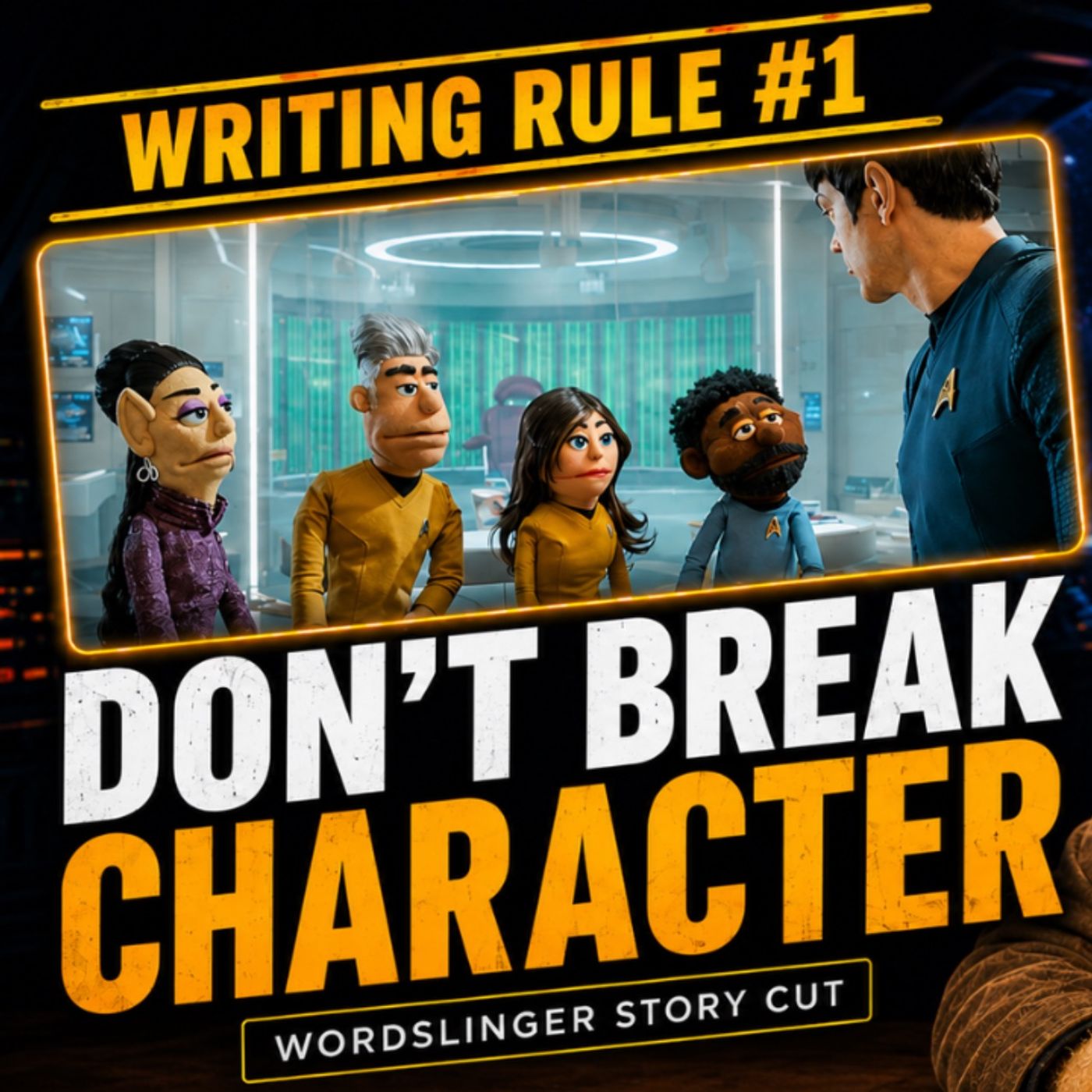
EPISODE · Aug 28, 2026 · 16 MIN
Star Trek Forgot the #1 Rule of Writing Characters
from The Wordslinger Podcast · host It's all about the story here.
A WORDSLINGER STORY CUT What obligations does a writer have when stepping into an established universe—or writing characters an audience already knows and loves? In this Story Cut, I take a critical look at Star Trek: Strange New Worlds and the broader modern Star Trek catalog through the lens of character, continuity, and audience expectations. Strange New Worlds has never been afraid to experiment, but when does experimentation stop serving the story and start forcing established characters to serve the gimmick? Spock is one of the best examples. We know this character. We know his history, values, personality, relationships, and behavior across decades of storytelling. That creates a constraint for anyone writing him—but that constraint can also be one of a storyteller’s greatest strengths. And this isn't just a Star Trek problem. The same principle applies when authors write long-running novel series, inherit someone else's intellectual property, adapt existing characters, or write historical fiction about real people and events. Once an audience knows a character, you aren't starting from zero anymore. Character creates expectations. Expectations create trust. And breaking that trust without earning it can cost you the audience. So how much freedom should writers have with established characters? When does character development become character betrayal? And does respecting canon restrict creativity—or actually make better storytelling possible? Visit the Knovelton Bookshop at knoveltonbooks.com GET 15% OFF YOUR ENTIRE ORDER AT CHECKOUT WITH CODE STORYCUTS TIMECODES: 00:00 What do writers owe established characters? 01:04 Why Strange New Worlds initially worked for me 03:07 The gimmick must serve the character 04:35 Spock, character consistency, and audience trust 05:31 Why the Lower Decks crossover worked 06:17 When experimentation starts overpowering the story 08:41 Character is a constraint—and that's a good thing 11:56 What this means for novelists and historical fiction 13:29 Why inherited franchises can lose their audience 14:25 Surprise vs. breaking audience expectations 15:09 What should writers owe continuity and canon? If you're a writer looking for practical, experience-based guidance on writing, publishing, storytelling, building an author career, and navigating the creative life, subscribe to the Wordslinger channel. This is where we talk honestly about the craft and business of being a writer—and use books, movies, television, and pop culture to figure out what makes stories work. FIND KEVIN: Find Kevin and his books:https://kevintumlinson.com Join Kevin on Substack:https://kevintumlinson.substack.com Wordslinger Podcast home page:https://wordslingerpodcast.com SERVICES FOR AUTHORS: Polish your writing and make it ready for publishing with ProWriting Aid:https://tidd.ly/3NCdlk5 Publish your book to every major retailer online, get your book into print and ebook, and get support the whole way at Draft2Digital:https://draft2digital.com/wordslinger Find a virtual assistant to help you market your books (and more!) at AuthorAnchor:https://authoranchor.com #StarTrek #StrangeNewWorlds #Storytelling Hosted by Simplecast, an AdsWizz company. See pcm.adswizz.com for information about our collection and use of personal data for advertising.
Embed this episode
What this episode covers
In this Wordslinger Story Cut, Kevin takes a critical look at Star Trek: Strange New Worlds and what writers owe established characters. When does experimentation serve the story—and when does it break the audience’s trust? The discussion expands beyond Star Trek to long-running novel series, inherited IP, and historical fiction, all centered on one rule: the gimmick should serve the character, not the other way around.
NOW PLAYING
Star Trek Forgot the #1 Rule of Writing Characters
No transcript for this episode yet
Similar Episodes
No similar episodes found.
Similar Podcasts
No similar podcasts found.