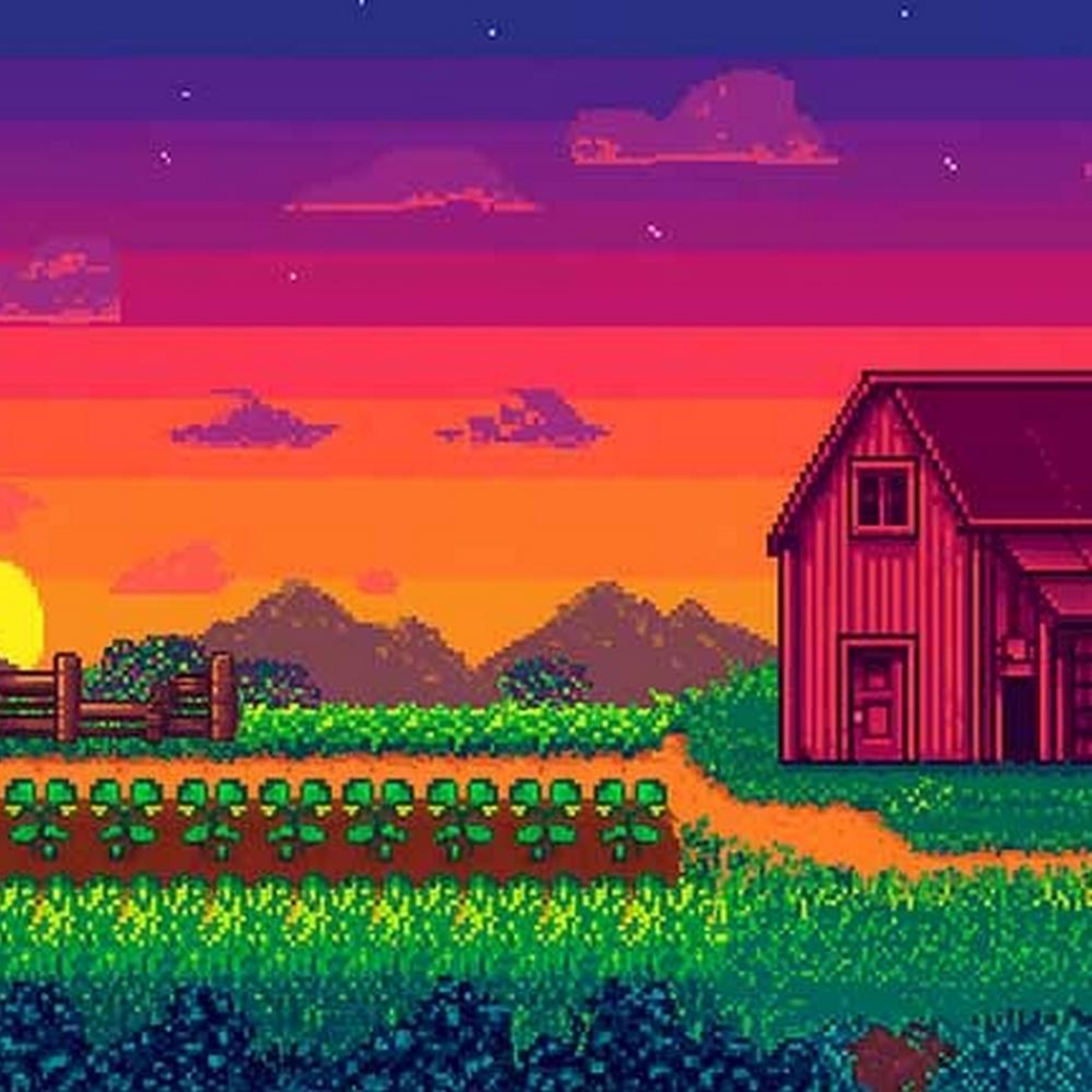
Welcome back to Dreamscape Archives, where we uncover the hidden stories behind your favorite games. Tonight, we're venturing into the seemingly peaceful countryside of Stardew Valley, a place where beneath the idyllic surface of farming, fishing, and friendship lies a world steeped in ancient conflicts, mystical beings, and deeply human struggles. Over the next hour, we'll explore the complete lore of this beloved farming simulator from the cosmic creation myth of Yoba to the thousand-year war between dwarves and shadow people, from your grandfather's mysterious legacy to the dark secrets hiding in the hearts of Pelican Town's residents. So settle into something comfortable, let the worries of your day drift away, and join me as we dig deep into the rich soil of Stardew Valley's lore.
This is a world far more complex than it first appears, and tonight, we'll uncover every layer. The Beginning. Escape from Joja and Grandfather's legacy. Your story in Stardew Valley doesn't begin in the peaceful countryside.
It begins in a place of fluorescent lights, endless cubicles, and soul-crushing monotony. You work for Joja Corporation, one of the most powerful megacorporations in the Ferngill Republic. Joja isn't just a retailer, it's an empire that spans shipping, warehousing, distribution, mining operations, emergency medical services, and energy drink production. It's a company so large and so influential that it can reshape entire communities according to its corporate will.
And working for Joja comes at a cost. Day after day, you sit in your cubicle, surrounded by identical gray walls, performing tasks that feel meaningless. The corporate culture is suffocating. Your boss reminds you that physical activity is bad for efficiency, keeping you trapped at your desk even when problems require you to see them first-hand.
The pay is meager despite Joja's massive profits. Your co-workers are burnt out, dead-eyed shells going through the motions. Some literally die at their desks, and the corporation barely notices. This is your existence, and it's slowly killing your spirit.
Then one day, the burden becomes too much. You feel crushed by the weight of this meaningless life, exactly as someone once predicted you would. You remember a sealed envelope given to you years ago by your grandfather on his deathbed. His words echo in your memory as you hold that envelope in trembling hands.
He told you there would come a day when you felt overwhelmed by life's burdens, when your spirit would fade, when you needed something more. He told you to open the envelope when that day came. Inside, you find a letter written in your grandfather's familiar handwriting. He tells you about his old farm in Stardew Valley, a place called Pelican Town in the southern region of the Ferngill Republic.
He spent the best years of his life there, working the land, becoming part of a real community. When he grew old and sick, he left that farm behind, but he never stopped thinking about it. Now he's giving it to you. The deed is enclosed.
The farm is yours if you want it. It's overgrown, abandoned for years, but it's a chance at a new life, a real life. You don't hesitate. Within days you've quit your job at Joja, packed your few belongings, and boarded a bus, heading out of Zuzu City toward the countryside.
The bus ride is long, taking you from the towering skyscrapers and sports stadiums of the city through gradually changing landscapes. Urban sprawl gives way to suburbs, then to open fields and forests. And leaving behind everything you've known, traveling toward an uncertain future in a town you've never seen. When the bus finally stops and you step off in Pelican Town, you're greeted by Mayor Lewis, a friendly older man who introduces himself as the town's leader.
He's been expecting you. He guides you to your grandfather's old farm and your heart sinks when you see it. The land is completely overgrown with trees, rocks, and weeds. The farmhouse is small and barely furnished.
This is it. This is your inheritance. It seems impossible that anyone could make a life here, let alone restore it to the productive farm your grandfather once maintained. But there's something else Mayor Lewis wants to show you.
He takes you to the old community center, a large building that once served as the heart of Pelican Town's social life. Now it's abandoned, supposedly infested with rats. Lewis leaves you to explore, mentioning the infestation apologetically. But when you step inside, you discover something that changes everything.
The creatures living here aren't rats and all. The Junimos, small, colorful forest spirits that most people in Pelican Town believe are nothing more than folklore. You see strange golden scrolls covered in mystical symbols you cannot read. These spirits are trying to communicate with you, but their language is incomprehensible.
After this encounter, the wizard who lives in CinderSap Forest contacts you through a letter. Rasmodius the wizard tells you he sensed your interaction with the Junimos and offers to help you understand them. When you visit his tower, he gives you a special potion. He calls it forest magic, something that will attune your consciousness to nature's hidden language.
You drink it and suddenly the world becomes slightly different. You can now read the Junimos scrolls. You can understand these ancient spirits. This act fundamentally changes who you are.
You are no longer just another human, you're someone who can perceive and interact with the magical reality that exists alongside the mundane world. The Junimos have a mission for you. They want to restore the community center to its former glory through a series of bundles, collections of items that represent the valley's bounty. In exchange, they'll help repair the building and drive away Joja Corporation's influence.
This puts you at a crossroads. You could buy a Joja membership and let the corporation convert the community center into another Joja warehouse, using money to quickly develop the town according to corporate interests. Or you could work with the Junimos, gathering items from across the valley to complete their magical bundles and restore community-driven development. This choice represents the central conflict at the heart of Stardew Valley's lore.
Its corporate efficiency versus community tradition, profit versus preservation, the modern world versus ancient magic. Your grandfather's legacy isn't just a piece of land, it's a philosophy about what kind of life is worth living. There's one more element to your grandfather's legacy. He promises in his letter that he'll return at the beginning of your third year to evaluate how you've done with the farm.
This isn't metaphorical. At the start of year three, his ghost literally appears at a shrine on your farm, manifesting as a translucent spirit. He judges your accomplishments based on a point system, considering your earned money, skill levels, friendships, whether you're married, whether you've completed the community center, and numerous other factors. If you've done well, he expresses pride and tells you that you've honored his memory.
He gives you rewards, most notably a special candle whose flames change color when you approach star drop locations. If you've failed to meet his standards, he admits disappointment but encourages you to keep trying. This supernatural evaluation raises profound questions. What is the nature of Yoba's religion which seems to promise an afterlife?
How can your grandfather manifest as a ghost? What deeper spiritual realities govern this world? These questions lead us to the second major aspect of Stardew Valley's lore, the magical and religious framework that makes such things possible. The magical reality, Yoba, Junimos, and ancient races.
To understand Stardew Valley's world, we must begin before the beginning. Before time existed, before the world took shape, there was only an endless golden light. This light became aware of itself and spoke its own name into the void. That name was Yoba.
Yoba wanted more than solitary existence in infinite light. Through an act of cosmic will, Yoba swirled the golden light into a vortex, faster and faster until a hole formed in the eye of that vortex. From this hole sprang a seed, the first physical thing to exist. Yoba then smoothed the golden light, transforming it through continuous effort until the light became soil.
Into this newly created soil, Yoba planted the seed. The seed sprouted and a vine grew upward from the soil, twisting and probing, casting a writhing shadow onto the golden void. For eleven days, the vine grew toward some ultimate destination. From the eleventh day, it bore a single fruit.
Yoba, with knowing wisdom, carefully peeled away the tough skin of this cosmic fruit and discovered that contained within it was the entire world. This is the Creation Story recorded in the Book of Yoba, one of the lost books that can be donated to the museum in Pelican Town. It establishes Yoba as the creator deity, the source of all existence. But Yoba is far more than just a creation myth.
Yoba is an active presence in the spiritual life of the Ferngill Republic. In Pierre's general store, there's a small altar room dedicated to Yoba worship. The altar is marked with a symbol that has deep significance. It's the Anglo-Saxon rune called Ear, which translates to Earth or Grave.
The symbol appears in multiple places throughout the game on gravestones, in Grandpa's bedroom during the opening cutscene and on the forge at Ginger Island, suggesting its religious significance spans multiple cultures and species. The symbol's dual meaning of Earth and Grave perfectly captures Yoba's role as a deity of both life and death, creation and ending. Those who worship Yoba are essentially worshiping the Earth itself, acknowledging that all life comes from the soil and returns to it. It's a religion that emphasizes cycles, mortality, and acceptance of natural order.
Several residents of Pelican Town actively worship Yoba. Jodi visits the altar every Sunday, especially during the first year when her husband Kent is away at war, praying for his safe return. Kent joins her at the altar after he returns home in year two. George and Evelyn keep religious materials in their home.
Crobus, the shadow person living in the sewers, stays silent every Friday as a sign of devotion to Yoba, indicating that this religion transcends human belief and is shared by other intelligent species. Interestingly, not everyone in Pelican Town believes in Yoba. Shane openly identifies as an atheist, though ironically his name means gift from Yoba. According to one of his post-marriage dialogues, a naming choice made by parents he never really knew.
Caroline, who owns Pierre's general store where the altar is located, admits the previous owners built it, and that her family isn't religious. They just let other townspeople use it. The presence of believers and non-believers alike creates a realistic spiritual landscape where faith is a personal choice rather than a universal truth. But if Yoba represents the ordered spiritual world, then the Junimos represent nature's chaotic magic.
These small forest spirits are perhaps the most visible manifestation of magic in Stardew Valley. They're colorful, apple-shaped creatures that live in harmony with nature. Most humans in Pelican Town consider Junimos to be folklore, nothing more than children's stories, but they're very real, and they only reveal themselves to those who possess magical awareness. The Junimos living in the community center have made it their home, but they're distressed by its deterioration.
They want to restore it because the community center represents harmony between humans and nature, the ideal they cherish. Through their bundle system, they teach the player about the valley's natural cycles. The spring crops bundle teaches what grows in spring. The artisan bundle celebrates human craftsmanship using natural materials.
The construction bundle provides materials for building. Each bundle is a lesson in sustainability and connection to the land. When you complete bundles, the Junimos reward you and repair sections of the community center overnight. They work invisibly to most people, but those who could see them would witness vegetables and fruits plucking themselves from soil and floating away to invisible hands.
They can also be employed on your farm through Junimo huts, where they happily harvest crops for you, provided you treat the land well, and don't side with Joja Corporation. Their presence on your farm isn't servitude but partnership, a mutual agreement between farmer and nature spirits. The existence of Junimos opens questions about what other beings share the world with humans. The answer is quite a few, and some have very complicated histories.
The dwarves call themselves Smoluano, which translates to sky people. Their short, bearded beings known for living underground and possessing advanced technology in ancient times. One dwarf runs a shop deep in the mines, while another operates a shop in the volcano dungeon on Ginger Island. The dwarves have their own language completely incomprehensible to humans, unless you find and donate all four dwarvish scrolls to the museum, which teaches you their language.
But there's an intriguing theory about dwarf origins that comes from within the game itself. A lost book written by archeologist M. Jasper proposes what the author admits is a radical theory, that the dwarves might actually be aliens whose spacecraft crashed on this planet in the ancient past. According to this theory, the dwarves would have been stranded and unable to leave, burrowing deep underground to create a new home.
This would provide an explanation for why they call themselves sky people, despite living underground. This would be a cultural memory of their celestial origin. Their advanced technology, now mostly lost, would represent remnants of their space faring civilization. While M.
Sior Jasper's theory is presented as speculation within the game, it does offer a compelling framework for understanding certain mysteries about the dwarves. Whether they're truly aliens, or simply an indigenous underground species, with a poetic name remains deliberately unclear. Whether they're aliens or not, the dwarves encountered another intelligent species when they moved underground. The shadow people already lived there, having made the deep earth their ancestral home.
Crobus, the friendly shadow person living in Pelican town sewers, explains that his people had to cross into the physical plane after a great catastrophe occurred in their original home, wherever that was. Shadow people cannot tolerate light, which is why they live in darkness. Their gentle beings by nature, preferring peace and solitude. The meeting between dwarves and shadow people did not go well.
According to Crobus, the dwarves tried to drive the shadow people from their ancestral homeland. The reasons for this attempted displacement remain a mystery within the game. Based on the limited information available, we might infer that the dwarves view the underground space as theirs by right of discovery, or that dwarves arrival, whether as aliens, crash landing, or as migrants from elsewhere, disrupted shadow people territory and led to conflict. It's also possible the dwarves harbored xenophobic attitudes toward a species they encountered in what they considered their new home.
Whatever the cause, the shadow people were forced to defend themselves. This sparked the elemental wars, a brutal conflict that lasted approximately 1,000 years. That's not a metaphor or an exaggeration, it's literally a millennium of warfare between two intelligent species living beneath the earth's surface, completely unknown to the humans living on the surface above. The war only ended recently, possibly within the last generation.
Both Crobus and the dwarf in the mines remember it personally, suggesting these species have very long life spans. If you gain enough friendship with both of them, you'll trigger a cutscene where they encounter each other in the sewers and immediately begin arguing about the war. The dwarf blames the shadow people for killing his entire family. Crobus counters that his people only retaliated because the dwarves invaded their home.
Crobus flairs and they're about to fight when the wizard suddenly appears. Rasmodius, the wizard, intervenes using his magical authority to demand they make peace for the sake of the humans living around them. Both agree and the wizard casts a seal of promise to legitimize their agreement. After this, they maintain an uneasy truce, generally avoiding each other.
This event reveals several important things. First, racial tensions from ancient wars can persist for centuries. Second, the wizard has significant power and respect that transcends species boundaries. Third, humans like you have the ability to bridge divides that seem permanent.
The dwarves and shadow people aren't the only non-human species. Elves once existed, though they seem to have vanished completely. No elvish bones have ever been found, but artifacts like elvish jewelry and an elven sword prove they were real. Their language appears on some jewelry as a flowing script that hasn't been fully deciphered.
In Elf-Kesadia, served at the Desert Festival, suggests they may have had some connection to desert regions, or perhaps it's just a folk recipe named after them. Goblin serve as henchmen for the witch, loyal to her for unknown reasons. You encounter one guarding her hut, and he'll only let you pass if you give him void mayonnaise, apparently a goblin delicacy. Merpeople exist in the gem sea, though they're rarely seen.
A mermaid will appear at the night market and sing for you, and another lives near the pirate cove on Ginger Island. Their singing has almost hypnotic qualities, suggesting they may have magical abilities. Fairies are real, but extremely elusive. They occasionally appear to bless crops on your farm during the night, accelerating their growth.
The fairy rose flower attracts them, increasing the chances they'll visit. The fairy stone artifact is said to be made from ancient fairy bones, though whether this is true or just folklore is unclear. All these species, all these magical beings, coexist with humans in Stardew Valley. Most humans are completely unaware of this reality.
They don't know about the elemental wars. They don't see Junimos. They think fairies are stories. Only those with magical awareness, granted by wizards or inherited through bloodlines, can perceive the full truth.
This brings us to the most powerful human magic users in the valley, the wizard and his ex-wife, the witch. Rasmodius the wizard lives in a tower in CinderSap Forest. He never leaves his tower except during festivals when he observes from a distance. He's an incredibly powerful mage who can sense magical disturbances from far away, create potions that alter consciousness, teleport instantaneously, and even mediate disputes between ancient warring races.
He possesses knowledge of arcane forces that most humans have forgotten. But Rasmodius has a tragic personal history. He was once married to another powerful magic user. They had a child together, a daughter.
Then something went terribly wrong. The relationship fell apart, ending in bitter divorce. His ex-wife became the witch, an angry mage who flies around the countryside on a corn husk broom, cursing things in her rage. She turns chicken's eggs into void eggs.
She curses slime hutches, making the slimes turn black and aggressive. She sealed herself in a swamp, building a hut protected by goblin guards. The wizard speaks of her with regret, implying he made mistakes that drove her to this transformation. He sealed her in the swamp not to punish her, but to protect townspeople from her harmless curses.
He keeps sadness in how he discusses her, suggesting love that curdled into resentment rather than genuine hatred. Their daughter is somewhere in Pelican town, but the wizard won't reveal who she is. Players have developed theories based on clues scattered throughout the game. The most popular theory centers on Abigail, Pierre, and Caroline's daughter.
Several details point in this direction. Abigail once dyed her hair purple, but the color never faded, which could suggest her hair color might be naturally supernatural rather than the result of ordinary dye. She feels drawn to the wizard's tower and takes walks near Cinder's App Forest, behavior that seems to indicate some unexplained connection to that area. She has an affinity for the occult and dreams of adventure, interests that align more with magical pursuits than mundane village life.
Caroline mentions that she used to take walks near the wizard's tower before she was married, a detail that hints at a possible past relationship. Pierre's behavior toward Abigail also raises questions. He is extremely controlling, pushing traditional gender roles on her with unusual intensity. This could be interpreted as overcompensation if he suspects she isn't biologically his daughter.
Pierre and the wizard have very different body types and personalities, but Abigail's rebellious spirit and magical interests seem to align more naturally with Rasmodius' character than with her supposed father's conventional nature. However, the game deliberately never confirms this theory. It's equally possible Abigail is simply Pierre's daughter, who happens to have magical inclinations, or that the wizard's daughter is someone else entirely, or even someone not yet in Pelican Town. The ambiguity appears intentional.
Whether or not Abigail is the wizard's daughter, the existence of these powerful human magic users proves that humans can access magical forces comparable to those of other species. This is important because it means humans aren't just passive inhabitants of a magical world, they're active participants in it. The dark underbelly, conflicts, curses, and hidden tensions. While Pelican Town seems peaceful on the surface, it sits within a nation at war, and contains citizens bearing deep psychological scars.
The Ferngill Republic, the country containing Stardew Valley, is engaged in active military conflict with the Gatorro Empire, a nation located across the gem sea to the south. This is not ancient history or distant memory. This war is happening right now, and it directly affects people in Pelican Town. Kent, husband to Jodi, and father to Sam and Vincent is a soldier serving the Ferngill Republic.
During year one of the game, he's completely absent, away at war. Jodi spends Sundays at Yoba's altar praying for his safe return, her anxiety palpable in her dialogue. She struggles to raise two boys alone while worrying constantly that her husband might never come home. Sam, the older son, tries to be strong, but clearly misses having a father figure in his life, possibly explaining his somewhat immature behavior and lack of practical life skills.
When Kent finally returns at the start of year two, he's clearly traumatized. He suffers from what appears to be severe PTSD. He mentions being held in a Gatorro prison camp, an experience that left deep psychological scars. He describes the Gatorro people as ruthless, though this may be propaganda or colored by his traumatic captivity.
Loud noises make him jump. He has nightmares. He struggles to readjust to normal life. The game doesn't shy away from depicting the real cost of warfare on soldiers and their families.
The war also explains certain economic realities in the valley. The traveling cart merchant claims to have smuggled goods out of the Gatorro Empire, explaining her high prices as compensation for risk. This suggests active smuggling operations across wartime borders. The war touches everything, even seemingly innocent commerce.
But Pelican Town faces threats beyond distant warfare. Joja Corporation represents a different kind of invasion, the slow colonization of small communities by corporate interests. Joja Mart arrived in Pelican Town and immediately began destroying local businesses. It undercuts Pierre's general store on prices while offering inferior quality.
It employs town residents like Shane and Sam at low wages with terrible working conditions. Morris, the Joja Mart manager, aggressively pushes for expansion, trying to convince you to buy a membership that would let Joja take over the community center. Morris represents corporate sociopathy. He talks about efficiency and development while showing zero concern for community welfare.
He wants Joja to expand because it increases his performance metrics, not because it helps anyone. The company he represents is infamous throughout the Fern Gill Republic for exploitative practices. You experienced it firsthand in your Zuzu City Cubicle. Now it's trying to do to Pelican Town what it did to countless other communities.
The community center versus Joja Mart Choice is the game's central moral decision. Choose Joja and you get quick development funded by corporate money. The community center becomes a warehouse. Morris gets his promotion.
Traditional gathering spaces are replaced by commercial ones. It's efficient, modern and soulless. Choose the Junimos and you restore the community center through personal effort and magical partnership. Local businesses survive.
The community maintains its identity. Its slower requires more work but preserves something essential about what makes Pelican Town worth living in. This choice reflects your grandfather's implicit challenge. What kind of life will you choose?
The witch represents another form of darkness in the valley. More personal and magical. Her random nighttime visits to curse your coops and slime hutches seem like minor annoyances at first. But they take on deeper meaning when understood in the context of her relationship with the wizard.
The wizard describes her curses as harmless, suggesting her actions stem more from pain than malice. Her angry flights across the countryside could be interpreted as expressions of heartbreak turned outward, though the game never explicitly confirms her emotional state. When you eventually gain access to her hut through the Dark Talisman quest, you find a place that's both sad and ominous. Inside are three dark shrines that offer morally questionable services.
The Shrine of Memory lets you erase your ex-spouse's memory of your relationship after divorce. The Shrine of Selfishness turns your children into doves, essentially erasing them. The Shrine of Elusions lets you change your appearance. These shrines reflect the witch's own regrets, her desire to undo the past, to transform herself, to forget what hurts.
The witch never appears in her hut and cannot be interacted with directly. She remains distant, defined by absence rather than presence. This makes her tragic rather than villainous. She's what happens when powerful people can't heal from their wounds when they turn pain into curses and isolation.
The racial tensions between dwarves and shadow people add another layer of darkness. The elemental wars may be over-officially, but the hatred lingers. The dwarf in the mines lost his entire family to shadow people. Crobus and his people were driven from their homeland by dwarven invasion.
Neither side can truly forgive. They can only agree not to fight. The seal of promise, the wizard casts, is necessary because without magical enforcement, they'd probably kill each other. This reflects real-world conflicts where generations of violence create wounds too deep for simple reconciliation.
The game doesn't offer an easy solution. It acknowledges that some damage persists, that you can stop violence without erasing its causes. The best you can do is maintain peace and hope future generations remember the wars less vividly. But perhaps the darkest elements of Stardew Valley's lore are hidden in the backstories of seemingly ordinary townspeople.
These are private tragedies, the kind that aren't written in history books but shape individual lives completely. Shane works at Jojemart and is severely depressed and alcoholic. He's the godfather to Jaz, whose parents both died in circumstances that are never fully explained. Shane was a friend of Jaz's parents and when they passed away, he found himself suddenly responsible for a child while dealing with grief, poverty, and a dead-end job.
He drinks to cope, which makes everything worse. His six-heart event involves him contemplating suicide at the cliffs, and you can intervene to help him. If you befriend him and marry him, he gets chickens and finds purpose in caring for them, suggesting that connection and responsibility can help heal even deep wounds. Penny lives with her mother Pam in a trailer, the most run-down dwelling in Pelican Town.
Pam struggles with alcoholism and lost her job as a bus driver when the bus broke down, pushing their already precarious financial situation to desperate levels. Penny tries to maintain dignity despite these conditions, teaching Vincent and Jaz since the town has no school. She dreams of a better life, of living in an actual house instead of a trailer, of having enough money to feel secure. If she marries the player, it does provide an escape from poverty, though this raises questions about the dynamics of such a relationship and whether economic desperation plays a role alongside genuine affection.
Alex's mother died from an illness when he was young. His father was abusive, leading Alex to live with his grandparents George and Evelyn. George is disabled and bitter, often taking his frustration out on others. Alex copes with his trauma by focusing obsessively on sports, dreaming of becoming a professional gridball player to escape his past.
His tough guy, Exteria, hides deep insecurity about his intelligence and worth. Emily and Haley's parents left them alone in their house, traveling somewhere for an extended period without clear explanation provided in the game. The circumstances raise questions. Are the parents planning to return?
Have they effectively abandoned their daughters? Haley starts the game appearing shallow and materialistic, and some players have interpreted her focus on fashion and appearance as a coping mechanism for parental abandonment. Emily, by contrast, seems to cope through spirituality and creative expression, seeking meaning in a situation that resists simple explanation. Linus chose to live in a tent rather than in conventional housing, a decision that suggests something drove him to reject mainstream society.
Towns people mock him and vandalize his property. Children are taught to fear him. Yet Linus proves to be kind and wise, offering genuine friendship to those who approach him without judgment. His voluntary choice to live outside society hints at disillusionment with conventional life, though the specific reasons remain his own secret.
His friendship with the wizard, as mentioned, suggests he may be aware of truths about the valley that make conventional living seem less meaningful. Sebastian feels trapped in Pelican Town, living in his mother's basement, overlooked in favor of his half-sister Maru, misunderstood by his stepfather Demetrius. He dreams of leaving on his motorcycle but lacks the means. His friendship with Sam and Abigail provides support, but he's fundamentally lonely.
His romance path involves helping him find reasons to stay, rather than encouragement to leave, which raises questions about whether love can truly satisfy someone who feels trapped. Leah fled her previous life and a toxic relationship, coming to Stardew Valley to pursue art away from her controlling ex. Depending on your dialogue choices, this ex is either named Kell or he's named Kell, they're just gender-switched. The ex shows up during a heart event and tries to manipulate Leah into returning.
This event demonstrates that some people escape abusive relationships but remain vulnerable to manipulation from former abusers. Elliot lives alone in a beach cabin, pursuing his dream of writing a novel while battling crippling self-doubt. His isolation reflects the artist's struggle between needing solitude to create and needing community to stay sane. His friendship with Leah and Leah provides minimal social contact, but he's fundamentally alone with his doubts.
Harvey is the town doctor, but he gave up his dream of becoming a pilot due to poor eyesight. He works with Maru at the clinic and has an obvious crush on her that he's too timid to act on. His entire life is defined by a dream he abandoned, working a respected profession that isn't what he truly wanted. Even Mayor Lewis hides darkness.
He's secretly having an affair with Marne, refusing to make their relationship public despite dating for years. The mayor's short quest reveals his cowardice. He's more concerned with his reputation than with Marne's feelings. He uses his political power for personal gain, keeping a gold statue of himself hidden because he embezzled town funds to create it.
He represents corruption on a small scale, the petty tyranny of local politicians. Pierre pretends his business is struggling while secretly having plenty of money. He takes credit for your produce when you sell through his shop, claiming he grew it himself. He's controlling and traditional, pushing gender roles on Abigail with unusual intensity.
Based on the wizard's daughter mystery and Caroline's admission about walking near the wizard's tower, some players have interpreted Pierre's behavior as stemming from suspicions about Abigail's parentage, though this remains purely speculative. He represents a certain type of small town hypocrisy, maintaining respectable appearances while harbouring his own questionable practices. His darkness lurk beneath Pelican Town's sunny exterior. Everywhere you look, people carry trauma, regret, addiction, poverty, and pain.
The game doesn't offer easy fixes. Friendship helps, but Shane remains an alcoholic. Even after his breakthrough, he just manages it better. Penny escapes poverty only if you personally rescue her through marriage.
Alex's childhood trauma doesn't vanish. The wounds persist. The best you can do is witness people's pain and offer what support you can. This darkness is part of what makes Stardew Valley's lore compelling.
It refuses to pretend that rural life is automatically healing, or that farming erases psychological damage. Your grandfather's farm offers you an escape from Joja Corporation, but it doesn't offer escape from the human condition. You still live among people damaged by systems, relationships, and circumstances. You're just doing it in a place where community support is possible, where connection might help everyone heal incrementally.
The interconnected lives of Pelican Town, the true depth of Stardew Valley's lore, becomes apparent when you realize how carefully everything connects. Characters aren't isolated collections of traits. They're nodes in a web of relationships, histories, and implications that extend far beyond what's explicitly shown. Consider the wizard's daughter mystery.
If the theory about Abigail being his daughter holds any truth, then multiple storylines suddenly interlock in fascinating ways. Caroline's walks near the wizard's tower would take on new significance. The wizard's mention of past mistakes would refer to more than just his divorce. Pierre's controlling behavior toward Abigail would stem from suspecting she isn't his biological daughter.
Abigail's magical interests wouldn't be random quirks, but rather an unconscious pull toward her biological father's domain. Her purple hair that never fades would serve as a supernatural marker of her heritage that no amount of conventional explanation can account for. This theoretical interpretation would also explain why the wizard never reveals his daughter's identity. Doing so would destroy Pierre and Caroline's marriage, traumatize Abigail and expose Caroline's past.
The wizard's past mistakes would include an affair that produced a child he could never publicly claim. He would be watching his daughter from afar, perhaps helping her subtly through magical means, but never able to have an open relationship with her. That becomes a tragedy of enforced silence, where revealing the truth would cause more harm than maintaining the secret. The game never confirms this theory, which is part of its genius.
It gives you enough hints to construct this narrative without forcing it. Maybe Abigail is the wizard's daughter. Maybe she's not. Maybe Caroline's walks meant nothing.
Maybe Abigail's purple hair is just magical genetics from Caroline's side. The ambiguity lets players engage with the lore as detectives, piecing together evidence to form theories. Other character connections are more explicit, but equally meaningful. Sam and Sebastian are best friends, united by being young men trapped in Pelican town with dreams of escape.
They form a band with Abigail, creating music as an outlet for frustrations they can't express otherwise. This friendship group represents youthful rebellion, the desire to be seen and heard in a community that treats young people as children. But their dynamics shift as they age, and circumstances change. When Kent returns from war, Sam gains a father figure, but also sees firsthand what military service does to people.
Sebastian continues feeling trapped as Sam's family becomes more complete. Abigail's engagement to the player potentially breaks up the friend group. Relationships that seemed permanent prove temporary as people grow in different directions. Penny and Sam dance together at the Flower Dance, if neither is partnered with the player, which has led many to view them as a natural pairing.
Sam's immature energy contrasts with Penny's responsible caretaking nature, but they share something important, both deal with difficult family situations. Sam's father is traumatized and emotionally distant after returning from war. Penny's mother struggles with alcoholism. This shared understanding of family dysfunction could form the basis for a meaningful connection.
Alex and Hayley also dance together at the Flower Dance, suggesting another potential pairing. The athletic jock and the fashion-focused young woman. Their relationship dynamics run deeper than surface stereotypes might suggest. Alex uses sports as a way to process his mother's death and his father's abuse, focusing on physical achievement to avoid emotional pain.
Hayley's emphasis on appearance and attitude could serve a similar defensive function, helping her avoid confronting her parents' prolonged absence. They both hide vulnerability beneath confident exteriors. Whether a relationship between them would reinforce these defensive behaviors or help them feel safe enough to be vulnerable remains an open question. Leah and Elliot are artistic neighbors who understand each other's creative struggles.
Elliot battles self-doubt about his novel. Leah battles memories of her controlling ex and doubts about her art's commercial viability. They could support each other as fellow artists or compete for the same limited space in a rural art market. Harvey's obvious crush on Maru creates a complicated dynamic.
He's her employer at the clinic. He's significantly older than she is. She's focused on her scientific ambitions. He's established but unfulfilled.
A relationship between them would involve navigating major power differentials and life stage mismatches. The game acknowledges this by having Harvey remain too nervous to act on his feelings, suggesting awareness that some attractions shouldn't necessarily be pursued. Emily and Shane work together at JoJoMark, placing them in similar circumstances but for different reasons. Emily appears to have chosen this job despite having other options, needing the income to support herself and Haley after their parents left.
Shane works there because poverty and his responsibility for jazz have left him with few alternatives. They dance together at the flower dance if neither is partnered with the player. Some players interpret Emily's spiritual optimism as a potential balance to Shane's depression, while others suggest her relentlessly positive outlook might frustrate someone dealing with serious mental health struggles. The older generation has its own complex relationships.
Lewis and Marney's secret affair has lasted years without commitment. Lewis won't make it public, apparently caring more about his mayoral image than about Marney's feelings. Marney accepts this arrangement despite clearly wanting more, suggesting either patience or codependency. Their relationship models unhealthy compromise where one partner's needs consistently outweigh the others.
Robin and Demetrius have a marriage that appears functional but shows cracks under examination. Demetrius is controlling about Maroo's social life, treating his adult daughter as if she's still a child. He's distant with Sebastian, his stepson, focusing all his parental energy on Maroo. Robin tries to mediate but ultimately enables Demetrius' behavior.
Sebastian suffers from feeling like a guest in his own home. George and Evelyn represent long-term marriage, weathering George's disability and bitterness. Evelyn remains patient and loving despite George's often harsh behavior toward others. She raised Alex after his mother's death, becoming a grandmother figure who provides stability in his chaotic upbringing.
Their relationship shows how love persists through difficulty, though it also shows how one partner can exhaust themselves maintaining emotional labor while the other wallows in resentment. Willie lives alone, dedicated to fishing and the ocean. His isolation seems chosen rather than forced, suggesting a personality that prefers solitude to the complications of relationships. Elliot and Willie's friendship works because Elliot respects Willie's need for space while Willie appreciates Elliot's genuine interest in the sea.
Linus' isolation is more complicated. He chose to reject conventional society but society also actively rejects him. Some townspeople show him kindness like Gus, who shares food without judgment. Others are deliberately cruel, vandalizing his tent and treating him with contempt.
In the past, he maintains connections that run deeper than his homeless situation might suggest. His friendship with the wizard hints that he may possess knowledge about magic and the valley's hidden nature, which could partially explain his choice to live close to the forest. His willingness to teach you wild bait indicates he has specialized knowledge worth sharing with those he trusts. Crobus lives in isolation in the sewers, cut off from his own people, unable to tolerate light, feared by surface dwellers who know about him.
The player's friendship with Crobus is remarkable because it crosses species boundaries and social taboos. You can eventually invite Crobus to live with you as a roommate, validating his personhood when most of society sees him as a monster from the mines. These interconnected relationships create a living community rather than a collection of quest dispensers. Characters react to each other, mention each other, have opinions about each other that inform how you understand them.
When Shane talks about drinking at the saloon with someone, he means real people you know. When Abigail mentions hanging out with Sam and Sebastian, she's talking about specific individuals with their own storylines. The town feels real because people's lives genuinely overlap. The game also connects its lore to gameplay mechanics in clever ways.
The reason you can befriend Junimos and use their huts isn't just convenience. It's because you drank a potion that changed your consciousness to perceive magical reality. You're literally different from other humans in Pelican Town because of magical transformation. The community center bundles aren't random collection quests.
They're lessons from forest spirits about living in harmony with seasonal cycles. Completing them doesn't just repair a building, it drives away Joja Corporation's corrupting influence through magical means. The choice between Community Center and Joja Membership isn't just mechanical, it's philosophical, determining whether you'll participate in the valley's magical reality or embrace corporate modernity. The grandfather's ghost returning to judge you isn't a cute game mechanic.
It's a manifestation of whatever afterlife exists in Yoba's religious framework. The fact that his spirit can interact with the physical world confirms that death isn't an ending in this universe, raising questions about what happens to everyone else who dies. Where is Alex's mother? Can she see how her son is doing?
Do George and Evelyn's daughter Clara, the one who wrote that letter, really exist with Yoba as she said? The mines contain various monsters and hostile creatures. While some shadow people do appear as enemies in the mines, driven to hostility by generations of conflict and isolation from the elemental wars, not all mine monsters are shadow people. The monster population is diverse, including slimes, bats and various other creatures.
The dwarf shopkeeper in those same mines represents an interesting dynamic, a member of one species involved in the ancient wars, conducting business in the same underground spaces where conflict once raged. Magic exists openly in some ways, with the wizard building mazes for spirits Eve festival, yet remains hidden in others, with most townspeople unaware that Junimos are real. This split between public and secret magic creates interesting tensions. Caroline knows the altar in her store was built by previous owners, but doesn't know why it's still spiritually active.
Robin jokes about thanking Yoba for fire-resistant lacquer, but doesn't recognize genuine magical intervention. The town lives with one foot in mundane reality and one foot in magical reality without recognizing the division. The broader world beyond Pelican Town adds context that deepens the lore. Zuzu City represents urban life in the Ferngill Republic, with its sports stadiums, corporate headquarters and crushing alienation.
The war with the Gatorro Empire affects the entire nation. Castle Village, Grampleton, the Fern Islands and Prairie Island are mentioned as other settlements, suggesting a wider geography beyond what we see. The gym-sea separates the Ferngill Republic from the Gatorro Empire, making maritime trade and warfare significant factors in geopolitics. This is a lived-in world with history, geography, politics, religion and magic all coexisting.
Your farm isn't an isolated bubble, it's one small piece of a complex reality. What you do there matters because you're participating in something larger than yourself. You're not just growing crops, you're continuing your grandfather's legacy. You're not just befriending townspeople, you're healing a community damaged by economic exploitation.
You're not just completing bundles, you're strengthening the magical bonds between humans and nature. The interconnectedness of Stardew Valley's lore is what makes it resonate emotionally. Nothing exists in isolation. Every choice ripples outward, every friendship matters, every secret connects to other secrets.
The valley is alive with history, relationships and meaning that extend far beyond what's visible on the surface. Conclusion. Stardew Valley presents itself as a simple farming simulator, a cozy game about growing crops and making friends. But beneath that gentle surface lies a world of remarkable depth and complexity.
It's a world with a creation myth older than time, where the creator deity, Yoba, shaped reality from golden light and planted the seed that became everything. It's a world where multiple intelligent species, humans, dwarves, shadow people, elves, goblins, merpeople and fairies share space with varying degrees of awareness and conflict. It's a world scarred by a thousand year war between dwarves and shadow people, the elemental wars that only recently ended and left both species traumatized. It's a world where magic is real but hidden, where forest spirits called Junimos exist alongside wizards and witches, where potions can alter consciousness to perceive supernatural reality.
It's a world where a corporate megacorporation called Joja threatens to colonize small communities through economic pressure, where the choice between preserving tradition and accepting corporate efficiency carries genuine moral weight. It's a world where individuals carry deep wounds, where veterans return from war with PTSD, where children raised in poverty and abuse dream of escape, where alcoholism and depression are ongoing struggles rather than problems easily solved. It's a world where people hide their true natures, where affairs remain secret for years, where mayors imbezzled funds, where store owners lie about their businesses, where parents abandon their children without explanation, but it's also a world where healing is possible through connection, where your friendship can help Shane manage his alcoholism, where marrying Penny lifts her out of poverty, where befriending Crobus validates a shadow person's personhood, where completing the community center bundles drives away corporate exploitation, where magic and mundane life coexist, offering wonder alongside practicality. Your grandfather understood this.
His legacy wasn't just land, it was a challenge to choose meaningful life over soul-crushing efficiency, to build community instead of consuming products, to perceive magic instead of accepting only what corporate reality presents as real. His farm was his answer to those challenges, and by leaving it to you, he gave you the chance to answer them yourself. The lore of Stardew Valley matters because it transforms a farming simulator into something profound. It creates a world where your choices have moral dimensions, where relationships carry weight, where the tension between tradition and progress plays out in everyday decisions.
It takes the cozy farming genre and asks difficult questions about what kind of life is worth living, what responsibilities we have to each other, and whether connection can heal wounds that seem permanent. This depth explains why Stardew Valley has sold over 41 million copies and inspired countless other games. It's not just the satisfying game-play loop of planting and harvesting. It's the feeling of participating in a living world with real stakes, where ancient conflicts intersect with personal struggles, where magic exists alongside corporate exploitation, where your grandfather's ghost can return to judge your accomplishments, whether you choose to explore this lore deeply or simply enjoy farming in peace.
Stardew Valley accommodates both approaches. The lore is there for those who want to dig deep into mysteries about who the wizard's daughter is, what really happened in the Elemental Wars, why Yoba's symbol means both Earth and Grave, and what it means that your grandfather can manifest as a ghost. But you can also just grow pumpkins, befriended townspeople, and find contentment without engaging with the darker or more complex elements. That flexibility is part of what makes the game special.
It respects your agency to engage with the world on your own terms. You can build a mega-farm focused entirely on profit. You can focus on relationships and ignore farming almost entirely. You can side with Joja, or complete the bundles.
You can dig into every lost book and dialogue hint, piecing together comprehensive lore, or you can let the mysteries remain mysterious. But now you know. You know that beneath the peaceful farming lies a world of cosmic creation myths, ancient wars, tragic magic users, corporate exploitation, and deeply damaged people seeking healing. You know that Pelican Town sits in a larger world affected by geopolitical conflicts, that magical species coexist with humans, that your choices matter because they participate in conflicts larger than yourself.
If you enjoyed this deep dive into Stardew Valley's lore, please consider liking this video and subscribing to Dreamscape Archives. We explore the hidden stories, complex lore, and fascinating mysteries behind your favorite games. There's always more to discover than what appears on the surface, and we're here to uncover it all with you. Thank you for spending this time with me exploring the valleys and depths of Stardew Valley's world.
May your crops grow well, may your friendships flourish, and may you always remember that even in the gentlest seeming worlds, profound stories wait to be discovered. Until next time, rest well.