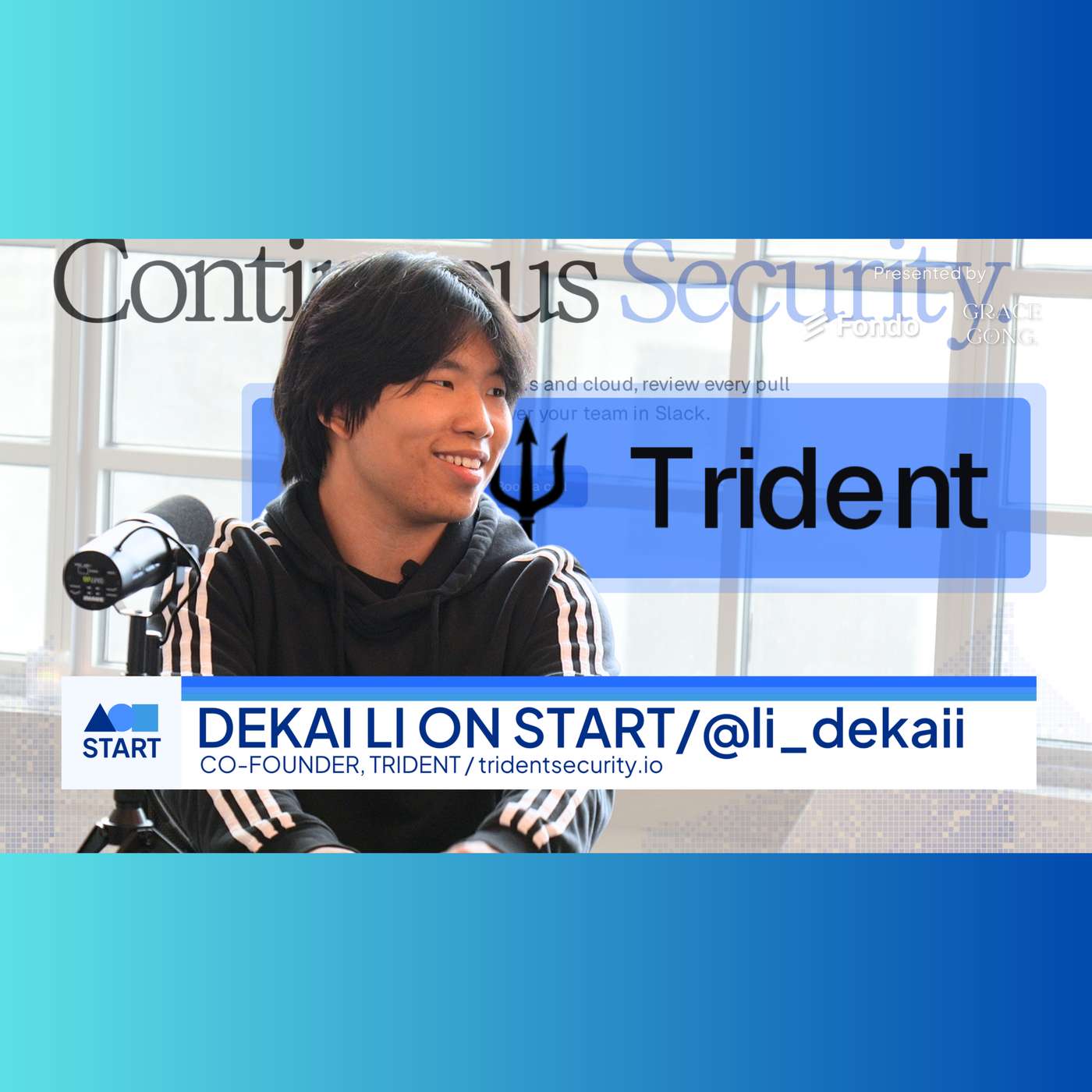
START: Dekai Li, CTO & Co-Founder, Trident "Autonomous offensive security agents."
from START Hosted by Fondo
Shipping code got faster. Security has to keep up. Before starting Trident, Dekai Li’s co-founder saw a workflow that concerned him: A product manager supplied a project description. An engineer pasted it into a coding agent. The output became a pull request. Dekai’s concern: manual pentesting couldn’t keep pace with how quickly developers were shipping. That’s the problem they built Trident to address. Trident uses AI to continuously pentest applications and APIs, review code, and identify security issues across cloud infrastructure. But finding a possible vulnerability isn’t enough. You have to prove it’s real. Dekai says validation is one of the hardest parts of AI pentesting. That’s why Trident’s findings come with reproducible evidence, and fixes can be proposed as draft pull requests for engineers to review and merge. The goal isn’t to give back the speed AI makes possible. It’s to build security that can keep up with it. Check out Trident "Continuous Security. AI agents test your apps, APIs and cloud, review every pull request, and answer your team in Slack." 🎙️Dekai Li Co-Founder & CTO, Trident on Fondo START w/ Guest Host, Grace Gong, Founder, Smart Venture Media 01:05 Why manual pentesting struggles to keep pace with development 02:12 Earning trust as young cybersecurity founders 03:25 Validating vulnerabilities and navigating AI guardrails 04:02 Building credibility through experienced hires and product results 05:18 A customer case: five critical vulnerabilities in 20 minutes 06:10 The founders’ cybersecurity backgrounds and path to Trident 07:02 How AI coding workflows helped inspire the company 08:13 Lessons from YC and building around customer feedback 09:32 Scanning software packages before they enter the codebase 10:21 Focusing on the security problems customers prioritize Check out tridentsecurity.io
Embed this episode
No transcript yet.