
EPISODE · Sep 30, 2024 · 48 MIN
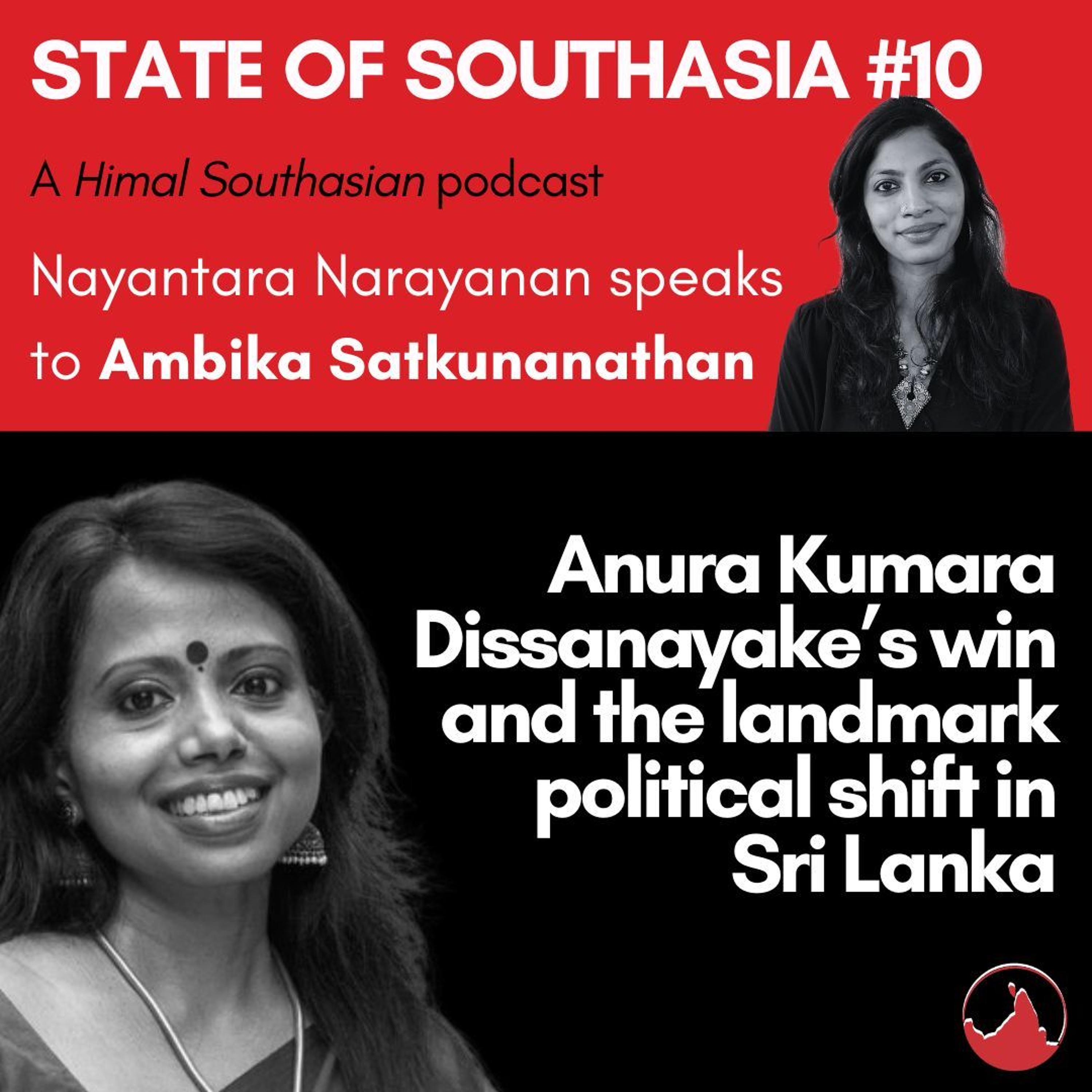
State of Southasia #10: Ambika Satkunanathan on the landmark political shift in Sri Lanka
from Himal Southasian Podcast Channel · host Himal Southasian Podcast Channel
In 2019, Anura Kumara Dissanayake contested Sri Lanka’s presidential election against the incumbent Gotabaya Rajapaksa. He won only three percent of the vote. In the parliamentary elections a year later, the National People’s power – the coalition that includes Dissanayake’s party, the Janata Vimukti Peramuna – won only three seats. The JVP was disparaged as the “three percent party.” In 2024, Dissanayake has turned the tables by winning 42 percent of the vote share. Meanwhile, Namal Rajapaksa, the son of former president and prime minister Mahinda Rajapaksa, secured only three percent. Dissanayake’s meteoric rise to Sri Lanka’s executive presidency, which marks a landmark shift in the country’s politics, was powered in large part by the people’s struggle or Aragalaya in 2022 and the simmering public dissatisfaction with the political class ever since. In this episode of State of Southasia, Ambika Satkunanathan, a lawyer and former commissioner of human rights in Sri Lanka, explains how sections of the populace, including the Tamil minority, are wary of Dissanayake, given the JVP’s history of violent insurrections in the 1980s and its leftist economic outlook. However, she says, he has made the right moves in reaching out to business communities and showing an eagerness to work with everyone. State of Southasia releases a new interview every four weeks. This podcast is now available on Soundcloud, Spotify, Apple podcasts and Youtube.
Embed this episode
NOW PLAYING
State of Southasia #10: Ambika Satkunanathan on the landmark political shift in Sri Lanka
No transcript for this episode yet
Similar Episodes
No similar episodes found.
Similar Podcasts
No similar podcasts found.