
EPISODE · Jan 24, 2021 · 33 MIN
State of the State podcast focuses on issues surrounding Capitol insurrection
from MSU Today with Russ White · host Russ White
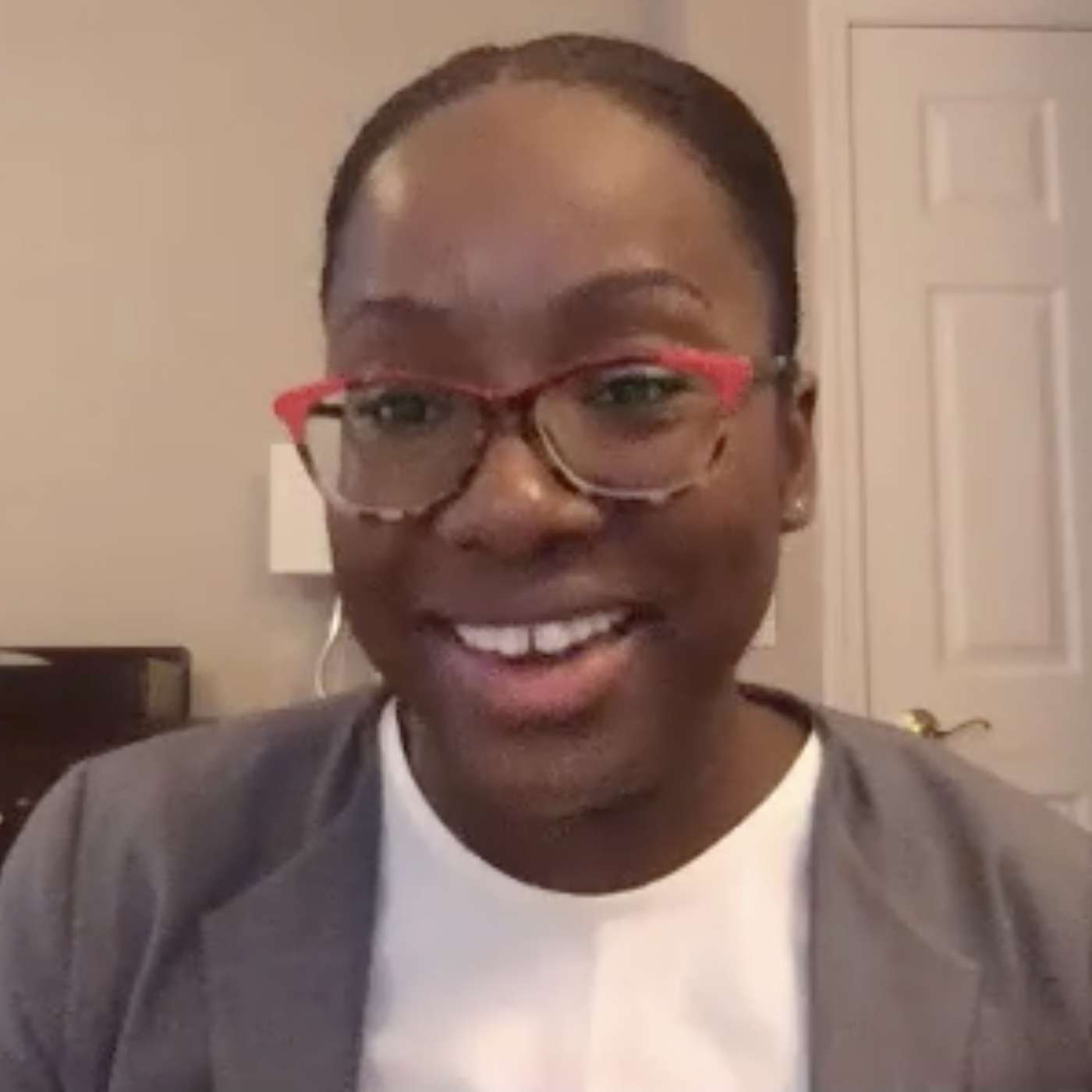
This month’s guest is Dr. Jakana Thomas, an Associate Professor in MSU's Department of Political Science whose research focuses on political violence, how violence influences conflict resolution, and the determinants of a successful peace process - items that are no doubt on the minds of many Americans today.“The drop in the economy in Michigan and everywhere else was dramatic in April of 2020. Really, by many measures, April 2020 was the worst month in American economic history,” says Ballard. “We previously thought that the 100,000 jobs lost in Michigan in January of 2009 was really horrendous; in April of 2020 we lost 10 times as many. We lost about a million jobs. “I think there are a couple of things going on. One is the federal government has stepped up and has relieved the burdens in many ways. Another is that we have learned a lot of businesses have been able to continue to operate better than maybe we first thought in an online, remote environment. So the good news is that the budgetary situation for Michigan is not nearly as bad as we once thought.“The not so good news is that the recovery appears to have stalled out.” “Can we keep injecting federal money into the economy,” asks Weinfeld?“On the one hand, I think this is not yet the time to worry about balancing our budget because our economy is still in deep trouble. On the other hand, the federal deficit for the fiscal year that ended last September was more than $3 trillion. And now the total accumulated debt is pushing toward $22 trillion. So far, the world credit markets seem happy to gobble up that debt and we don't have to pay very high interest rates. I do worry that there will eventually be a day of reckoning. I hope that once we get past the worst of the COVID crisis, which I think we may well be able to do that by summer, then it will be time to have a serious national discussion for the first time in a long time about maybe paying our bills.“I think that the tax cuts that were passed three years ago were absolutely wrong-headed because introductory macro economics tells you that you should balance your budget or run surpluses when the economy is good leaving some room for deficits when the economy is struggling. But the tax cuts that went into effect three years ago meant that we were running a trillion a year even when the economy was doing well. That's a concern, but I feel like I'm kind of a lonely voice in the wilderness when I say that. Because in order to deal with it, you're going to have to cut some spending or you're going to have to raise some taxes.”Weinfeld asks Grossmann to reflect on the events of January 6th and how corporate America has seemingly taken a different tact with its philosophy on donations.“First it's too early to say on the donation patterns,” says Grossmann. “This is right after an election; this is not usually a high time for corporate PAC donations. Many of the businesses that have made announcements have just said they're not making donations for the next six months or doing some kind of pause. Overall, actually the data shows that corporate donations tend to moderate representatives. It's actually the individual contributions that are more likely to lead to more extreme representatives. It's not clear that those patterns are really going to change our polarized landscape.“On the stimulus, I just want to make sure everybody understands that although state and local government funding wasn't directly included in the December stimulus, Michigan is still vastly helped in its state government by that stimulus package. Not only is money that is for health and education likely to be fungible in the state budget as it was almost entirely in the last state budget, but we also benefit in terms of revenues from those higher unemployment benefits and from checks going to individuals. So those stimulus packages before really helped to alleviate what would have been big pain in the state budget.“Going forward, if we do get to that point that Charley mentioned where we start to see if not austerity, at least a turning off of the hose of federal money, we are likely to have postponed that potential pain in the state budget rather than gotten rid of it completely.”Weinfeld wonders whether Democrats and Republicans may or may not work together more closely in the wake of November’s election. “It doesn't seem like it's so far,” Grossmann says. “We're a few days after the inauguration and already there's a dispute about even how to form the Senate committees. There's no evidence that there's Republican support for any of the initial legislative proposals that Biden put forward, either the immigration one or the stimulus proposal.“So there's a lot of talk about unity, but most of that was about being unified in values or against extremism or maybe toning down the culture war. There's not really a whole lot of sign that there's going to be bipartisanship when it comes to public policy. Democrats do now have full control and there are a lot of people who are going to want to use that full control to enact a lot of policies. We also know that the party out of the presidency tends to win the midterm election, and so they are going to see this as a fleeting chance that they have to potentially enact new policies.“Now at the state level research shows that the party out of power in Washington is more likely to move their states more ideologically in the opposite direction. So we will be looking for Republican states to actually move rightward under the Biden administration while Congress tries to take advantage of its couple years with Democrats in the majority.”“I think 2021 is going to be better than 2020,” Ballard adds. “But that's setting the bar really low. Certainly, the Trump administration never really took fighting COVID very seriously. They viewed it as a public relations problem, not a public health problem. It will be difficult for Biden’s team not to do better. I think there's a decent chance that we will speed up the shots in arms rapidly. But since there are still bottlenecks in the system, I think it's probably summer or fall before we really start seeing major progress, and then it will take many months to put the economy together. Most economists say that 2021 will still be a rocky year and maybe we can look to 2022 to getting back to an economic more normal.”Grossmann welcomes his colleague from MSU’s Department of Political Science, Jakana Thomas, to the conversation.“She’s an international expert on terrorism and violence,” says Grossmann. “Jakana, talk about how you think we should see the attack on the Capitol in an international context.”“America is not really the only country to encounter many of these same problems,” Thomas says. “This looked very much like post-election violence that we would witness around the world in other countries. And post-election violence occurs often when people distrust the electoral process or they're unhappy with the outcome and so they engage in violence. A key point of focus here is a lack of trust in the institutions and specifically in the electoral process.“A colleague of mine notes that what we saw on display on January 6th is consistent with democratic backsliding, and this is kind of where you see a democratic state sliding closer and closer toward autocracy very slowly. Other colleagues say that there are clear indicators of some deep-seated trouble ahead for the United States, and some of the key factors that are going to cause some of these problems are the gross economic inequality and the growing polarizatio...
Embed this episode
What this episode covers
State of the State is the monthly roundup of policy and research for the state of Michigan from the Institute for Public Policy and Social Research at Michigan State University. Arnold Weinfeld is Associate Director for the Institute and is joined by MSU economist Dr. Charley Ballard and Institute Director Dr. Matt Grossmann.
Ready to play
State of the State podcast focuses on issues surrounding Capitol insurrection
No transcript for this episode yet
Similar Episodes
No similar episodes found.
Similar Podcasts
No similar podcasts found.