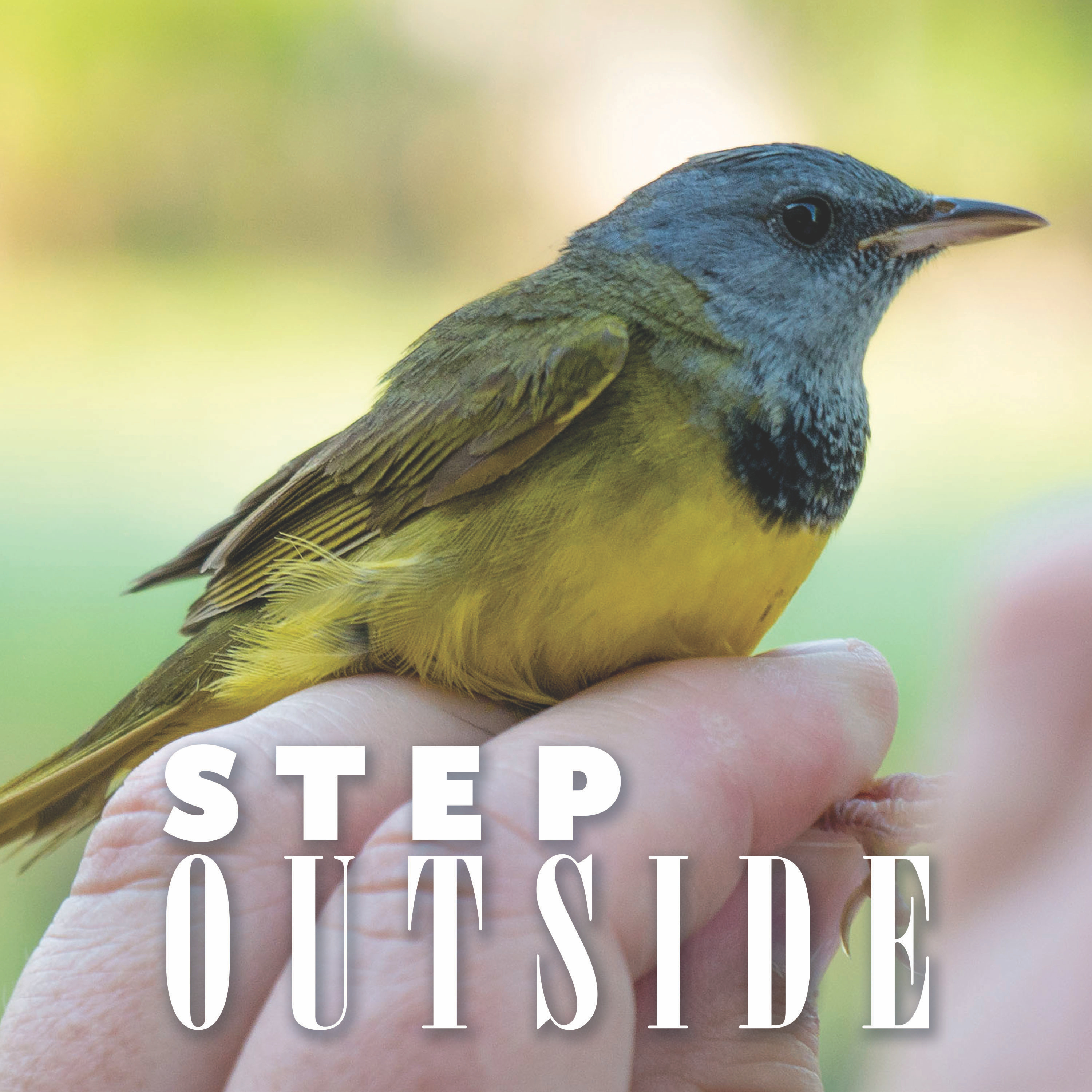
Hi, everyone. Welcome to the Step Outside podcast from the Department of Forestry, Wildlife, and Fisheries at the University of Tennessee Institute of Agriculture. I'm your host, Christy Kiel-Blackman. Today, I'd like to welcome Hannah Shapiro to our podcast.
Hannah is a grad student in our department, and today we're going to be talking about her research dealing with bats. Hannah, welcome to the show. Thank you so much. Thanks for coming.
Hannah, you're getting your MS in Wildlife and Fisheries Science? Yes, that's great. Okay, great. And when will you be finished?
I'm planning to be finished around December 2020. Awesome. That's great. Tell us about your thesis work.
What's a 30,000-foot view of what you're studying? Yeah, so big picture, I'm looking at using visitor surveys in national parks to improve their bat and cave conservation plans. So pretty much, the national parks have done a great job at doing biological and ecological work on bats, but they don't really have a lot of information on what their visitors think about bats at all. And this research is becoming more important as a new set of cave management plans have just been released for parks and other show caves, and they want to help prevent the spread of white-nose syndrome, which is a disease that impacts bat populations from spreading west.
So it was discovered in 2006 in caves near New York, and now it has spread pretty much throughout half the country, and it just made a leap over to Washington in 2016, and they just recently found it this past summer in California. Yeah, wow. For our listeners who perhaps don't know what happens to a bat when they get white-nose syndrome, can you go into a little bit of the physiology behind that? Yeah, so white-nose syndrome is caused by a fungus with a fancy Latin name, pseudodymnoacic disruptions, which is PD for short.
So if I use the word PD, that's the fungus. And pretty much, it affects bats hibernating in caves mostly because it prefers these moist, dark, damp environments. And once it gets into the bat, so it infiltrates the skin, a various amount of effects will happen. So dehydration, it'll change their metabolic activities, it'll make them wake up more during hibernation and groom themselves, so they burn those critical fat reserves they need to survive the whole winter.
And what this can do is then, because they burn through their fat reserves, they try to go out of the cave to look for food, and what is the status of bat populations across the U.S. right now? Why do we need to be concerned about bats? Yeah, so bat populations across the U.S., white-nose syndrome is definitely one of the key contributors to them declining.
Not all bat species are affected, but a lot of the ones with very large populations are being affected. There are other causes of bat population declines, like wind turbines are always a big thing, just in general habitat loss as well, but white-nose syndrome was kind of the very blunt trigger that caused a lot of additional bat research to happen because it's killed, I think, at this point, over 6 million bats since 2006, which is a big hit to their population. Yeah, that's significant. And so your research is related to visitor perceptions of how bats are affected by white-nose syndrome, is that accurate?
Yeah, so my research focuses on how visitors, what do they think about bats, their knowledge of white-nose syndrome and bats in general, and their opinions on these common cave management practices that have come out of white-nose syndrome being discovered and starting to spread. So a lot of the cave management actions the parks have implemented, they vary between parks, but almost all of them have adapted their educational materials, so they always include something about white-nose syndrome on their written pamphlets or if they give tours in their tours. And then depending on the white-nose status of the park, they then, some of them install decontamination mats, which are just pretty much mats, usually with hydrogen peroxide in the bottom, that visitors walk over to clean their shoes off, and others have closed sections of the caves with vulnerable bat populations. Some don't let visitors in if they've had clothes that have been in a cave with white-nose syndrome.
So my big project is just to see what do visitors know, do visitors care, and as these cave management plans keep adapting and going forward in the future, the parks now will have this information of do visitors agree, what's impacting visitors' ability to actually do these cave management practices, and just in general to make sure that they're not completely impacting the recreation side of their kind of mission statement. So really, your research will affect management practices implemented by the National Park Service going forward? Yes, that's the plan. Fantastic.
That's very impressive. What are some interesting findings you had when you spoke to these national park visitors? Yeah, so we spoke to 1,365 park visitors in eight different national parks, so we went all over the place. We started out in Oregon, so we did Oregon and California, and then we dropped down to New Mexico to do Carlsbad Caverns and El Malpais, and then we went to South Dakota for Wind and Jewel Cave, and then back east we did Mammoth Cave, which is a big one in Kentucky, and Cumberland Gap National Historic Park.
So we've gotten this mix of very popular cave parks versus maybe some more hidden gems in the national park system or local treasures. So pretty much what we found was that visitors really like bats, which is very positive. Research done in the 70s and 80s saw that the general public tended to not like bats, and they grouped them together with sharks and other kind of animals that seem scary. So there's been this shift, at least in North America and some other Western countries, that people actually like bats now, which is great when they're talking about possibly adding restrictive cave management practices specifically for bats.
Additionally, we also found that a lot of people had heard of white-nose syndrome before, which was very good because there was a similar study done by a previous master's student here, and she conducted it at Great Smoky Mountain National Park, and she wasn't looking at cave-dwelling bats, but more building-dwelling bats. So when she did her study, I think it was only around 30% of people had heard of white-nose syndrome. So now with ours, I believe the average was 60% to 70% had heard of white-nose syndrome, and that varies between parks. So that was very encouraging to see that people like bats, and they've also heard of this disease that's kind of wiping them out.
And then overall, we found that people were very much willing and had very positive attitudes towards all the cave management actions we asked about. So we used a theory called the theory of planned behavior, which is just a theory that tries to predict what people do and tries to explain their behavior. So we found that their intention to follow these management actions was very high, and then their attitudes towards was also very high, and they didn't see a lot of barriers to them participating in any of these actions, even if it was the more kind of restrictive ones of having to change their clothes or shoes before entering the cave. So that was very encouraging for parks that might have to, in the future, have these more restrictive management practices.
Of course, a lot of parks want to avoid that because the National Park is all about educating people, giving them a good recreation experience, but also conserving the environment that they've been dedicated to protect. So the fact that visitors see the point of these management actions and are willing to follow them is very promising for any parks that maybe have to go a little more restrictive in their practices. That's all great to hear. Sure.
That's fascinating to me that the reputation of bats has changed so much. What do you think caused that? That's wonderful to hear that so many people realize the importance of bats and that they don't think they're creepy. But what led from people thinking that a bat was going to bite them or crawl in their hair to, hey, bats are really important.
They're part of the ecosystem. They should protect them. Yeah, so there's a couple of historical theories on why people have generally disliked bats. One of the big reasons is disease, so people don't tend to like animals or wildlife that can transfer disease, and bats around the world are known as carriers for a lot of the pretty dangerous virus.
Here in America, rabies is a big one that's often associated with bats. Another theory that why people don't like bats is before there wasn't a lot of public knowledge or information about them, so people tend not to like what they don't understand. Also, in terms of bats being mammals, they're very different from all the other ones. They're the only flying mammal.
They're nocturnal. People might not see them or interact with them a whole bunch, maybe just see them in the evening when they come out, but that's about it. So we think possibly the more spread of knowledge, definitely social media has helped. A big kind of factor is a lot of people have seen the flying foxes, which are bats in Southeast Asia, in these little bat burritos.
They even give them a little blanket. So they're changing from kind of this ugly, creepy to cute, with some species especially. And also, I think the public just knows more about it. And then additionally, I think in America, the fact that white-nose syndrome hit bat species so hard, it created a lot of news around bats where there might not have been a lot of focus before.
So people tend to empathize with animals or wildlife populations that are declining. And because it got hit so hard, that kind of opened the gateway of like, okay, well, why do we need to protect bats? So I feel like people's interest in bats as a whole kind of got triggered once white-nose syndrome became a lot more publicized. Yeah, okay.
What misconceptions about bats do people still carry? Yeah, so the big one, which isn't super harmful to bats that we saw in our survey, was a lot of people still think bats are blind. So that doesn't really affect if people like them or not. But a lot of people, you know, they always know that bats echolocate, so they have eyes, but they don't need them type of thing.
So that was a common misconception that about half the people were like, yeah, bats are totally blind. And then the other ones people had, to a lesser extent, the one about bats flying in your hair was definitely, it decreased a lot, which was great to hear. Very good to hear. I saw to calm some kids down and came to the table who were like, were afraid to go in the cave because they thought bats were there and was whooped down at them.
So I backtracked that one a little bit. And then the big thing with, you know, a lot of bats have rabies or all bats have rabies was a big one. They've done studies and they found like, I think it's less than 1% of bats in the U.S. at least carry rabies.
So of course if you get bitten, you should still get checked out and get the shots and all that stuff. But the same precautions as if you get bitten by any male. Yeah, by any wild animal, really. So people definitely thought rabies was still a factor with bats, but not nearly as much as they used to, which was nice to hear.
Yeah, that's great. It sounds like a lot of really great progress is being made with regard to bats and their reputation. For sure. And I definitely think because we were specifically targeting national park visitors, the national park has definitely done a good job with ones that have show caves of communicating why bats are important, why you shouldn't be afraid of them, and what you can kind of do to help bat populations in your area.
So I think at least amongst the national park visitor population, they've done a very good job at making sure people leave the cave knowing that, you know, whether or not that cave had a huge bat population or not, that bats are important. And you need to be aware if you do go into these other caves, for sure. Right. So leading off that, what would you say are the next best steps for visitors to take and also for the national park service to take to control the spread of white-nose syndrome?
Yeah, so some of the spread definitely can't be helped. White-nose syndrome has three studied pathways. One is cave-to-bat, so if a cave has the fungus, it gets transferred to the bat. The next one is bat-to-bat transmission, so a lot of bats hibernate in pretty tight colonies, so they groom each other, you know, they're protecting each other, and then if they fly to another cave, that cave can then get the fungus spread into it.
So those ones, visitors can't really help at all. But the third transmission path is human-to-cave or humans-to-caves then bats. So they definitely believe that some of the big jumps in white-nose syndrome, mainly the jump from Europe to North America initially, and then there was a big jump in 2016 from pretty much eastern North America to Washington State, was due to human activity. So being aware of what caves people have gone in is a big one.
A lot of the parks will have these screening procedures where they ask, you know, have you been in a cave in eastern North America in the past, you know, five, ten years, and making sure that visitors are aware, like, even if it's just a little cave, not necessarily associated with the parks, they can still have white-nose syndrome. So I think awareness is definitely a big one for visitors. And then, on top of it all, just supporting other conservation organizations that do bat research. So one of the big ones is Bat Conservation International.
They do a lot of good work. They have a lot of educational materials. And they give people instructions on, like, how to build bat boxes for your bat yard and things like that. So just getting engaged with other sites and other organizations that might also have a lot of information on bats.
And then in terms of the parks themselves, it's hard to have, like, an overarching, like, this is what they need to do next. But I think one of the big things that most of the parks can do better is giving people kind of, like, a ray of sunshine. So a lot of white-nose syndrome is just, like, bats are dying. We need bats.
You know, like, all this stuff. But they kind of stop there. They don't say, what can people do additionally to kind of help other than following these management protocols. So I think that parks, maybe with partnering with some of these organizations or advertising their adopted bat programs or how to sponsor research, that might give visitors more of a ray of hope that, you know, they can do something to help rather than just, yeah, I can follow the procedures.
But that doesn't seem to be enough right now. Yeah, and no one wants to just stand by while millions of bats are dying. Yeah, for sure. Especially when you see the updated map and you see it slowly kind of creeping across the U.S.
It's kind of a very disheartening image to see. It is. Yeah, I recently saw the updated map. And I honestly did not know about this read to the Western U.S.
And so that was a really disappointing shocker to see. Yeah, so definitely when it makes those big jumps, you're just like, okay, at least it hasn't hit these states yet. But, you know, there's a lot of bats in the Western United States. And scientists are still pretty unsure of how they're going to be impacted because they have a lot of different species than the Eastern United States.
So there's a lot of unknowns as it continues to kind of push its way west. And with some of these bigger bat colonies, like Carlsback Caverns has a colony of at least 250,000 Brazilian free-tail bats and things like that. They want to make sure they're protected or at least they know how to handle it once, if and when it gets there. Sure.
Yeah, okay. Well, this has been fascinating. I could talk with you about bats all day. But we're going to start to wrap up.
Are there any last words you'd like to leave us with about your research? Are there any other points you'd like to hit for the public? Go online. See a little information on bats.
They're pretty cool in the U.S. Simple, like, setting up bat boxes in your backyard and things like that. Just some small citizen science projects. Yeah, for sure.
There's always ways to get engaged and be safe. And I guess if you're just going to national parks, be prepared to look at their website. They have a ton of information on white-nose syndrome and what's expected of that park in particular. So if you're going to a cave in a national park, just check it out online.
Make sure you're not unprepared. And that's probably one of the best ways you can help the park service out. Great. Hannah, thank you so much for being here.
This was fascinating. You guys, obviously, who are listening, cannot see this. But Hannah is wearing a fantastic bat t-shirt from Carlsback Caverns. So just imagine a fantastic bat t-shirt while you're listening.
Well, thanks for listening to the Step Outside podcast. Again, I'm Christy Coe Blackman. And please join us next time when we talk to more of our grad students about their research. For more real-life solutions provided by the UT Institute of Agriculture, go to our website at ag.tennessee.edu.