
EPISODE · Apr 28, 2021 · 5 MIN
Stepwise Melody Rule
from Ray Harmony · host Hack Music Theory
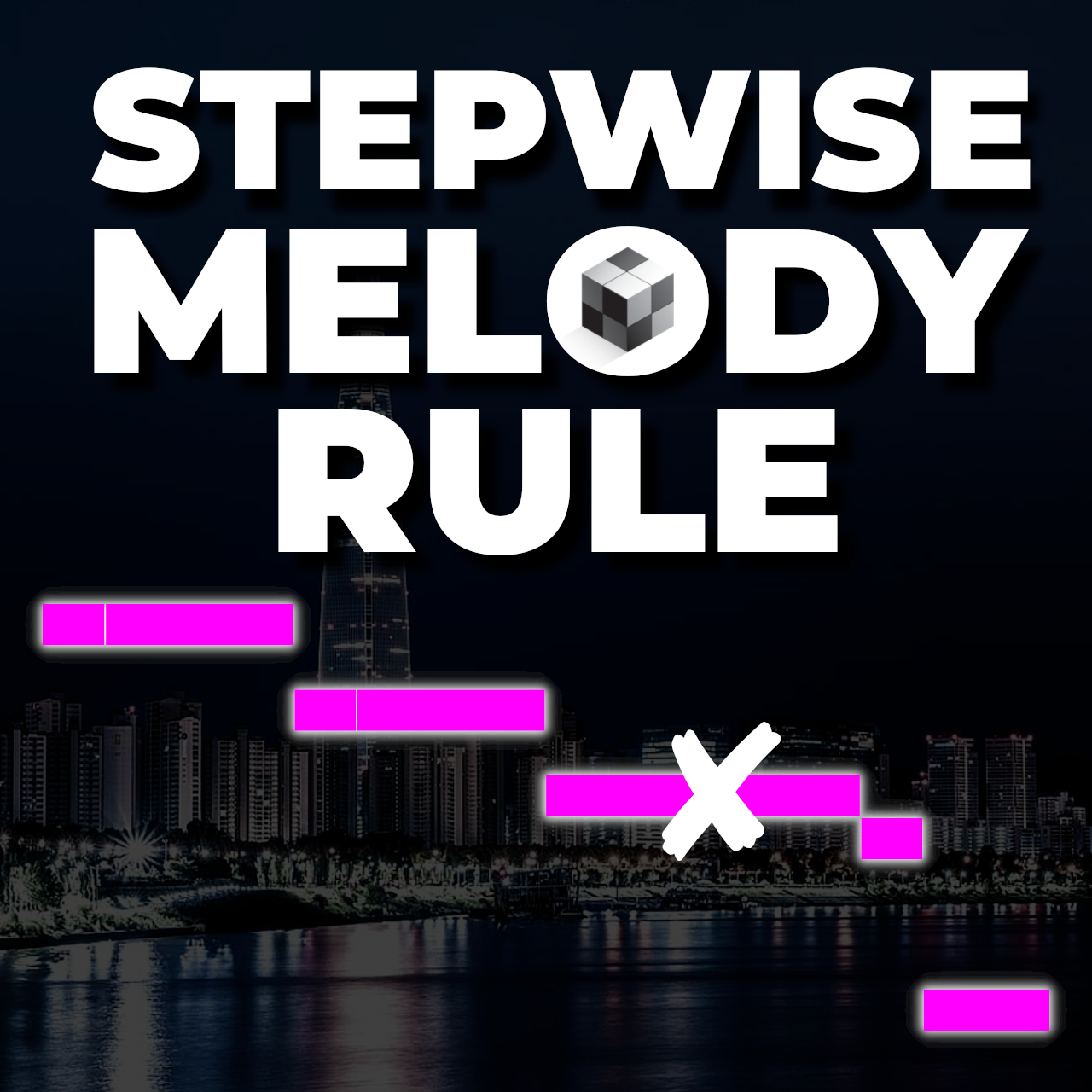
Stepwise Melody Rule Learn how to avoid this common fault many songwriters and producers make in their melodies. But first... Tea! Hello revolutionary music makers, we are Kate and Ray Harmony (AKA Revolution Harmony), and welcome to Hack Music Theory, the fast, easy and fun way to make music! If you’re new to theory, or if you just want a refresher, then read our free book "12 Music Theory Hacks to Learn Scales & Chords". It’ll give you a super solid music theory foundation in just 30 minutes. The free download is below. Enjoy! The Fault Right, first things first. We intentionally use the word “fault” in this context, because music is an art, so technically there can’t be any mistakes. But, and it’s a big but, there can definitely be faults, as faults are weaknesses. And unfortunately, when songwriters and producers compose by ear, their music ends up with many faults! For the record, though, it’s not their fault. It’s the fault of our current music education system that focuses on classical and jazz, which are irrelevant for most songwriters and producers. This means they struggle finding resources to learn relevant music theory, which often results in them composing music by ear instead. This is a huge problem in the music world, and it was the inspiration for us launching Hack Music Theory back in 2016, so songwriters and producers could finally have a place to learn theory that’s actually relevant to the music they make! Now, let’s get back to that melody. So, what is the theory fault here? Well, it contains more than three stepwise notes from the scale. In the beginning of the melody, it goes: E, D, C, B. And in the middle of the melody, it goes: E, D, C, B, A. We refer to this as the “practising scales” fault, because whenever a melody goes stepwise through the scale (up or down), it literally sounds like the producer accidentally hit the Record button while they were practising their scales. This fault is extremely common, as songwriters and producers who compose by ear don’t have the confidence that theory gives you to experiment, so they tend to play it safe and stick with a lot of stepwise movements. You see, our ears will always be led by musical gravity to the predictable note, like resolving the 7 up to the 8. Boring! If we wanna make cool music that stands out, we need to use theory! And by the way, if you were wondering, our example is in the key of A minor, which is all the white notes from A to A, and the tempo is 100 BPM. The Fix You know what’s interesting? Now that you’re aware of this fault, you’ll start noticing it everywhere. It really is sad how common it is! But, there’s a super easy hack to fix this fault. All you have to do is change a note (or two) in each scale segment, to break up that stepwise movement. In our example, we only had to change one note in each segment to fix this fault. After this tweak, our melody now has no more than three stepwise notes, which is the maximum you want. It’s truly amazing how changing just one note can have such a massive impact on a melody! The Rule So to conclude, our Stepwise Melody Rule is to have no more than three stepwise notes in your melodies (unless for some good reason, you really really want that). Lastly, if you need more help writing melodies, then simply use our "Melody Checklist", which tells you exactly what to do and what not to do in your melodies. The "Melody Checklist" can be found in our Songwriting & Producing PDF. Thanks for being here in the Hack Music Theory community, we really appreciate you, and we'll see you next time. Until then, we're sending you good vibes and gratitude :) Free Download Wooohooo!!! You’re a mere 30 minutes away from being even smarter than you already are. Just head on over to your inbox now for your free download. There was an error submitting your subscription. Please try again. “The most brilliant, fast, easy & fun music theory book I’ve ever seen!” DEREK SIVERS, CD Baby founder We use this field to detect spam bots. If you fill this in, you will be marked as a spammer. DOWNLOAD FREE BOOK /* Layout */ .ck_form { /* divider image */ background: #EAE9EA url(data:image/gif;base64,R0lGODlhAQADAIABAMzMzP///yH/C1hNUCBEYXRhWE1QPD94cGFja2V0IGJlZ2luPSLvu78iIGlkPSJXNU0wTXBDZWhpSHpyZVN6TlRjemtjOWQiPz4gPHg6eG1wbWV0YSB4bWxuczp4PSJhZG9iZTpuczptZXRhLyIgeDp4bXB0az0iQWRvYmUgWE1QIENvcmUgNS41LWMwMTQgNzkuMTUxNDgxLCAyMDEzLzAzLzEzLTEyOjA5OjE1ICAgICAgICAiPiA8cmRmOlJERiB4bWxuczpyZGY9Imh0dHA6Ly93d3cudzMub3JnLzE5OTkvMDIvMjItcmRmLXN5bnRheC1ucyMiPiA8cmRmOkRlc2NyaXB0aW9uIHJkZjphYm91dD0iIiB4bWxuczp4bXA9Imh0dHA6Ly9ucy5hZG9iZS5jb20veGFwLzEuMC8iIHhtbG5zOnhtcE1NPSJodHRwOi8vbnMuYWRvYmUuY29tL3hhcC8xLjAvbW0vIiB4bWxuczpzdFJlZj0iaHR0cDovL25zLmFkb2JlLmNvbS94YXAvMS4wL3NUeXBlL1Jlc291cmNlUmVmIyIgeG1wOkNyZWF0b3JUb29sPSJBZG9iZSBQaG90b3Nob3AgQ0MgKE1hY2ludG9zaCkiIHhtcE1NOkluc3RhbmNlSUQ9InhtcC5paWQ6MUQ5NjM5RjgxQUVEMTFFNEJBQTdGNTQwMjc5MTZDOTciIHhtcE1NOkRvY3VtZW50SUQ9InhtcC5kaWQ6MUQ5NjM5RjkxQUVEMTFFNEJBQTdGNTQwMjc5MTZDOTciPiA8eG1wTU06RGVyaXZlZEZyb20gc3RSZWY6aW5zdGFuY2VJRD0ieG1wLmlpZDoxRDk2MzlGNjFBRUQxMUU0QkFBN0Y1NDAyNzkxNkM5NyIgc3RSZWY6ZG9jdW1lbnRJRD0ieG1wLmRpZDoxRDk2MzlGNzFBRUQxMUU0QkFBN0Y1NDAyNzkxNkM5NyIvPiA8L3JkZjpEZXNjcmlwdGlvbj4gPC9yZGY6UkRGPiA8L3g6eG1wbWV0YT4gPD94cGFja2V0IGVuZD0iciI/PgH//v38+/r5+Pf29fTz8vHw7+7t7Ovq6ejn5uXk4+Lh4N/e3dzb2tnY19bV1NPS0dDPzs3My8rJyMfGxcTDwsHAv769vLu6ubi3trW0s7KxsK+urayrqqmop6alpKOioaCfnp2cm5qZmJeWlZSTkpGQj46NjIuKiYiHhoWEg4KBgH9+fXx7enl4d3Z1dHNycXBvbm1sa2ppaGdmZWRjYmFgX15dXFtaWVhXVlVUU1JRUE9OTUxLSklIR0ZFRENCQUA/Pj08Ozo5ODc2NTQzMjEwLy4tLCsqKSgnJiUkIyIhIB8eHRwbGhkYFxYVFBMSERAPDg0MCwoJCAcGBQQDAgEAACH5BAEAAAEALAAAAAABAAMAAAICRFIAOw==) repeat-y center top; font-family: 'Montserrat'; line-height: 1.5em; overflow: hidden; color: #000000; font-size: 16px; border-top: none; border-top-color: #666666; border-bottom: none; border-bottom-color: #3d3d3d; -webkit-box-shadow: none; -moz-box-shadow: none; box-shadow: none; clear: both; margin: 0px 0px; } .ck_form, .ck_form * { -webkit-box-sizing: border-box; -moz-box-sizing: border-box; box-sizing: border-box; } #ck_subscribe_form { clear: both; } /* Element Queries — uses JS */ .ck_form_content, .ck_form_fields { width: 50%; float: left; padding: 5%; } .ck_form.ck_horizontal { } .ck_form_content { border-bottom: none; } .ck_form.ck_vertical { background: #fff; } .ck_vertical .ck_form_content, .ck_vertical .ck_form_fields { padding: 10%; width: 100%; float: none; } .ck_vertical .ck_form_content { border-bottom: 1px dotted #aaa; overflow: hidden; } /* Trigger the vertical layout with media queries as well */ @media all and (max-width: 499px) { .ck_form { background: #fff; } .ck_form_content, .ck_form_fields { padding: 10%; width: 100%; float: none; } .ck_form_content { border-bottom: 1px dotted #aaa; } } /* Content */ .ck_form_content h3 { margin: 0px 0px 0px; font-size: 0px; padding: 0px; } .ck_form_content p { font-size: 14px; } .ck_image { float: left; margin-right: 5px; } /* Form fields */ .ck_errorArea { display: none; } #ck_success_msg { padding: 10px 10px 0px; border: solid 1px #ddd; background: #eee; } .ck_label { font-size: 14px; font-weight: bold; } .ck_form input[type="text"] { font-size: 16px; text-align: center; margin-top: 20px; margin-bottom: 0px; padding: 8px 8px; width: 100%; border: 1px solid #d6d6d6; /* stroke */ -moz-border-radius: 4px; -webkit-border-radius: 4px; border-radius: 30px; /* border radius */ background-color: #fff; /* layer fill content */ height: auto; } .ck_form input[type="email"] { font-size: 16px; text-align: center; margin-top: 0px; margin-bottom: 15px; padding: 8px 8px; width: 100%; border: 1px solid #d6d6d6; /* stroke */ -moz-border-radius: 4px; -webkit-border-radius: 4px; border-radius: 30px; /* border radius */ background-color: #fff; /* layer fill content */ height: auto; } .ck_form input[type="text"]:focus, .ck_form input[type="email"]:focus { outline: none; border-color: #aaa; } .ck_checkbox { padding: 10px 0px 10px 20px; display: block; clear: both; } .ck_checkbox input.optIn { margin-left: -20px; margin-top: 0; } .ck_form .ck_opt_in_prompt { margin-left: 4px; } .ck_form .ck_opt_in_prompt p { display: inline; } .ck_form .ck_subscribe_button { width: 100%; color: #fff; margin: 0px 0px 0px; padding: 8px 8px; font-size: 18px; background: #c83232; -moz-border-radius: 4px; -webkit-border-radius: 4px; border-radius: 30px; /* border radius */ cursor: pointer; border: none; text-shadow: none; } .ck_form .ck_guarantee { color: #626262; font-size: 12px; text-align: center; padding: 5px 0px; display: block; } .ck_form .ck_powered_by { display: block; color: #aaa; } .ck_form .ck_powered_by:hover { display: block; color: #444; } .ck_converted_content { display: none; padding: 5%; background: #fff; } /* v6 */ .ck_form_v6 #ck_success_msg { padding: 0px 10px; } @media all and (max-width: 403px) { .ck_form_v6.ck_modal .ck_close_link { top: 30px; } } @media all and (min-width: 404px) and (max-width: 499px) { .ck_form_v6.ck_modal .ck_close_link { top: 57px; } } Want More? Sign up for our newsletter, and get tutorials like this delivered to your inbox. Wooohooo!!! You're now one small step away from joining the Hack Music Theory revolution. Just head on over to your inbox, open the email we've sent you, click the link to confirm, and you're in! There was an error submitting your subscription. Please try again. Email Address SUBSCRIBE /* Layout */ .ck_form.ck_naked { /* divider image */ background: transparent; line-height: 1.5em; overflow: hidden; color: #666; font-size: 16px; border: none; -webkit-box-shadow: none; -moz-box-shadow: none; box-shadow: none; clear: both; margin: 0px 0px; text-align: center; } .ck_form.ck_naked p { padding: 0px; } .ck_form, .ck_form * { -webkit-box-sizing: border-box; -moz-box-sizing: border-box; box-sizing: border-box; } .ck_form.ck_naked .ck_form_fields { width: 100%; float: left; padding: 3%; } /* Form fields */ .ck_errorArea { display: none; /* temporary */ } #ck_success_msg { padding: 10px 10px 0px; border: solid 1px #ddd; background: #eee; } .ck_form.ck_naked input[type="text"], .ck_form.ck_naked input[type="email"] { font-size: 16px; font-family: Montserrat; text-align: center; padding: 10px 8px; width: 34%; border: 1px solid #d6d6d6; /* stroke */ -moz-border-radius: 0px; -webkit-border-radius: 0px; border-radius: 30px; /* border radius */ background-color: #fff; /* layer fill content */ margin-bottom: 5px; height: auto; float: left; margin: 0px; margin-right: 1%; height: 42px; } .ck_form input[type="text"]:focus, .ck_form input[type="email"]:focus { outline: none; border-color: #aaa; } .ck_form.ck_naked .ck_subscribe_button { width: 100%; color: #fff; margin: 0px; padding: 9px 0px; font-size: 16px; background: #c83232; -moz-border-radius: 0px; -webkit-border-radius: 0px; border-radius: 30px; /* border radius */ cursor: pointer; border: none; text-shadow: none; width: 30%; float: left; height: 42px; } .ck_converted_content { display: none; padding: 5%; background: #fff; } /* max width 500 */ .ck_form.ck_naked.width500 .ck_subscribe_button { width: 100%; float: none; margin-top: 5px; } .ck_form.ck_naked.width500 input[type="text"], .ck_form.ck_naked.width500 input[type="email"] { width: 49%; } .ck_form.ck_naked.width500 input[type="email"] { margin-right: 0px; width: 50%; } /* max width 400 */ .ck_form.ck_naked.width400 .ck_subscribe_button, .ck_form.ck_naked.width400 input[type="text"], .ck_form.ck_naked.width400 input[type="email"] { width: 100%; float: none; margin-top: 5px; } .ck_slide_up, .ck_modal, .ck_slide_up .ck_naked, .ck_modal .ck_naked { min-width: 400px; } .page .ck_form.ck_naked { margin: 50px auto; max-width: 700px; } /* v6 */ .ck_slide_up.ck_form_v6, .ck_modal.ck_form_v6, .ck_slide_up.ck_form_v6 .ck_naked, .ck_modal.ck_form_v6 .ck_naked { min-width: 0 !important; } .ck_form_v6 #ck_success_msg { padding: 0px 10px; } @media all and (max-width: 403px) { .ck_form_v6.ck_modal .ck_naked { padding-top: 0px; } } @media all and (max-width: 499px) { .ck_form_v6.ck_modal .ck_naked + .ck_close_link { color: #fff; top: 10px; } } .ck_form_v6.ck_slide_up .ck_naked + .ck_close_link { right: 10px; top: -5px; } @media all and (min-width: 600px) { .ck_form_v6.ck_slide_up .ck_naked + .ck_close_link { right: 35px; } } Podcast Listen below, or on any podcast app.
Embed this episode
Ready to play
Stepwise Melody Rule
No transcript for this episode yet
Similar Episodes
No similar episodes found.