
EPISODE · Dec 20, 2023 · 1H 30M
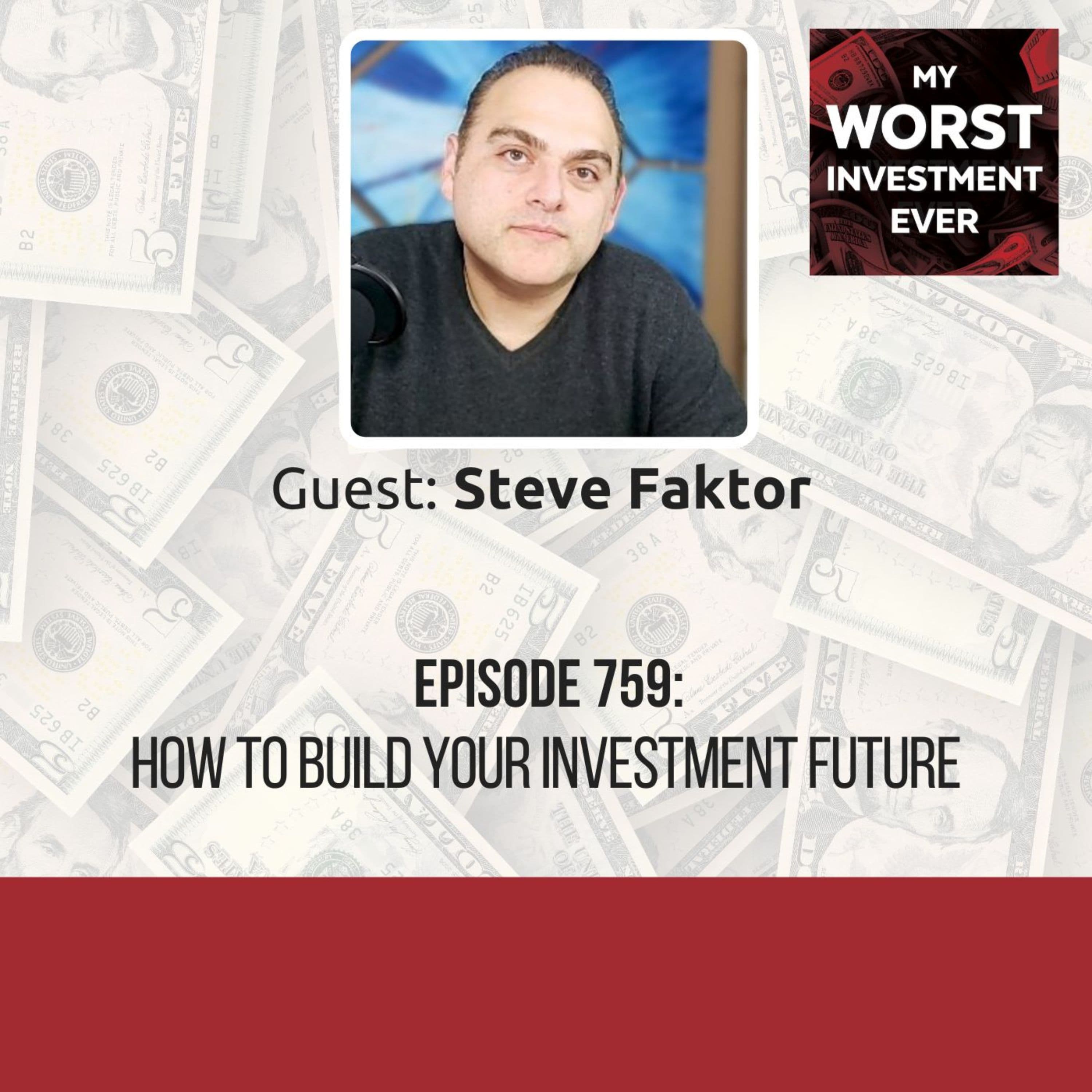
Steve Faktor – How to Build Your Investment Future
from My Worst Investment Ever Podcast
BIO: Steve Faktor is a former Fortune-100 executive—turned entrepreneur, futurist author of Econovation, and podcaster. As Managing Director of IdeaFaktory Innovation, he helps tech, financial services, and consumer goods clients see and build the future.STORY: Steve joins the My Worst Investment Ever podcast again, this time sharing advice on how investors can see and build their investment futures.LEARNING: Try to understand the future by differentiating between noise and legitimate signals. Don’t let others impose on your story. Act in principle. “I would like to see more people acting in a principled way because even if you win, but you do it without principle, you will have lost because those same unprincipled methods will come back to haunt you.”Steve Faktor Guest profileSteve Faktor is a former Fortune-100 executive—turned entrepreneur, futurist author of Econovation, and podcaster. As Managing Director of IdeaFaktory Innovation, he helps tech, financial services, and consumer goods clients see and build the future.Steve is a LinkedIn Influencer with over 750,000 followers and has been featured in Forbes, Harvard Business Review, and The Wall Street Journal, among others. He’s a popular keynote speaker at major events and numerous corporations.The McFuture Podcast features Steve’s provocative predictions and prescriptions, as well as guests like Larry King, comedian Jim Jefferies, Governor Jesse Ventura, Nobel Economist Joseph Stiglitz, former ACLU President Nadine Strossen, Megachurch Pastor AR Bernard, and many more.Previously, Steve launched multiple $150m+ loyalty, payments, and e-commerce products & services as head of the American Express Chairman’s Innovation Fund, SVP at Citi Ventures, VP of Strategy & Innovation at MasterCard, and management consultant at Andersen.Steve joins the My Worst Investment Ever podcast again, sharing advice on how investors can see and build their investment futures. Listen to his previous episode: Take the Risk and Pursue Your Dreams.Understanding the future as a long-term investorIf you want to invest in three to ten-year opportunities, Steve says you need to know what the future will look like or at least have an idea of what that might be. However, as we try to understand the future, Steve says most of what we are reacting to is noise. You therefore, need to learn how to filter out what is signal and what is noise. Once you’ve identified which opportunities are legitimate signals and not noise, ask yourself where they could go. You’ll never know for sure. But again, that’s where you assign probabilities and say, this is likely to happen or more likely than something else. Now that you have an idea of where these things might go and what this future might look like, ask yourself how you’ll act in that future.Steve adds that there’s another equal danger to listening to noise, which is deafness. So there’s the hearing of everything that may not be relevant or important, and then there’s complete deafness. Steve says the vast majority of people are deaf. And so they’re not even hearing and understanding the signals or the noises. Such people are complete pawns in whatever the people who are active and responding to either signal or noise will determine.This kind of deafness is because some people there are institutionalized and believe that whatever system has worked for them is what is working. They don’t have an incentive to look any deeper. So they just putter along.Dealing with propagandaWhile propaganda is a negative characterization, and for good reason, Steve thinks personal narratives are important. The story that you tell yourself of how the world works and what matters to you is the story that will motivate you to do something. Now the question is, is it a good something or a bad something? Will it propel you forward to be a better person to help others to do things that are moral and unjust? Or will it push you to do harmful and destructive things, profiteering, or whatever else that may not be moral?So the question is, what is the story? What are the stories that we want to have versus the stories others want us to have? So, regarding propaganda, Steve believes that what matters is the imposition of other people’s stories into our lives and our response to them. Will you make their imposition part of your story, or do you have the ability to decide what your story should be? Steve says that’s tricky because we’re not equipped to deal with this level of propaganda individually.The victim-oppressor ideologySteve also talks about a terrifying ideological thing currently happening, especially in the education system. There are groups in education institutions about the victim-oppressor ideology. According to Steve, this ideology works by weaponizing empathy. It’s a brutal ideology, but its brutality is cloaked in justice and kindness. So, it’s the appearance of compassion and empathy. So people care about the victim but are prepared to stand behind or have the state impose the most incredible force to achieve the equity and kindness they think is just.Steve believes the only way to stop this ideology is to emphasize morality. We need a re-moralization because the former systems of morality have failed as they’ve outlived their useful life. Steve insists that empathy can be weaponized when it’s not paired with morality. But people are far more concerned with the appearance of goodness than the actuality and reality of virtue. And that is where the problem is. Combining the lack of morality, weaponized empathy, appearances, and the motivations on social media to present yourself a certain way becomes a deadly combination. And so what we desperately need is re-moralization.The thing that concerns Steve the most, he adds, is principles. Principles, just like morality, are unfortunately a luxury good. When you don’t have things, you aren’t too worried about being that moral. You’ll steal to get food for your child, for example. However, most people in the US have enough—not what they feel they should have—but are at a point where they can afford morality and principle. But they’re not buying either. Steve would like to see more people acting in a principled way because even if you win but it was without principle, you will have lost. Those same unprincipled methods will come back to haunt you.Parting words “What do you believe in? What do you think a moral person is? What do you think a principled person is? What do you think is right and wrong, and does it apply equally to the people you hate as to those that you love? That’s what I want people to think about because I think that’s the crisis of our time.”Steve Faktor Connect with Steve FaktorLinkedInTwitterYouTubeWebsitePodcastAndrew’s booksHow to Start Building Your Wealth Investing in the Stock MarketMy Worst Investment Ever9 Valuation Mistakes and How to Avoid ThemTransform Your Business with Dr.Deming’s 14 PointsAndrew’s online programsValuation Master ClassThe Become a Better Investor CommunityHow to Start Building Your Wealth Investing in the Stock MarketFinance Made Ridiculously SimpleFVMR Investing: Quantamental Investing Across the World<a...
Embed this episode
Ready to play
Steve Faktor – How to Build Your Investment Future
No transcript for this episode yet
Similar Episodes
No similar episodes found.