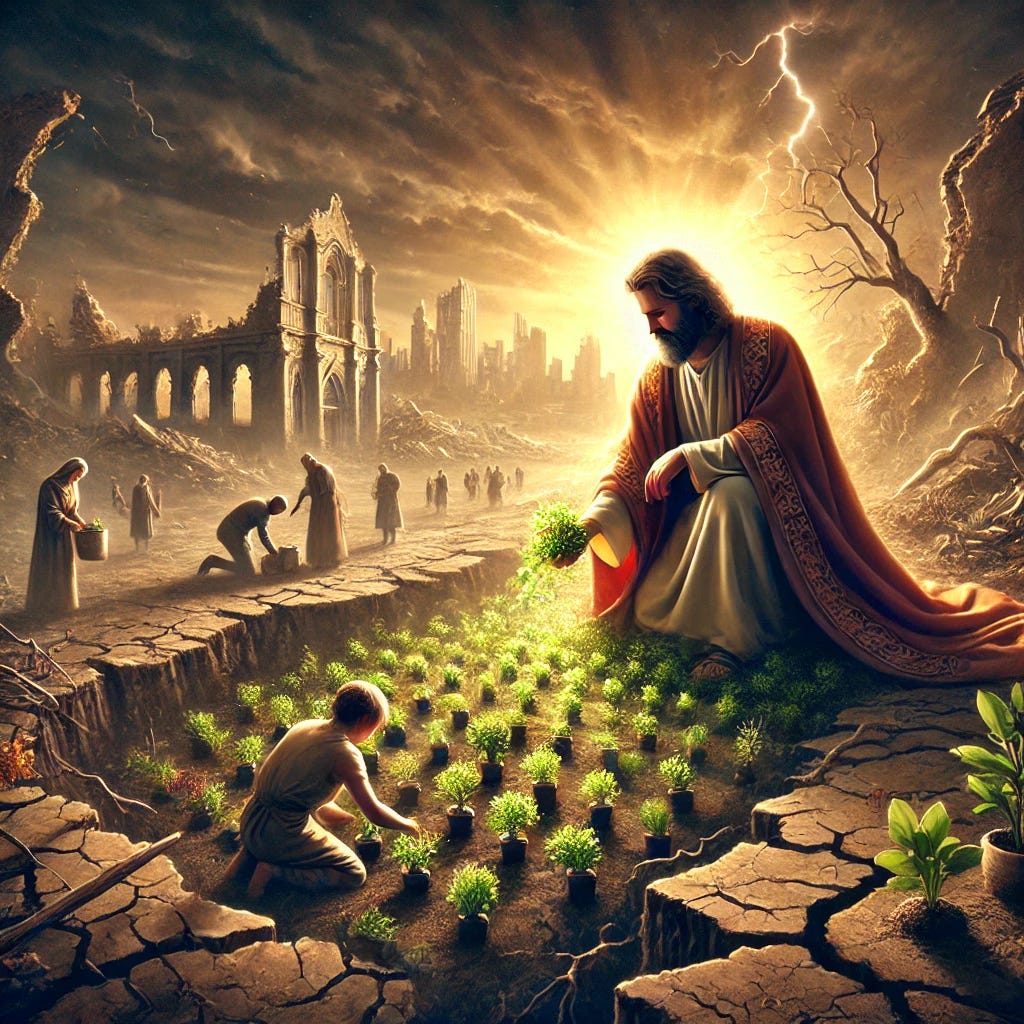
Stewardship?
from Brandon’s Newsletter Hosted by Brandon Freywald
Thanks for reading Brandon’s Newsletter! Subscribe for free to receive new posts and support my work. Stewardship is simply managing our responsibilities carefully and orderly. This could be as simple as managing a budget or tending to our environment by cleaning up trash or trimming overgrown brush. Stewardship is a biblical mandate. All things belong to the Creator (Psalm 24:1). He has bestowed on us the responsibility to care for what He has given to us (1 Chronicles 29:14). From the very beginning in Genesis, G-d has placed upon mankind the responsibility to care for, to manage, and to make beautiful His creation. We do this to glorify Him. Under His banner, we work diligently and with all integrity. He has placed all people exactly where He wants them. Acts 17:26 says: “From one man He made every nation of men, that they should inhabit the whole earth; and He determined their appointed times and the boundaries of their lands.” This world is broken and will be until sin is ultimately vanquished. With an all-consuming fire the universe will be amalgamated into a new and glorified state. Till then we bring the misplaced back to their place, the fallen back to wholeness and the hurting back to health. 1. The Commission in Genesis: A Call to Stewardship In Genesis 1:26–28, humanity is given a unique vocation: to rule over creation and care for it as God’s image-bearers. This “cultural mandate” reflects God’s intent for humans to cultivate, protect, and expand creation’s flourishing. Stewardship involves active engagement with the world—governing, innovating, and nurturing in a way that mirrors God’s character. However, this stewardship is not just about dominion; it’s about partnership. Humanity was created to work in harmony with God, others, and the earth, acting as intermediaries who extend God’s wisdom, justice, and love into the created order. 2. The Impact of the Fall: Brokenness in Stewardship The Fall (Genesis 3) disrupted this divine commission. Humanity’s relationship with God, one another, and creation is fractured. The ground is cursed (Genesis 3:17–19), and humanity’s dominion becomes distorted—marked by exploitation, negligence, and self-centered ambition. The Fall creates a tension: the original commission remains, but fulfilling it now requires navigating sin, suffering, and resistance within creation. In this context, stewardship becomes an act of redemption, where humans must reconcile their broken nature with their God-given role. It raises critical questions: • How do Christian stewards address ecological degradation, social injustice, and economic exploitation? • What does it mean to rule with wisdom and humility in a world marred by sin? 3. Human Agency as a Redemptive Force Through Christ’s redemptive work, Christians are empowered to reclaim their role as stewards in a new way. This is not merely a restoration of the Genesis mandate but an elevation of it, informed by the Gospel. Human agency, renewed by grace, becomes a means of advancing God’s kingdom: • Ecological Stewardship: Caring for the environment as an act of worship, recognizing creation’s intrinsic value. • Social Responsibility: Addressing systemic sin through advocacy, service, and the promotion of justice. • Cultural Engagement: Using creativity, intellect, and innovation to reflect God’s beauty and truth in all spheres of life. • Science and Technology: The progress made in the sciences can be used to advance stewardship in new and amazing ways—not as a means of elite control and domination, but as an advancement of God’s kingdom purposes. To care for His creation and above all the souls in our care for His glory! 4. Responsible Citizenship: Faith in Action Responsible faith calls for a theology of citizenship rooted in biblical stewardship. Responsible citizens view their roles in society—whether as voters, leaders, or neighbors—as an extension of their stewardship. This involves: • Seeking the common good while prioritizing God’s kingdom. • Balancing justice and mercy in public discourse and decision-making. • Engaging in ethical practices that reflect Christ’s love and integrity. Christians must wrestle with the complexities of living in a pluralistic, fallen world while holding fast to their identity as ambassadors of God’s kingdom. Conclusion: Stewardship as a Path of Hope Christian stewardship ultimately offers a vision of hope. Despite the brokenness introduced by the Fall, Christians are called to live out a redemptive stewardship that points to the restoration of all things in Christ (Revelation 21:1–5). By integrating theology, ethics, and practical action, this framework provides a roadmap for Christians to faithfully navigate their role as stewards and citizens in a world awaiting renewal. Thanks for reading Brandon’s Newsletter! Subscribe for free to receive new posts and support my work. This is a public episode. If you'd like to discuss this with other subscribers or get access to bonus episodes, visit brandonfreywald.substack.com/subscribe
Embed this episode
No transcript yet.