
EPISODE · Sep 12, 2025 · 17 MIN
Stone Tools and Shared Rituals: Rethinking Gender and Childhood in the Baltic Stone Age
from Evolutionary Insights by Anthropology.net · host Anthropology.net
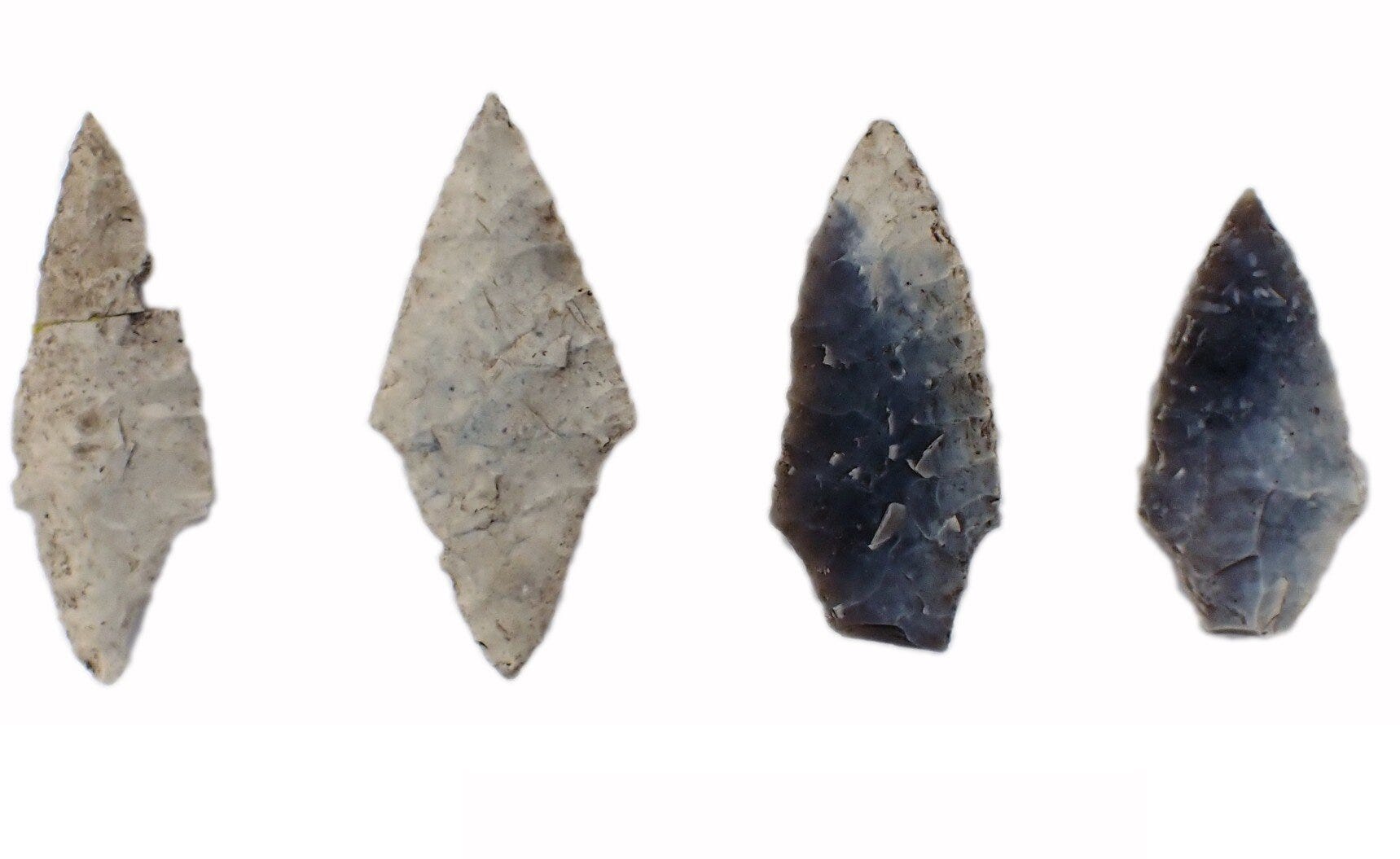
Beneath the soil of northern Latvia lies one of Europe’s largest Stone Age cemeteries. For decades, Zvejnieki has fascinated archaeologists for its hundreds of burials, red ochre stains, and pendants made from animal teeth. But the flaked stone tools—often seen as ordinary or utilitarian—sat largely ignored in museum drawers. A new multiproxy study published in PLOS ONE changes that, revealing a surprising portrait of gender, age, and ritual in prehistoric Europe (Petrović et al. 2025).“Our findings overturn the old stereotype of ‘Man the Hunter,’” said Aimée Little of the University of York. “Lithic grave goods were not just for men. Women and children were equally likely to be buried with them.”A Cemetery with Deep TimeZvejnieki sits on a former island in Lake Burtnieks, its cemetery active from roughly 7500 to 2500 BC. Over 330 graves have been excavated, spanning Mesolithic and Neolithic lifeways. Many burials are lined with red ochre; some children were interred with amber discs over their eyes or small figurines tucked near their heads. The new study zeroed in on 158 stone tools from 33 graves, analyzing their raw materials, manufacture, and microscopic wear traces.“A missing part of the story was understanding why seemingly utilitarian items were given to the dead,” noted Anđa Petrović of the University of Belgrade.Stone Tools Beyond UtilityThe team found that flakes, scrapers, bifacial points, and blades were buried with adults, children, and especially older adults—without strong ties to biological sex. Children were in fact the most common recipients of lithic grave goods. About half of the artifacts showed no signs of use, suggesting they may have been made specifically for burial.This deliberate inclusion echoes patterns seen across the eastern Baltic. Some tools appear to have been intentionally broken before deposition, hinting at a shared ritual tradition. Others bear microscopic traces of hide-working, meat-cutting, or mineral processing, suggesting these tools once played a role in daily life before being offered to the dead.Why This Matters for ArchaeologyFor decades, archaeologists often assumed that stone tools signified male hunters, while ornaments and pendants marked female or child burials. The Zvejnieki data undermine that binary. Instead, stone tools in death seem to reflect community-wide practices of mourning, memory, and identity.“We cannot make gendered assumptions about Stone Age grave goods,” Petrović emphasized. “Lithics played an important role in the mourning rituals of children and women as well as men.”Ritual as a Community ActOne of the richest burials belonged to a genetically female older child (Burial 207) interred with seven bifacial points, six scrapers, and sixteen flakes. Another, a young adult female (Burial 211), was accompanied by an ochre-rich deposit containing dozens of flakes and blades. These assemblages dwarf those of many adult male graves.Lithic grave goods were not just for men. Women and children were equally likely to be buried with them.” — Aimée Little“We cannot make gendered assumptions about Stone Age grave goods.” — Anđa PetrovićThese findings point to a complex ritual life where children and women could be at the center of symbolic acts, not on the margins. Even simple flakes—usually the most humble of stone artifacts—were sometimes singled out as meaningful offerings.A Wider Baltic TraditionComparable funerary practices have been documented at other sites in Finland and Russia, suggesting a broader cultural sphere. The Stone Dead Project database now provides open access to Zvejnieki’s lithic inventory, allowing researchers worldwide to compare burial customs across northern Europe.Related ResearchOther studies support a rethinking of gender and burial practices in prehistoric Europe:* Nilsson Stutz, L. (2003). Embodied Rituals and Ritualized Bodies: Tracing Ritual Practices in Late Mesolithic Burials (Lund University). * Jordan, P. (2003). Material Culture and Sacred Landscape: The Anthropology of the Siberian Khanty (AltaMira).* Schulting, R. J., & Richards, M. P. (2002). “The wet, the wild and the domesticated: The Mesolithic–Neolithic transition in the western British Isles.” Proceedings of the Prehistoric Society, 68, 101–123. https://doi.org/10.1017/S0079497X00001487 This is a public episode. If you'd like to discuss this with other subscribers or get access to bonus episodes, visit www.anthropology.net/subscribe
Embed this episode
NOW PLAYING
Stone Tools and Shared Rituals: Rethinking Gender and Childhood in the Baltic Stone Age
No transcript for this episode yet
Similar Episodes
No similar episodes found.
Similar Podcasts
No similar podcasts found.