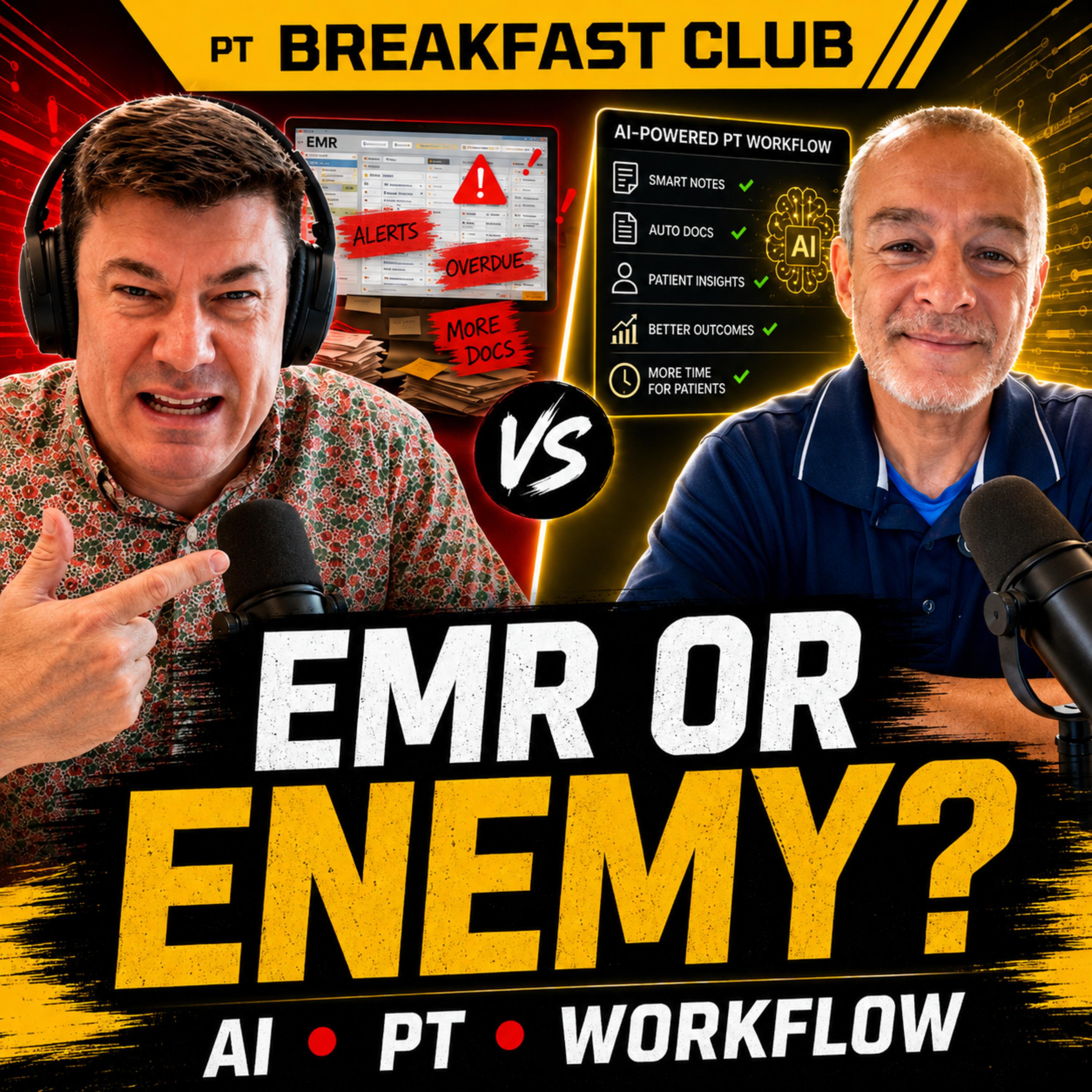
Broadcasting way too early from three separate Wi-Fi connections. It's PG Breakfast Club with Tony Maritano, Dave Kittle, and Jimmy McKay. And we're live. Good morning, Tony Maritano. Good morning, Jimmy McKay. Jimmy from the office. It's so professional. It's so adult. You mean my living room isn't nearly as professional as being in an office? It's a pretty dope view. Maybe, like, you know, we got cool, like, skyline over there. I took a picture. Hoboken. Like, again, I'm a New Yorker. And, you know, the office I work in is in New Jersey, which is, you know, almost, you know, sacrilege a little bit, like, working in New Jersey. But.
But if you think about it, Hoboken has the best views of New York. That's the ESB, baby. It's pretty dope. Wow. All right. So this has nothing to do with the fact that you are at prompt headquarters, but it does have to do with topics that have been floating around the social medias.
And basically, this kind of evolved from, you know, I have been indirectly involved with EMRs since the beginning of time. Back in the day, early 2000s, I used Microsoft Access and Visual Basic to create an ad hoc EMR for my clinic. I'm not a coder. I just looked up, Googled, like, how do I do this? And how do I do that? And I made it happen. Fast forward now into an AI world, and I'm always reliving this experience of, like...
What is the function of an EMR, regardless of the brand? What should it be doing? How does it work? Now, I still see a major divide. And I don't know, because you've had experience with multiple companies. I still see, and you tell me if you see this from your side, there's a divide between the administrative aspect of an EMR and the clinical aspect of an EMR. And I see it in my clinic. You know, my wife, who is a physical therapist, runs the administrative aspect of the business. And so her experience with the EMR that we use is completely different than me. I never get into the administrative at all, the money, none of that.
I'm all on the clinical side. So like, have you seen just that divide first before we get into the AI part? A thousand percent. I mean, my first job or my second job out of PT school, we were still on paper, but even there was no EMR, but you still saw what I did. And the woman, bless her soul, I can't remember her name. She would like call me back when I didn't maybe, you know, she could read what the hell I wrote because we were again on paper. And she would walk me through why she was asking. Like, God bless her. She was so nice and not just, come here. Why are you doing that? She's like, hey, let me show you what I do. And I saw what she was looking at. I was like, oh my God. So it did give me a healthy appreciation for what I'm doing shows up somewhere else. She's downstream of me.
And that's why me writing legibly or being clear or all those things are important. So I did get to see sort of the two halves. to the same coin this was similar in radio like i'm gonna that's all i'm gonna do tony you know i'm tell radio stories but there's two halves right it was programming we played the music we said the jokes we did the thing and sales and you'd often see these two things at odds right the purists say like we don't need a commercial and i'm like do you like paying rent because otherwise it's just a hobby you have to understand what happens before or after we do our thing and i see the parallel between radio programming and sales and clinical and administrative or ops whatever you want to call it those two are they're not distinct things they're two sides of the same coin and Do you need to understand them? You need to work together. I don't know if you need to understand everything. I think it definitely helps people when they see that. They go, aha. So we can dig deeper into what should this thing be? Who's the master here? Do I work for the EMR or does EMR work for me? And I heard a great term the other day. There's an author named Cory Doctorow, and he's so crazy smart. He writes for like Wired Magazine, like technology smart, but he also writes fiction. So he can put technology. The first time I heard about 3D printer or GLP-1s.
was 10 15 years ago in a book and i went cool story that'll never happen and as i started seeing the things i was like oh my god read about this the two terms were Centaur and reverse centaur. And then I'll just explain this and stop because I think this goes in your argument. The centaur is it's a man with a horse body. So you have the thinking ability and the reasoning ability of a human and the power and efficiency and endurance of a horse. Or sometimes we're a reverse centaur where we have the brain of a horse, right? The brain of a computer with the efficiency of a human. The reverse centaur is obviously, no one wants that. That's not efficient, right? A horse walking around with a human body. And we have to be careful that we're not designing processes or things that make us.
reverse centaurs, we want to be centaurs. We want to do the higher level reasoning and then have the thing do the horsepower thing, the thing downstream. So where do you want to start with this? Because I think we, I mean, this is a big one. Yeah. So here's my thought process with this. And a discussion came up the other day about, again, you know, the AI physical therapist, is the AI physical therapist going to replace the human physical therapist? I shared a post that said, what's our obligation to contribute to training the AI? Because I said, look, if we're here to help people, and I know that there's a technology that can reach every single person on the globe for virtually zero cost as energy comes down.
i should have some obligation to contribute my knowledge my experience to making it a better service because i can't treat every human in the world so why prevent those other humans from gaining this experience so you know that got me thinking i was like okay back to the emr what does it do now it's a passive part of the the business it's a passive part of the the clinician you know at best the ai aspect of uh ambient listening is listening to what i say and turning into clinical documentation but it's not really doing anything else on the administrative side most emrs today are using ai to help post payments and find problems and Okay, that's like very basic level stuff. So we've talked about humans are wearing wearable technology. My Apple phone tracks steps. It can tell the authorities when I fall, like call 911 for me if I have an accident. It does so much stuff. We have the pacemaker. We have a smart knee. We have sleep apps that track sleeping. I'm like the EMR should really become kind of the all-encompassing. It's capturing all of this information.
It integrates with the person, the patient's access to information. The AI aspect of it is, look, I've got this little microcosm of a therapist. It's not a human therapist. It's an AI therapist, but it's collecting all of this information that I'm generating as a patient all day long. Potentially, I can put in, you know, what did I eat today? Snap a picture of it. All of this stuff already exists. None of it integrates with the EMR. So my vision is step one. It starts to collect all of that information. You know that I'm using ChatsyBT as my running coach. Why do I love ChatsyBT as my running coach? Because...
Any time of day, I can put information into it. I can ask it questions. It can ask me questions. The AI never gets frustrated. It never gets tired. It never has a bad day. It's never going through a divorce. And so it's this like infinite world of, I can give it information. It can sift through and ask me better questions. And even if the AI thinks I don't know what I'm doing.
It can continue to guide me through the process to get the real information. Me as a human therapist, I have an hour, you know, in the best of times, I have an hour with a patient. I can only ask so many questions. I can only collect the information. I assume it's truthful. It's usually not whether the patients know they're lying to me or not. They're giving me their subjective reports. The best tests and measures I have in the clinic are fairly accurate at best, right? Goniometry off by five degrees, up or down, manual muscle testing, like give me a break. So I'm like, I don't have anything to go by. I am trying to make an educated guess through a foggy window.
at best it's like my cousin vinnie you know when when they're on the stand asking the eyewitness if they see the person in the room so this is what i'm not seeing the emrs and maybe it's happening behind the scenes but like this would be my vision for the future starting to integrate let's start there you have two things you just described two things inputting the information we're collecting all this data but because it's everywhere right what are we gonna do with it by the time tony was able to sit down with his patient and go okay bring up your peloton app bring up your whoop app bring up your apple health app and let me sift through all those things I sit down on my Peloton and it's like, hey, Jimmy, your last five workouts, your average kilojoules per workout or watts have gone up 10%. That's great. Maybe you should take your FTP test again to recalibrate your whatever. It's able to collect. And the second part is synthesize to give me something useful. Like I asked this question to somebody on LinkedIn. They're like, how come we aren't tripling down on wearables? I'm like, because no one's synthesizing that stuff yet. And I'm going to oversimplify this because I am also not a coder.
But this information needs to pass through a gate, and that gate is known as an API. I don't even know what API stands for. I knew at one point, but it's a way that two computers talk to each other, right? We've got all these bits of information. Companies like Vault, they are very good at the capture. But then are we bringing it into the EMR? I know that prompt is. So that's one little nod. I'm sure others are as well. But that's what needs to start to happen because you need to be given that Peloton snapshot because you got what? All of six minutes in between patient one and patient two to figure out who are you? I mean, you asked the question the other day.
we even attaching photos in the emr so tony and people like jimmy who i can't remember a name until i've seen someone two or three times oh yeah that guy with the thing and then you know the facial hair we're still on photos now we understand what was this person coming in for what they look like a week ago when i saw them and then what happened when they escaped the clinic we can track that we can and we are but we're tracking so much the question is are we able to actually leverage it and i don't i don't know that we are at scale or you and i wouldn't be asking these questions right and so there's the clinical side of it which goes back to the ai is not going to replace the therapist it's going to make the therapist better as as the ai is sifting through all of that information i mean in my mind today which i can only go by what i know i have no idea what the future is going to be every patient that walks in the store so we're trying not we we tried it and it didn't work for us rtm the profession is trying rtm we have this idea about rtm remote therapeutic monitoring the patient still has to be an active participant in that we're not at the point where patients want to be an active participant i talk to patients all day long they're like i got this stupid app i have to log in i have to they hate it they don't want to do that stuff um whereas there are apps that we actively want to open i want to open facebook i want to open instagram strava
I don't use it, but that would be an example. So it's one of those things where it's like, all right, how do we flip the script? How does my EMR, which AI can code anything, why isn't my EMR coding an app or a component that my patient wants to use? They're actively engaging by desire, not by requirement. And then I'm like, okay, well, let's go to the therapist side. Since we started with this, there's two sides to a clinical and administrative or operational.
I said, hey, I ran into a situation in the office the other day, and I've shared this before. When I evaluate three or four people the same day, or I'm doing 15 evaluations in a week, and three or four of those people hit kind of the same paradigm, okay, it's Betty, Margaret, and Mildred. They all have, you know, comb outs. They all are little old ladies in their 80s, and they all have abnormal gait. Man, I'm going to have a hard time remembering which is which, you know? So I tell my EMR.
hey, I need you to generate code so that I can get a photo of every new patient when they come in so that when I pull up the account, that photo is front and center. Right now, what I actually do in the real world is I open my EMR, I go to documents, I go to IDs, I look at their driver's license, and I'm like, oh, I remember who that is. But I don't want to do that. I think Planet Fitness has a photo that pops up when you scan in. That's what I want. The EMR company...
doesn't need to do the coding to change the emr for everybody we're in a day and time where i should just be able to run the instance where i tell my ai hey run this code for me pull up this because this is what i want you know don't let me schedule the same person more than once in a day and maybe i'm the only clinic that has that problem but it's something i should be able to generate just like that with a voice command and now my emr takes care of everything else like those are some of the little things that it's available right now, but we're not seeing it, that I think improves the experience for me, the clinician, improves the outcome for the patient, maybe reduces subjective burnout, maybe makes life a little bit easier and happier. What are you thinking about some of that?
I'd love to, I mean, we're supposed to give, you know, extreme, extreme thoughts, right? Because otherwise we're in the messy middle and we're just mayonnaise flavored ice cream. I think we keep trying to make a better EMR, which I think is a race to small improvements over time. Instead of, I wrote a post the other day where I said, if Peloton let me steer the bike for 90 days, here's the first three things I do. Do you think I stole any ideas from healthcare? No, I stole one idea from video games, one idea from hotels and one idea from software. Like number one, I've said this before, we've talked about a gamification.
nowhere in an emr is badges or rewards right now it's just do this thing who are you accountable to a pt i see once a week like i don't know tony do you floss i floss sometimes i'm i'm beholden and i'm accountable to the woman who knows if i'm lying she can see the thing i can't see like she knows i don't floss there is a study published that said flossing doesn't make a difference anyway i tell my dental hygienist every time i see him twice a year yeah i've been flossing they're like oh you could tell it looks so good you got great yeah That's the equivalent of I can tell you're doing your clamshells here. Yeah, 100%. Yeah. Do you know what my response was to you have more tartar buildup on your teeth? I just go three times a year now.
I go, okay, I do what I do. I'm 46. I'm probably not going to start doing more. I know I'm lovingly a big, dumb human since I know this, but I have buildup and I don't like that feeling at the end of six months. I go three times a year and they go, whoa, whoa, whoa, your benefits don't cover that third visit. I go, well, how much is it? And they say, it's a hundred dollars. And I go, huh, do I like feeling good? And is my feeling good worth a hundred dollars? Yes, it is. It is. And I feel like I'm doing something good for the future. Maybe my teeth will last nine years longer or whatever. So number one.
Video games and gamification. Two things. Rewards. We know we like points. I don't know how much about teeth we could do, but I don't know. Exercise and movement. We know we do that with the rings and the thing and the Strava. So could you steal something from video games? The second thing would be group people together. And Tony's like, yeah, bro, I do that already. You bring people into groups. I've told a story about my friend Megan Brown, who has not a physical therapy clinic. It's a Pilates and yoga studio run by a physical therapist. So she's giving group physical therapy, but people are paying for it with cash. Oh my God, cash.
It's all cash, guys. Is it flowing through your insurance company or not flowing through your insurance company? So that was my gamification, which is you don't show up to play video games or go on your weekend bike ride because your PT told you to. You do it because if you show up at 6.08 and the group ride leaves at 6, people go, where were you, bro? So there's human accountability. We're social animals. Video games know this with guilds and clans within video games. And it matters if you're not there. They design the game so you're not there, if it matters if you're not there. The second one I stole from software. And this, I think, is genius. If you're a Peloton, you know when someone's about to quiet quit.
You got the data. Jimmy used to ride five times a week. Now he's riding once a week. What's next? Canceling. Is it tomorrow or three months from now? Does not matter. What will we do when he cancels? We'll send him a coupon to rejoin for 10% off. Bro, what's better than that? You know when I'm fading. Imagine Peloton called me, like a phone call. I don't know if you know, Tony, these things send more than text me. You can talk in this end and someone will talk in that end. Peloton sent me a t-shirt when I hit my thousandth ride. It said Century Club. They've done nothing since. Nothing. And I've paid them.
$50 a month for six years? I think it doesn't have to be a t-shirt again. But wouldn't you be more nervous about losing me than gaining another client? Because you already know both of the elements are in alignment for Peloton. So software companies know this, and they send you a notification when they notice usage going down. The apps have that, but Tony's got no visibility on it. So I think that's a big one. And then the third one was hospitality. And this is smart, and I want to reframe it around healthcare. Great hotel chains don't define themselves by the room.
like Hilton's not bragging. We've got 612 square feet. Like that's not why you go. They build around the experience of why you're there and what you need. So like, I look at this as on ramps. I'm surprised Peloton hasn't done it. I'm surprised more PT clinics haven't done it. What I mean by that is why don't you have already set up groups for getting back into it? The 6 AM club, you know, one, I used to be a high school football player 40 years ago. You still have that identity, right? And I understand that more people in that room will be more like me. We keep defining clinical care and our EMRs by trying to make a better, faster EMR. And I'm trying to tell you.
It's the law of diminishing returns. All this money is going into making it incrementally suck less, as Rory Sutherland would say. You're not really making it better. You're trying to make it suck less. When I think you flip the script and you say, how does video games get people to not only come back, but come back in droves, pay more for the newest version of the game, in-game purchases. I know David Rowan is probably in there going in-game purchases. Yeah, that'd be fantastic. That's the game that you're in. So I think the answer, ironically, is not from inside health. The call is not coming from inside the room. It's from outside. But we won't let it in because we're prestigious health. We're doctors. We're doctors. We don't need health. Video game people. Those are stupid.
so then my question is is it even possible and i don't know for the the people that are running the emrs today because you know we've talked about this like if i um if i sold silverware right i'm a manufacturer i make forks and knives and spoons and i open a restaurant because i'm like a restaurant's going to be the best way for me i'm going to open a chain of a thousand restaurants because i want to sell more silverware but i'm approaching the restaurant as somebody who is obsessed with silverware i don't care what the food is i don't care what you know the experience is and the ambiance and any of that it's all about the silverware Is the mindset and the culture of the current companies in the landscape today always going to be what it's always been? And what we need is we need somebody to come out of a different profession to come into the EMR and say, I'm going to build a new EMR that's about this. It's not about that. Yep.
Right now, we're sitting around. Listen, all these organizations pay attention to each other. I'm not selling secrets, right? Big PT chains pay attention to what other big PT chains do. Universities pay attention to one of yours. Tech companies, tech companies. It will change exactly when one person does the, as Rory Sutherland would say, the unreasonable thing. We spent this much money over this much time, and we did a thing that no one else was doing. Then they do it, and then everyone panics and goes, oh, they're doing that. They're going to jump ahead of us. Well, you know what the smarter thing would have been done? Doing it already. You know the answer, right? Build the thing. Every once in a while, you're supposed to do this exercise.
You go get to run your competitor for six months in your brain. What would you be pissed off if they did, if they did it tomorrow? I try to use this psychological trick when people come to me and they're like, I want to start creating content. I want to create a podcast, but it's a lot of work. And I go, imagine this idea in your head that is absolutely perfect and pure in your brain. Tomorrow you wake up and somebody did it. How pissed would you be? You had the idea first. You just didn't execute. So my point is, this will change.
exactly when someone is bold enough to change it, and then everyone will follow, and not a second before that. The system is designed to perfectly give a result that it gives. It's made up that way. So that takes me into the next segment. You did an awesome interview. I don't remember the gentleman's name. The company was Active Life. Say it again? Okay. I followed him for a long time. You know, for context, I came out of personal training. I had my CSCS. I was a strength coach. Then I became a physical therapist. I've said it before. I'll say it a hundred more times. To me, the physical therapy license gave me a license to bill insurance for what I was already doing. I was already working with adults. I was already working with individuals with orthopedic issues.
needed fitness, needed some pain resolution, needed these things. The PT license gave me the license to bill insurance, period. I was going to get the information somewhere. I didn't need to be in a university setting. While the PT education experience was comprehensive and it was good, there was a lot of stuff I'm never going to use. I'm never going to use pediatric neuro. I'm never going to use all of these other things. I had to go through that to get the license. I had to get the license to bill insurance. That's it. That being said...
I've always said, look, if we're stuck in the insurance model, the majority of the PT profession, but we see, just like earlier in the show, I said, what's my obligation if I know AI exists, I know I can help improve AI with my clinical knowledge, and AI can deliver services to people who will never be my patient, I should have some obligation. This is the same thing. What he is creating, Russin, John Russin, I think it is, what he is creating, they're taking the clinical knowledge of physical therapy, they're delivering it to personal trainers who are unlicensed and free to do what they want to do. they're accessing a population that either isn't in physical therapy won't ever go i i would never go to physical therapy for a shoulder problem a knee problem if i had a stroke i'm going to physical therapy if i had a brain injury if i had an amputation i am going to physical therapy but like the fitness stuff i'm just not going to go you know but i i would potentially hire a coach a personal trainer or something like that so i thought it was an awesome interview I think he's got a great understanding of where he is in the space. There it is. And I think that he sees that he's filling a need that needs to be filled. Every person who wants to work with adult geriatrics does not need to become a physical therapist. And it's cost prohibitive, and they don't have to put seven, eight years into it. He's saying, look, in two years, you can have all of this information and knowledge. You can have a body behind you that will say, yes, this person's trustworthy. And you can help that population who's happy to pay out of pocket for it. Yep.
Sean's interesting you said where you said a where thing and not a what thing because you have physical therapy and then you have fitness physical therapy does feel like a very established place like if I had access to a database Tony I could tell you exactly how many physical therapists there are in the United States but I don't know how many I don't know if I could ever tell you how many fitness people there are, right? Because there's no, I could just wake up tomorrow and decide. And that feels like very ambiguous and unsafe. So Sean didn't pick a place. He didn't pick physical therapy or fitness. He picked the space between and that place is wide open. And his whole, his whole, I don't want to say argument, but his whole notice of a pain point is when you're discharged from PT, when you're cleared.
What does that mean? Are you just done? And most PTs know, like, I've got you to the edge of the diving board. You can't, you don't got to go home, but you got to get, you got to get the heck up out of here. I don't know where home is, but good luck, right? It's the bartender being like, we're closed. And it's like, where do I go? I'm like, you can go anywhere. But just, I stop at the door at 2 a.m. That's when I turn the neon lights off. And Sean sees that and he goes, oh, if I get 1% of those people, if I can teach people how to find those people, that is a need.
And that's why it's valuable. We see this as like scope creep. And if you look at it defensively, you see it as scope creep. And that's what all of our professions do. All of us are touching each other. And in a conference setting, on a stage, in a panel, we love each other. We put our arms around each other. And then it comes to the Facebook groups of just our individual professions, trainers, chiropractors, PTs, PAs, nurses. And that's when we're like,
These Kairos are infringing on our Blabbity Blues. Are you mad they're doing it? Or are you mad they're doing it better than you? Are you mad they're doing something different that you don't agree with or you don't believe in? Are you mad they're communicating it better and people are finding their way to them and not you? The answer is yes. That's what you're mad at. You are mad at you. So you can play that Taylor Swift song all you want. Hi, it's me. I'm the problem. It's me. I was pretty interested because also Sean from Active Life, who I just interviewed, great interview. Go listen to him. Go read his book. I get no nickels from the book. Go read it. He's on Long Island. And Mike Stella, who's an athletic trainer, is on Long Island.
I would love to have those guys on stage at a PT program on Long Island. I did a show live at NYIT, so I'm going to reach out to my friend Eric Greenberg and see if I can get there because I'd love to put non-PTs in front of a bunch of PT students. And I'm not trying to get you to think any which way. I'm trying to get you to think hard stop about what it is you're actually able to do because I think you and I both agree what we're able to do is much larger than what we're thinking about right now. Most of our colleagues, I think, are thinking about right now.
I think we're going to be hit with the reality that where is the scope of physical therapy? It's in the diagnosis, it's in the evaluation, in the assessment, developing the plan of care, it's in understanding the why. Why am I prescribing this? It's not in the how or the doing, you know, anybody can do. A straight leg race. Anybody can do a lap pull. Anybody can do the exercise. Once it's been prescribed, but you have to understand why are you prescribing that? Why are you doing this intervention? Even at the most complex levels for neuro and brain injuries and things like that, understanding why is where we should live. That's the bread and butter of what we do. Teach other people how to do the how. Let them take that part of it.
Now, what's going to make therapists go crazy? And I don't know with John, I've followed John for a long time. I've never met him in person. For some reason in my mind, I feel like he used to focus his training on training PTs. And now I feel like his focus is training personal trainers. And so, you know, $200 a session. He's talking about increasing from $80 a session to $150. He's talking about moving into price points that would be considered, you know, comparable to a cash-based physical therapist. He's focusing his content on successful executives who have money.
more money than time and they just want the solution you know and so again i think he's stepping on toes in a good way that's going to force clinicians to figure out like why am i not doing that put that back up uh yeah clinicians will see this and they'll get so mad because we're talking about money and they'll go ah this is so this is so annoying john isn't saying everybody should do this he's saying that this is a way to do the thing that you want this is a way to do the thing that he's not speaking in absolutes like again i pay a woman 200 bucks to clean my house And people are like $200 to see a PT. That's insane. For some of you, it might be. But for some people, it is not. Right? Yeah. John had one of the, I wouldn't say one of the first, but like had a PT podcast with Gene Chiracabrod. They had like a- Oh, he did? I knew Gene. They launched like-
Gene and Ben, John, Russon, they launched three or four podcasts at the same time, which is a network, which is very smart. John was one of them. I think it was real early in terms of seeing an ROI. But figure out what you like doing. I say that very much first. Figure out what you like doing. Then figure out whose problem is solved. Don't try the other way, which is, I want to solve a problem for blah, blah, blah. Hold on a second. What are you doing, though? Because John likes solving these problems. And you said he's moved audiences?
That's a good way to go about it, in my opinion. Because he's like, I'm not going to change the thing that I do. I'm going to change who I offer it to. Because I guess he tried to teach PTs and they didn't want to listen or whatever reason he moved. And he goes, well, I guess this doesn't work. No, they don't want to hear it. Sell it to someone else. So here's the thing. You've got John who tried to do that for PTs and then just shipped it away.
I've shifted away. I'm nowhere near as active as I was trying to help PTs understand business, grow their business, because I'm just yelling into a void. And I think this, which you shared with me, is a great example of that. So Rob Jordan says, hey, he talked to a UHC executive, informed them that they want to pull out of the network. Now, I don't know how big Rob's clinic is or his operation is, but I can tell you from personal experience, I'll put this back up in a second. Here in Ohio, where I live, the hospital, the local hospital told UHC,
hey we're not gonna we're not gonna negotiate these rates are too low we're dropping them and uhc said bye bye like we have zero they don't care and the thing is here for for context a huge steel mill that employs thousands of people they had uhc as their their worker um health insurance and they still said we don't care we're not going to negotiate these are the rates take it or leave it so no individual clinician now i've heard stories i've talked to therapists where they've negotiated up from the 60 but the truth is like rob is saying and i'm one of them come talk to me if you want to. I'm one of them. I will take the $60. I will take $60 a visit to deliver a physical therapy experience. I'll take less. That is worth how much?
Well, that's the thing. So here in Ohio, they pay a flat day rate. I'm going to say somewhere around 50 or 55. I don't remember exactly. So I could do 10 minutes of manual therapy if I believe that's what the patient needs. I get paid $50, which is more than twice what Medicare pays. And then the patient can do other stuff that I've prescribed, but that does not require my direct one-on-one time. I can build an operation around that level of reimbursement without losing money, and it can still be worthwhile. The hospital can do it. I can do it. There's plenty of providers who can do it. So you can't do it. Rob perhaps can't do it. And that's totally fine because...
hey, give John a call. He'll teach you how to earn $200 a session, and you don't have to worry about $60. Right. But what I was getting at there is if you understand that UHE is going to pay you $60, Tony goes, okay, I'm going to provide $40 worth of service. You're going to provide adequate, quick care, but you're going to say, if I'm being paid $60, I can't provide $120 worth of care because I will be out of business in a month. You will not support yourself. So you're going, okay, I'll take the $60.
Because UHC, you're not going to negotiate them with them until you have a long enough lever or a sharp enough sword. And individual clinics just ain't got it. I will tell you, yes, it does happen. But you have to be large enough. This is math at this point. This is not hearts and minds. You are not winning. So bring that graphic back up. Because what they said was she pulled up some data that indicated that every provider in my county was accepting $60 a visit.
I'm going to go out here and say that that person, she was not lying. What can I say? This sounds rhetorical, but the answer to Rob is unfortunately, and I'm sorry, nothing. What more can you say is nothing. You decide to take 60 and provide $59 worth of, invest $59 worth of therapist time, lights, electricity, all those things, and make a dollar or not. You can have some or none. This is not a middle ground. Now bring that back up again, because then Adam said, this is a lie. We negotiated a much higher rate than that.
in that county right and then how'd you do that the answer might be if adam is saying they did that and i'm going to go on everything that's being said is true i agree with that you did it a certain way Unless I'm wrong, right? And there's smarter people who can point out the nuances, but that's the breaks, kid. And it sucks. So I go back to, if you took the transcript of every episode I've ever done over 11 years, put it into AI and said, what's Jimmy really saying? It's understand what game you're playing. As soon as you do that, decide, do I want to play this game or not? And playing this game means you can play lots of different ways. But we hear consistently over and over again, I'm going to take my ball and go home, and UHD is going to look at you. And before the door closes, they forgot about you. This is not the way. There is a way, and other people are doing it.
So I think this, I'm going to put words out there. I think the, uh, what does he say? Will Boyd said, not related to the episode, but can you guys do an episode where you dress like the other person? Tony needs to rock Jimmy's shirt. I got flowers on my shirt. I'm fashionable. I think my kids have shirts like that. So I'll go find one. I got it from J.Crew Kids probably is where I got it from. It's probably sale on the internet. I think they, I think the opposition to my position would say, look, we have to protect the profession. We have to circle the wagons. We have to collectively say, where's the union?
where's the union and so they're going to say we need to protect the therapist i'm going to say who's protecting the consumer who's protecting the patient if i can deliver the service because i've monetized it in other ways the hospital monetizes with surgeries and other things i monetize with social media and real estate and just the fact that i've been at it for 25 years i talked to somebody the other day i said look i bought all this equipment about 20 years ago it was way cheaper than it would be to buy today i have a competitive advantage over every other physical therapist who wants to open a clinic today simply because i've been alive longer and in business longer Does that mean that I shouldn't use my competitive advantage, that I shouldn't use the resources I have to both help my consumer and to still be profitable in the process? No, that's absurd. That's what business is all about. Correct. Correct. I was going to say, then people will say, I can people hear them, right? Can you hear them, Tony? They're screaming at their speaker. You're the reason. Tony's the reason. You take $60, which means we're never going to make $70. And I'm saying, no, that ain't it. I wish it was, right? And then it's almost cyclical. I sound like the old man now. Every six months.
We should pick a day when every PT decides we're not going to treat a patient today. And that'll show them. That'll show them. UHC is going to see a day where they don't spend one single nickel at one day where they don't see one nickel. Fantastic. You know what's going to happen the day two? They're going to spend 170% more. Or they're just going to absorb that day's losses and they're never going to notice it. It would be a blip on the radar.
And then my almost stock response is, can you get 10 people to throw a surprise party? I need 10 of your friends to agree on a time, date, place, and theme of a surprise party. And let me know how that goes. Because that person who says, we're going to pick one day. It's going to be Black Friday for PT. And they're going to see. They're going to feel us. I agree with your emotion. And I wish this were true. It's just realistically not going to happen or matter even if you have pulled off the emotion. It's not going to happen.
Yeah, my response, and I have no connection to him, go sign up for this course, go make $200 an hour, drop all the insurance companies, you know, if that's not the business you want to be in. You can't complain if there are solutions available. And you just want to ignore them. Now, I will say, Tony, is John Russon speaking in absolutes? And what I mean by that is, is he saying you have to treat everybody for $200 an hour? Is that what he's saying? Because if you want to do pro bono, and we have said this on the show, and people do this, you raise your rates for some people, and then you are free.
I mean, I'm looking outside. It still looks like a free country. You are free to give stuff away or give it away at a reduced rate or do whatever the heck you want. You cannot do that if you are out of business, though. So understand what game you're playing. So John is saying, you can do this. This is how things work. If you decide not to, that is a you problem.
We're not a political show, but you hear the same thing with the people who want to raise taxes. Just pay more in taxes. There's nothing stopping you from paying more. Send the government a bigger check. I can monetize my day, my time, my patient care with media. I let Facebook and YouTube and other online platforms pay me the money I need. I own the real estate. I have the investments.
I can give stuff away for free. I can accept lower reimbursement. Like none of that stuff, it's not going to move the needle if somebody comes in for $50 instead of $150. It makes no difference in the big scheme of things to me because of the business that we've built. And there's other business models out there. So I know you're at work. We don't have to hit the full hour. Let's kind of wrap it up now. Can I give one good example? Just one good example. So we talk about these psychological theories. I love them.
Some people like listening to me talk about them, but they're embedded places. And I like to spot them when they're in the wild, right? And this is one of them. And I shared this in our group chat. This is a great example of price anchoring. And that's the psychological theory. And the funny part is even when we know the trick is happening, we still fall for it. I still look at this ad and I go, those are dope. So I'm showing an ad for cycling shoes from Pace Bikes. And the ad reads, why $74.95 and not $500?
What they've done there is they've placed an anchor at 500 because there is a picture of six dope looking, clean, modern cycling shoes. So if you are, this only applies if you're a cyclist. If you're not a cyclist, you're like, I'm not paying $70, I'm not paying $7. But this drops an anchor and anchors your brain at 500 and goes, these are worth 500, but we're selling them for 74. And the immediate feeling in your gut is, I better hurry up and do this because that's a steal. It would not be a steal if I said on sale for 74.95 because there's no anchor. There's no place to start. So they started at 500 and then reeled it back in.
So these little psychological lessons, these little gems, I love sharing them just as tidbits. I don't think I need to go deep into it. That's how it's done, people. It's not complicated. You don't need to over-explain. It was one headline. I never even read beyond that. I went headline. Shoo. I didn't even read the middle words. So that is similar to what John did. I would redesign John's ad. Too many words. He's overselling here. If he A-B tested and changed his ad here, and for John, if somebody passes this along, literally drop this image into chat GPT and say, make my ad more like this, and I bet you sales conversions go up. Yeah.
Quick aside, we never used to buy anything from Dick's Sporting Goods. And then lately we had to buy a couple things here and there from Dick's, but my kids never want to go to Dick's and they'll go begrudgingly and get their baseball pants or whatever. Now, the Dick's here, they redesigned the store. Now they have the golf simulator. Now they have the batting cages. Now they've brought in the stuff that we've heard about. And you and I have talked about Dick's. I think they acquired a media company because they're going to start producing a lot of that kind of content. Now, literally, my kids are like, Dad, can we go to Dick's? I want to go to Dick's. I want to check out the new stuff.
Just because they changed the environment, it went from RTM. Dick's used to be what RTM is today to what we want RTM to be. We want the patient to want to pull up the app and get the information and interact with it and have fun with it. Let me ask a few questions. So number one, somebody at Dick's corporate probably saw...
hey, kids don't care about coming to dicks. Like for me going to dicks when I was a kid, it was cool to like watch, you know, see the next hat. And there was probably a drop. So what is it like? Is it very experiential and gamified? That's it. Hands on. You can touch all this stuff. You can swing the bat in the batting cages. You can't. So they probably sat there and they go, well, what are we competing against? They did not go to another sporting goods store, most likely, because they're not competing. They looked at an Oculus or a PlayStation or an iPad and they said, we're competing against that. What's our competition for that? I want that to be the hard lesson. Because if you hear dicks, I'm not competing with dicks.
You aren't, but we're all competing for the same thing, which is attention. Attention leads to trust. Trust leads to action. This is going to be a theme forever. That's the math, right? It's not just doing it for the gram. It's attention leads to trust. You just said that magic phrase. Now my kids want to go to a store to do that. Your clinic could be that. Decide what that is that makes people want to come. And I got news for you. Beige painted walls ain't it. And a 30-year-old assault bike ain't it. But it does not need to be a $25,000 golf simulator. But it needs to be something.
and you get to pick and plant your flag into what that thing is. Or don't. Or wait for UHC to send you $60. Like, you choose. Decide. Yeah. What do you have coming up this week? We'll end with that. We're looking forward to the parting shots. What do you have coming up this week? Anything special? No, nothing special. I've been 100% focused on growing the Facebook page. We just hit 25 million views. That's wild. We're on track to hit 5,000 in revenue for the month just from ads. I still cannot get myself to create the digital product that every single human and AI is telling me I need to create. So pay someone to do it.
Nah. I'm going to get AI to get into my psyche and figure out how to make me want to do it. Okay. All right. I've got Jerry Durham just posted a prompt. This is not an ad. I'm just saying this. Oh, it's going to feel like an ad whenever you're talking about where you work. So I'm sorry. It just feels icky for me. But I do work. They're doing something cool, which is they're bringing a bunch of practice owners in.
to teach them things, but I'll pull the curtain back too because it's pretty obvious. They want to learn and be like, what are your real frustrations? So the dangle is come here and learn, grow your practice. We've got expertise on that. But the magic I think for Prompt anyway is we're going to listen to you. Let me go real high tech for you. We're going to listen to you.
And these are some people, you know, who've been using the product or don't, whatever. It's a cross-section of practice owners. And then they're going to listen. Then they're going to do stuff around what those practice owners are saying. I'm giving away the secret sauce, but it's not secret sauce. It's quite literally like really smart product. Not even product size, really smart humanism. I heard a great bit of parenting, which was be the parent that drives the kids to the thing enough that the kids forget that you're in the front seat because you're the cool mom. And then they start talking about the stuff that they're actually talking about and they forget you're there. That's what this is. I'll play your music.
and I get you comfortable, and then I get to hear you talk about, oh, so-and-so's kissing so-and-so. You start to hear from the person you're trying to influence or help in their language. This is that version of that. Jerry Durham's coming to town, so I'm interested to see what Jerry says about this. This is my first time doing this. I've never done it before. Because that's Jerry's whole thing. Sit in your own waiting room. Long enough that the patients and the front desk people forget you're there, and they continue to act as they act when you're not around. That's how you find your leaks. Jerry is the originator of Secret Caller in physical therapy.
Yep, he is. Oh, let's answer this one question real quick. Metal Mark asked this at the beginning of the show, but we didn't get to it. Metal Mark says, today's my first date at an independent and assisted living facility as a PTA, but I have 10 years experience in outpatient workers' comp setting. What advice would you give me to Excel now? Figure out the game you're playing and play it real well. Do you like this setting? If the answer is yes, figure out how to do it adequately today, and then a little bit better tomorrow, and a little bit better tomorrow, and if you like it, keep going, and if you don't, switch. He said skill nursing? First date at an independent and assisted living facility.
I think you just got to forget everything that you learned in the workers' comp world. Probably. Because this is a completely different fish tank. There are sharks all around you. I remember going into those kinds of settings. You decide, he decides, she decides. Are you there to do the best job you can do? Are you there to fit in? I got in trouble constantly just because I was always changing things. I was doing what I thought was best for the person rather than what's best for the organization. How does this work? Does he work for the assisted living facility? Where my dad lives, it's a third party.
Yeah, I have no idea. I mean, it's either a third party or the facility itself. Somebody is employing this person. And with that, there's other employees. And assuming you're not going to be seeing the same person every day or throughout the plan of care, you know, you got to adapt to the environment you're in, which I guarantee is going to be very different than a workers' comp clinic that this person's coming out of. It's all physics, man. Figure out how gravity works here. Figure out who the cool colleagues are. Learn from them. Don't just pretend to learn. Like, actually learn from them. Like, that's been my secret. Using air quotes here, my secret in every job. I'm like, what do I, can I do this job as a B minus employee right now? Yes.
great how can i do an a job and still put b minus effort into it figure how to do it better like figure how to leverage gravity right i talked about centaur and reverse centaur a great example is like put a human on a bicycle now that's a that's a centaur you put the human brain on a thing that makes me really efficient so figure out how to do adequate and then figure out if you like that and then how to do it figure out how to jump on a bicycle and do that i feel like the bicycle in the room is a i feel for right now like in terms of documentation because that's the thing slowing you down and eating unnecessary calories How could you remove that? In my opinion, it's a scribe or whatever. Those are our parting shots, right? We don't need to react. Yeah, absolutely. Grab a game you're playing. Play it better. We'll be back on Thursday. Enjoy your – put the digital course together, Tony. Just do that. That's it. We're out. Boys, what the hell are you doing? Follow Tony Maritano on YouTube at Total Therapy Solution. Find Dave Kittle at conciergepainrelief.com and on YouTube at The Dave Kittle Show. And follow Jimmy McKay at PT Podcast. On YouTube, the socials, and wherever you've been to podcasts you pretend are for CEU.
And hey, just a reminder. None of this was for advice. This was for Entertainment Home. Our lawyers say that counts. Thanks, Keith.