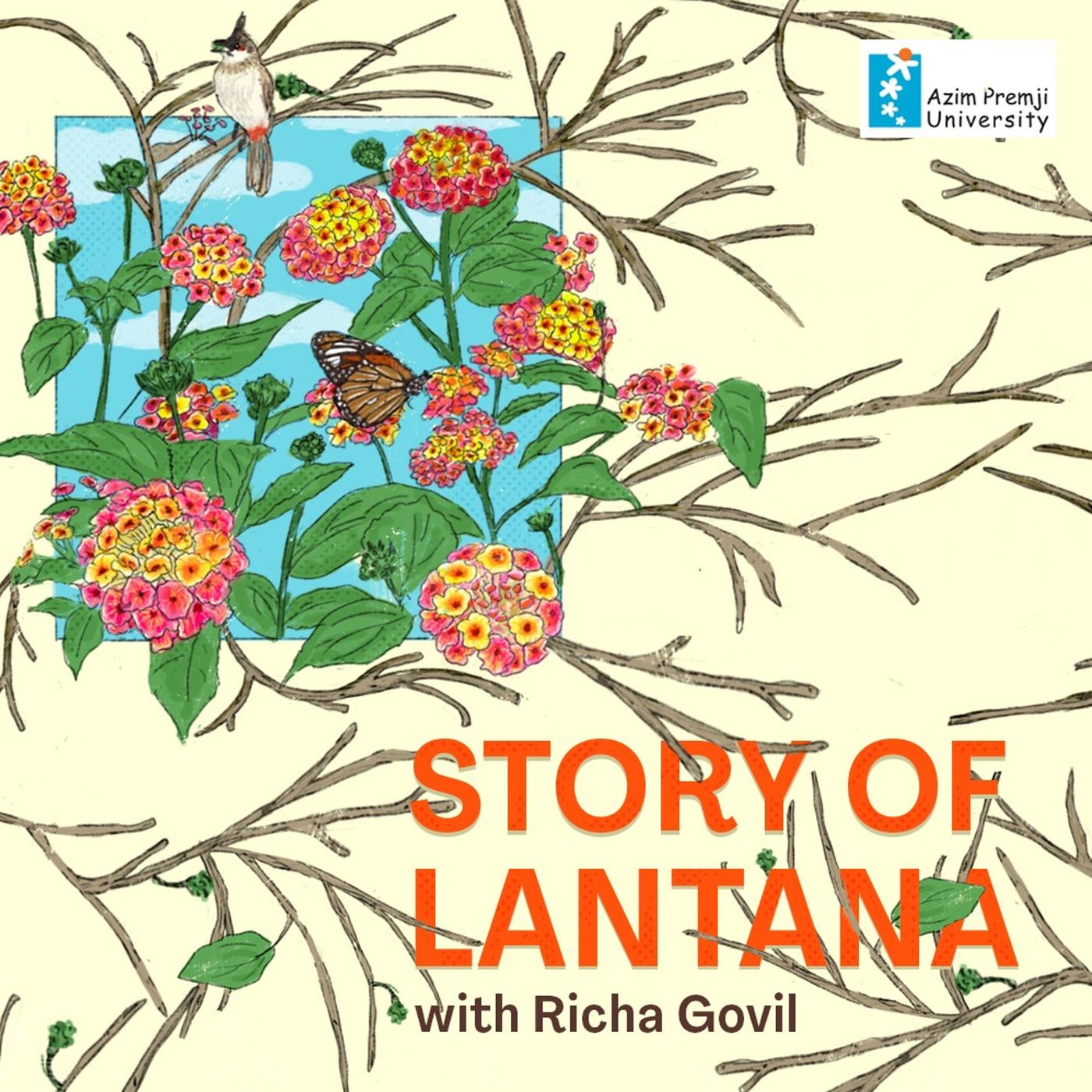
Story Of Lantana | Story of… with Richa Govil episode artwork

EPISODE · Mar 26, 2024 · 32 MIN

Story Of Lantana | Story of… with Richa Govil

from Radio Azim Premji University · host Radio Apu

The story of Lantana is one of unintended consequences. A strong-smelling flowering plant with clusters of colourful pink, yellow, and red blossoms that resemble miniature wedding bouquets, Lantana is hard to miss in the Indian countryside. Despite its alluring appearance, the plant has earned the dubious title of an invasive species, which rapidly outcompetes native flora and poses a challenge for conservationists. European planters, who chanced upon it while exploring its native haunts in Central and South America, introduced Lantana to India about two centuries ago. Today, it is hard to find a part of India that is free from the plant’s influence. Most commonly encountered at the edges of forests that have been burned or cleared for cultivation, it grows roots quickly, spreads aggressively, and chokes out native vegetation by excreting chemicals that stunt their growth. Being toxic to grazing animals makes it even harder to control. Pollinated by bees and butterflies, with birds dispersing its seeds, Lantana has travelled far and wide. Now it is naturalised in more than 50 countries on five continents. In Story of Lantana, the third episode in our series Story Of… Richa Govil and Madhuri Ramesh of Azim Premji University ponder the differences between alien and invasive species, mulling over the role that humans have played in altering biodiversity around the world. They reflect on the broader implications of introduced species and confront the complexities of categorising organisms as invasive or desirable. While examining how to live with invasive species that are a challenge to manage, Madhuri and Richa applaud the efforts of organisations that have embarked on innovative ventures to repurpose Lantana as a valuable resource. Through craft collectives and artisanal workshops, the sturdy stems of Lantana find new life as furniture and sculptures, offering both economic opportunities for local communities and a sustainable solution to its proliferation. But the story doesn't end there. By examining how food crops like potatoes and tomatoes were introduced to India by Portuguese traders centuries ago, we embrace the intricate relationships between humans, plants, and ecosystems. Through a thought-provoking exploration of 'novel ecosystems' that challenges conventional dichotomies, the presenters invite us to reconsider our perceptions of native and invasive species. As we navigate these nuanced discussions, we are urged to contemplate the interconnectedness of our natural world and the implications of human intervention. The story of Lantana prompts us to observe, question, and appreciate the intricate tapestry of life that surrounds us. So, the next time you admire a blooming flower or savour a meal, ponder its origins and the intricate web of relationships that define our natural world. Credits: Akshay Ramuhalli, Bijoy Venugopal, Bruce Lee Mani, Harshit Hillol Gogoi, Narayan Krishnaswamy, Prashant Vasudevan, Sananda Dasgupta, Seema Seth, Shraddha Gautam, Supriya Joshi, and Velu Shankar For a comprehensive list of acknowledgements and resources for further reading and exploration, visit our website: https://azimpremjiuniversity.edu.in/crunch-slurp-the-story-of-pani-puri

The story of Lantana is one of unintended consequences. A strong-smelling flowering plant with clusters of colourful pink, yellow, and red blossoms that resemble miniature wedding bouquets, Lantana is hard to miss in the Indian countryside. Despite its alluring appearance, the plant has earned the dubious title of an invasive species, which rapidly outcompetes native flora and poses a challenge for conservationists. European planters, who chanced upon it while exploring its native haunts in Central and South America, introduced Lantana to India about two centuries ago. Today, it is hard to find a part of India that is free from the plant’s influence. Most commonly encountered at the edges of forests that have been burned or cleared for cultivation, it grows roots quickly, spreads aggressively, and chokes out native vegetation by excreting chemicals that stunt their growth. Being toxic to grazing animals makes it even harder to control. Pollinated by bees and butterflies, with birds dispersing its seeds, Lantana has travelled far and wide. Now it is naturalised in more than 50 countries on five continents. In Story of Lantana, the third episode in our series Story Of… Richa Govil and Madhuri Ramesh of Azim Premji University ponder the differences between alien and invasive species, mulling over the role that humans have played in altering biodiversity around the world. They reflect on the broader implications of introduced species and confront the complexities of categorising organisms as invasive or desirable. While examining how to live with invasive species that are a challenge to manage, Madhuri and Richa applaud the efforts of organisations that have embarked on innovative ventures to repurpose Lantana as a valuable resource. Through craft collectives and artisanal workshops, the sturdy stems of Lantana find new life as furniture and sculptures, offering both economic opportunities for local communities and a sustainable solution to its proliferation. But the story doesn't end there. By examining how food crops like potatoes and tomatoes were introduced to India by Portuguese traders centuries ago, we embrace the intricate relationships between humans, plants, and ecosystems. Through a thought-provoking exploration of 'novel ecosystems' that challenges conventional dichotomies, the presenters invite us to reconsider our perceptions of native and invasive species. As we navigate these nuanced discussions, we are urged to contemplate the interconnectedness of our natural world and the implications of human intervention. The story of Lantana prompts us to observe, question, and appreciate the intricate tapestry of life that surrounds us. So, the next time you admire a blooming flower or savour a meal, ponder its origins and the intricate web of relationships that define our natural world. Credits: Akshay Ramuhalli, Bijoy Venugopal, Bruce Lee Mani, Harshit Hillol Gogoi, Narayan Krishnaswamy, Prashant Vasudevan, Sananda Dasgupta, Seema Seth, Shraddha Gautam, Supriya Joshi, and Velu Shankar For a comprehensive list of acknowledgements and resources for further reading and exploration, visit our website: https://azimpremjiuniversity.edu.in/crunch-slurp-the-story-of-pani-puri

NOW PLAYING

Story Of Lantana | Story of… with Richa Govil

0:00 32:17

No transcript for this episode yet

We transcribe on demand. Request one and we'll notify you when it's ready — usually under 10 minutes.

No similar episodes found.

No similar podcasts found.

Frequently Asked Questions

How long is this episode of Radio Azim Premji University?

This episode is 32 minutes long.

When was this Radio Azim Premji University episode published?

This episode was published on March 26, 2024.

What is this episode about?

The story of Lantana is one of unintended consequences. A strong-smelling flowering plant with clusters of colourful pink, yellow, and red blossoms that resemble miniature wedding bouquets, Lantana is hard to miss in the Indian countryside. Despite...

Can I download this Radio Azim Premji University episode?

Yes, you can download this episode by clicking the download button on the episode player, or subscribe to the podcast in your preferred podcast app for automatic downloads.
URL copied to clipboard!