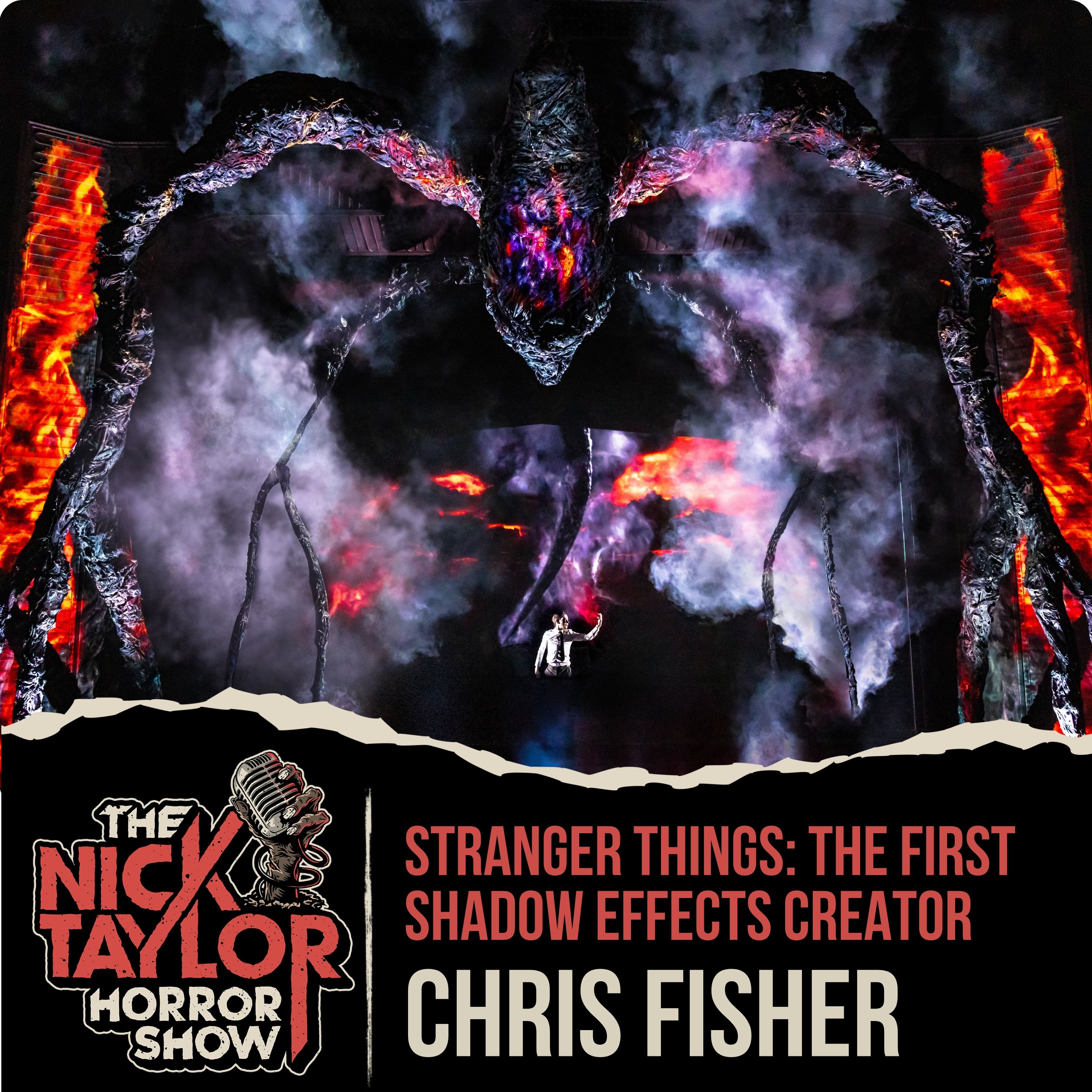
STRANGER THINGS: THE FIRST SHADOW Effects Creator, Chris Fisher
from The Nick Taylor Horror Show
Chris Fisher is one of the leading minds behind the groundbreaking illusions in Stranger Things: The First Shadow, the stunning stage prequel to the beloved Netflix series. As Co-Illusion and Visual Effects Designer, Fisher helped craft an unprecedented theatrical experience that combines practical magic, cutting-edge engineering, and emotional storytelling — all performed live, night after night. With a background in stage magic and major productions like Harry Potter and the Cursed Child and Back to the Future: The Musical, Chris brings a magician’s eye and a director’s instinct to theatrical illusion, redefining what’s possible on stage. In this episode, he talks about training actors in sleight-of-hand, designing horror sequences for a live audience, and why Stranger Things: The First Shadow might be the most ambitious stage show ever produced. Key Takeaways Live theater is the new special effects. In a world dominated by CGI and AI, Fisher believes true spectacle now lies in what you can do right in front of an audience. With Stranger Things: The First Shadow, the goal was to create jaw-dropping effects — in real time, with no digital help. That meant gasps in the theater, not in post-production. The live setting becomes its own kind of magic. Treat actors like magicians. To pull off illusions, Fisher and his team had to train the cast in principles of stage magic: misdirection, sleight of hand, and controlled attention. Especially lead actor Louis McCartney, who had to master complex tricks — like bleeding on cue — all while acting. Fisher runs “magic boot camps” during rehearsals, teaching performers how to make illusions look natural and narrative-driven. Horror is harder on stage — but more powerful. Crafting fear in theater demands balance. Go too far and it becomes laughable; not far enough, and it’s ineffective. Fisher focused on building suspense through precise timing, lighting, and sound — even dissecting jump scares frame by frame. His team embraced the “Jaws effect”: show just enough to unsettle, then deliver a brief, unforgettable payoff. Make every department part of the illusion. From lighting and sound to costumes and props, each scare in the show is a feat of cross-departmental coordination. A single effect — like a character’s fall or a monster’s entrance — often requires perfect timing across half a dozen teams. According to Fisher, true stage magic only works when everyone is completely in sync. Sometimes, the simplest things are hardest. The most challenging illusion? A nosebleed. Recreating Eleven’s signature moment live took months of testing — and eventually relied on sleight-of-hand and costume tricks. The goal was to make it visible to every seat in the house, not just the front row. More often than not, storytelling dictated technique. Push past what’s been done. To elevate the show beyond existing stage spectacles, Fisher and his team studied the most advanced illusion shows in Las Vegas — then set out to beat them. With encouragement from producers and the Duffer Brothers, they constantly pushed for bigger, scarier, and more innovative moments. Multiple illusion labs and workshops allowed them to invent new methods just for this production. Blood is a storytelling tool. After early previews, one note became universal: “More blood.” From subtle nosebleeds to geysers of gore, Fisher and his team used blood effects to amplify horror and tragedy. These weren’t just shocks — they were emotional beats, tied to character and story. That meant making blood visible from every seat and learning how it read under different lights and costumes. Collaboration is the ultimate special effect. No single department could have pulled this off alone. Fisher credits the leadership of producers Sonia Friedman and directors Stephen Daldry and Justin Martin for fostering an environment where every creative team — from illusion to engineering to design — worked in tandem toward a shared vision. Weekly meetings, shared breakthroughs, and constant iteration made the impossible possible. Show Notes Movies & Shows Stranger Things: The First Shadow (West End, Broadway) Stranger Things (Netflix) Jaws Harry Potter and the Cursed Child Back to the Future: The Musical Titus Andronicus (Stage Production) Books & Media The First Shadow Documentary (Netflix, Behind-the-scenes) Magic Sets (Chris Fisher & Jamie Harrison, childhood influences) Techniques & References The Jaws Effect (suspense over spectacle) Sleight of hand & misdirection training Practical blood FX on stage Multi-department stage illusions “Scary Patty” sequence “Black void” design Spider puppetry and staging Gantry fall stunt Follow Chris Fisher at: IMBd: https://www.imdb.com/name/nm17220142/ Instagram: https://www.instagram.com/theatreillusion/ X (Twitter): https://x.com/theatreillusion Facebook: https://www.facebook.com/chris.fisher.77312/
Embed this episode
No transcript yet.