Substack Live: Best Practices as Guest or Host (Updated March 2026)
from Weekly LIVE Updates at Projectkin Hosted by Barbara at Projectkin
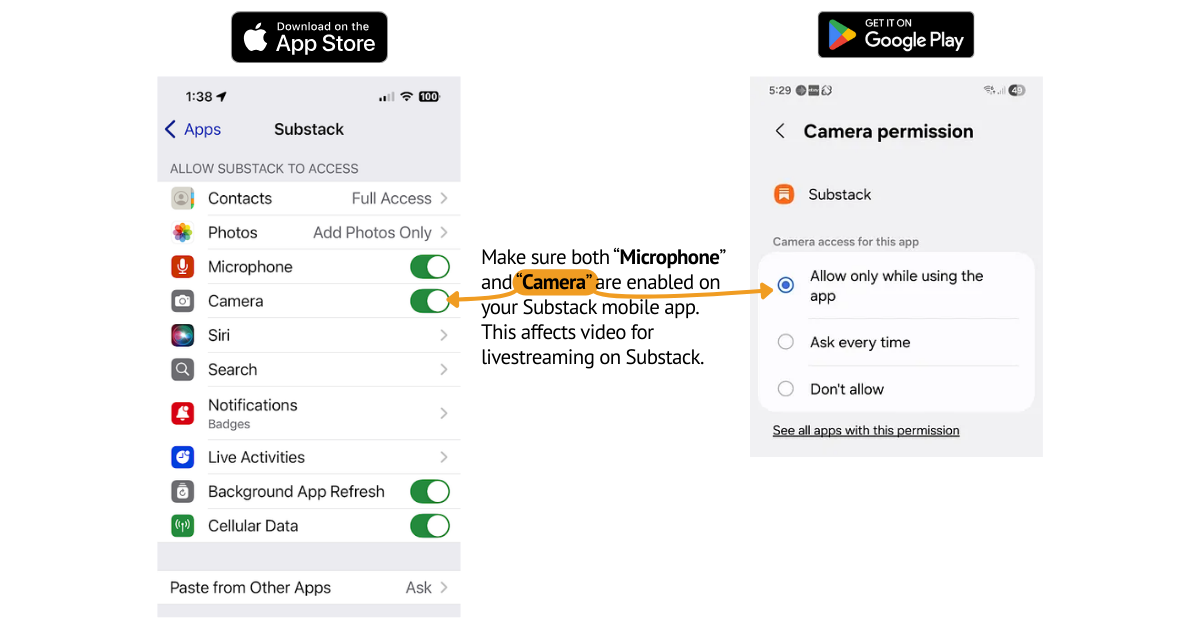
«UPDATED» In March 2026, Substack made the full set of its livestreaming features accessible to users on desktop browsers without either the fiddly bits of using mobile devices or complexity of a “stream key” (an API Key to use the RTMP protocol). Today, you can use Substack in a browser to: * Initiate, join, or schedule a livestream. * Share a screen from a desktop computer window. * Schedule an join scheduled events from a desktop browser. * Use a second, high-end microphone for audio. Since January 2025, Projectkin has hosted over 100 Substack Live sessions, including Weekly Previews and Updates, the RootsTech Ride Along series, and the All About That Place (AATP) series featuring guests from the UK to Australia. For most of my guests, Substack has been utterly new. Using Live Video Projectkin is all about encouraging families to tell their stories—in any form. Recorded conversations are a fantastically compelling form, so I’d love to see more people feel more comfortable using this feature. It’s a perfect complement to the notion of a “Private Podcast” I talked about in a project recipe in 2024. This post is designed to complement the materials provided by Substack’s Support pages. I hope you find these as helpful as I have. These are referenced in this post: * Getting started with Live Video on Substack These have been updated to reflect using video from desktop devices: * How do I join a live video that I am invited to? * How do I schedule a live video on Substack? * How do I go live on Substack using my computer? In addition, Substack launched a variation for use with studio-style livestreaming services like Streamyard or OBS Studio: * Live video on Substack via RTMP A Few Tips I’m sharing what I’ve learned here not only to make the experience a bit easier for my Projectkin guests but also to encourage you. I encourage you to consider this extraordinary medium if you’re already using Substack to create a newsletter for your family or any audience. Like any newsletter, website, or podcast, though, your clarity on what you want to say, why, and to whom is critically essential. I recommend you think that through before you start. This post may help you think through the details. Finally, before we get started, special thanks to my confederates on this how-to project. I wholeheartedly recommend their publications: * Jude Rhodes, of Yorkshire Family History, captured in several clips from our recent AATP25 episode; * Kathy Stone, of Kathy’s Coaching, who presents our monthly Kathy’s Corner program and joins me for a preview each month; and finally, * Jennifer Jones, of Tracking Down the Family, whose Speakers’ Corner and the accompanying preview program has become our new hit. * Emma Cox, of Journeys Into Genealogy, whose Emma Explores has been a stalwart supporter of my explorations into new technology adoptions. I’m indebted to all of you. 🙇♀️ Was this forwarded to you? Join us, free! The Experience as a Guest It’s helpful to look at the experience in three steps: before, during, and after a livestream. This makes it easier to understand what you’re doing and why. 1. Before you get started Substack allows you to read posts without an account, but streaming requires an account. If you don’t have an account, you’ll start by creating one. If you already have one, skip ahead. You already know all of this! A. Creating an account Like Zoom, Facebook, or other platforms, Substack requires an email and a password. But there’s more. The onboarding sequence will also ask you to specify a * “@handle,” also called a username on other platforms, and… * a name describing this handle. Note that they do not have to be the same. This username, preceded by an “@” symbol, allows users within the platform to find or mention each other. Other users might search for or “name-check” you using your name — or your @handle. Your “name” does not have to be unique, but your “@handle” does. You see this pairing for any account in a profile, which can always be found at “Substack.com/@handle.” You can explore my profile by letting your mouse hover over the byline of this post. Accounts and email addresses are associated one-to-one. Depending on how you started, Substack’s slick onboarding process can make it easy to accidentally set up multiple accounts. Search for yourself to see if you’ve already done it (it happens) or if there’s someone out there who might be mistaken for you (John Phillips, I see you!). If you have an account, you’re on your way as a Livestreaming Guest! ⮕ First, tell your host what your @handle is. If you’re my guest, I’ve probably already asked you. 😉 B. Get the Substack app on a mobile phone or tablet OR log in to Substack in a browser Until (roughly) December 2025, Substack required all hosts and guests to use a mobile device for livestreaming, with a technical exception. That’s no longer true. While it works well in the Substack app installed on a phone or tablet (get the free app and install it), that’s no longer required. You can now connect with a browser. Any browser will do, but for compatibility reasons, I’d avoid Safari on a Macintosh. Once you’re logged in, you can explore the Substack platform and go about the rest of your day. If you’re my guest, I will ask you to be logged in — with your notifications enabled — on the day of our scheduled event. This will ensure I can reach you at the appointed time for our livestream. C. Prepare your device for the livestream When reviewing your mobile device, be sure your camera and microphone are enabled in the settings panel for your iOS or Android device. For desktop settings, please see How do I go live on Substack using my computer. For a scheduled livestream, I (or any host) will share a link with you via email, text, or messaging. It will be in the following form: ⮕ https://open.substack.com/live-stream/12345 (The trailing number will be unique, of course.) Before the scheduled start time of the livestream, this link appears as a countdown clock referencing the host and guest when shared in the Notes feed. If the livestream link is shared on a public calendar, such as Projectkin’s Events page, tapping the link presents a static image with a field for subscription. It will also indicate a warning if the guest has not yet created an account or installed the app. The “Share” link for the event can now be shared with anyone on social media or email. This is a change from the original rollout of Substack Live and makes it as powerful a tool as YouTube livestreaming. If you’re a guest for Projectkin, you can always find that link in the Projectkin Events calendar. If this is your first time connecting to a livestream, an instruction sequence tests your device's camera and mic configuration. Once you’ve done this, you’re invited to join the “Preview Room.” Hosts can invite guests using email addresses or handles. If you are not currently a Substack subscriber with the email address you’ve been invited with, I recommend asking your host to use the correct email address. Otherwise, you might accidentally create a new Substack account, which could cause other issues. The host controls when the livestream starts. They can start any scheduled livestream up to 15 minutes before the scheduled time. Once the host initiates the stream, guests may be notified that the stream has begun through a… * In-app notification from Substack. * Email notification, which will direct you to your mobile device if you don’t open it on your mobile, though this is an option for the host. As a best practice, I often reach out to my guests about 30 minutes before the scheduled start time using Substack’s Direct Messaging (DM) feature just to be sure they’re ready. It tends to put everyone at ease. D. Join the livestream Once you accept the invitation to join the livestream and confirm your camera and mic settings, you’re dropped into a “Preview Room” where you can check you… Get full access to Projectkin at projectkin.substack.com/subscribe
Embed this episode
No transcript yet.