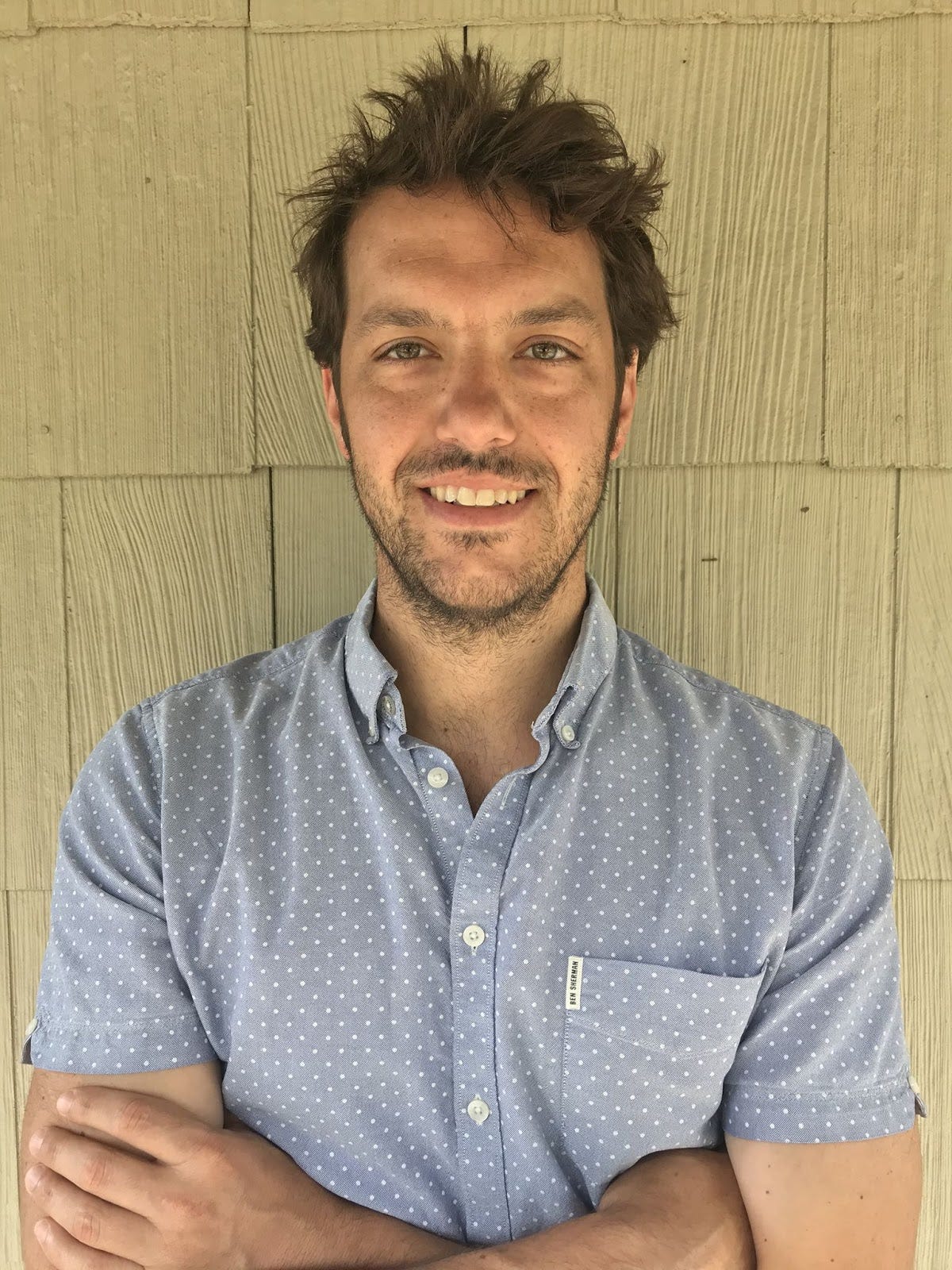
Substack Podcast #017: Psychedelics with Zach Haigney
from The Substack Podcast Hosted by The Substack team
We spoke with Zach Haigney of The Trip Report, a newsletter covering the business, policy, and impact of psychedelics. With a background in clinical research and acupuncture, Zach has closely followed the psychedelics industry for years. As the topic started to gain momentum, he was inspired to write about it. Zach covers not just the business and policy landscape, but also the science behind psychedelics and their long-term cultural impact. These diverse focus areas have allowed him to gain a variety of readers, from psychedelic enthusiasts to investors, researchers, and clinicians who are building the emerging psychedelics ecosystem. We talked to Zach about why he’s excited about the psychedelics industry, his early days of writing his newsletter and building his audience, and why he believes independent publishing is so important. Links * The Trip Report, Zach’s newsletter * Zach on Twitter * Multidisciplinary Association of Psychedelic Studies (MAPS), an organization that has been studying psychedelics since 1986 * How to Change Your Mind, a book by Michael Pollan about the science of psychedelics * 60 Minutes, an episode on how researchers experiment with psychedelics to treat addiction, depression and anxiety * Psychedelics Today, a podcast on how psychedelics relate to human potential and healing Highlights * (10:47) Why psychedelics are a hot topic right now * (21:55) Why Zach believes independent publishing is important * (27:40) The Trip Report’s community of readers and subscribers * (36:42) How Zach grew his newsletter list, despite not having a preexisting audience or social media following * (41:59) How Zach powered through writing in the early days and learned from other newsletter writers * (47:12) Why Zach decided to start a paid newsletter On social media: Social media is a weird place. I don't know how to navigate it. I feel much more comfortable in the confines of a newsletter. The medium of the newsletter, where you're going to somebody's email is really ... it makes sense to me. I get it and I love it. On imposter syndrome: If you can use imposter syndrome when you're writing your newsletter, it's a great tool because it forces you to think about what you don't know, and use that to flesh out the questions of what you don't yet understand. That's great fodder for, at least, what I'm trying to do. Transcript Nadia (00:42): First question, which I'm sure a lot of people ask you, is how did you start writing about psychedelics? Zach (00:50): I've been watching the development of a few of the organizations that have been funding the science. There's been some research over the last 20 odd years or so of really small studies of looking at psychedelics for things like depression and cancer-related anxiety and some other indications. They're really impressive results for really challenging conditions. I've been watching this and watching it grow and I felt I missed the boat of a career of being involved in this space. I knew I wasn't going to go back to school to be a scientist or I didn't quite know how to get in. I started writing about it. Here we are. Nadia (01:36): Love it. I mean, it seems like you have been involved or in and around both Eastern and Western medicine and that you have an ongoing interest in the human body. I guess psychedelics helps bridge that gap. Zach (01:50): I spent my first stint in a career in clinical research right out of college. I did HIV and Hep C clinical trials. I managed what's called an expanded access program in phase two pharmacokinetic studies. That was really cool. I was planning to go to medical school and be a doctor. Just through whatever circumstances, I decided, at some point, to pursue acupuncture and Chinese medicine. I went to acupuncture school. After that, I did have a brief stint in Silicon Valley. That was a huge embarrassing failure. Nadia (02:30): Yeah. Been there. Zach (02:32): But yeah. I've been working with patients primarily for conditions like chronic musculoskeletal pain for the last five or six years. My research into the workings of the nervous system and pain brought me back into understanding psychedelics from a scientific perspective. It's really interesting. I thought I had this audacious idea that I might be able to offer some insight in that. Because I think that there's a lot of overlap and a lot of similarities, psychedelic as tools for spiritual development and as medicines goes back thousands of years across cultures. There's some parallels between that and Chinese medicine that I'm really interested in and I've just started to explore in the Trip Report. Nadia (03:33): Where do you see psychedelics fitting in? Since you've been around both clinical research and Chinese medicine, is there an ideal, I guess, in terms of whether you would like it to be taken into one of those specific disciplines or how you would like the world to see and treat psychedelics? Zach (03:52): Well, that's the $64 million question. What I've been thinking about is I'm covering the news that's coming through, especially in the business and the policy side of psychedelics. But I'm also trying to generate, just collect themes or concepts or ideas. One of the main concepts that we're grappling with or thinking about or communicating about is the different ways that this grows. We have what's happened recently in Oakland and Denver where there's been a decriminalization or really a deprioritization of psilocybin in Denver, and then entheogenic plants or things like Ayahuasca, POD ... or maybe not POD ... psilocybin in Oakland. That's one of these vehicles, so to speak of broadening access. Zach (04:54): On the other end of the spectrum is the FDA route. There's a few companies and nonprofits that are developing pharmaceutical grade psychedelics for prescription use. That's this really interesting area where there's going to be tradeoffs and pros and cons to all of these different means of changing policy and stuff like that. The way I'm thinking about it is there's two ... My perspective is I like decriminalization. Portugal has been this model for drug reform, where they've decriminalized all drug use. You're not going to go to jail for possession or intoxication, perhaps, maybe but drug possession has been completely decriminalized. You have this opportunity to rehab people rather than put them in prison. Zach (06:04): Anyway, the opportunity, I think, to conduct psychedelic assisted therapy, or guide, or journeys in a nonmedical context I would really love to see. That's where it might resemble more like a Chinese medicine and acupuncture approach. On the other end of the spectrum is the opportunity for the FDA to say, "The science looks great. Let's approve this as pharmaceutical grade drugs." That would then be delivered in a more conventional medical setting. I think it's going to take some time for these different options to grow and to blossom. But I'm hoping that there's a diversification and some diversity within the ways that people are able to access and use them. Nadia (07:02): It's simple. But there's this toeing of the line of wanting to frame it in medical terms to establish legitimacy, while also not doing a disservice to the nature of psychedelics, which inherently does have this spiritual aspect to it that a lot of people find very fulfilling. Are there learnings from what's happened with cannabis research, which is ... I’m just like a casual connoisseur of information in both these realms, but it seems it's a little bit further ahead. Is there anything that parallels what's happening in cannabis with psychedelic? Zach (07:40): From the science perspective, the body of literature in psychedelics is much larger and more expansive than we have for cannabis. That has to do with issues around funding and regulation and access to that scientist can get access to cannabis. It's a really weird, bizarre thing where they can only get it from a university that's growing in Alabama or Arkansas or something. Whereas psychedelics, it hasn't had… This is a public episode. If you would like to discuss this with other subscribers or get access to bonus episodes, visit on.substack.com
Embed this episode
No transcript yet.