Substack Podcast #021: Cookbooks with Paula Forbes
from The Substack Podcast Hosted by The Substack team
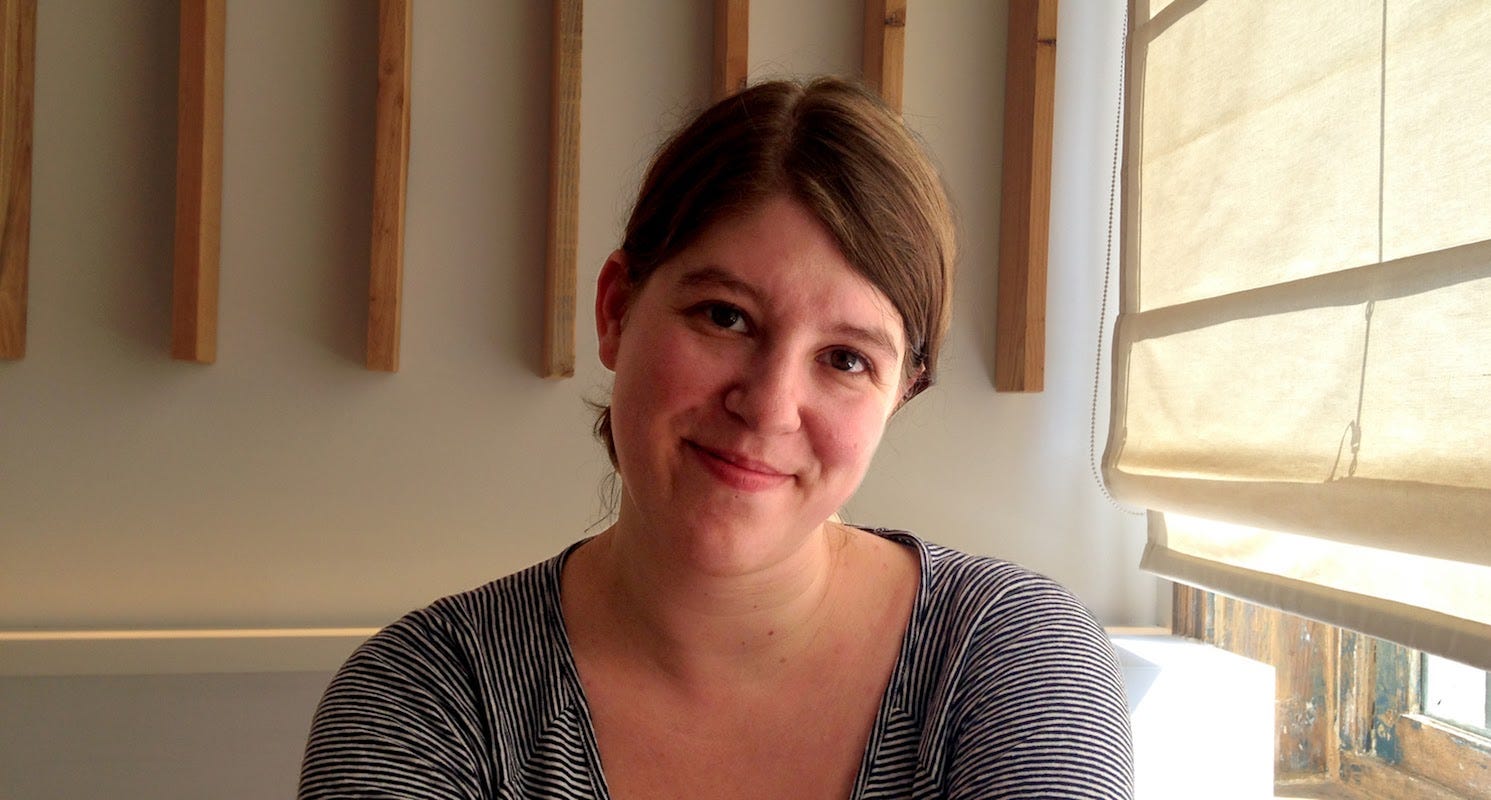
We spoke with Paula Forbes of Stained Page News, a newsletter about cookbooks. For her, it’s a place to geek out about cookbooks - where she can write about news, recipes, and upcoming releases. Paula has a multifaceted view of the culinary world. She worked as a professional cookbook critic for over a decade, writing for publications like Eater, Epicurious, Lucky Peach, and Food 52. She also has a background in cooking for restaurants, and in 2008 she published her own cookbook, The Austin Cookbook. We talked about the worlds of food blogging and cookbook writing, what makes a good cookbook, and what it was like for Paula to write her own cookbook after years of reviewing them. Links * Stained Page News, Paula’s newsletter * Paula on Twitter * The Austin Cookbook, Paula’s cookbook Highlights * (2:23) Paula’s writing journey, from writing cookbook reviews to blogging to starting her newsletter * (12:38) Why people buy cookbooks, even though so many recipes are online now * (18:42) How the 2008 recession coincided with the rise of food bloggers * (25:44) Paula’s favorite types of cookbooks, and the overall qualities that make good cookbooks * (37:34) The process of writing a cookbook On similarities between cooking and writing: The feeling you get from cooking in a restaurant and writing a solid blog post that goes up really quickly is very similar to me. A very speedy, quick strategy is involved. You have to be very efficient. On having a community of newsletter readers: I think that in the grand scheme of things, you're never going to make it rich with a cookbook website or TV show. But being able to focus on a self-selecting audience who has said, "Okay, I'm interested in this topic. I'm interested in cookbooks. I want to hear what you have to say about them.” It amplifies what you're saying so much more. On the process of writing a cookbook: It's a hell of a process. You have to be so organized and you have to be just on top of everything. It's so much more data than just writing the text of the thing. Cookbooks are so much work and I have so much respect for anyone who tries to write one. Transcript Nadia (00:22): We see a lot of food writers on Substack, but your publication, Stained Page News, stood out to me because you're specifically focused on cookbooks - which just said to me that this person isn't just really into food as a broader topic, but you have this truly geeky obsession with cookbooks specifically that I really want to hear more about. How did you come to fall in love with this topic? Paula (00:44): Way back when I graduated from college, I originally thought that I wanted to go to grad school and go into academia. And what I wanted to do was ... This was not really a thing that existed then, but I wanted to look at food cultural history of the 20th century through the lens of books as a literature. Paula (01:19): I applied to grad school a bunch of times and didn't get in because people kept saying, "You're a great candidate, but we don't have anyone here who can help you study that." So, in the meantime, I started writing book reviews, freelance, for a Typepad blog because this was what, 2007, 2008? And then later for outlets and I've been covering cookbooks ever since. Nadia (01:52): Wow, this got me even more excited about this topic. So, you really are coming at it from a researcher mindset way back in the day of wanting to just understand cookbooks as a genre, it sounds like, before you got into writing. You mentioned writing on a blog in the early days and then writing professionally and now you have a newsletter on Substack - how does that experience of early blogging compare to writing today? Paula (02:23): That's why I started the newsletter, it’s because I missed blogging. So, I started writing cookbook reviews and later just about everything else for a blog called Eat Meat Daily that no longer exists. And they looked at the liberal arts of food. It was art, it was film, it was books. And just generally weird stuff with a good sense of humor. Paula (02:52): So, I started there and that was a very late odds style blog. And then from there, I moved on to writing for Eater, which is a different style of blog. Nadia (03:13): So, for folks who haven't read Eater, can you tell us a little bit about how it's different? Paula (03:23): I can't really speak to their current style of blogging, but when I worked there, it was very quick hit news, re-blogs, everything with a sense of humor - sense of humor and a point of view of restaurant insiders. But the two were different and that one was very much ... Eater was very much volume-driven when I worked there, so it was very much get in, get out of the story. Get it up, have the best headline, that kind of thing. Paula (04:02): And I missed that. I also have a background in cooking in restaurants and the feeling you got from cooking in a restaurant and writing a really solid blog post that goes up quickly is very similar to me. A very speedy, quick strategy is involved. You have to be very efficient - so figuring out how to do that in my head scratches the itch of like, "Okay, now I'm working." And that doesn't really exist anymore in media, near as I can tell, at least not in my circles. Paula (04:48): So, I missed it. I missed talking about cookbook news which I didn't really see anyone doing. And I just started tweeting stuff. And then, people started picking up stuff I was tweeting and I was like, "Well, this is not great because I'm a freelance writer, and I would like to be making some money off of the scoops I'm finding." There is one in particular that was after Anthony Bourdain passed away. Paula (05:29): They announced that they were going to be publishing a book that he had been working on when he passed away. And so, I tweeted about it and everyone linked to the tweet. People magazine linked to the tweet. It was wild, and I was just like, "Why am I just throwing the stuff up on Twitter when I'd be writing it?" So, that's a very long way of saying that the newsletter scratches both the quick hit, how much information can you relay in one sentence thing that I got from blogging, and also fills the hole of the cookbook news that I wasn't seeing other places. Nadia (06:14): That makes sense. It sounds so simple but I feel like the addition of an email list really just changes that relationship. Even if you have a popular blog post and it goes super viral and everyone is reading it, you never really know who's on there and they kind of go off into the ether and do something else. But when you have a place for people to subscribe and get more of it, then it's you're actually building this relationship within an ongoing audience. Paula (06:41): Yeah, and especially with a topic like my topic which is so focused. I think that in the grand scheme of things, cookbooks are not ... You're never going to make it rich with a cookbook website or TV show or whatever but being able to focus it at a self-selecting audience who has said, "Okay, I'm interested in this topic. I'm interested in cookbooks. I want to hear what you have to say about them.” It amplifies what you're saying so much more. Nadia (07:13): I'm curious whether you feel like you've created a different sense of community because you're this independent writer at the center of your work versus writing about cookbooks and reviewing them on say Eater or Food 52’s communities. Paula (07:29): Gosh, not really. I don't allow comments on my newsletter. Nadia (07:35): Oh, interesting. Paula (07:37): So, I actually did on today's newsletter but it's a rarity for me. The newsletter management for me is very much about the path of least resistance in many ways. And it came down to: did I want to spend a ton of time moderating comments? And I've decided that that was not for me. Nadia (08:03): I really like that. I respect that. Actually, I noticed that you started writing Stained Page News a few years ago and then you went on hiatus and then you brought it back. And I just thought it was great… This is a public episode. If you would like to discuss this with other subscribers or get access to bonus episodes, visit on.substack.com
Embed this episode
No transcript yet.