NPR. D'hah! Well, is that an animatronic bird? Oh, yes. This is Molly, my one-of-a-kind singing and dancing bird at Tomaton.
She plays an important role in our weekly roundup of the most interesting economic headlines, also known as... Incators of a week of the week! This week we're going to tell you about inflation, bumbles latest pivot, and another plaything that is also in a bit of a custody battle. Unlike Kelly Clarkson and a certain Brooklyn toy shop, we will be back after the break. This week on Consider This, an investigation into widespread complaints about sales tactics at mall skincare kiosks led NPR to a company in California.
Am I being recorded? Yeah. Okay, delete that, then we're not interviewing anything, you can mount the tower. Legal department. We investigate a group that supplies mall skincare stores that left customers with thousands of dollars in bills.
And listen now on Consider This from NPR. Hey, how are you feeling right now? Exhausted from the summer? Overwhelmed with the new school year? Restless?
Inkshists? LifeKit is here to help. Consider us your mental health accountability buddy, with episodes on everything from navigating social anxiety to unlearning perfectionism. Listen to the LifeKit podcast in the NPR app or wherever you get your podcasts. It's Indicators of the Week.
Adrian, how about you go first? Okay, my indicator is 4.6%. 4.6 is the annualized rate of so-called super core inflation over the past three months. Sounds like something Elon Musk came up with. Well, this term is actually based on data from the latest consumer price index report.
And when we often talk about the CPI, we often talk about the headline inflation number. That is, how much goods and services have changed in price over the past year. In September, by the way, that number came in at 3.7%, which is the second month in a row that it's ticked up. But this number is really just a kind of bird's eye view of inflation. And if you want to understand the underlying forces, you can zoom in even more and you could look at just goods or you could look at just energy or you could look at what is called super core inflation, which just looks at certain kinds of services.
Yeah, like lawyers, healthcare, manicurist, landscapers. Lamps, skapers. Mm-hmm. This would make a perfect family for you question. Five things that people say belong in super core services inflation.
Nice. And then you know, some confused person is going to buzz in and be like, we're a refrigerator. We're talking about services. I respect points for creativity. The thing about the price of these kinds of services is that they can change relatively quickly when you compare them to things like the cost of housing.
So by focusing on the price of services, economists can see how much people's wages are driving inflation. And, you know, when you think about it, it's like employers raising employees wages, we tend to say that's a good thing, right? People are getting a raise. Unless at least you're an inflationary spiral. We don't want that.
It's a good thing. It's a good thing. Full stop. Raise the money. Everyone here gets a raise.
And employers may decide, okay, I'll give everybody a raise, but then I'll just pass that cost on to the customer in the form of higher prices. And if those wages don't increase at the same level, well, that's not good for employees, right? And this is kind of what we're seeing right now. Super core services inflation up by rate of 4.6%. And wages over the past year have only gone up 3%.
Okay. So wages not keeping up with super core inflation. Thank you, Adrian. Now, Ricky, what do you have? Okay.
So remember a couple of months ago on indicators of the week, we talked about how bad things were at Bumble, the dating app company. Yes. I remember because they were like, new plan. It used to be that women always had to message first. And that was kind of the absolute thing.
And then they were like, never mind. Exactly. Revenue had been declining. A lot of daters were in just like app fatigue. Well, if you listen to that episode and thought, wow, this show has absolutely no idea what it's talking about.
I'm going to go buy Bumble stock. Then you would have doubled your money in just a couple of months. We are not a financial advice podcast. Yeah. So my indicator is 119%.
That is the return on Bumble stock since we talked about how bad things were for dating app companies. Yeah, the business didn't suddenly get better. This is from a buyout bid. A group called Ithaca Holdings is going to take Bumble private. And it's an investment group run by some former big dogs at meta and Instacart.
Ithaca is paying more than double the stock price was to take the company off of this exchange. That's the huge bump. Current CEO and founder Whitney Wolf heard said that she was excited to have partners who believe in Bumble's women first mission. Though, I should note, it is too due to taking the CEO spot from a woman. Did they message her first?
Did she message them first looking for a buyout? That is the question we need to find out. One of the new co CEOs, Ravi Gupta, is betting that his AI advances more and more. The value of human relationships will grow. The new owners said this investment is a bet on the future of humanity.
A bet that humans will want to pay to meet other humans. Yeah, so Gupta was not super clear in his post about what the plan is for Bumble moving forward, writing, together, we intend to build the best company in the world for helping people find each other. But he doesn't need to be super clear. This is why businesses often go private. Management doesn't have to report to shareholders every quarter and talk about what's going on.
So we might never know. That's right. Wayland Wong. What do you have? All right.
My indicator is 100 years. That is the anniversary being celebrated this week by the classic children's book, We Need the Pooh. Have you guys read it? It may have been read to me, but not in my memory. Never reading it so much as just knowing it.
Does that make any sense? Yeah, I mean, it's just like there in your job. Exactly. Well, it might not surprise you to learn. I've read all the books by A.M.L.
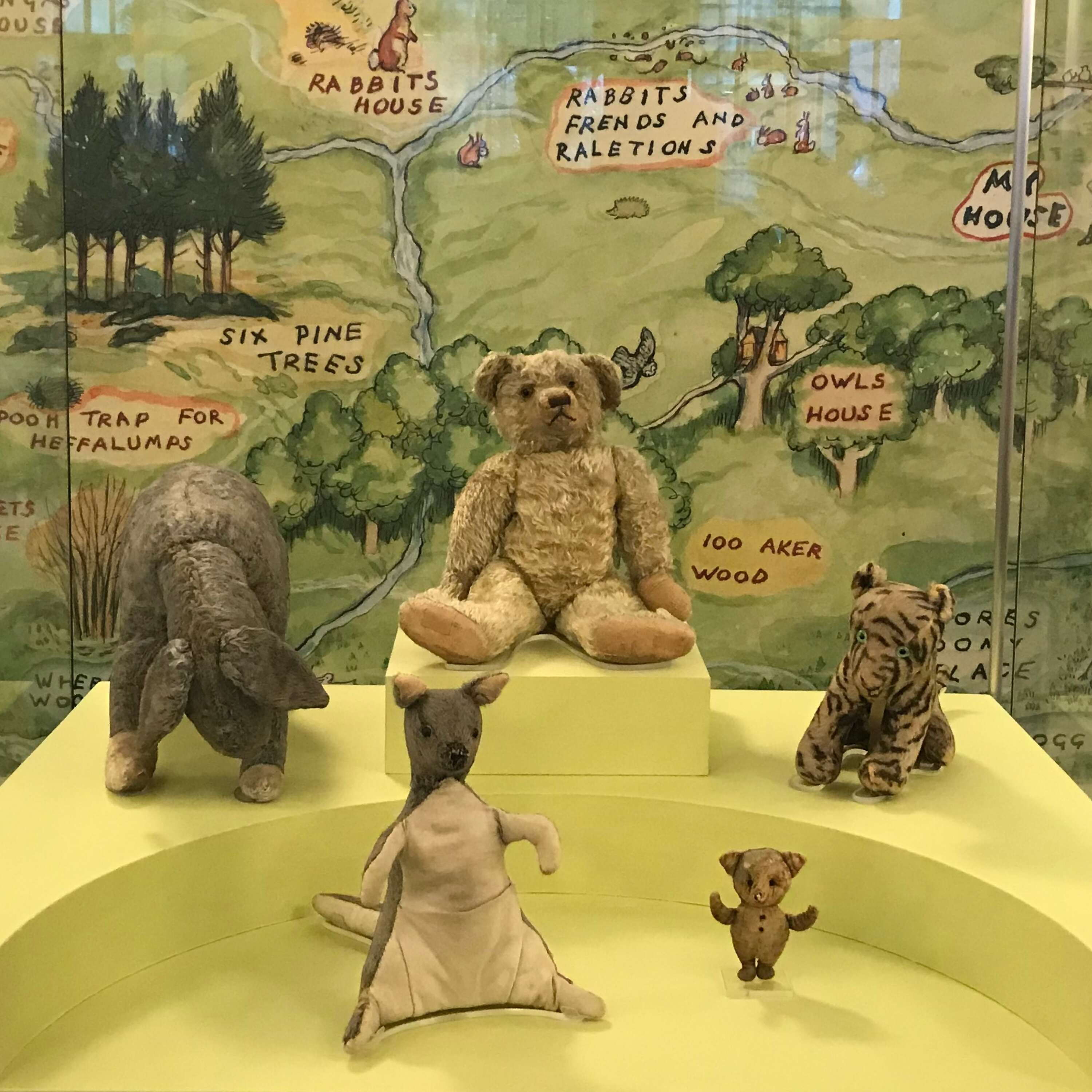
multiple times. I read the autobiography of Milne's son, The Real Life Christopher Robin. That was a huge bummer by the way. Yeah, I am kind of a super fan. And I visited the original Pooh Teddy Bear at the New York Public Library.
This is a such bear that Christopher Robin got for his first birthday in 1921. Did they have a nickname for Pooh Bear, Super fans? The Pooh, Pooh heads. Pooh heads. My two heads.
Pooh heads out. Strike that from the record. Yeah, so Winnie the Pooh was on display at the New York Public Library along with the stuffed versions of other characters like Eor and Tigger. And millions of visitors have come through the library where Pooh lives. He's a big tourist straw.
And I chose the Pooh Viserie as my indicator because this 100-year milestone is reviving the debate about whether Pooh should go back to England. Huh, so England called and said, another country has a historically important artifact and we'd like that return to us. Yes, and in the case of Pooh, they've been trying this for years. In 1998, a member of the British Parliament asked for the stuffies to be returned. And then a couple of years ago, an emissary of Queen Camilla tried to get the New York Public Library to send Pooh to Buckingham Palace just for a short-term visit.
And the representative of the Queen told the Washington Post that the library said, no, because the toys are too old and they get so many visitors. How did the New York Public Library end up with the Pooh Bear? Well, if you want to know the backstory, it's that the toys got into the possession of a publishing company and then that publishing company had the toys in New York and then the owners of that company donated Winnie the Pooh and his friends to the library and that happened in 1987. So they've been there a long time. Oh, okay.
The British don't really have a rightful claim to this. They just kind of like want them to do a solid for them. I mean, you could argue that Winnie the Pooh is part of, you know, England's cultural patrimony. But as we get reminded us before, the British do not have the best track record when it comes to keeping stuff from other countries. Like, if you go to the British Museum website, there is a whole section about contested items in the museum collection.
So I think like, your abandoned bronzes, then a Dering government has asked for those sculptures to be repatriated or the Elgin Marbles. These are sculptures on the parthenon that the Greeks are trying to get back. If you want to know more about this stuff, I recommend there's a podcast and TV show called Stuff the British Stole. That's all about the backstories of these contested artifacts. How the tables have turned.
We didn't steal this one. No, no. It's like the A-mill in the States, Sol Pooh, and the other stuff that we used to, this publishing company and then the executives at that company donated the toys to the New York Public Library. So it's up to the library whether or not it's to give those stuffies back. Okay, Inglid, if you're listening, which we know you are, use money.
We're not going to give a back. Buy it. Make them an offer. How many pots of honey? This episode was produced by Eucharados, an engineer by Travis Hagen, who was fact checked by Leidos.
He can Canonizer Editor and the indicator is production of NPR. To admit term election, it's hard to keep track of all those small down ballot races. So some voters are using AI chatbots to figure out who to support. Sometimes if you push back to hallucinations, the chatbot will confess that it made something up. But in other cases, it will double down.
What you should know about using AI for election research. Listen now on the NPR Politics Podcast. On the next through line from NPR. I was surprised that this man every single day takes a chair and goes to the troubles and debris of his house. And he starts to tell stories to his children, to his mother, to his wife.
He traveled through the past four seasons of ceasefire in Gaza, with NPR's NS Baba.